Authentic Seafood Gumbo – A Hearty, Classic Louisiana Stew

Gumbo is the kind of dish that brings people to the table. It’s rich, layered, a little spicy, and full of coastal flavor. This version leans into the Gulf tradition: dark roux, the “holy trinity” of vegetables, and a generous mix of shrimp, crab, and tender fish.
It tastes like home cooking at its best—slow, soulful, and deeply satisfying. If you’ve never made gumbo before, don’t worry. With a little patience and a few simple steps, you’ll be ladling up bowls like a local.
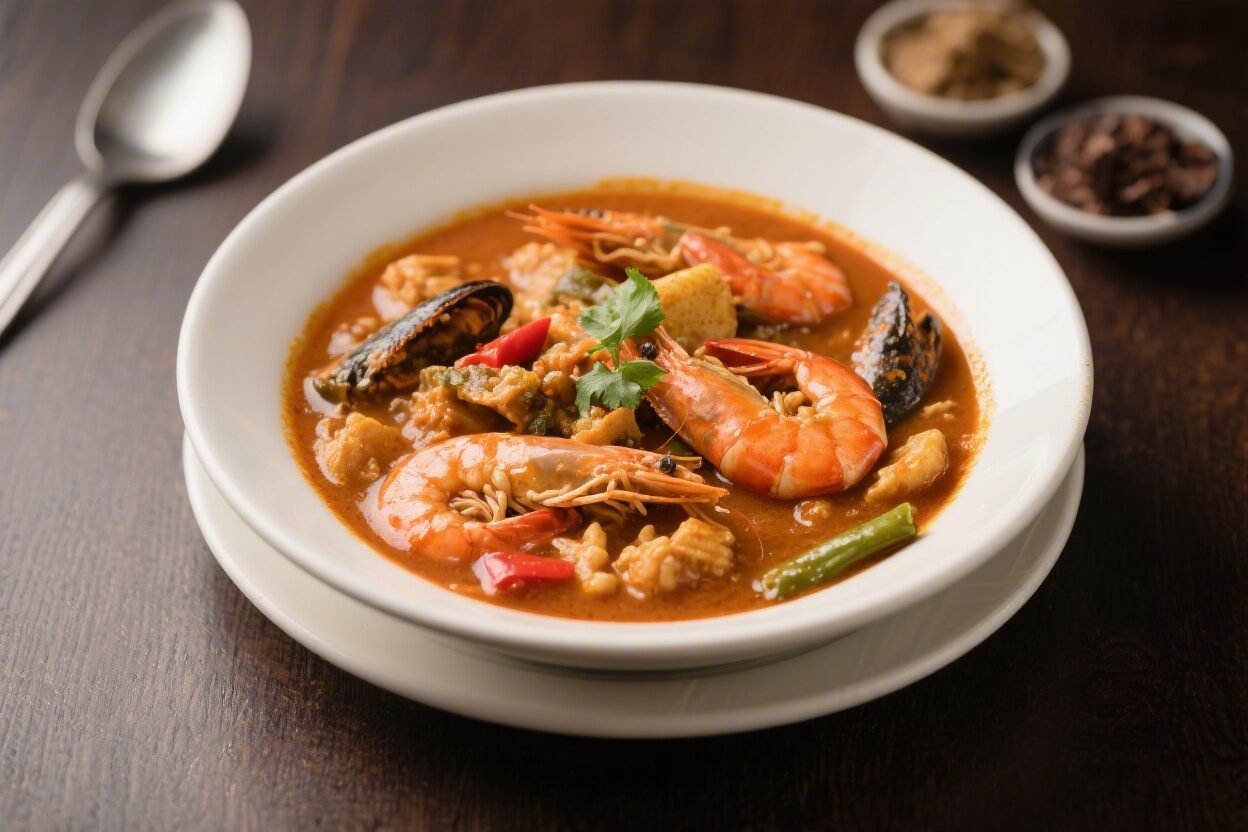
Authentic Seafood Gumbo - A Hearty, Classic Louisiana Stew
Ingredients
Method
- Make the seafood stock: In a pot, combine shrimp shells, 6 cups water, halved onion, celery stalk, bay leaf, and peppercorns.Simmer 25–30 minutes. Strain and keep warm. You should have about 5 cups.
- Brown the sausage (optional): In a large heavy pot, brown sliced andouille over medium heat until rendered and lightly crisp.Remove and set aside, leaving a thin film of fat.
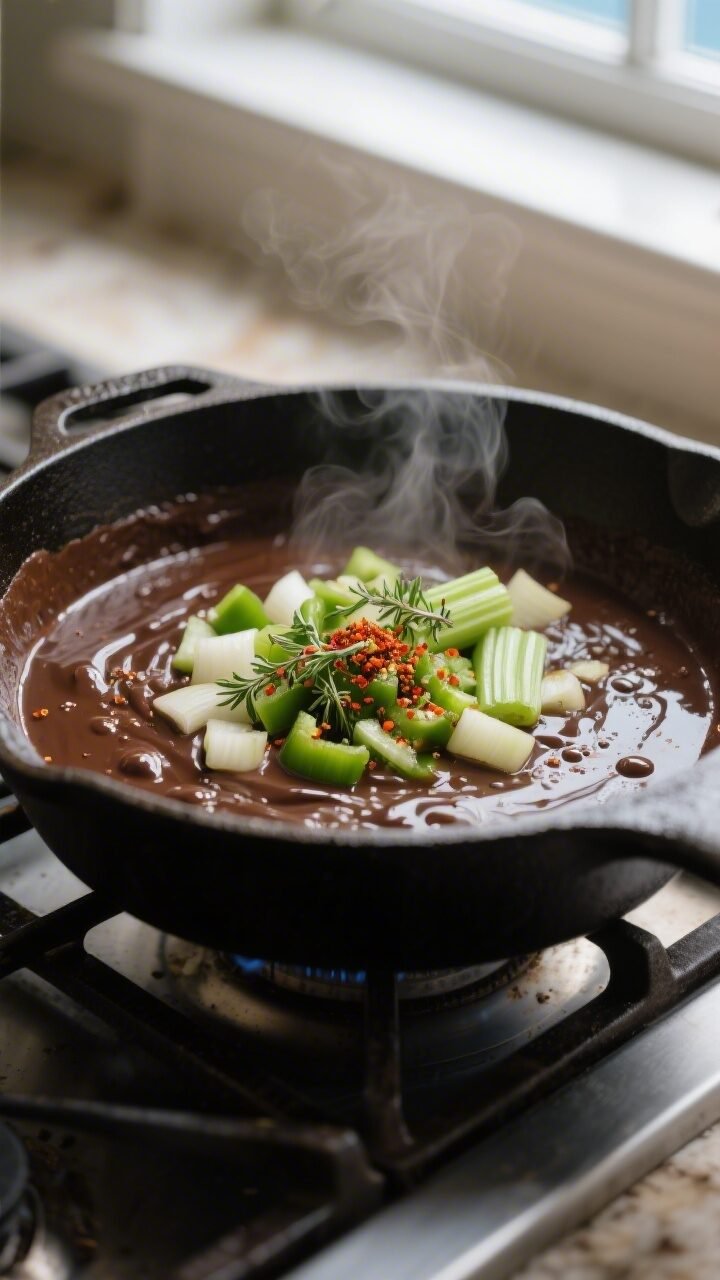
- Cook the roux: Add oil to the pot (or supplement with sausage fat) and whisk in flour over medium to medium-low heat. Stir constantly 20–30 minutes until the roux turns the color of dark chocolate. Do not walk away. If it smells burnt, start over.
- Add the trinity: Stir in diced onion, bell pepper, and celery. Cook 5–7 minutes until softened and glossy.Add garlic and cook 1 minute.
- Season the base: Stir in salt, black pepper, paprika, cayenne, thyme, oregano, and bay leaves. Let spices bloom 30 seconds.
- Build the soup: Slowly whisk in warm seafood stock, a ladle at a time, to avoid lumps. Add tomatoes if using, Worcestershire, and hot sauce.Return sausage to the pot if using.
- Simmer: Bring to a gentle simmer. Add okra if you want a thicker, silkier texture. Cook 25–35 minutes, stirring occasionally, until flavors meld and the gumbo slightly thickens.
- Add seafood: Lower the heat to just under a simmer.Gently add fish pieces and cook 3–4 minutes. Add shrimp and cook another 2–3 minutes, until just pink. Fold in crab last and warm through 1–2 minutes. Do not boil.
- Finish: Remove bay leaves.Stir in parsley and green onions. Taste and adjust salt, pepper, and heat.
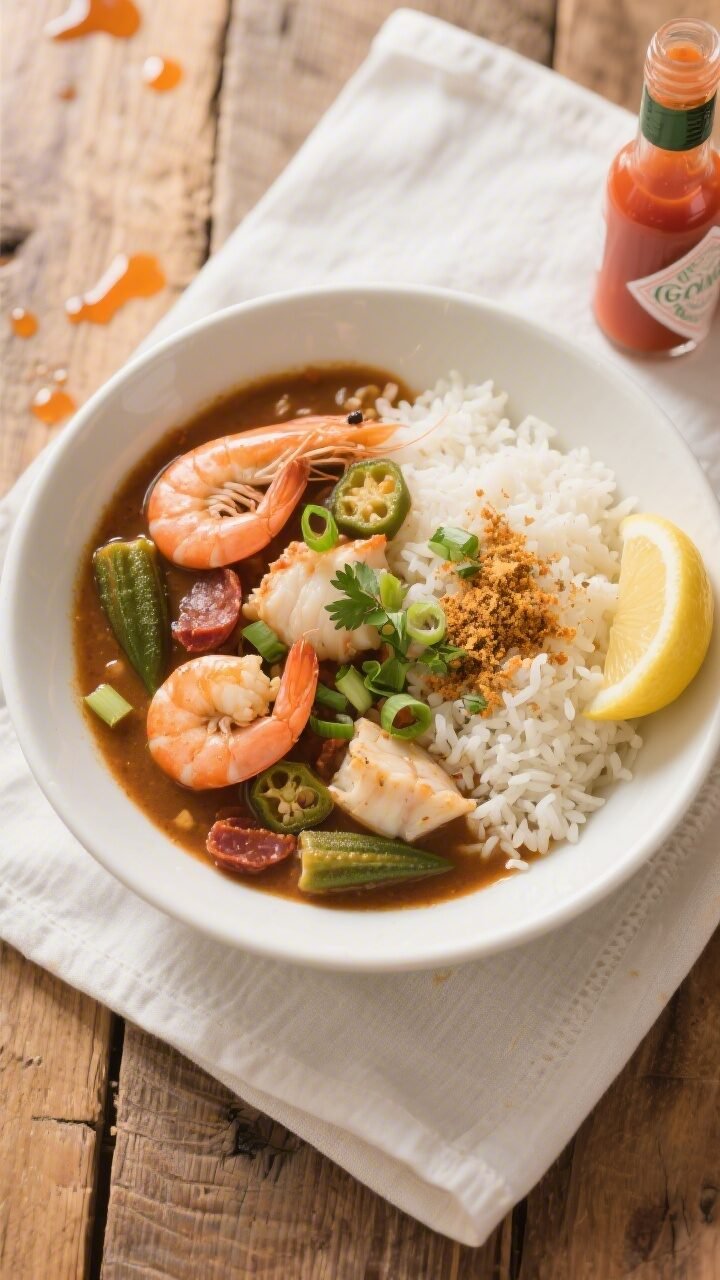
- Serve: Spoon over hot white rice. Offer filé powder at the table to thicken slightly and add earthiness.Finish with a squeeze of lemon and extra hot sauce if you like.
Why This Recipe Works
- Deep, developed flavor: A dark roux builds a nutty, toasty base that gives gumbo its signature depth.
- Balanced seafood mix: Shrimp, lump crab, and a firm white fish cook gently, staying sweet and tender.
- Classic Cajun-Creole aromatics: Onion, celery, and bell pepper (the “holy trinity”) add body and sweetness.
- Clean seafood stock: Using shrimp shells and aromatics creates a bright, ocean-forward broth without overpowering the roux.
- Time-tested technique: Layering spices, simmering low and slow, and finishing with filé or okra yields authentic texture and taste.
Ingredients
- Seafood: 1 lb large shrimp, peeled and deveined (reserve shells); 8 oz lump crabmeat (picked over for shells); 12 oz firm white fish (such as redfish, snapper, or cod), cut into 1-inch pieces
- Stock: Shells from the shrimp; 6 cups water; 1 small onion (halved); 1 celery stalk; 1 bay leaf; 6 black peppercorns
- Roux: 1/2 cup neutral oil (canola or peanut) or clarified butter; 1/2 cup all-purpose flour
- Aromatics: 1 large yellow onion (diced); 1 green bell pepper (diced); 3 celery stalks (diced); 4 garlic cloves (minced)
- Vegetables and thickeners: 1 cup sliced okra (fresh or frozen), optional; 1–2 tsp filé powder (sassafras), optional for serving
- Seasoning: 1 1/2 tsp kosher salt (plus more to taste); 1 tsp black pepper; 1–2 tsp paprika; 1/2–1 tsp cayenne pepper (to taste); 1 tsp dried thyme; 1 tsp dried oregano; 2 bay leaves
- Liquids: 1 (14.5 oz) can diced tomatoes with juices, optional; 1 tbsp Worcestershire sauce; 1 tsp hot sauce, plus more for serving
- Finish: 2 tbsp chopped fresh parsley; 3 green onions (sliced)
- Serving: Cooked white rice; lemon wedges
- Optional: 6–8 oz andouille sausage (sliced and browned), if you like a surf-and-turf gumbo
How to Make It
- Make the seafood stock: In a pot, combine shrimp shells, 6 cups water, halved onion, celery stalk, bay leaf, and peppercorns.Simmer 25–30 minutes. Strain and keep warm. You should have about 5 cups.
- Brown the sausage (optional): In a large heavy pot, brown sliced andouille over medium heat until rendered and lightly crisp.Remove and set aside, leaving a thin film of fat.
- Cook the roux: Add oil to the pot (or supplement with sausage fat) and whisk in flour over medium to medium-low heat. Stir constantly 20–30 minutes until the roux turns the color of dark chocolate. Do not walk away. If it smells burnt, start over.
- Add the trinity: Stir in diced onion, bell pepper, and celery. Cook 5–7 minutes until softened and glossy.Add garlic and cook 1 minute.
- Season the base: Stir in salt, black pepper, paprika, cayenne, thyme, oregano, and bay leaves. Let spices bloom 30 seconds.
- Build the soup: Slowly whisk in warm seafood stock, a ladle at a time, to avoid lumps. Add tomatoes if using, Worcestershire, and hot sauce.Return sausage to the pot if using.
- Simmer: Bring to a gentle simmer. Add okra if you want a thicker, silkier texture. Cook 25–35 minutes, stirring occasionally, until flavors meld and the gumbo slightly thickens.
- Add seafood: Lower the heat to just under a simmer.Gently add fish pieces and cook 3–4 minutes. Add shrimp and cook another 2–3 minutes, until just pink. Fold in crab last and warm through 1–2 minutes. Do not boil.
- Finish: Remove bay leaves.Stir in parsley and green onions. Taste and adjust salt, pepper, and heat.
- Serve: Spoon over hot white rice. Offer filé powder at the table to thicken slightly and add earthiness.Finish with a squeeze of lemon and extra hot sauce if you like.
How to Store
- Refrigerate: Cool completely. Store in airtight containers up to 3 days. Reheat gently over low heat; avoid boiling to keep seafood tender.
- Freeze: Gumbo with seafood freezes best without the rice.Freeze up to 2 months. Thaw overnight in the fridge and reheat slowly.
- Make-ahead tip: Cook the base (through step 7) and refrigerate up to 2 days. Add seafood when reheating to serve.
Why This is Good for You
- Lean protein: Shrimp, crab, and white fish provide high-quality protein with less saturated fat.
- Micronutrient boost: Seafood offers selenium, iodine, B vitamins, and omega-3s that support heart and brain health.
- Veggie support: The trinity and okra add fiber, vitamin C, and antioxidants.
- Customizable heat and sodium: You control spice and salt levels, making it easier to fit your goals.
Pitfalls to Watch Out For
- Burnt roux: It turns bitter fast.Keep heat moderate, stir constantly, and use a flat wooden spatula to scrape the bottom.
- Boiling seafood: A rolling boil toughens shrimp and breaks up fish. Keep the pot at a gentle simmer or below when seafood goes in.
- Skipping warm stock: Cold liquid can seize the roux and create lumps. Warm stock blends smoothly.
- Overcrowding flavors: Too many strong add-ins (extra tomatoes, heavy smoke, or lots of spices) can overshadow the seafood.Keep the balance.
- Filé timing: Don’t boil gumbo after adding filé or it can turn stringy. Use it at the table or stir in off heat.
Variations You Can Try
- All-seafood, no sausage: Skip andouille for a cleaner, brinier profile.
- Smoky andouille version: Keep the sausage and reduce or omit tomatoes to let the roux and smoke shine.
- Okra-forward: Double the okra and skip filé for a more traditional summer-style gumbo.
- Tomato-leaning Creole style: Use the diced tomatoes and add a splash more Worcestershire for a slightly brighter finish.
- Spice swap: Add a pinch of white pepper and smoked paprika for warmth without extra heat.
- Shellfish upgrade: Add mussels or clams near the end; steam separately and fold in to avoid grit.
FAQ
What color should my roux be?
Aim for a deep mahogany to dark chocolate color. The darker the roux, the richer and more toasty the flavor.
Just don’t cross into burnt—if it smells acrid, start a new batch.
Do I have to use filé or okra?
No. Both are traditional thickeners, but you can use one, both, or neither. If you skip them, be sure your roux gets dark enough to provide body.
Can I use store-bought stock?
Yes, but choose a low-sodium seafood or chicken stock and warm it before adding.
If using chicken stock, a splash of clam juice can boost seafood flavor.
How spicy should gumbo be?
Spice is personal. Start with less cayenne, then adjust at the end. You can always add hot sauce at the table.
What’s the best rice for serving?
Long-grain white rice is classic.
Cook it fluffy and keep it plain so it doesn’t compete with the gumbo.
Can I make this gluten-free?
Yes. Use a gluten-free all-purpose flour for the roux, or make an okra- and filé-thickened gumbo without a flour roux. Keep an eye on sausage and Worcestershire labels.
Why is my gumbo greasy?
Too much fat in the roux or sausage can leave a sheen.
Skim excess oil with a spoon, or blot the surface with a paper towel just before serving.
How do I prevent slimy okra?
Sauté okra separately over medium-high heat until it loses some of its stickiness, then add to the pot. Acid from tomatoes also helps.
Final Thoughts
Authentic seafood gumbo is about patience, balance, and respect for simple ingredients. A careful roux, warm stock, and gentle handling of the seafood make all the difference.
Serve it with hot rice, a squeeze of lemon, and good company. It’s the kind of meal that feels like an occasion, even on a weeknight. Once you master the rhythm, you’ll reach for this recipe again and again.