Chicken Ghee Roast: Fiery, Buttery, Absolutely Unforgettable

You know that one dish that hijacks the table and makes everything else look like background music? This is that dish.
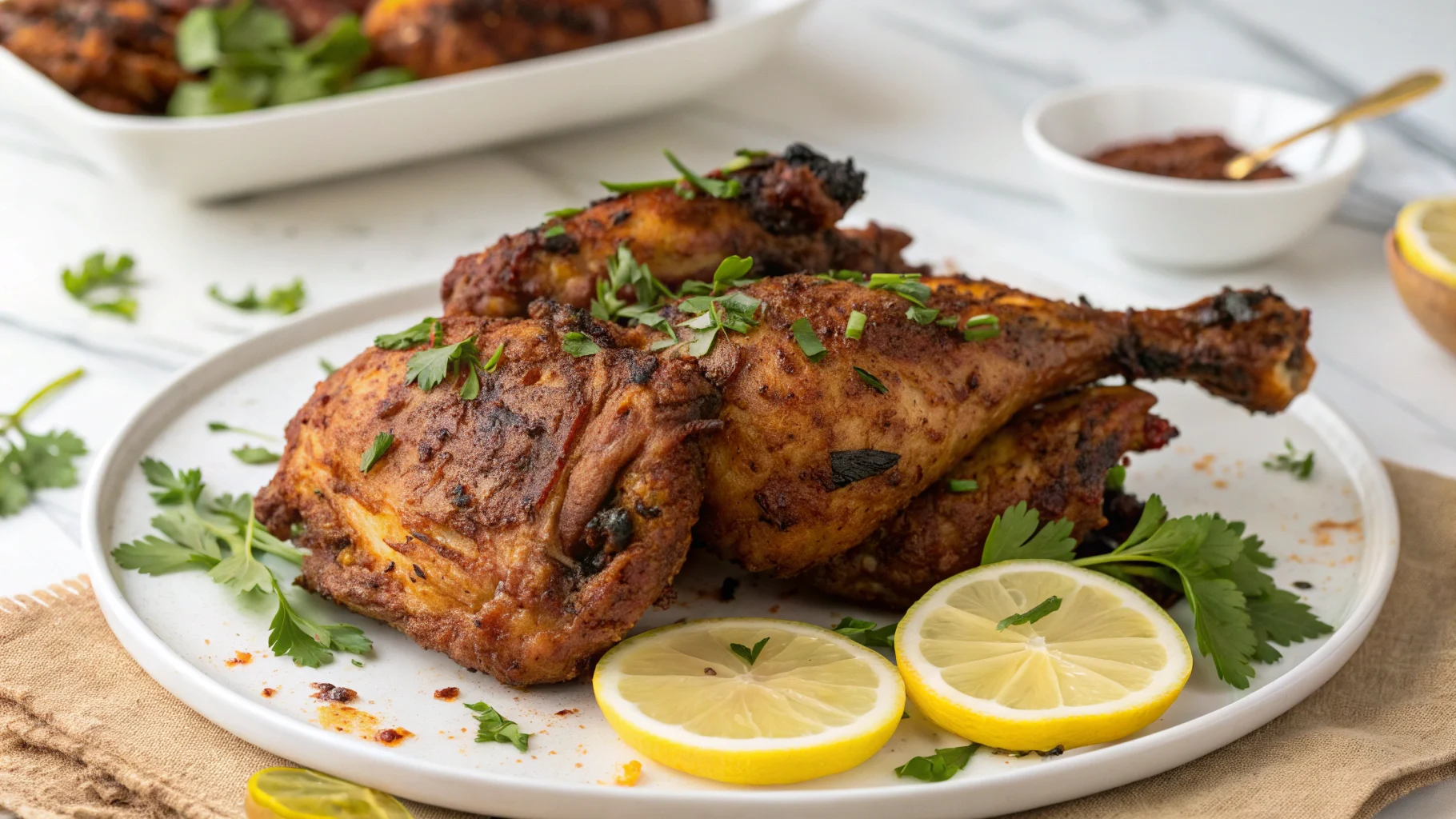
Chicken Ghee Roast is bold, unapologetically rich, and engineered for maximum flavor per bite. It’s smoky, spicy, buttery, and just the right kind of messy.
If you’ve been stuck in bland-chicken purgatory, this is your jailbreak—no hacks, just old-school technique with big payoffs.
Why Everyone Loves This Recipe
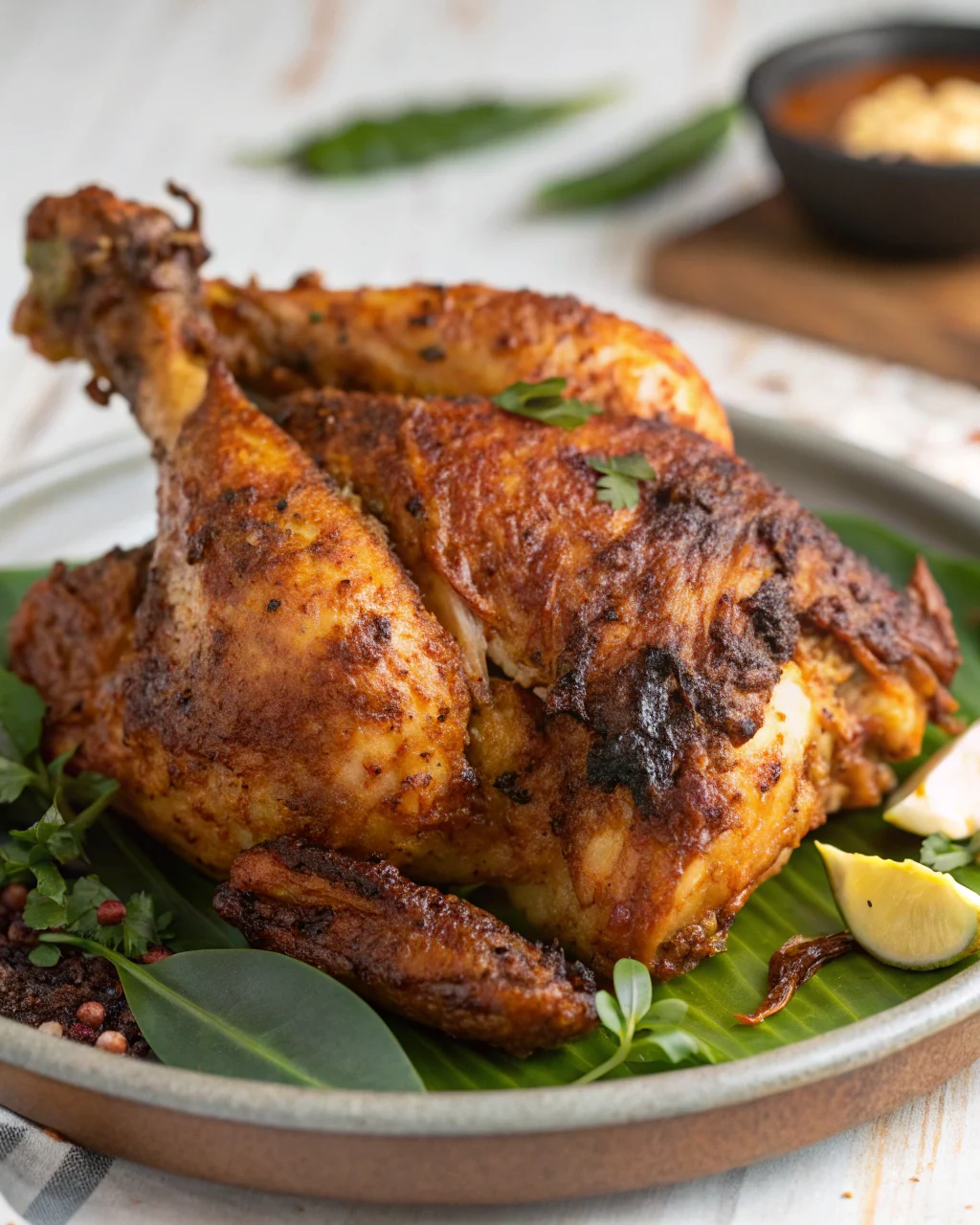
This plate hits you with layers: tang from tamarind, warmth from Kashmiri chilies, and the nutty luxury of ghee. It’s comfort food dressed as a showstopper—fancy enough for guests, easy enough for a weeknight win.
Plus, you don’t need a pantry full of unicorn spices, just the right ones. And yes, it pairs with everything: dosa, paratha, rice, or just a spoon because self-control is overrated.
Servings, Prep time, Cooking time, Calories
- Servings: 4
- Prep Time: 20 minutes (plus 30–60 minutes marinating)
- Cooking Time: 35–40 minutes
- Calories: ~420 per serving (estimate; see Nutrition Stats)
Things You’ll Need on Hand
- Chicken: 750 g bone-in pieces or boneless thighs, cut into medium chunks
- Ghee: 4–5 tablespoons (good quality matters)
- Curd/Yogurt: 1/2 cup, thick
- Lemon juice: 1 tablespoon
- Tamarind paste: 1–1.5 tablespoons (adjust to taste)
- Jaggery or brown sugar: 1–2 teaspoons
- Garlic: 8–10 cloves
- Ginger: 1-inch piece
- Whole spices (for masala):
- Kashmiri red chilies: 8–10 (stems removed; for color and mild heat)
- Coriander seeds: 2 teaspoons
- Cumin seeds: 1 teaspoon
- Black peppercorns: 1/2 teaspoon
- Fenugreek seeds: 1/4 teaspoon
- Fennel seeds (optional): 1/2 teaspoon
- Cloves: 3–4
- Turmeric powder: 1/2 teaspoon
- Curry leaves: 1 sprig
- Salt: to taste
- Water: as needed to grind
Step-by-Step Guide
- Soak the chilies: Cover the Kashmiri chilies in hot water for 10–15 minutes.
This softens them and helps your blender behave.
- Dry-roast the spices: In a skillet, toast coriander, cumin, peppercorns, fenugreek, fennel, and cloves on low heat until aromatic (about 2 minutes). Don’t burn them unless “bitter disappointment” is your thing.
- Make the masala paste: Drain chilies.
Blend with roasted spices, garlic, ginger, tamarind paste, turmeric, and a splash of water to a thick, smooth paste.
- Marinate the chicken: Mix yogurt, lemon juice, salt, and 2 tablespoons of the masala. Coat the chicken and rest 30–60 minutes.
Longer = deeper flavor.
- Sear in ghee: Heat 2 tablespoons ghee in a heavy pan. Add chicken and sear on medium-high until lightly browned.
Remove and set aside. No need to cook through yet.
- Bloom the curry leaves: Add 1 tablespoon ghee to the same pan.
Toss in curry leaves; let them crackle. Fragrant?
Good sign.
- Fry the masala: Add the remaining masala paste. Cook on medium, stirring, until thick, glossy, and the ghee begins to separate (6–8 minutes).
This step makes the flavor sing—don’t rush.
- Finish cooking: Return chicken to the pan. Add salt, jaggery, and 1/4 cup water.
Cover and cook on low for 12–15 minutes, stirring occasionally.
- Reduce to roast: Uncover and let the sauce reduce until it clings to the chicken in a thick, fiery coat. Add the last tablespoon of ghee for that signature sheen.
- Taste and balance: Adjust salt, tang (tamarind), and heat if needed.
If it’s too sharp, a pinch more jaggery smooths it out.
- Serve hot: Garnish with more curry leaves. Pair with neer dosa, paratha, jeera rice, or honestly, your fingers.
Storing & Reheating Tips
- Fridge: Store in an airtight container for up to 3 days.
The flavors deepen—yesterday’s roast might be today’s champion.
- Freezer: Up to 2 months. Thaw overnight in the fridge for best texture.
- Reheat: Low heat in a skillet with a teaspoon of ghee and a splash of water.
Microwave works, but the pan keeps it glossy.
Why This Recipe Rocks
- Restaurant-level flavor, home-kitchen steps: You’re not pulling tricks; you’re using technique.
- Customizable heat: Kashmiri chilies keep color high and pain low. Want more fire?
Add a couple regular red chilies.
- Balanced profile: Heat, tang, sweet, umami—like a flavor board meeting where everyone shows up.
- Meal-prep friendly: Better the next day, FYI.
Nutrition Stats
Per serving (approximate; for 4 servings):
- Calories: ~420
- Protein: 28–32 g
- Fat: 26–30 g (primarily from ghee and chicken thighs)
- Carbohydrates: 8–12 g
- Sodium: Depends on salt level; aim moderate
To lighten it up, use skinless chicken breast and reduce ghee by 1 tablespoon. To go full-send on richness, add a final spoon of ghee and don’t apologize.
What Can Go Wrong
- Burnt masala: Heat too high or neglecting the pan.
Solution: medium heat, frequent stirring, and patience.
- Too sour: Tamarind went wild. Fix with a pinch of jaggery and a spoon of yogurt.
- Too spicy: You got brave.
Tame with more yogurt or a splash of coconut milk (non-traditional but effective).
- Watery sauce: You added too much water. Reduce uncovered and finish with ghee to emulsify.
- Bland flavor: Under-roasted spices or weak tamarind.
Toast properly and use a good-quality tamarind paste.
Creative Twists
- Prawn Ghee Roast: Swap chicken for prawns; cook time drops to 5–6 minutes after the masala is ready.
- Mushroom or Paneer Ghee Roast: Vegetarian superstar. Paneer gets golden edges; mushrooms release moisture, so sauté until dry before adding masala.
- Coconut note: Add 2 tablespoons roasted grated coconut while blending the masala for a Mangalorean-style nudge.
- Cashew finish: Stir in a tablespoon of cashew powder at the end for creamy body without dairy overload.
- Air-fryer assist: Air-fry marinated chicken at 190°C/375°F for 12–15 minutes to pre-brown; finish in the masala for smokier vibes.
FAQ
Can I use store-bought ghee?
Yes.
Use a good brand with a clean, nutty aroma. If it smells waxy or stale, it will show up in the final flavor—hard pass.
Is boneless or bone-in better?
Bone-in adds depth and stays juicy.
Boneless thighs are great for speed and weeknights. Breast works, but watch cook time like a hawk.
How do I make it less spicy without losing color?
Stick to Kashmiri chilies for color and swap a few with mild paprika.
Keep the aromatics the same so the flavor still slaps.
What do I serve it with?
Neer dosa, appam, paratha, jeera rice, or even garlic naan. For a lighter plate, try it with cucumber-onion salad and lemon wedges.
Can I skip yogurt?
Use coconut milk or just lemon-tamarind for tang.
The texture will be slightly different, but the roast still hits hard.
How do I scale this for a crowd?
Double everything but toast spices in batches to avoid uneven browning. Use a wide pan so the sauce reduces, not steams.
IMO, two pans beat one overcrowded pan.
To Sum It Up
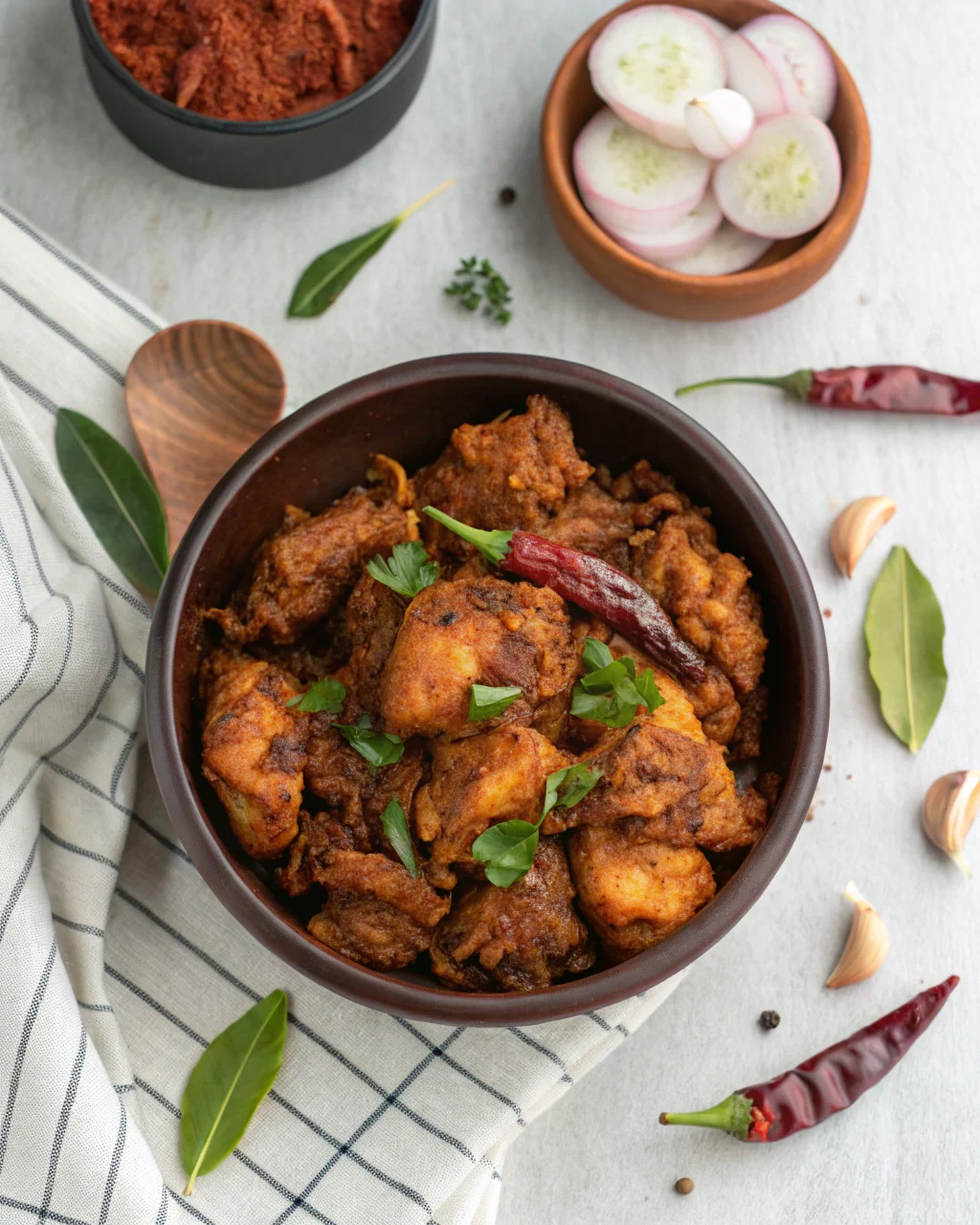
Chicken Ghee Roast is heat, tang, and buttery bliss locked in a crimson coat that means business. It’s fast enough for Tuesday, epic enough for Saturday, and forgiving if you follow the simple steps.
Stock good ghee, respect the roast, and let the masala do the heavy lifting. Ready for a plate-licking situation?
That’s the point.