Classic Scrambled Eggs With Herbs – Creamy, Soft, and Ready in Minutes

Scrambled eggs are a small luxury you can make any day of the week. They’re creamy, comforting, and endlessly customizable, yet they take less than 10 minutes from start to finish. This version keeps things simple: soft, custardy eggs with a fresh pop of herbs and a gentle buttery sheen.
It’s the kind of recipe you’ll use on slow weekends and busy mornings alike. Once you master the heat and timing, you’ll get consistently silky eggs every time.
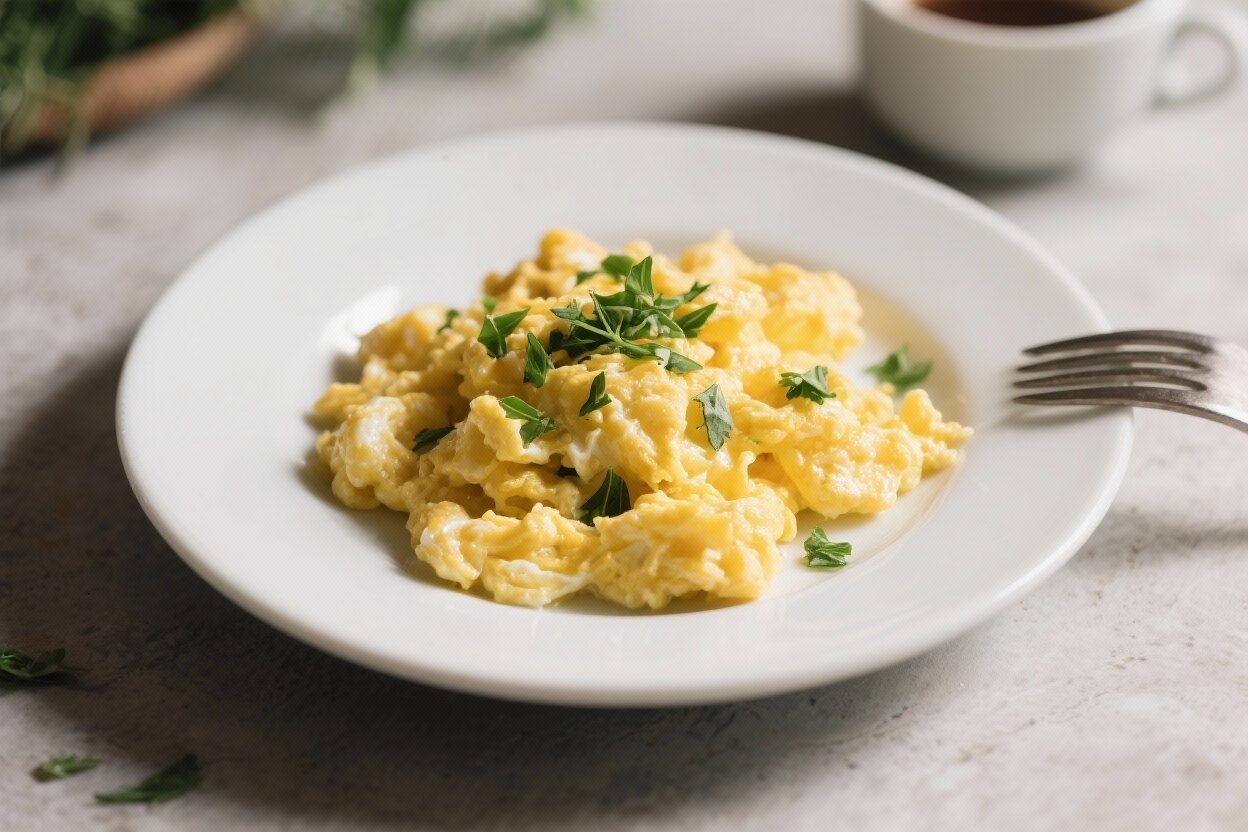
Classic Scrambled Eggs With Herbs – Creamy, Soft, and Ready in Minutes
Ingredients
Method
- Prep the herbs: Rinse, dry, and finely chop your herbs.Keep them small so they fold seamlessly into the eggs.
- Beat the eggs: Crack the eggs into a bowl. Add the cream, salt, and a few grinds of pepper. Whisk until the yolks and whites are fully blended and slightly frothy—about 20 to 30 seconds.
- Warm the pan gently: Set a nonstick or well-seasoned skillet over low to medium-low heat.Add the butter and let it melt slowly. You want it foamy, not brown.
- Pour and pause: Pour in the egg mixture. Let it sit untouched for 10 to 15 seconds, just until the edges start to barely set.
- Stir with intention: Using a silicone spatula, push the eggs from the edges toward the center in slow, sweeping motions.Keep the heat low. You’re forming soft curds, not frying.
- Control the heat: If the eggs seem to set too quickly, lift the pan off the heat and keep stirring. Residual heat continues cooking.Return the pan to the burner as needed.
- Add herbs near the end: When the eggs are glossy but still slightly loose, fold in the chopped herbs and any optional Parmesan. Taste and add a pinch more salt if needed.
- Pull them early: Remove the pan from the heat when the eggs look about 90% done. They will finish cooking off the heat and stay soft and creamy.
- Serve immediately: Plate the eggs while they’re still silky.Add a final grind of pepper and a sprinkle of fresh herbs on top.
What Makes This Recipe So Good
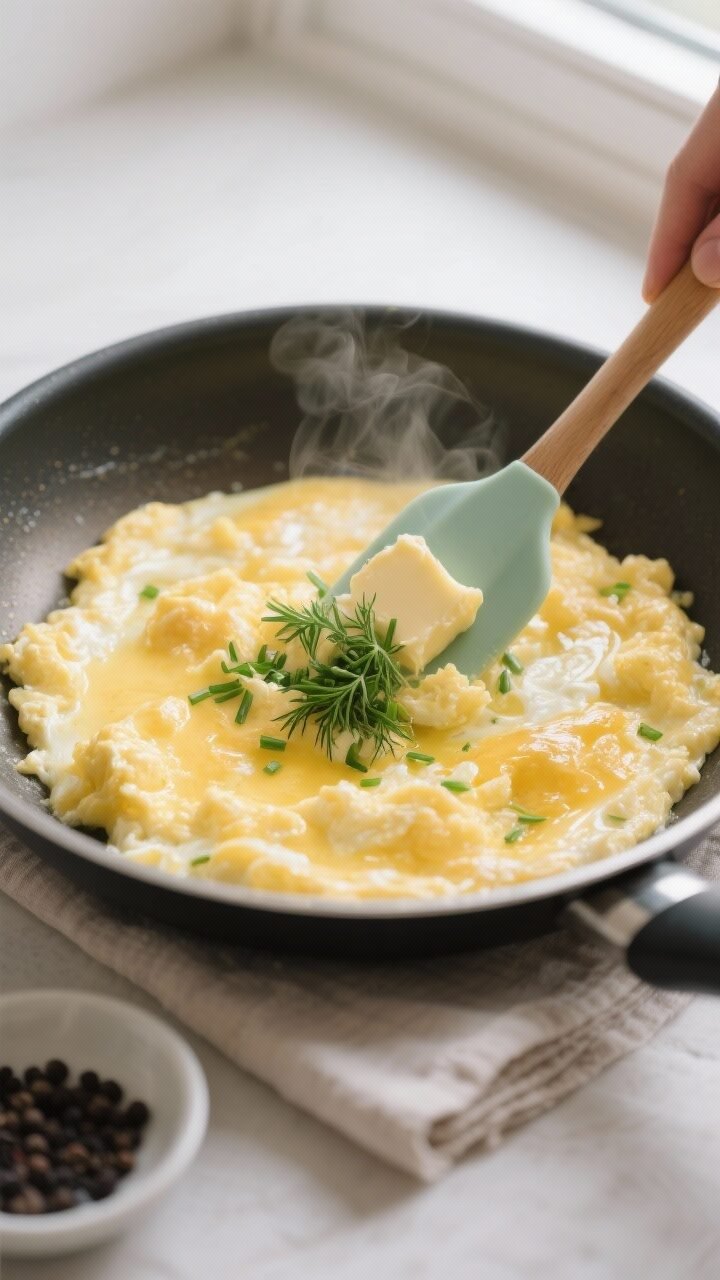
- Soft, creamy texture: Low heat and gentle stirring give you tender curds instead of dry, rubbery chunks.
- Fresh, bright flavor: A mix of herbs—like chives, parsley, or dill—adds lift without overpowering the eggs.
- Quick and reliable: From cracking to plating in under 10 minutes, with easy steps anyone can follow.
- Simple ingredients: Just eggs, butter, cream or milk, salt, pepper, and herbs. Nothing fancy, yet it tastes special.
- Flexible and scalable: Make it for one or for a crowd, and adjust the herbs to what you have on hand.
Ingredients
- 4 large eggs
- 1 tablespoon unsalted butter (plus a little extra if your pan needs it)
- 2 tablespoons cream, half-and-half, or whole milk
- 1 to 2 tablespoons finely chopped fresh herbs (chives, parsley, dill, or a mix)
- 1/4 teaspoon kosher salt, plus more to taste
- Freshly ground black pepper, to taste
- Optional: a small pinch of garlic powder or a teaspoon of grated Parmesan for extra savoriness
How to Make It
- Prep the herbs: Rinse, dry, and finely chop your herbs.Keep them small so they fold seamlessly into the eggs.
- Beat the eggs: Crack the eggs into a bowl. Add the cream, salt, and a few grinds of pepper. Whisk until the yolks and whites are fully blended and slightly frothy—about 20 to 30 seconds.
- Warm the pan gently: Set a nonstick or well-seasoned skillet over low to medium-low heat.Add the butter and let it melt slowly. You want it foamy, not brown.
- Pour and pause: Pour in the egg mixture. Let it sit untouched for 10 to 15 seconds, just until the edges start to barely set.
- Stir with intention: Using a silicone spatula, push the eggs from the edges toward the center in slow, sweeping motions.Keep the heat low. You’re forming soft curds, not frying.
- Control the heat: If the eggs seem to set too quickly, lift the pan off the heat and keep stirring. Residual heat continues cooking.Return the pan to the burner as needed.
- Add herbs near the end: When the eggs are glossy but still slightly loose, fold in the chopped herbs and any optional Parmesan. Taste and add a pinch more salt if needed.
- Pull them early: Remove the pan from the heat when the eggs look about 90% done. They will finish cooking off the heat and stay soft and creamy.
- Serve immediately: Plate the eggs while they’re still silky.Add a final grind of pepper and a sprinkle of fresh herbs on top.
Storage Instructions
Scrambled eggs are best fresh. Their texture changes quickly as they sit, so plan to serve them right away. If you do have leftovers, cool them completely, then store in an airtight container in the fridge for up to 2 days.
Reheat gently over low heat with a small knob of butter or a splash of milk to loosen them.
Freezing isn’t ideal for this recipe. The eggs can turn grainy after thawing. If you need a make-ahead option, consider cooking the eggs slightly under and reheating them briefly with extra butter.
Benefits of This Recipe
- Fast protein: Each serving offers a satisfying amount of protein with minimal prep time.
- Budget-friendly: Eggs, butter, and herbs are affordable and widely available.
- Balanced flavor: Herbs brighten the richness of the eggs, so the dish feels light, not heavy.
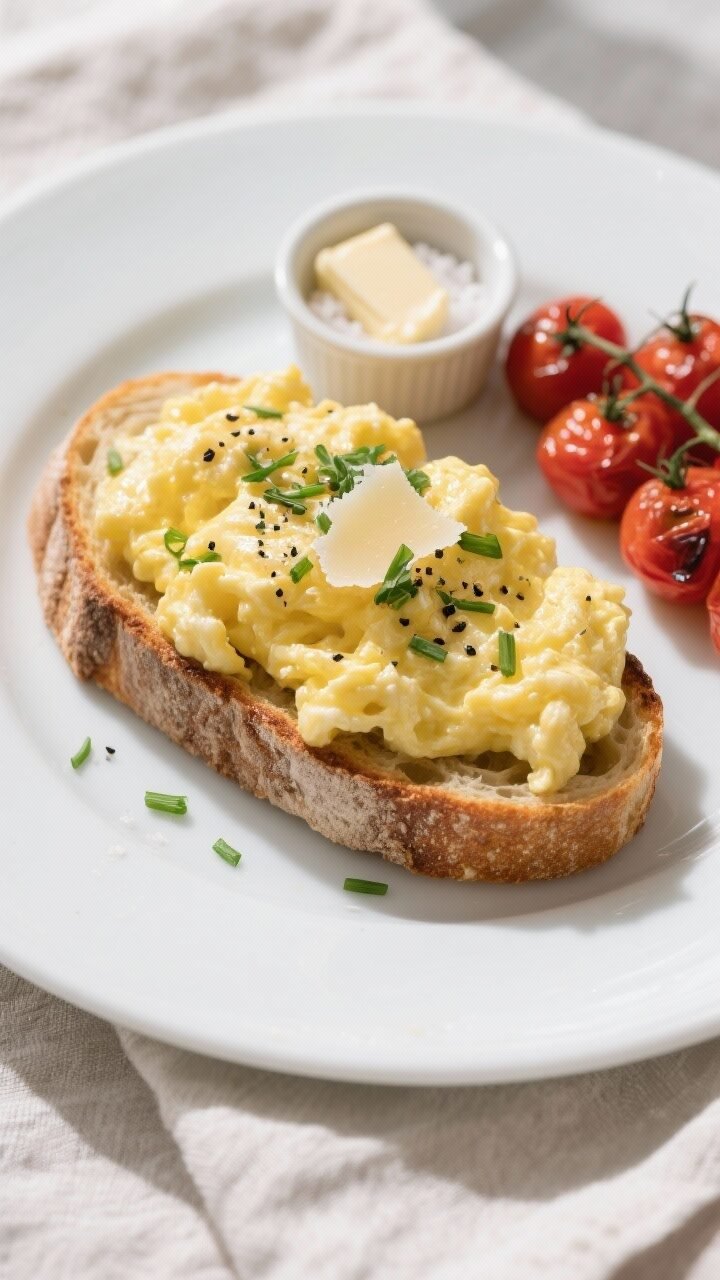
- Versatile meal: Serve with toast, roasted tomatoes, smoked salmon, sautéed mushrooms, or a simple salad.
- Beginner-friendly technique: Teaches heat control and timing—skills that carry over to many other dishes.
What Not to Do
- Don’t crank the heat: High heat leads to tough, rubbery eggs and brown spots.Keep it low and slow.
- Don’t stop stirring too soon: Gentle, consistent movement helps you get soft curds and an even cook.
- Don’t overcook: Pull the eggs off the heat while still slightly glossy. They’ll set as they rest.
- Don’t skip seasoning: A small, early dose of salt improves texture and flavor. Taste and adjust near the end.
- Don’t drown them in dairy:</-strong> A splash of cream or milk is enough.Too much can make the eggs watery or slow to set.
- Don’t add herbs too early: They can darken and lose their freshness if cooked too long.
Variations You Can Try
- French-style soft scramble: Stir constantly over very low heat with a teaspoon of crème fraîche added at the end. Ultra-silky and rich.
- Greek twist: Fold in crumbled feta, chopped dill, and a squeeze of lemon. Finish with a drizzle of olive oil.
- Mushroom and thyme: Sauté sliced mushrooms in butter until browned.Add thyme, then the eggs. Finish with parsley.
- Smoked salmon and chives: Stir in small pieces of smoked salmon off the heat with plenty of chives and a crack of black pepper.
- Spicy herb scramble: Add a pinch of Aleppo pepper or red pepper flakes and finish with cilantro and lime zest.
- Cheesy chive: Fold in a handful of grated cheddar or Gruyère during the last 30 seconds of cooking.
FAQ
Should I use milk, cream, or no dairy at all?
All three work. Cream gives the richest texture, milk lightens it a bit, and no dairy produces a purer egg flavor with slightly firmer curds.
Use what you enjoy. The key is not to overdo it—just a splash is enough.
What’s the best pan for scrambled eggs?
A nonstick skillet is the most forgiving, especially for beginners. A well-seasoned cast iron pan also works, but keep the heat low and use enough butter.
Avoid stainless steel unless you’re comfortable managing sticking and heat.
How do I know when to take the eggs off the heat?
Look for soft, shiny curds with a little looseness. When the eggs are about 90% set, remove the pan. They’ll finish cooking in the residual heat and stay creamy instead of dry.
Can I use dried herbs instead of fresh?
Fresh herbs are best for this recipe, but you can use dried in a pinch.
Use about one-third the amount and add them to the eggs before cooking so they rehydrate a bit. Taste and adjust, as dried herbs can be stronger.
Why did my eggs turn watery?
Overcooking, too much dairy, or adding watery ingredients (like tomatoes) too early can cause this. Keep the heat low, use just a splash of dairy, and add juicy add-ins at the very end or serve them on the side.
Can I make this for a crowd?
Yes, but cook in batches for the best texture.
Hold finished eggs over very low heat with a small knob of butter and stir occasionally. Avoid piling them into a deep dish, which traps steam and makes them weep.
Is butter necessary?
Butter adds flavor and helps create a silky texture, but you can use olive oil or ghee. If using oil, choose a mild one and keep the heat low to protect the eggs’ delicate texture.
In Conclusion
Classic scrambled eggs with herbs are the perfect blend of comfort and freshness.
With gentle heat, steady stirring, and a handful of bright herbs, you’ll get soft, creamy eggs every time. Keep the process simple, trust your senses, and pull them early. Breakfast—or lunch or dinner—doesn’t get much better, or easier, than this.