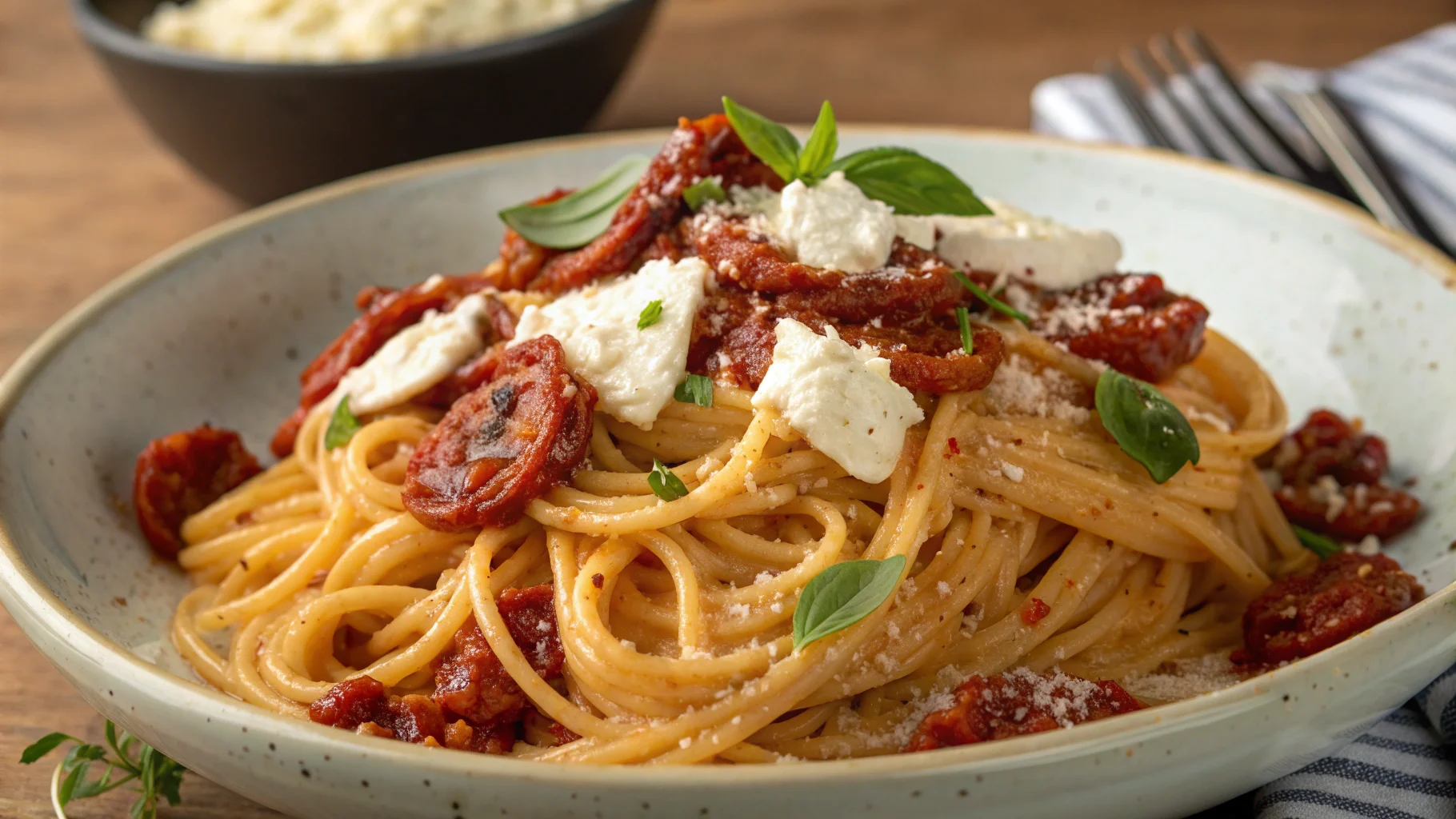
Creamy Sundried Tomato Mascarpone Pasta: Weeknight Gold

You know that dish you make once and suddenly your friends think you secretly went to culinary school? This is that dish.
Creamy, punchy, and absurdly satisfying, this pasta tastes like a $28 entree but comes together faster than your delivery app can find a driver.
The mascarpone turns everything velvet-smooth, while sundried tomatoes bring a concentrated, sweet-tart kick that wakes up your taste buds.
Add garlic, herbs, and a splash of pasta water wizardry, and boom—restaurant energy at home.
Why Everyone Loves This Recipe
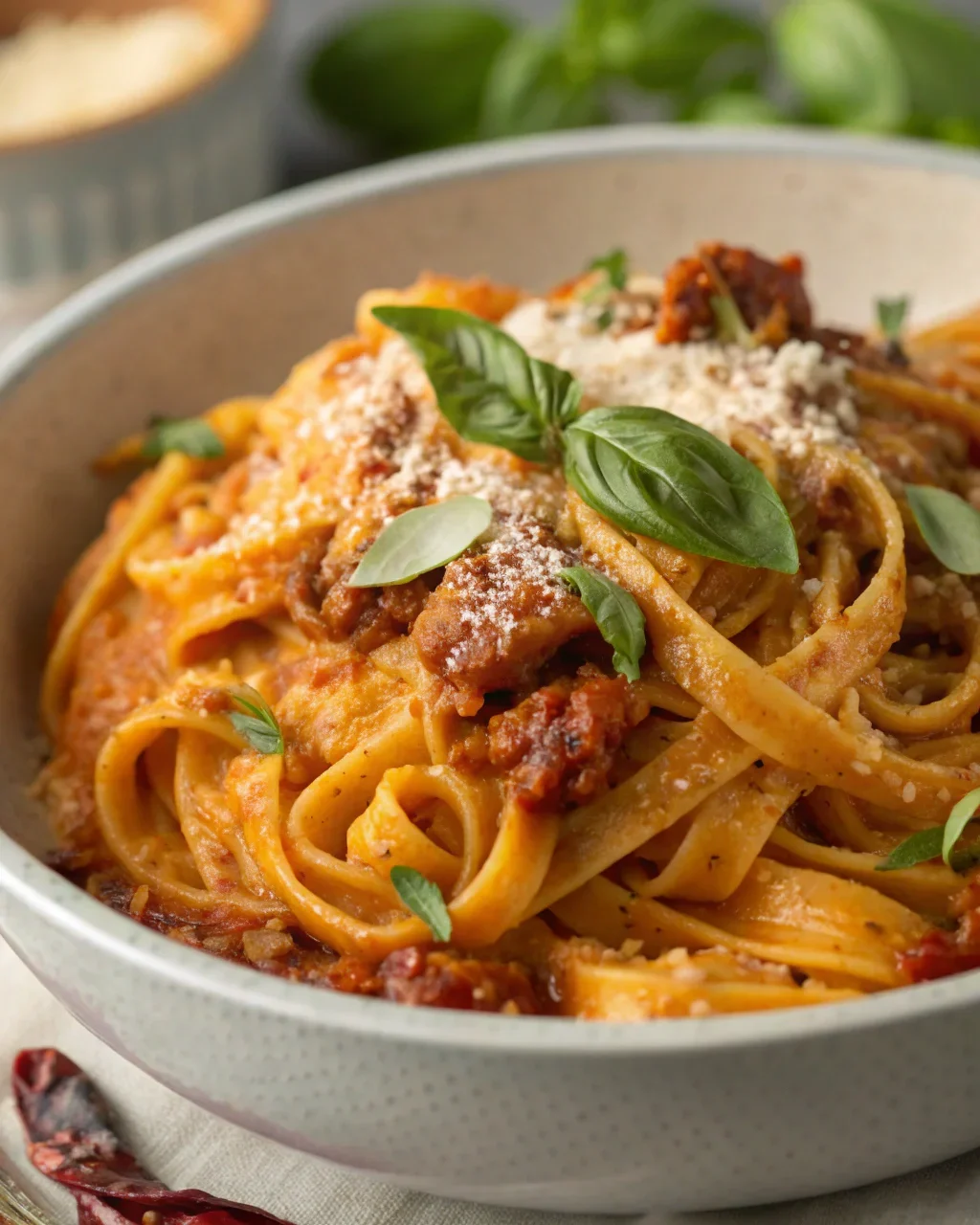
It’s the perfect balance of rich and bright—no heavy after-dinner regret, just clean plates and applause.
The sauce clings to every curve of the pasta, thanks to mascarpone’s lush texture and the starchy pasta water.
Sundried tomatoes deliver mega flavor with minimal effort, and a little chili flake adds that subtle heat that keeps you coming back.
Plus, it’s customizable: it plays nice with chicken, shrimp, mushrooms, or spinach.
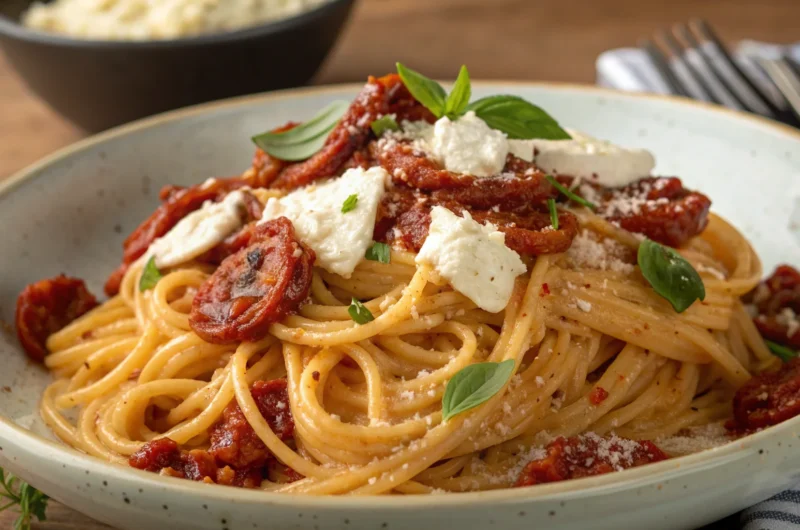
Creamy Sundried Tomato Mascarpone Pasta: Weeknight Gold
Course: Dinner4
servings10
minutes20
minutes560
kcalIngredients
1. Pasta: 12 oz short pasta (rigatoni, penne, or fusilli)
2. Sundried tomatoes in oil: 1 cup, thinly sliced, plus 2 tablespoons of the oil
3. Mascarpone cheese: 8 oz
4. Garlic: 3–4 cloves, minced
5. Tomato paste: 2 tablespoons
6. Chicken or vegetable broth: 1/2 cup
7. Heavy cream (optional but glorious): 1/4 cup
8. Parmesan: 1/2 cup freshly grated, plus extra for serving
9. Red pepper flakes: 1/2 teaspoon (adjust to taste)
10. Fresh basil: 1/4 cup chopped (or 2 teaspoons dried Italian seasoning)
11. Lemon zest: From 1/2 lemon
12. Olive oil: 1 tablespoon (if needed)
13. Salt and black pepper: To taste
Step-by-Step Instructions
- Salt your water like the ocean. Bring a large pot of salted water to a rolling boil. Cook pasta until just shy of al dente. Reserve 1 to 1.5 cups of pasta water and drain.
- Sizzle the aromatics. In a large skillet, heat 2 tablespoons sundried tomato oil (plus a little olive oil if needed). Add garlic and red pepper flakes; cook 30–45 seconds until fragrant—not brown.
- Build the base. Stir in tomato paste and cook 1–2 minutes to caramelize slightly. This deepens the flavor and keeps the sauce from tasting “raw.”
- Loosen and bloom. Add broth, whisking to combine. Simmer 1 minute, then add sliced sundried tomatoes.
- Turn on the silk. Lower the heat. Add mascarpone and stir until melted and smooth. If using cream, add it now. Season with salt and black pepper.
- Marry pasta and sauce. Toss in the drained pasta with 1/2 cup pasta water. Stir vigorously so the starch emulsifies with the fat. Add more water as needed until the sauce clings luxuriously.
- Finish strong. Stir in Parmesan, lemon zest, and basil. Taste and adjust salt/pepper. If you like heat, sprinkle a pinch more chili flake.
- Serve like you mean it. Plate with extra Parmesan and a drizzle of sundried tomato oil. Optional: toasted pine nuts for crunch.
Keeping It Fresh
Leftovers keep in an airtight container in the fridge for 3–4 days.
The sauce will thicken—totally normal. Reheat gently on the stovetop with a splash of water or broth to revive the glossy finish. Avoid microwaving on high for too long; mascarpone prefers low-and-slow.
If freezing, skip the basil and Parmesan until reheating; freeze up to 2 months, thaw overnight, then rewarm with extra liquid.
Why You’ll Feel Good Eating This
Sundried tomatoes bring concentrated lycopene and antioxidants, while basil adds vitamin K and a fresh kick.
Mascarpone creates richness without the heaviness of cream-only sauces, and using broth adds flavor without extra fat.
You can easily boost protein with grilled chicken or chickpeas, and toss in spinach or arugula for greens.
It’s comfort food that doesn’t knock you out for the night—win-win, IMO.
Nutrition Stats
- Estimated per serving (1/4 of recipe): 560 calories
- Protein: ~18 g
- Carbs: ~62 g
- Total Fat: ~26 g
- Saturated Fat: ~13 g
- Fiber: ~4 g
- Sodium: ~780 mg (varies by broth and added salt)
Note: Values are estimates based on standard ingredients. Swap whole-wheat pasta to bump fiber, or use reduced-sodium broth to lower salt.
Recipe Fails to Watch Out For
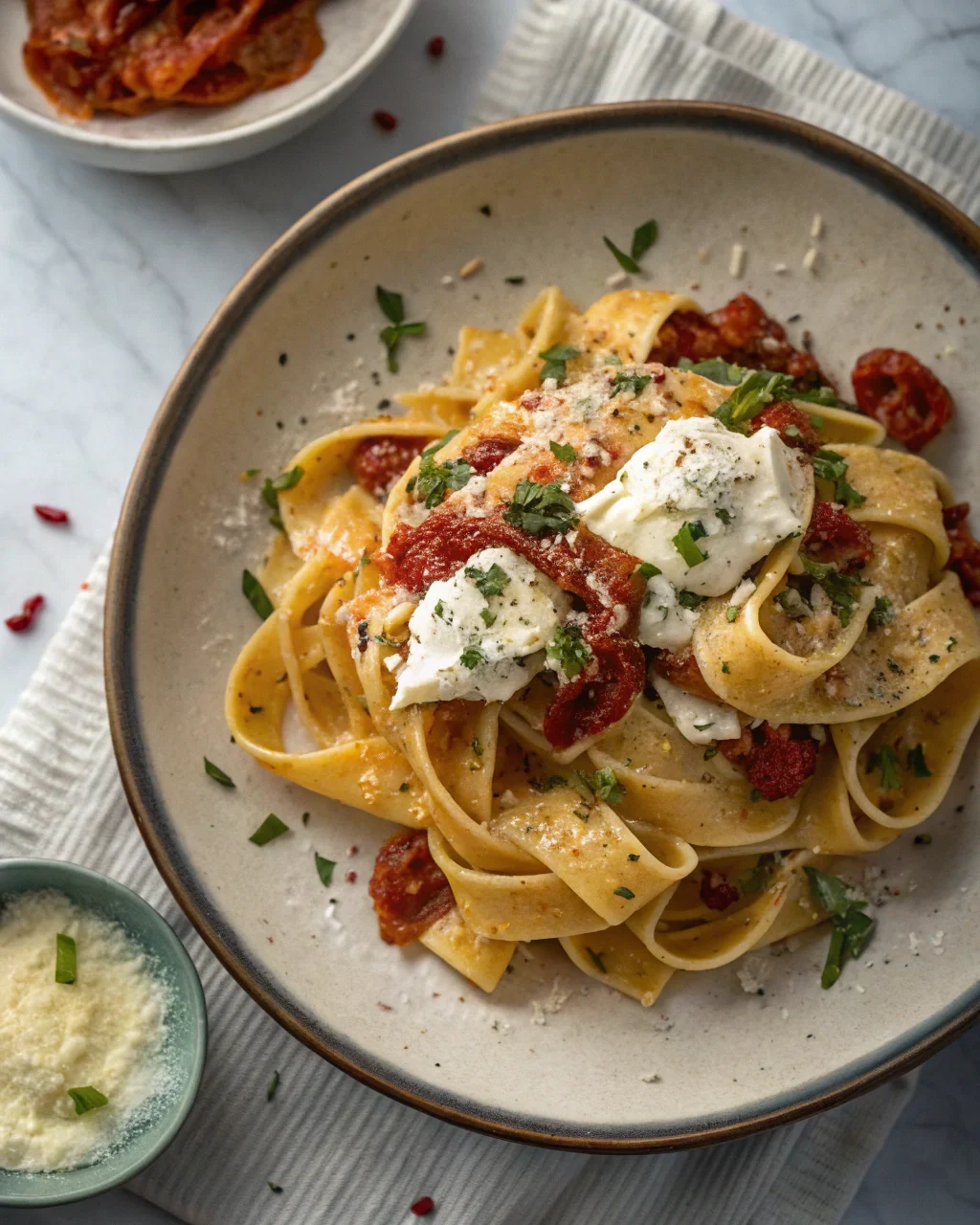
- Breaking the sauce: Boiling mascarpone over high heat can cause separation. Keep heat medium-low after adding it.
- Bland pasta: Under-salted water equals lifeless noodles.
Add 1–2 tablespoons kosher salt to the boil—yes, really.
- Heavy, gloopy texture: Skipping pasta water means no emulsion. Add it gradually while tossing to get that glossy cling.
- Raw tomato paste taste: Cook it for at least a minute to develop flavor; otherwise, it tastes tinny.
- Overcooked pasta: Pull it at “just under” al dente; it will finish in the sauce.
Different Takes
- Protein upgrade: Add sautéed chicken, shrimp, or crispy pancetta. For plant-based, try white beans or pan-seared mushrooms.
- Green machine: Stir in spinach, kale, or arugula at the end for color and nutrients.
- Smoky depth: Add a pinch of smoked paprika or char a lemon half and squeeze over before serving.
- Nutty crunch: Toasted pine nuts or walnuts on top = chef’s kiss.
- Lighter version: Use half the mascarpone and increase broth; finish with a small knob of butter for body.
- Spice route: Calabrian chili paste instead of flakes for a fruity heat that slaps (in a good way).
- Gluten-free: Use GF pasta and watch cook times closely; they go from perfect to mush fast.
FAQ
Can I substitute mascarpone?
Yes.
Use cream cheese for tangier results (thin with a splash of cream), or ricotta blended smooth. Crème fraîche works too and won’t curdle as easily.
Do I have to use sundried tomatoes in oil?
Oil-packed is best for flavor and texture. If using dry-packed, rehydrate in hot water for 10 minutes, then pat dry and add extra olive oil in the pan.
What pasta shape works best?
Short shapes with ridges—rigatoni, penne, fusilli—grab the sauce beautifully.
Long noodles work, but you’ll lose some cling factor.
How can I make it spicier?
Increase red pepper flakes or add a spoon of Calabrian chili paste. Taste and build heat gradually; you can always add more, but you can’t subtract.
Can I make it ahead?
Make the sauce up to 2 days in advance. Reheat gently, cook fresh pasta, and combine with hot pasta water to revive the emulsion.
Is there a dairy-free option?
Use a thick, unsweetened plant-based cream cheese or a cashew cream (soaked cashews blended with water), and skip the Parmesan or use a dairy-free hard “cheese.”
How do I avoid a greasy sauce?
Measure the sundried tomato oil and don’t overdo added olive oil.
Emulsify with pasta water and finish with cheese off heat to keep it silky, not oily.
Can I add wine?
Absolutely. Deglaze with 1/4 cup dry white wine after the tomato paste step; simmer 1–2 minutes before adding broth.
In Conclusion
Creamy Sundried Tomato Mascarpone Pasta delivers maximum payoff with minimal sweat. It’s rich yet bright, looks fancy, and tastes like you planned it all week—even if you made it in 20.
Keep mascarpone and sundried tomatoes on standby, and you’ve got a dinner party ace up your sleeve.
Simple technique, bold flavor, reliable crowd-pleaser. FYI: leftovers might “mysteriously” vanish.