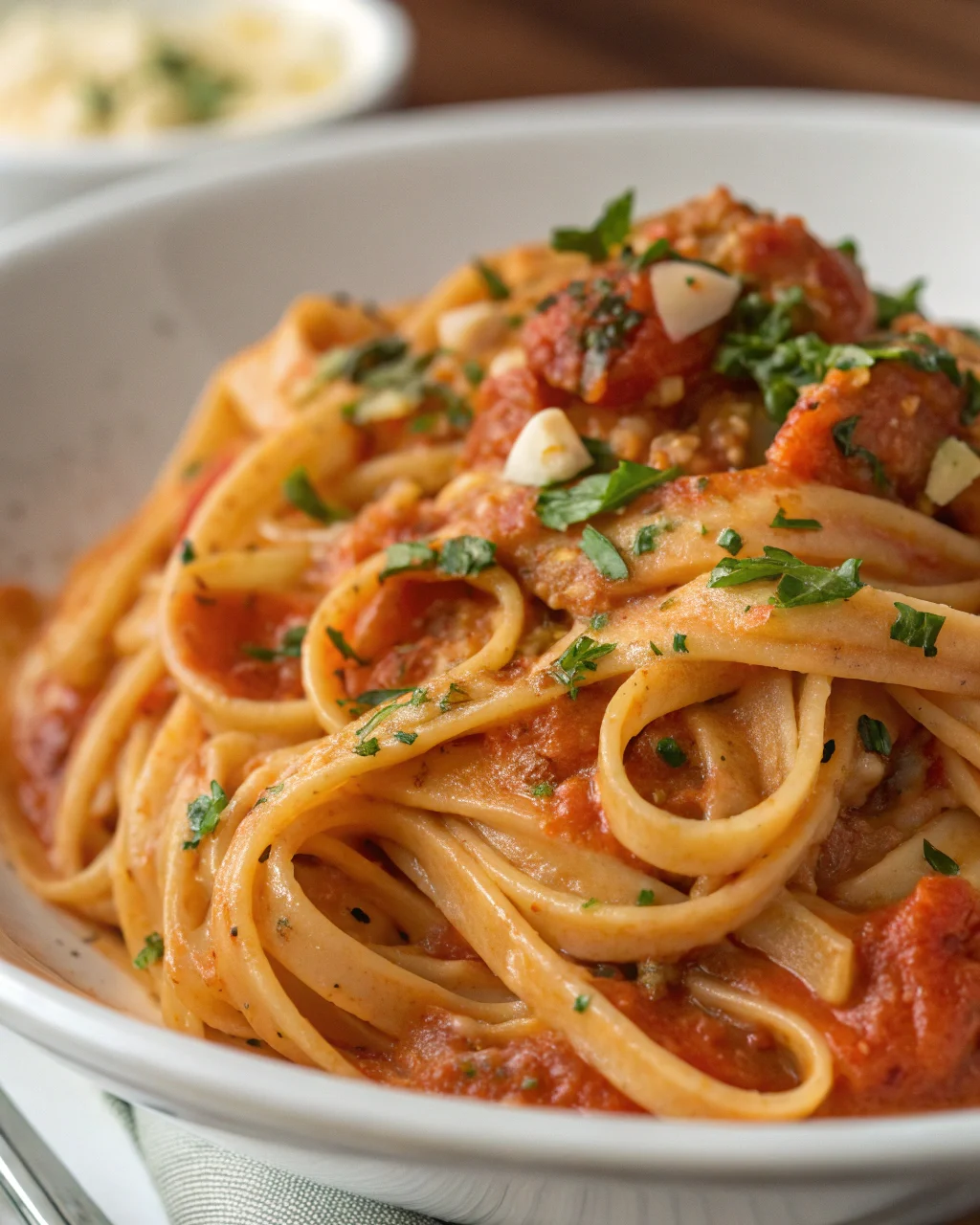
20-Min Creamy Tomato Garlic Pasta You’ll Crave Nightly

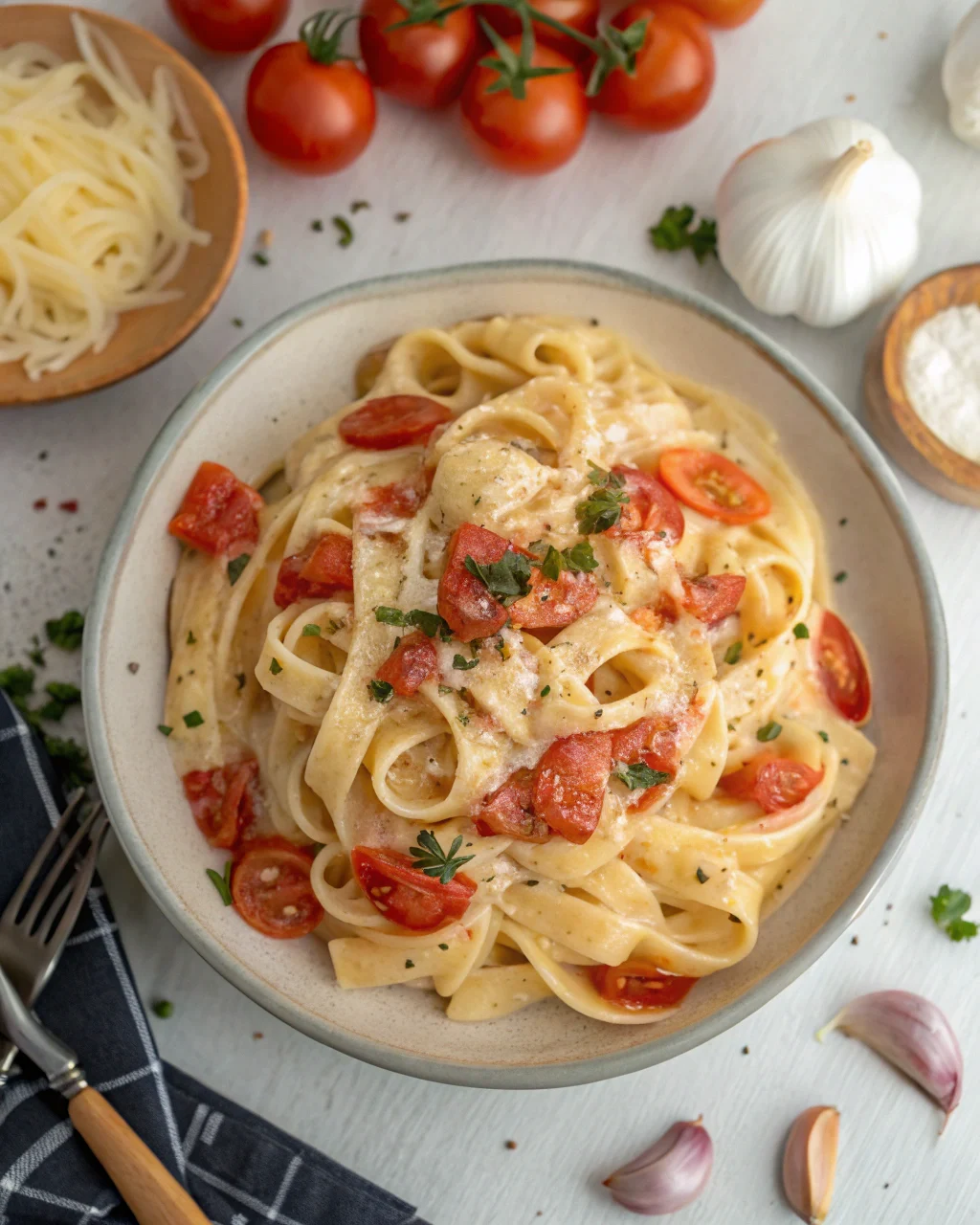
Skip the hour-long kitchen saga. This Creamy Tomato Garlic Pasta delivers restaurant-level comfort in 20 minutes flat—no chef jacket required.
Think silky sauce, sweet-tart tomatoes, and a garlic punch that politely slaps. It’s the meal you make when you’re busy, hungry, and done settling for boring.
One pot of boiling water, one skillet, zero excuses.
What Makes This Recipe So Good
- Fast and foolproof: Boil pasta, build the sauce, toss. You’re eating before your playlist hits track four.
- Balanced flavor: Sweet tomatoes, rich cream, and bright acidity from a splash of vinegar or wine.
Nothing flat or heavy.
- Garlic-forward (in a good way): We bloom garlic gently so it’s aromatic, not bitter.
- Weeknight flexible: Works with any pasta shape, dairy swaps, and pantry-friendly add-ins.
- Legit silky texture: Starch from pasta water emulsifies the sauce so it clings beautifully.

20-Min Creamy Tomato Garlic Pasta You’ll Crave Nightly
Course: Dinner, Pasta4
servings5
minutes15
minutes520
kcalIngredients
Pasta: 12 ounces short pasta (penne, rigatoni, or shells) or long pasta like fettuccine
Olive oil: 2 tablespoons
Butter: 1 tablespoon (for richness)
Garlic: 5–6 cloves, thinly sliced or minced
Tomato paste: 3 tablespoons
Crushed tomatoes: 1 can (14–15 ounces), or 2 cups passata
Heavy cream: 3/4 cup (or half-and-half for lighter)
Parmesan: 1/2 cup finely grated, plus more to finish
Red pepper flakes: 1/2 teaspoon (optional heat)
Dry white wine or balsamic vinegar: 2 tablespoons (for brightness)
Salt and black pepper: To taste
Pasta water: 1 cup, reserved
Fresh basil or parsley: A handful, chopped
Lemon zest: 1/2 teaspoon (optional finishing pop)
Step-by-Step Instructions
- Boil the pasta: Bring a large pot of salted water to a rolling boil. Cook pasta until just shy of al dente. Reserve 1 cup pasta water before draining.
- Sauté aromatics: In a large skillet, heat olive oil and butter over medium. Add garlic and a pinch of red pepper flakes. Cook 60–90 seconds until fragrant—don’t brown it.
- Tomato paste time: Stir in tomato paste and cook 2 minutes to caramelize. It’ll darken slightly and smell amazing.
- Deglaze: Add wine (or balsamic). Scrape up any tasty bits and reduce by half, about 1 minute.
- Add tomatoes: Stir in crushed tomatoes. Simmer 3–4 minutes to thicken and mellow the acidity.
- Creamy finish: Reduce heat to low. Stir in heavy cream. Season generously with salt and black pepper.
- Emulsify: Add drained pasta to the skillet with 1/2 cup reserved pasta water. Toss vigorously. Sprinkle in Parmesan, tossing until glossy. Add more pasta water as needed for a silky coat.
- Herb and zest: Fold in chopped basil or parsley and optional lemon zest. Taste and adjust seasoning.
- Serve: Plate hot with extra Parmesan and a drizzle of olive oil. Optional: more red pepper flakes because you can.
How Long Does It Keep?
This pasta keeps up to 3 days in an airtight container in the fridge. Reheat gently on the stovetop with a splash of water, cream, or milk to revive the sauce.
It’s not ideal for freezing due to the cream, but if you must, freeze up to 1 month and expect some texture changes. Pro tip: store pasta and sauce separately if you plan ahead—ultimate leftovers insurance.
Why This is Good for You
- Tomatoes deliver lycopene, a powerful antioxidant linked to heart health.
- Garlic supports cardiovascular health and brings anti-inflammatory compounds.
- Olive oil adds heart-healthy monounsaturated fats.
- Parmesan contributes protein and calcium without a ton of moisture (read: big flavor, small volume).
- Balance matters: Carbs for energy, fat for satiety, and umami for brain-level happiness.
Moderation and portion control do the rest, IMO.
Nutrition Stats
Approximate per serving (1/4 of recipe):
- Calories: ~520
- Protein: ~17g
- Carbohydrates: ~64g
- Fat: ~22g
- Fiber: ~5g
- Sodium: ~720mg (varies with salt and cheese)
Numbers will vary based on pasta shape, cream vs half-and-half, and how heavy your Parmesan snowfall gets. FYI, switching to whole-wheat pasta bumps fiber and micronutrients.
Recipe Fails to Watch Out For
- Burning garlic: If it goes past golden to brown, it’s bitter.
Start over. Your taste buds will thank you.
- Skipping tomato paste caramelization: That 2-minute step = depth.
Don’t rush it.
- Curdling cream: Keep heat low when adding cream and avoid boiling once it’s in.
- Dry pasta: Sauce too thick? Add more pasta water and toss.
Starch is your friend.
- Under-seasoning: Tomatoes crave salt. Taste at least three times: after tomatoes, after cream, after cheese.
Switch It Up
- Protein boost: Add sautéed shrimp, rotisserie chicken, or crispy pancetta.
- Vegetarian power: Stir in spinach, roasted red peppers, or mushrooms with the tomato stage.
- Dairy-light: Use half-and-half, or coconut cream for a subtle twist.
- Spice lovers: Upgrade to Calabrian chili paste instead of flakes.
- Herb swap: Try thyme or oregano if basil’s MIA.
- Cheese curveball: Pecorino Romano for a sharper bite.
- Gluten-free: Use your favorite GF pasta and watch the cook time—some go from al dente to mush fast.
FAQ
Can I make it without cream?
Yes.
Use half-and-half plus 1 tablespoon cream cheese, or skip dairy entirely and add 1/4 cup cashew cream. You’ll still get a velvety texture with the pasta water emulsion.
What pasta shape works best?
Ridged shapes like rigatoni or shells catch the sauce like champs, but long noodles are classy and slurpable.
Use what you love or what’s in the pantry.
Is tomato paste really necessary?
It concentrates tomato flavor and adds umami. Without it, the sauce is still good, just less complex.
If skipping, simmer your crushed tomatoes a few minutes longer.
Can I make it ahead?
Make the sauce up to 3 days ahead and store chilled. Reheat gently, then add freshly cooked pasta and reserved pasta water right before serving for best texture.
How do I make it spicier?
Increase red pepper flakes, add a spoon of Calabrian chili paste, or finish with chili crisp.
Taste as you go—heat compounds with time.
What wine should I use?
A dry white like Pinot Grigio or Sauvignon Blanc works. If using red, go light-bodied (Chianti) and use half the amount to avoid overpowering the sauce.
Chef’s Notes
- Salt smart: Your pasta water should taste like the sea—this seasons the noodle from the inside out.
- Slice garlic thin: Slices perfume the oil gently; minced hits harder.
Choose your adventure.
- Parmesan technique: Finely grate and add off heat while tossing. It melts smoother and avoids clumping.
- Finish with acidity: A splash of balsamic or a squeeze of lemon at the end brightens the entire dish.
- Texture control: If the sauce feels heavy, loosen with a bit more hot pasta water.
If it’s thin, simmer 1 minute or add a touch more cheese.
- Leftover magic: Next-day? Add a handful of arugula and a few cherry tomatoes to freshen it up—lazy gourmet vibes.