Easy Potato Noodles – Comforting, Chewy, and Surprisingly Simple

If you love chewy noodles and pantry-friendly cooking, these Easy Potato Noodles might become a new favorite. They’re tender yet springy, made mostly from mashed potatoes and a little starch. The result is a satisfying bowl that feels both cozy and fresh.
You can toss them with a quick sauce, add them to soup, or pan-fry them for crispy edges. They’re budget-friendly, naturally gluten-free with the right starch, and a fun hands-on project that doesn’t take all day.
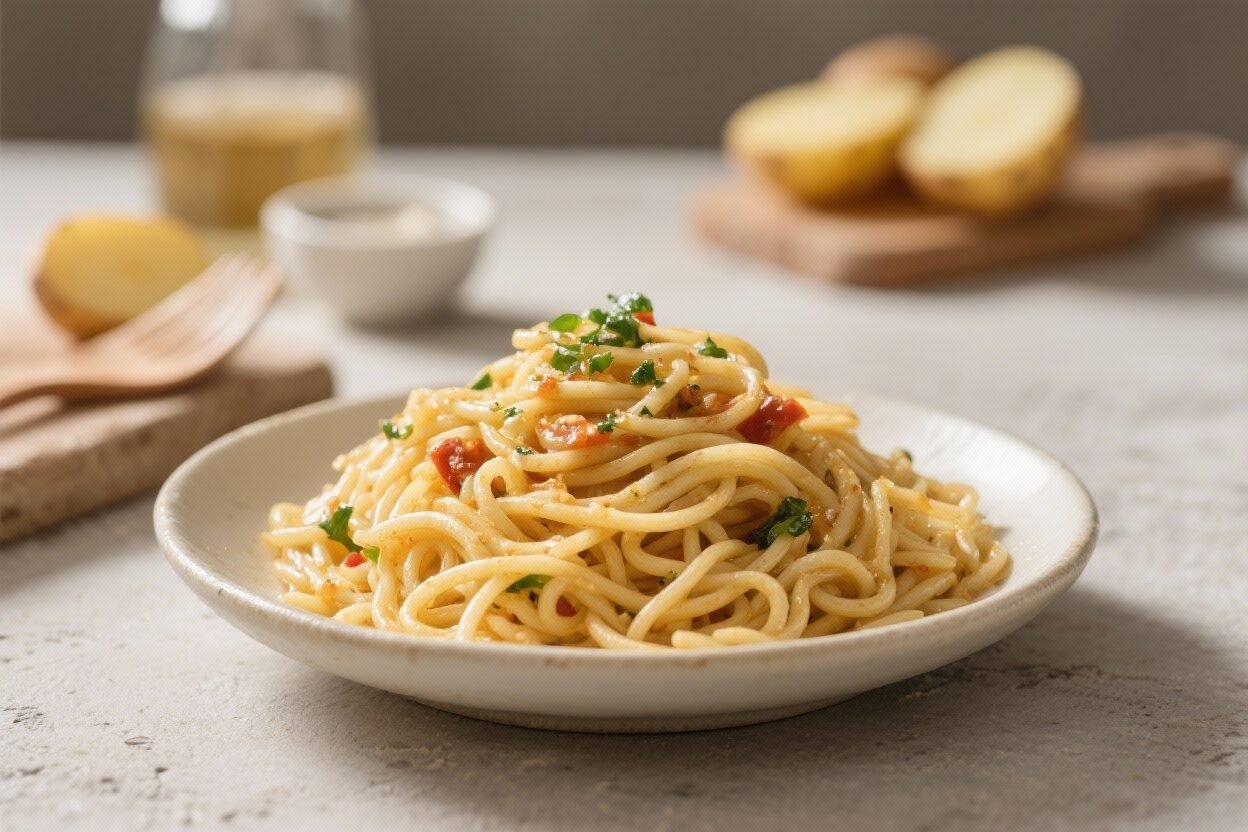
Easy Potato Noodles – Comforting, Chewy, and Surprisingly Simple
Ingredients
Method
- Cook the potatoes. Peel and cut potatoes into chunks.Boil in salted water until very tender, about 12–15 minutes. Drain well and let steam off for 2–3 minutes so excess moisture evaporates.
- Mash smoothly. Mash until lump-free. For ultra-smooth noodles, pass through a ricer.You should have about 2 heaping cups of mashed potato.
- Season and cool slightly. Add 1/2 teaspoon salt while the potatoes are warm. Let them cool until just warm to the touch; hot mash will make the dough sticky and hard to handle.
- Add starch gradually. Sprinkle in 1 cup potato starch or cornstarch and mix with a spoon, then your hands. The dough should come together into a soft, slightly tacky ball.If it’s still sticky, add more starch 1 tablespoon at a time. Aim for a dough that holds its shape without cracking.
- Divide and shape. Dust your counter lightly with starch. Divide the dough into 4 pieces. Roll each piece into a rope about 1/2 inch (1.25 cm) thick.For thicker, chewier noodles, go closer to 3/4 inch.
- Cut into noodles. Slice ropes into short cylinders (about 1 inch long) for gnocchi-style bites, or keep them as longer strands if you rolled them thinner. Lightly dust to prevent sticking.
- Boil briefly. Bring a large pot of salted water to a gentle boil. Add noodles in batches to avoid crowding.Cook until they float and then 30–60 seconds more. Do not overcook; they’ll turn mushy.
- Shock and oil. Use a slotted spoon to transfer cooked noodles to a bowl of cool water to stop cooking, then drain. Toss with a drizzle of neutral oil to keep them from sticking.
- Make a quick sauce (optional but recommended). In a skillet, warm 1–2 tablespoons oil or butter. Add minced garlic until fragrant (30 seconds).Stir in 1–2 tablespoons soy sauce or tamari, a splash of sesame oil, and chili crisp to taste. Add the noodles and toss to coat. Finish with sliced green onions and a squeeze of lemon or a dash of vinegar.
- Serve. Enjoy hot as is, or top with sautéed mushrooms, wilted spinach, or pan-seared tofu.A crack of black pepper or toasted sesame seeds is great for texture.
Why This Recipe Works

Potatoes create a soft, pillowy base that binds well without lots of flour. With the right ratio of mashed potatoes to starch, you get noodles that hold together and stay bouncy.
A simple hot-water blanch locks in that chewy texture before you sauce or stir-fry. The noodles soak up flavors beautifully, whether you go garlicky, spicy, or buttery. Best of all, you don’t need special equipment—just a pot, a bowl, and a rolling pin or your hands.
Shopping List
- Starchy potatoes (Russet or Yukon Gold; about 2 large/700 g)
- Potato starch or cornstarch (about 1 to 1 1/4 cups/120–150 g)
- Salt
- Neutral oil (like canola, avocado, or grapeseed)
- Optional for sauce:
- Garlic
- Soy sauce or tamari
- Sesame oil
- Chili crisp or red pepper flakes
- Green onions
- Butter or olive oil
- Black pepper
- Lemon juice or rice vinegar
- Optional add-ins: Spinach, mushrooms, julienned carrots, peas, shredded chicken, or tofu
Instructions

- Cook the potatoes. Peel and cut potatoes into chunks.Boil in salted water until very tender, about 12–15 minutes. Drain well and let steam off for 2–3 minutes so excess moisture evaporates.
- Mash smoothly. Mash until lump-free. For ultra-smooth noodles, pass through a ricer.You should have about 2 heaping cups of mashed potato.
- Season and cool slightly. Add 1/2 teaspoon salt while the potatoes are warm. Let them cool until just warm to the touch; hot mash will make the dough sticky and hard to handle.
- Add starch gradually. Sprinkle in 1 cup potato starch or cornstarch and mix with a spoon, then your hands. The dough should come together into a soft, slightly tacky ball.If it’s still sticky, add more starch 1 tablespoon at a time. Aim for a dough that holds its shape without cracking.
- Divide and shape. Dust your counter lightly with starch. Divide the dough into 4 pieces. Roll each piece into a rope about 1/2 inch (1.25 cm) thick.For thicker, chewier noodles, go closer to 3/4 inch.
- Cut into noodles. Slice ropes into short cylinders (about 1 inch long) for gnocchi-style bites, or keep them as longer strands if you rolled them thinner. Lightly dust to prevent sticking.
- Boil briefly. Bring a large pot of salted water to a gentle boil. Add noodles in batches to avoid crowding.Cook until they float and then 30–60 seconds more. Do not overcook; they’ll turn mushy.
- Shock and oil. Use a slotted spoon to transfer cooked noodles to a bowl of cool water to stop cooking, then drain. Toss with a drizzle of neutral oil to keep them from sticking.
- Make a quick sauce (optional but recommended). In a skillet, warm 1–2 tablespoons oil or butter. Add minced garlic until fragrant (30 seconds).Stir in 1–2 tablespoons soy sauce or tamari, a splash of sesame oil, and chili crisp to taste. Add the noodles and toss to coat. Finish with sliced green onions and a squeeze of lemon or a dash of vinegar.
- Serve. Enjoy hot as is, or top with sautéed mushrooms, wilted spinach, or pan-seared tofu.A crack of black pepper or toasted sesame seeds is great for texture.
Keeping It Fresh
These noodles are best the day you make them, but you’ve got options. Store cooked noodles in an airtight container with a light coating of oil for up to 3 days in the fridge. Reheat gently in a skillet with a splash of water or broth to loosen them.
For longer storage, freeze uncooked shaped noodles on a parchment-lined tray until solid, then bag them. Boil from frozen and add 30–60 seconds to the cook time.
Benefits of This Recipe
- Minimal ingredients: Potatoes, starch, salt, and oil—simple and clean.
- Naturally gluten-free: Use potato starch or cornstarch and gluten-free soy sauce for a fully GF meal.
- Budget-friendly: Potatoes are affordable and widely available.
- Flexible: Works with many sauces and add-ins, from garlicky butter to spicy sesame.
- Comforting texture: Chewy and soft, with a satisfying bite that doesn’t feel heavy.
- Great for leftovers: Pan-fry cold noodles for crisp edges and a new texture.
Pitfalls to Watch Out For
- Too much moisture in the mash: If potatoes are watery, you’ll need extra starch, which can make noodles dense. Let them steam dry after draining.
- Overworking the dough: Mix until it just comes together. Over-kneading can make noodles tough.
- Overcooking: Once they float, give them only a little longer.Boiling too long equals mush.
- Skipping the light oil toss: Without a bit of oil, they may clump as they cool.
- Water at a rolling boil: A violent boil can break delicate noodles. Keep it gentle.
Variations You Can Try
- Garlic-Butter Herb: Toss with butter, garlic, chopped parsley, and a squeeze of lemon. Finish with grated Parmesan if you like.
- Spicy Sesame: Mix soy sauce, sesame oil, rice vinegar, chili crisp, and a pinch of sugar.Top with scallions and toasted sesame seeds.
- Creamy Mushroom: Sauté mushrooms with thyme, deglaze with a splash of cream or oat milk, and fold in the noodles.
- Crispy Pan-Fried: Chill cooked noodles, then pan-fry in oil until golden on the edges. Finish with garlic and scallions.
- Brothy Bowl: Drop cooked noodles into hot chicken or vegetable broth with spinach and a soft-boiled egg.
- Cheesy Bake: Layer sauced noodles with mozzarella and bake until bubbly for a cozy casserole vibe.
FAQ
Can I use sweet potatoes instead of regular potatoes?
Yes, but the dough may be softer and sweeter. You’ll likely need more starch to reach the right consistency.
Taste and adjust salt, and consider balancing with soy sauce, vinegar, or chili to cut the sweetness.
What’s the best starch to use?
Potato starch makes the chewiest noodles with a clear, bouncy texture. Cornstarch also works and is easier to find. Avoid wheat flour if you want a gluten-free result and that classic chew.
Do I need eggs?
No eggs required.
The starch and potatoes bind the dough well. If you want a richer noodle and don’t need it to be vegan, you could add 1 egg yolk, but you’ll need a bit more starch.
My dough is cracking. What should I do?
Cracking means the dough is too dry.
Knead in a teaspoon of water or a tiny bit of warm mashed potato. Work gently until smooth, then shape.
How do I keep the noodles from sticking together?
Toss them with a small amount of oil after boiling. If you’re freezing them uncooked, dust lightly with starch and freeze in a single layer before bagging.
Can I make the dough ahead?
It’s best fresh, but you can shape the noodles and refrigerate for up to 12 hours, lightly dusted with starch and covered.
Boil just before serving.
What sauces pair best?
Anything bold and a little salty: soy-garlic, chili oil with sesame, brown butter and herbs, pesto, or a light cream sauce. The noodles are mild, so flavorful sauces shine.
Can I make them without peeling the potatoes?
You can, but the skins will create specks and a slightly rough texture. For smooth, tender noodles, peeling is recommended.
How do I reheat leftovers?
Skillet over medium with a splash of water or broth is best.
Stir until warmed through. You can also pan-fry for crispy edges and add sauce at the end.
What if I don’t have a rolling pin?
Use your hands to roll logs like playdough. The dough is forgiving.
Just keep the ropes even in thickness so they cook uniformly.
Wrapping Up
Easy Potato Noodles are proof that simple ingredients can deliver big comfort. With potatoes and a bit of starch, you get chewy, versatile noodles that play well with almost any sauce. Keep the boil gentle, don’t overwork the dough, and finish with a flavorful topping.
Once you try them, you’ll likely slot this recipe into your weeknight rotation—and have fun customizing it every time.