Garlic Herb Pork Tenderloin – Simple, Juicy, and Full of Flavor

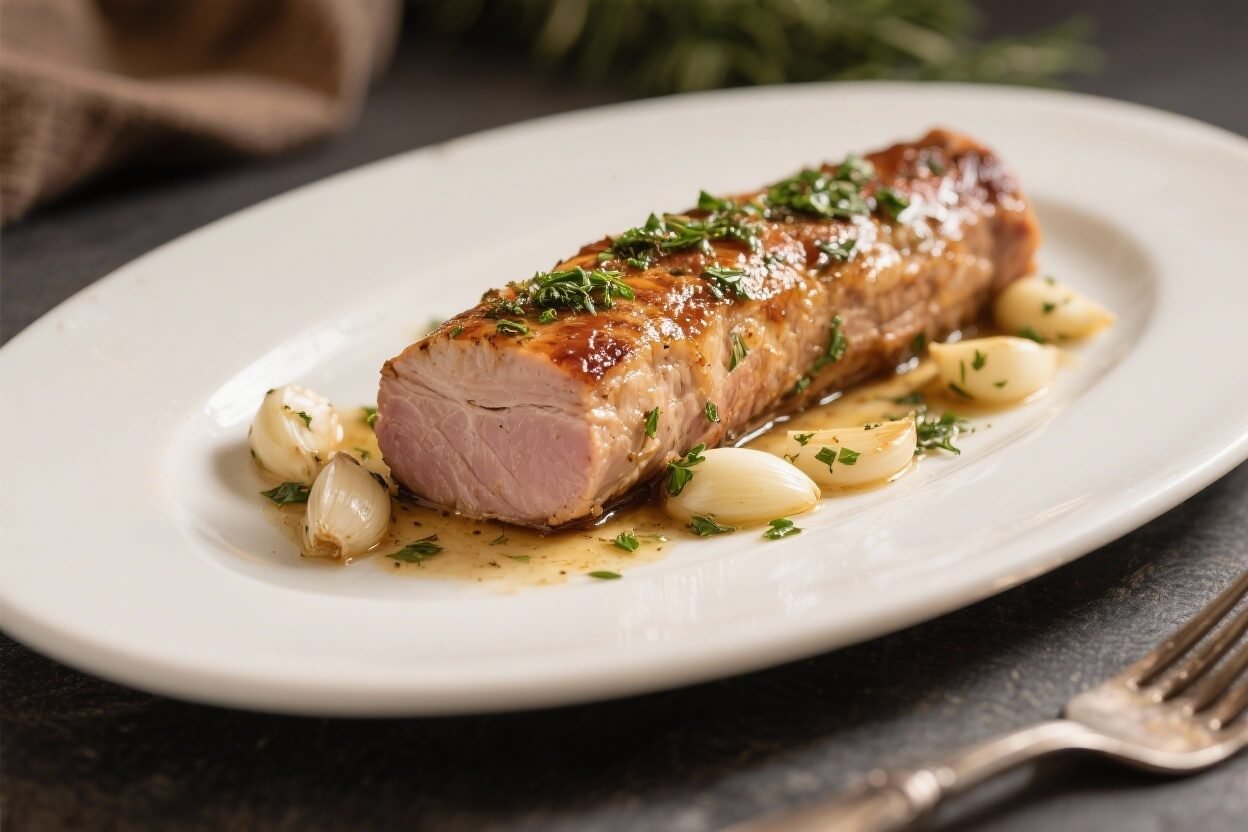
This Garlic Herb Pork Tenderloin is the kind of dinner that feels special without being complicated. It’s tender, juicy, and packed with fresh, savory flavors that come together fast. You get a golden crust, a fragrant herb rub, and a quick pan sauce that tastes like you spent hours on it.
It’s weeknight-friendly, dinner-party worthy, and doesn’t need fancy ingredients. If you love clean, bright flavors and a reliable main dish, this one’s a keeper.
Garlic Herb Pork Tenderloin - Simple, Juicy, and Full of Flavor
Ingredients
Method
- Preheat and prep. Heat your oven to 400°F (205°C).Pat the pork dry with paper towels. Dry meat sears better and gets a nicer crust.
- Make the herb paste. In a small bowl, mix olive oil, garlic, rosemary, thyme, parsley, Dijon, salt, pepper, lemon zest, and lemon juice. If you like a bit of heat, add red pepper flakes.
- Season the pork. Rub the herb paste all over the tenderloins.Press it in so it sticks. Let it sit on the counter for 10–15 minutes while you heat your pan.
- Sear for color. Heat a large oven-safe skillet (cast iron is ideal) over medium-high. Add a thin film of olive oil.When the oil shimmers, add the pork. Sear 2–3 minutes per side until nicely browned.
- Roast to finish. Transfer the skillet to the oven. Roast 12–18 minutes, depending on thickness, until a thermometer inserted in the thickest part reads 140–145°F (60–63°C).The temperature will rise slightly as it rests.
- Rest the meat. Move the tenderloins to a cutting board and tent loosely with foil. Rest 8–10 minutes to keep the juices in.
- Make a quick pan sauce. Place the hot skillet over medium heat. Add the broth or wine to deglaze, scraping up the browned bits.Simmer 2–3 minutes to reduce slightly. Whisk in the butter until glossy. Taste and adjust salt and pepper.
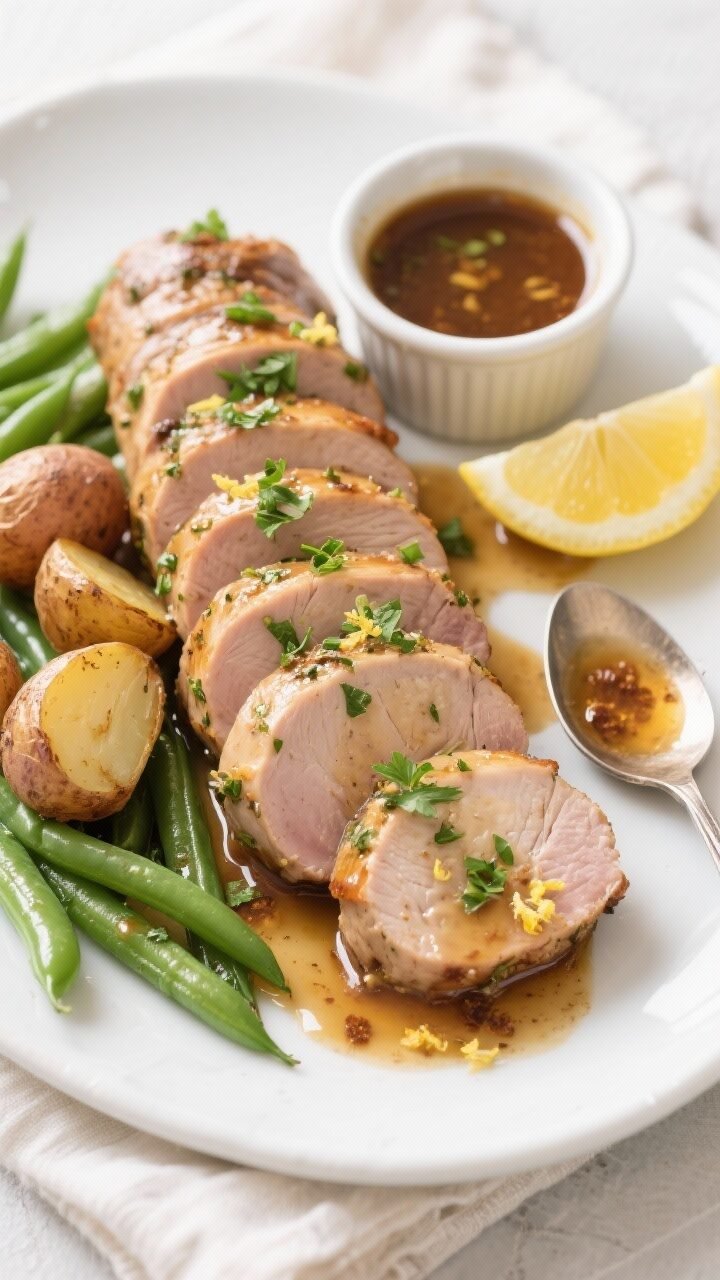
- Slice and serve. Slice the pork into 1/2-inch medallions.Spoon the pan sauce over the top and sprinkle with fresh parsley. Serve with your favorite sides.
What Makes This Special
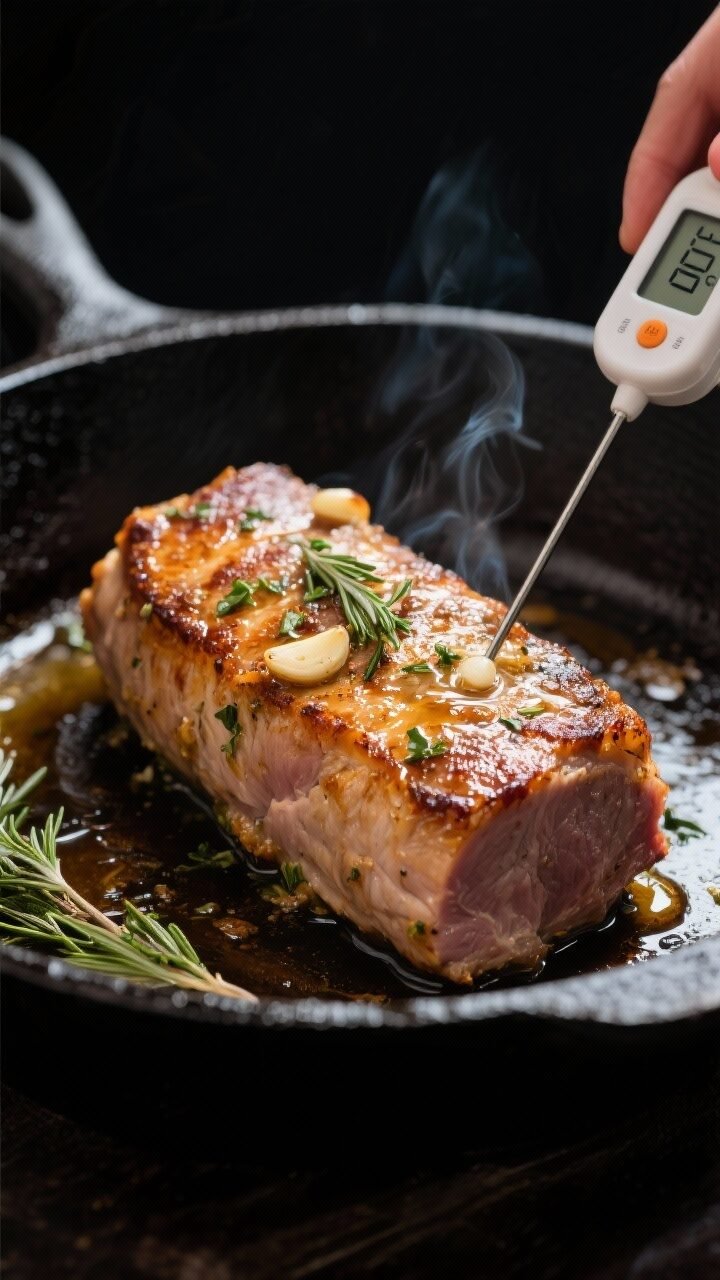
This recipe balances bold garlic with fresh herbs and a touch of lemon for brightness. The technique is simple: sear for a crust, then finish in the oven for even cooking.
The tenderloin cooks quickly, so you can have dinner on the table fast. Plus, it’s versatile—serve it with roasted potatoes, a crisp salad, or creamy polenta. The pan sauce uses the same skillet, so cleanup stays easy.
Ingredients
- 2 pork tenderloins (about 1 to 1.25 pounds each), silver skin trimmed
- 2 tablespoons olive oil, plus more for searing
- 4 cloves garlic, finely minced
- 1 tablespoon fresh rosemary, finely chopped
- 1 tablespoon fresh thyme leaves, chopped
- 1 tablespoon fresh parsley, chopped (plus more for garnish)
- 1 teaspoon Dijon mustard
- 1 teaspoon kosher salt, plus more to taste
- 1/2 teaspoon freshly ground black pepper
- 1 teaspoon lemon zest
- 1 tablespoon lemon juice
- 2 tablespoons unsalted butter (for finishing)
- 1/2 cup low-sodium chicken broth or dry white wine (for pan sauce)
- Optional: 1/2 teaspoon crushed red pepper flakes for heat
Instructions
- Preheat and prep. Heat your oven to 400°F (205°C).Pat the pork dry with paper towels. Dry meat sears better and gets a nicer crust.
- Make the herb paste. In a small bowl, mix olive oil, garlic, rosemary, thyme, parsley, Dijon, salt, pepper, lemon zest, and lemon juice. If you like a bit of heat, add red pepper flakes.
- Season the pork. Rub the herb paste all over the tenderloins.Press it in so it sticks. Let it sit on the counter for 10–15 minutes while you heat your pan.
- Sear for color. Heat a large oven-safe skillet (cast iron is ideal) over medium-high. Add a thin film of olive oil.When the oil shimmers, add the pork. Sear 2–3 minutes per side until nicely browned.
- Roast to finish. Transfer the skillet to the oven. Roast 12–18 minutes, depending on thickness, until a thermometer inserted in the thickest part reads 140–145°F (60–63°C).The temperature will rise slightly as it rests.
- Rest the meat. Move the tenderloins to a cutting board and tent loosely with foil. Rest 8–10 minutes to keep the juices in.
- Make a quick pan sauce. Place the hot skillet over medium heat. Add the broth or wine to deglaze, scraping up the browned bits.Simmer 2–3 minutes to reduce slightly. Whisk in the butter until glossy. Taste and adjust salt and pepper.
- Slice and serve. Slice the pork into 1/2-inch medallions.Spoon the pan sauce over the top and sprinkle with fresh parsley. Serve with your favorite sides.
Storage Instructions
- Refrigerate: Store leftovers in an airtight container for up to 3–4 days. Keep the sauce separate if possible.
- Reheat: Warm gently in a skillet over low heat with a splash of broth, or microwave in short bursts, just until heated through.Avoid overcooking.
- Freeze: Freeze sliced pork and sauce in freezer bags for up to 2 months. Thaw overnight in the fridge and reheat gently.
Why This is Good for You
Pork tenderloin is a lean protein, so it delivers satisfying nourishment without being heavy. Fresh herbs add flavor without extra sodium or sugar, and garlic offers natural compounds that support heart health.
The lemon brightens the dish without needing cream or heavy sauces. When you pair this with vegetables or a whole-grain side, you’ve got a well-rounded meal.
What Not to Do
- Don’t skip drying the pork. Moisture prevents a good sear and leads to a pale crust.
- Don’t overcook. Tenderloin is lean. Past 145°F, it dries out quickly.
- Don’t skip resting. Cutting too soon lets the juices run out and leaves the meat dry.
- Don’t overcrowd the pan. If your skillet is small, sear one tenderloin at a time for proper browning.
- Don’t go heavy on rosemary. It’s potent.Stick to the amounts listed or it can overwhelm the dish.
Alternatives
- Herb swaps: Use sage, marjoram, or oregano if you don’t have rosemary or thyme. Keep the total herb amount the same.
- Citrus twist: Swap lemon for orange zest and juice for a warmer, slightly sweeter flavor.
- Spice variation: Add smoked paprika or ground coriander for a deeper, earthy note.
- Butter-free sauce: Finish the pan sauce with a teaspoon of Dijon or a drizzle of olive oil instead of butter.
- Grill option: Sear over direct heat, then move to indirect heat and cook until 140–145°F. Rest and slice as usual.
- Sheet pan meal: Roast the tenderloin on a sheet pan with halved baby potatoes and green beans.Toss veggies with olive oil, salt, and pepper. Pull the beans a few minutes early if needed.
FAQ
How do I know when pork tenderloin is done?
Use an instant-read thermometer. Aim for 140–145°F in the thickest part.
The temperature will rise slightly as it rests, and the center may have a faint blush, which is perfectly safe at this range.
Can I marinate the pork ahead of time?
Yes. You can rub the herb mixture on the pork up to 12 hours ahead. Keep it covered in the fridge.
Let it sit at room temperature for about 15 minutes before cooking.
What if I don’t have fresh herbs?
Use dried herbs, but reduce the amounts. Replace each tablespoon of fresh herbs with about 1 teaspoon of dried. The flavor will be more concentrated, so don’t overdo it.
Why is my pork tough?
It was likely overcooked or sliced right away without resting.
Stick to the 140–145°F target and rest 8–10 minutes before slicing to keep it juicy.
What sides go well with this?
Roasted potatoes, buttery mashed cauliflower, lemony asparagus, sautéed green beans, a bright arugula salad, or creamy polenta all pair nicely. Keep the sides simple so the herb flavors shine.
Can I use pork loin instead of tenderloin?
Pork loin is larger and cooks differently. If you swap, plan for a longer cook time and consider roasting at a slightly lower temperature to keep it from drying out.
The seasoning mix still works well.
Is the pan sauce necessary?
No, but it adds a lot of flavor with minimal effort. If you’re short on time, a squeeze of lemon and a drizzle of olive oil over the sliced pork is a quick alternative.
How do I get a better sear?
Make sure the pork is dry, the pan is hot, and you don’t move the meat too soon. Use a high-heat oil like olive oil or avocado oil and give each side 2–3 minutes undisturbed.
Final Thoughts
Garlic Herb Pork Tenderloin is simple, fast, and really satisfying.
It’s the kind of recipe you can make on a Wednesday and serve to guests on Saturday. With a solid sear, a quick roast, and a bright pan sauce, you get big flavor without fuss. Keep this one in your rotation—you’ll reach for it often, and it never disappoints.