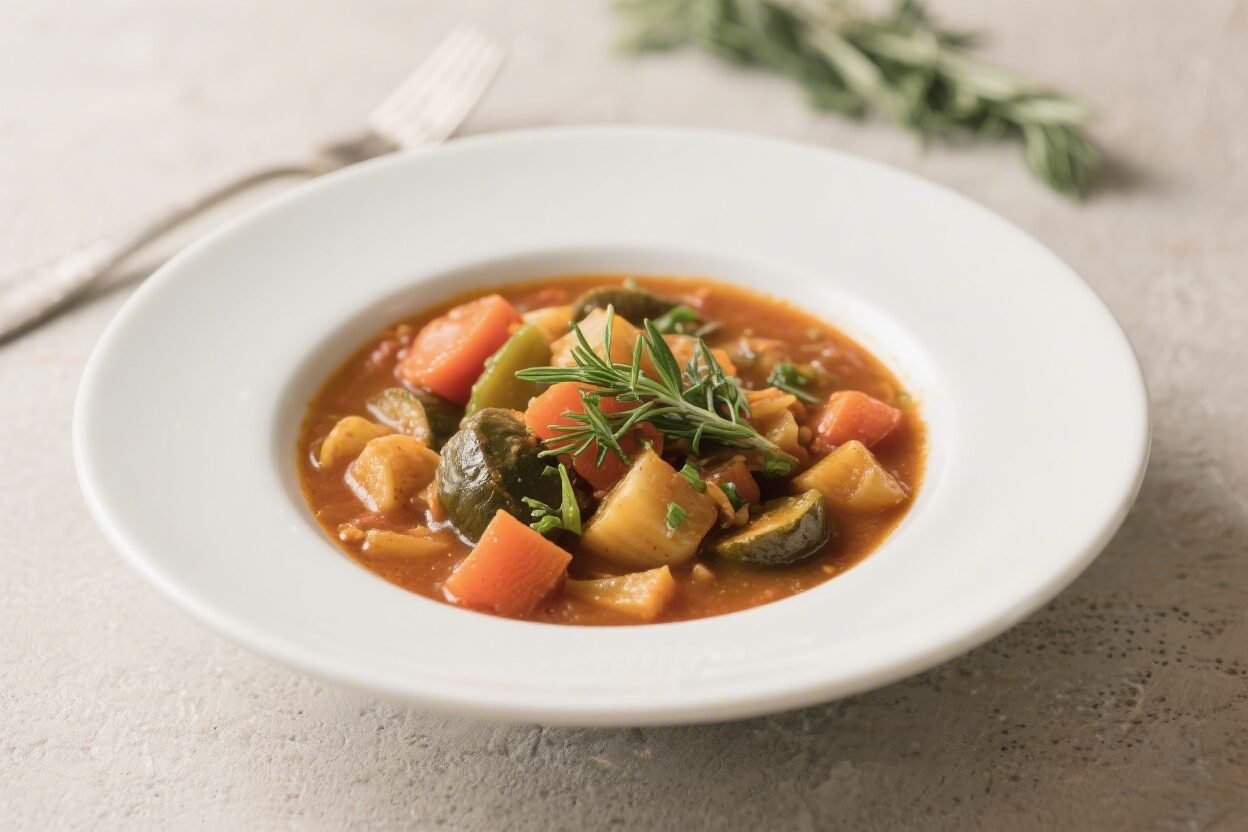
Herb Infused Vegetable Stew – Comforting, Fresh, and Simple

This stew is the kind of meal you make when you want something warm, nourishing, and easy. It brings together soft vegetables, good broth, and a generous mix of herbs that brighten everything up. You can make it on a quiet weeknight or for a relaxed weekend dinner with friends.
It tastes even better the next day, and it’s flexible enough to adapt to whatever you have on hand. If you love clean, honest flavors and a pot of food that makes the house smell amazing, this one’s for you.
Herb Infused Vegetable Stew - Comforting, Fresh, and Simple
Ingredients
Method
- Warm the base: Heat olive oil in a large pot over medium heat. Add onion with a pinch of salt.Cook 4–5 minutes until it softens and turns translucent.
- Add aromatics: Stir in garlic, carrots, and celery. Cook 2–3 minutes until fragrant. Don’t let the garlic brown.
- Build the body: Add potatoes, zucchini, bell pepper, and green beans.Sprinkle in dried thyme, dried oregano, smoked paprika, and another pinch of salt. Stir to coat the vegetables with oil and herbs.
- Liquids and simmer: Pour in diced tomatoes with their juices and the vegetable broth. Add the bay leaf.Bring to a gentle boil, then reduce to a simmer.
- Cook until tender: Simmer uncovered for 20–25 minutes, stirring occasionally, until the potatoes and carrots are tender but not falling apart. Skim any foam if needed.
- Greens and fresh herbs: Stir in the chopped greens and cook 3–5 minutes, just until wilted and bright. Remove the bay leaf.Turn off the heat and add parsley, basil or dill, and lemon juice.
- Season and finish: Taste and adjust. Add more salt, black pepper, and red pepper flakes if you like a kick. Finish with a drizzle of olive oil for richness.
- Serve: Ladle into warm bowls.Add a squeeze of lemon or a sprinkle of fresh herbs on top. Crusty bread on the side is never a bad idea.
What Makes This Special
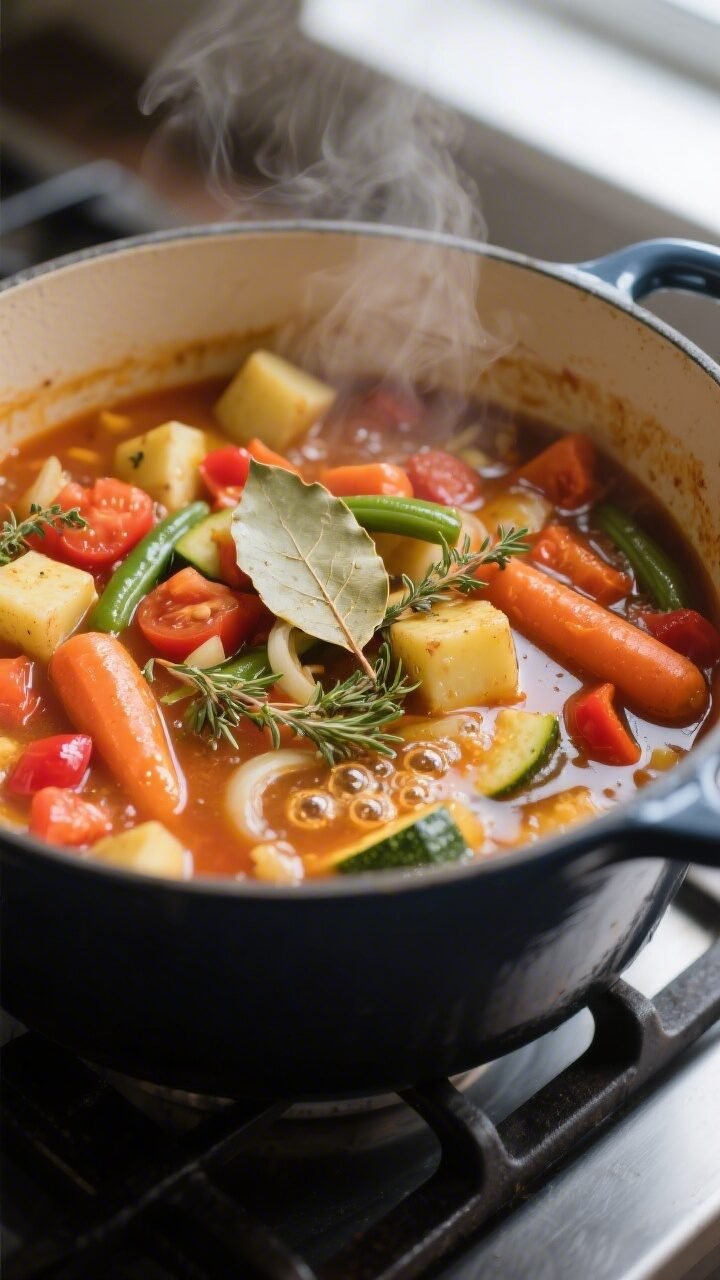
This isn’t just another vegetable soup. The key is a layered herb approach: some herbs cook with the stew for depth, others go in at the end for freshness.
That balance gives you both comfort and lift. It’s also a forgiving recipe—swap vegetables without stress and still end up with something satisfying.
Another win: texture. You’ll get tender carrots and potatoes, soft onions, and just-cooked greens.
A squeeze of lemon and a drizzle of olive oil at the end ties it all together. The result is simple, but it tastes thoughtful.
Ingredients
- 2 tablespoons olive oil, plus more for finishing
- 1 large yellow onion, diced
- 3 cloves garlic, minced
- 2 medium carrots, sliced into half-moons
- 2 celery stalks, sliced
- 2 medium potatoes, cut into 1-inch cubes (Yukon gold or red)
- 1 small zucchini, chopped
- 1 red bell pepper, chopped
- 1 cup green beans, trimmed and cut into 1-inch pieces
- 1 can (14.5 oz) diced tomatoes, with juices
- 4 cups vegetable broth (low sodium preferred)
- 1 bay leaf
- 1 teaspoon dried thyme
- 1 teaspoon dried oregano
- 1/2 teaspoon smoked paprika (optional, for depth)
- 1 cup chopped leafy greens (kale, spinach, or chard)
- 1/4 cup chopped fresh parsley
- 2 tablespoons chopped fresh basil or dill (or a mix)
- 1 tablespoon lemon juice, plus more to taste
- Salt and black pepper to taste
- Red pepper flakes, to taste (optional)
How to Make It
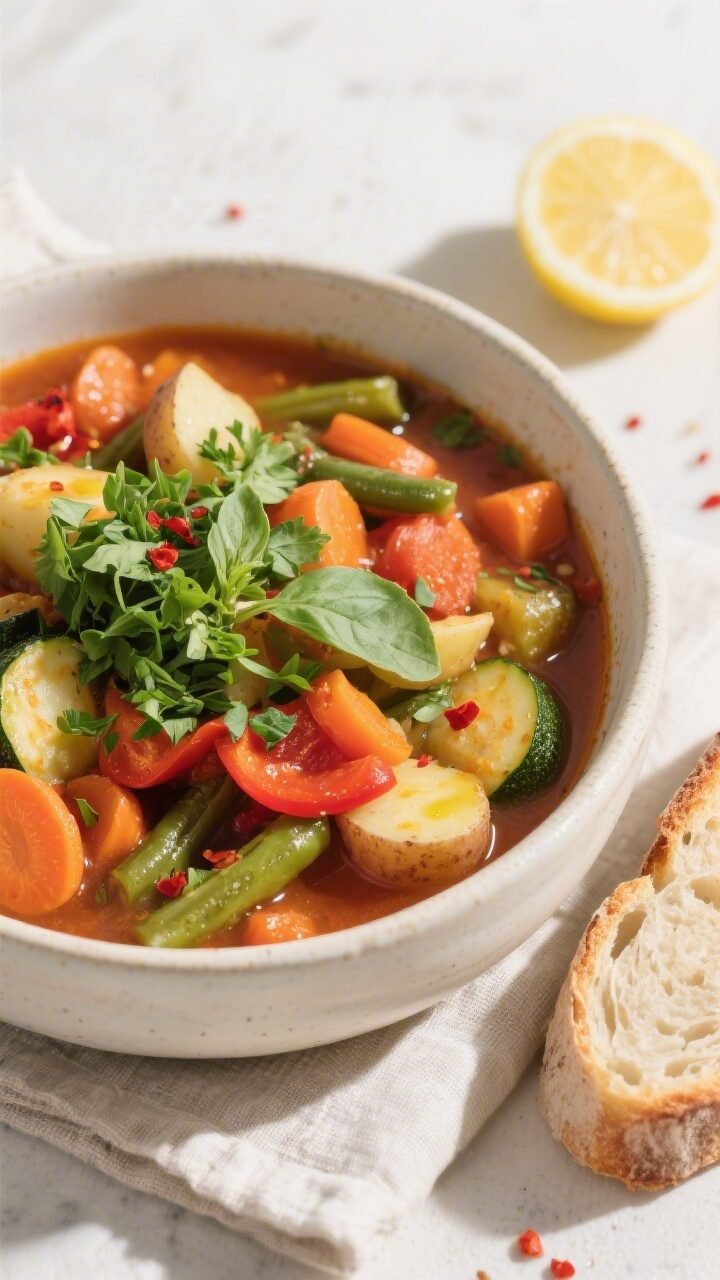
- Warm the base: Heat olive oil in a large pot over medium heat. Add onion with a pinch of salt.Cook 4–5 minutes until it softens and turns translucent.
- Add aromatics: Stir in garlic, carrots, and celery. Cook 2–3 minutes until fragrant. Don’t let the garlic brown.
- Build the body: Add potatoes, zucchini, bell pepper, and green beans.Sprinkle in dried thyme, dried oregano, smoked paprika, and another pinch of salt. Stir to coat the vegetables with oil and herbs.
- Liquids and simmer: Pour in diced tomatoes with their juices and the vegetable broth. Add the bay leaf.Bring to a gentle boil, then reduce to a simmer.
- Cook until tender: Simmer uncovered for 20–25 minutes, stirring occasionally, until the potatoes and carrots are tender but not falling apart. Skim any foam if needed.
- Greens and fresh herbs: Stir in the chopped greens and cook 3–5 minutes, just until wilted and bright. Remove the bay leaf.Turn off the heat and add parsley, basil or dill, and lemon juice.
- Season and finish: Taste and adjust. Add more salt, black pepper, and red pepper flakes if you like a kick. Finish with a drizzle of olive oil for richness.
- Serve: Ladle into warm bowls.Add a squeeze of lemon or a sprinkle of fresh herbs on top. Crusty bread on the side is never a bad idea.
Keeping It Fresh
Let the stew cool to room temperature before storing. Transfer to airtight containers and refrigerate for up to 4 days.
The flavors deepen overnight, so it’s a great make-ahead option.
For freezing, portion into freezer-safe containers, leaving some room for expansion. Freeze for up to 3 months. Thaw overnight in the fridge, then reheat gently on the stove with a splash of broth or water. Add a fresh handful of herbs and a squeeze of lemon after reheating to bring back brightness.
Health Benefits
- Fiber-rich vegetables: Carrots, potatoes, green beans, and greens support digestion and keep you satisfied.
- Antioxidants galore: Tomatoes, bell peppers, and herbs like parsley and basil bring vitamins A, C, and phytonutrients.
- Low in saturated fat: Olive oil provides heart-healthy fats without weighing the dish down.
- Hydrating and light: A broth-based stew keeps sodium in check (use low-sodium broth) and helps with hydration.
- Plant-forward: Great for those cutting back on meat while still wanting a filling, complete-feeling meal.
What Not to Do
- Don’t boil aggressively: A rolling boil breaks down vegetables.Keep it at a gentle simmer for better texture.
- Don’t add all the herbs at once: Dried herbs like thyme and oregano should simmer; fresh herbs should go in at the end for flavor and color.
- Don’t skip seasoning layers: Add small pinches of salt as you go. It builds balanced flavor without over-salting.
- Don’t overcook the greens: They only need a few minutes. Overcooking dulls color and taste.
- Don’t forget acidity: Lemon juice at the end lifts the whole pot.Without it, the stew can taste flat.
Recipe Variations
- Hearty bean boost: Add a can of chickpeas or cannellini beans in the last 10 minutes for extra protein and creaminess.
- Mushroom umami: Sauté sliced mushrooms with the onions to add depth and a meaty bite.
- Root vegetable twist: Swap zucchini and peppers for parsnips and sweet potatoes in colder months. Adjust simmer time as needed.
- Herb profile swap: Try rosemary and sage in winter, or mint and dill in spring. Keep the fresh herb addition at the end.
- Spice it up: Add a pinch of cumin and coriander for warmth, or a spoon of harissa for heat and complexity.
- Grain add-in: Stir in cooked farro, barley, or quinoa just before serving for a thicker, stew-like feel.
- Creamy finish: For a richer texture, blend 1 cup of the stew and stir it back in, or add a splash of coconut milk.
FAQ
Can I use frozen vegetables?
Yes.
Add heartier frozen vegetables (like green beans or mixed veg) during the simmer and quick-cooking ones (like peas or spinach) in the last few minutes. You may need a few extra minutes of cooking to bring everything up to temperature.
How can I make it in a slow cooker?
Add all ingredients except fresh herbs, greens, and lemon to the slow cooker. Cook on Low for 6–7 hours or High for 3–4 hours, until vegetables are tender.
Stir in greens and fresh herbs in the last 10 minutes, then finish with lemon juice.
What’s the best way to thicken the stew?
Lightly mash a few potato pieces against the pot and stir. You can also blend a cup of the stew and add it back, or stir in a tablespoon of tomato paste early in the simmer.
Can I add meat or sausage?
Absolutely. Brown sliced chicken sausage or ground turkey in the pot first, then continue with the recipe.
If adding bacon or pancetta, reduce the olive oil and adjust salt.
What herbs can I substitute if I don’t have fresh basil or parsley?
Dill, chives, cilantro, or mint can all work. Use what you enjoy, and keep the fresh herbs for the end to keep their flavor bright.
How do I make it gluten-free?
The recipe is naturally gluten-free. Just make sure your broth and any add-ins (like sausage or grains) are labeled gluten-free.
Why does my stew taste bland?
It likely needs salt and acid.
Add a pinch of salt, a squeeze of lemon, and a drizzle of olive oil. Taste again and repeat in small steps until it sings.
Final Thoughts
Herb Infused Vegetable Stew is proof that simple ingredients can add up to something special. With a smart herb strategy and a few pantry staples, you get a pot of food that’s cozy, bright, and adaptable.
Make it once and you’ll find your own rhythm—your favorite herb combo, your preferred veggies, your ideal finish. Keep it easy, keep it fresh, and let the herbs do the heavy lifting.