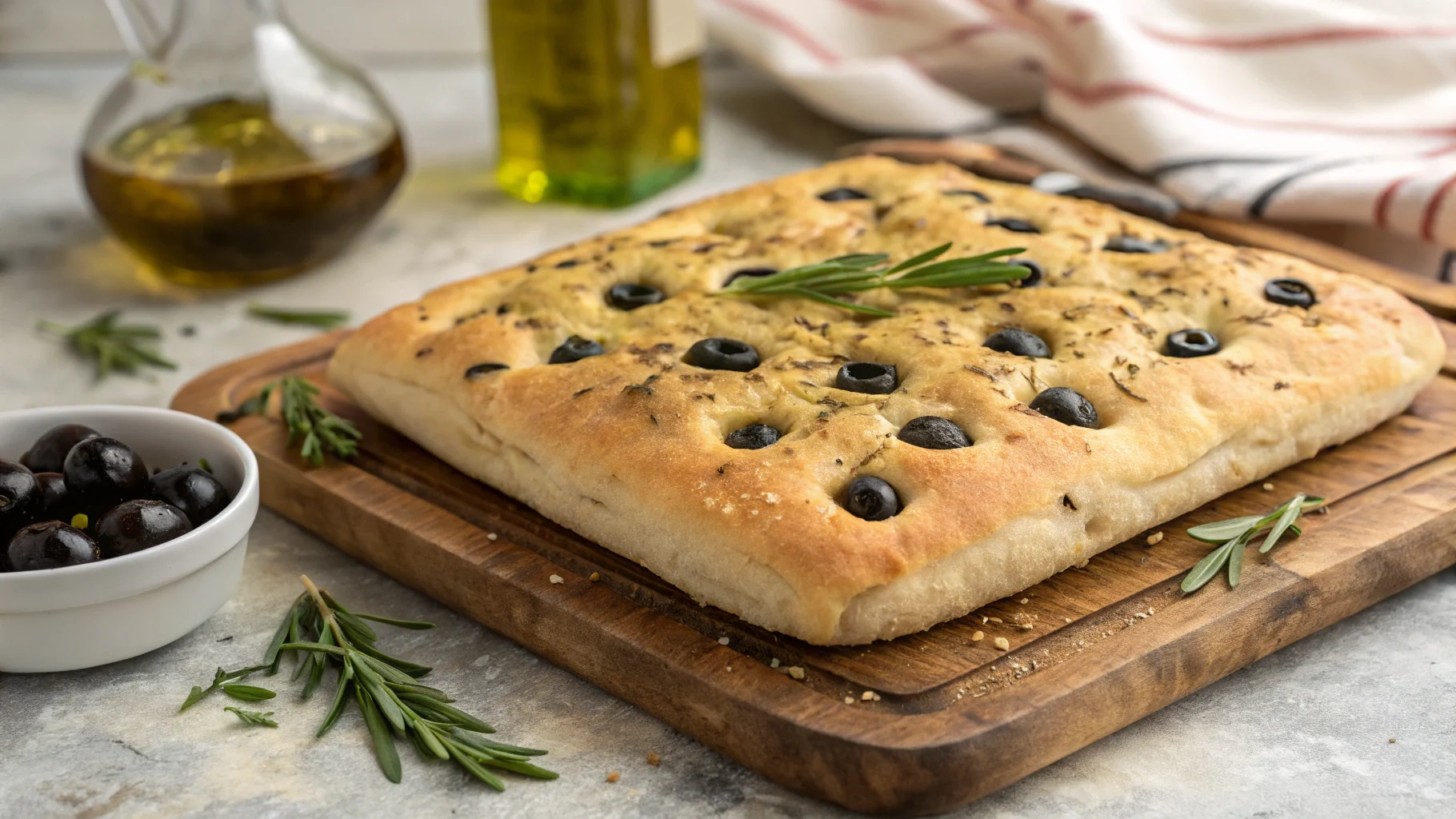
Homemade Olive Focaccia Bread That Steals the Show

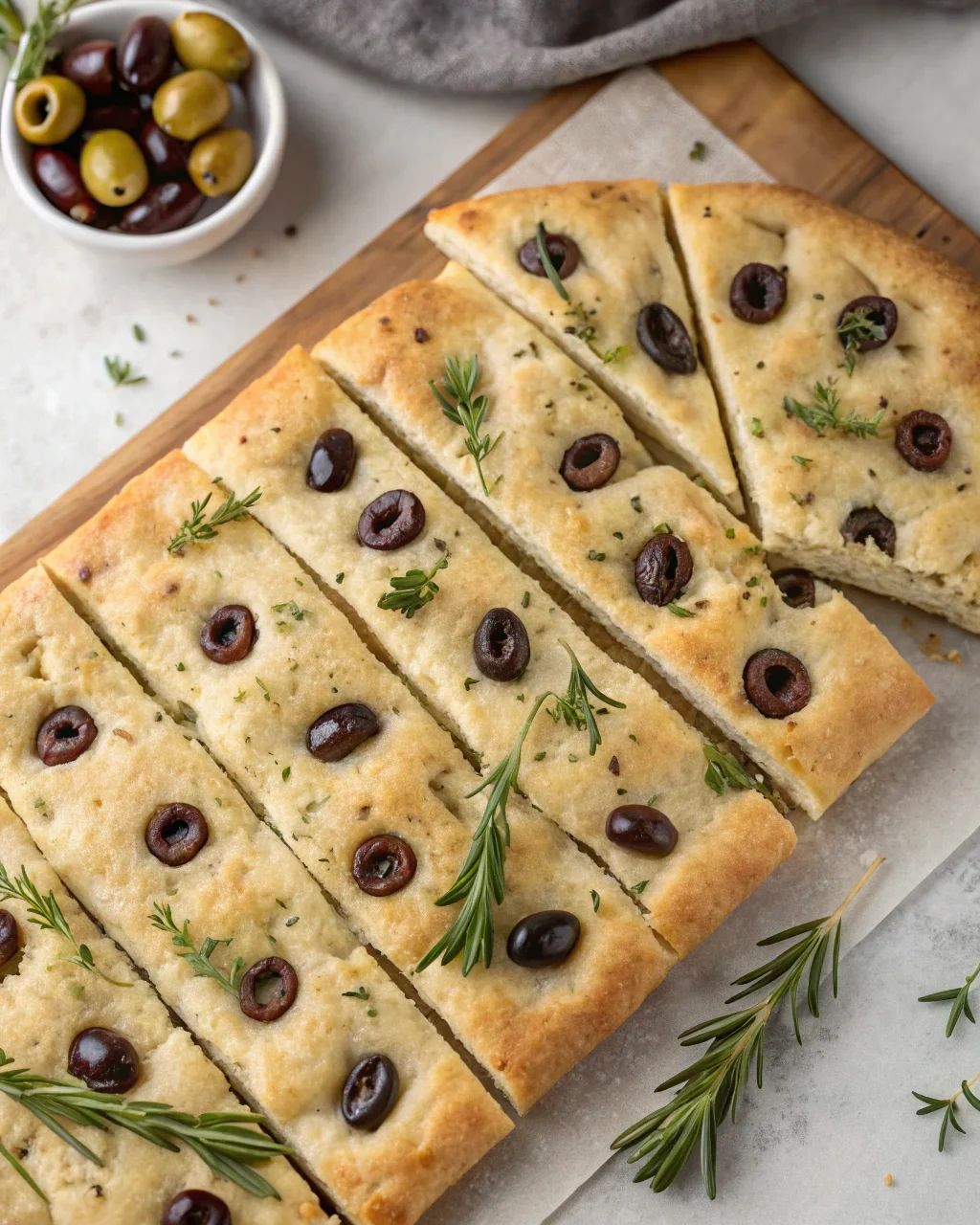
You know that bread basket you pretend you’ll “just sample”? This is the one that wrecks your plan—in the best way. Homemade Olive Focaccia Bread is salty, pillowy, and unapologetically addictive.
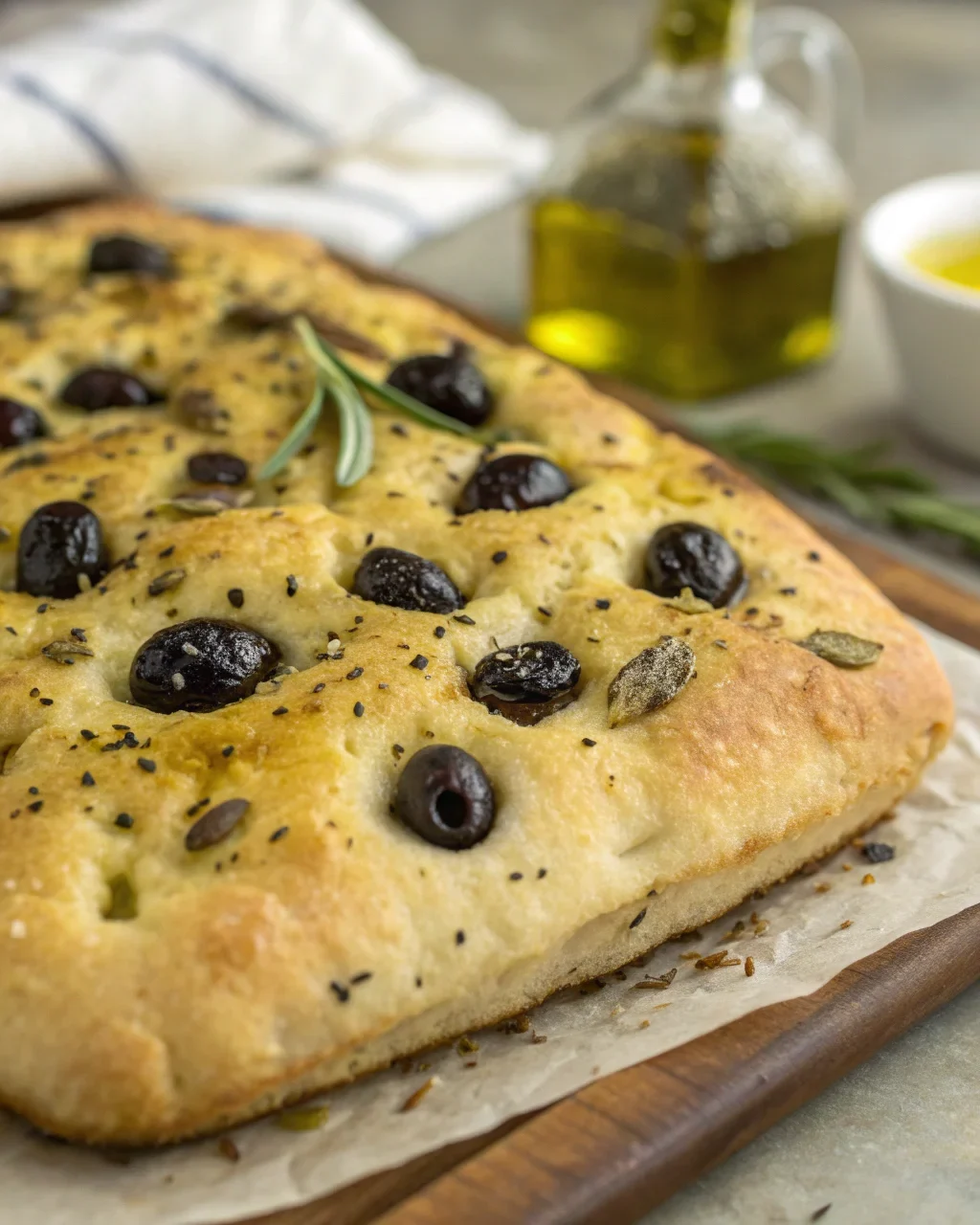
It’s the kind of bake that makes people think you own a wood-fired oven and a small Italian villa.
Spoiler: you just need a mixing bowl, a pan, and the courage to pour on more olive oil than feels reasonable. Ready to make the best thing that’s ever happened to your sandwich game?
The Secret Behind This Recipe
Focaccia’s magic is all about hydration and patience.
A wetter dough creates those signature airy pockets and a custardy crumb—exactly what makes it irresistible. The second trick? A generous olive oil bath before baking and a dimpled surface that holds flavor like a sponge.
Finally, briny olives add hits of umami that turn “bread” into “dangerously good.” We’re using a slow, room-temp rise to develop flavor without fuss.
If you want bakery-level results, let time do the heavy lifting and don’t overwork the dough. Minimal kneading, maximal payoff.
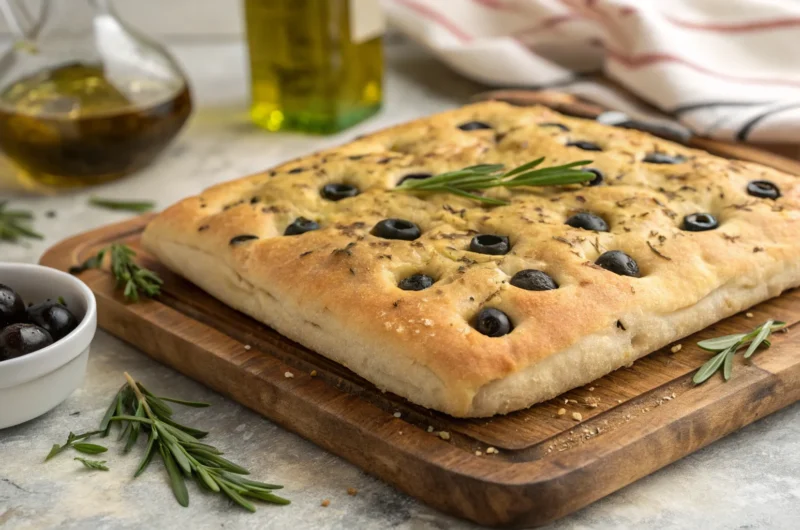
Homemade Olive Focaccia Bread That Steals the Show
Course: Breakfast10
servings20
minutes28
minutes260
kcalThings You’ll Need on Hand
500 g (4 cups) bread flour (or all-purpose in a pinch)
10 g (2 tsp) fine sea salt
7 g (2 1/4 tsp) instant yeast (or active dry)
400–430 g (1 3/4 cups) warm water (about 100–105°F / 38–41°C)
80 ml (1/3 cup) extra-virgin olive oil plus more for pan and finishing
1–1 1/2 cups pitted olives (Kalamata, Castelvetrano, or mixed), halved
Flaky sea salt for topping
1–2 tsp fresh rosemary, chopped (optional but epic)
1 tsp honey or sugar (feeds yeast, optional)
Step-by-Step Instructions
- Bloom (if using active dry yeast): In a bowl, mix warm water with honey/sugar and yeast. Let sit 5–10 minutes until foamy. If using instant yeast, skip blooming and add it directly to the flour.
- Mix the dough: In a large bowl, whisk flour and salt. Add yeast mixture (or water + instant yeast) and 2 tbsp olive oil. Stir with a spatula until a shaggy dough forms. It should cling to the bowl.
- Fold, don’t knead: With damp hands, perform 3–4 sets of stretch-and-folds every 5 minutes over 20 minutes. The dough will tighten and smooth slightly.
- First rise: Lightly oil the bowl, cover, and let rise at room temp until doubled, about 60–90 minutes. It should jiggle like custard.
- Prep the pan: Generously oil a 9×13-inch pan or 12-inch cast-iron skillet with 2–3 tbsp olive oil. Yes, it’s a lot. That’s the point.
- Pan the dough: Gently pour/scrape the dough into the pan. Drizzle 1–2 tbsp olive oil on top. With oiled fingers, coax it toward the edges. Rest 10 minutes if it resists.
- Second rise: Cover loosely and let puff for 30–45 minutes until pillowy. Meanwhile, preheat oven to 450ºF (232ºC).
- Dimple and top: With oiled hands, press fingertips into dough to make deep dimples. Scatter olives into some dimples, sprinkle rosemary, finish with flaky sea salt, and drizzle another tablespoon of olive oil.
- Bake: Place on the middle rack and bake 22–28 minutes until golden brown with crisp edges. If using cast iron, check at 20 minutes.
- Finish: Cool 10–15 minutes in the pan, then loosen edges and transfer to a rack. Brush with olive oil for shine. Slice into squares and try not to eat half the pan over the counter.
Preservation Guide
- Room temp: Wrap in parchment, then foil, and keep at room temperature for up to 2 days. Refresh in a 350°F (175°C) oven for 6–8 minutes.
- Freeze: Slice, wrap tightly, and freeze up to 2 months. Reheat from frozen at 375°F (190°C) for 10–12 minutes.
- Revival tip: Sprinkle a few drops of water on stale slices before reheating to rehydrate the crumb.
Why You’ll Love It
- Textural contrast: Crispy edges, cloud-soft center, juicy olive bursts.
- No knead drama: Gentle folds, not a gym session.
- Restaurant-level flavor: Long rise + quality olive oil = “Where did you buy this?” energy.
- Ridiculously versatile: Sandwiches, soups, charcuterie boards, or eaten plain at midnight.
No judgment.
Nutrition Stats
Per serving (1/10 of pan): ~260 calories; 10–12 g fat; 36–38 g carbs; 6–7 g protein; 2–3 g fiber; sodium varies with olives and salt. Using extra-virgin olive oil provides heart-healthy monounsaturated fats. Want to lighten it up?
Reduce finishing oil or use a mix of whole-wheat flour (see substitutions) to bump fiber.
Don’t Do This!
- Don’t skimp on oil. That’s your crispy bottom and luscious crumb. Dry focaccia is a tragedy.
- Don’t rush the rise. Under-proofed dough bakes dense and sulky.
- Don’t poke timidly. Deep dimples = flavor pockets. Go all-in.
- Don’t overload wet toppings. Too many watery add-ons (looking at you, juicy tomatoes) can sog out the crust.
Drain well.
- Don’t slice too hot. Let it rest 10–15 minutes or you’ll compress the crumb. Patience, friend.
Optional Substitutions
- Flour swap: Use 20–30% whole-wheat flour for nuttier flavor; add 1–2 tbsp extra water if the dough feels stiff.
- Yeast options: Active dry works fine; just bloom it first. For a slower schedule, use 1 tsp yeast and extend the rise.
- Olives: Kalamata for briny depth, Castelvetrano for buttery mildness, or a 50/50 mix IMO.
- Herbs: Rosemary is classic; thyme, oregano, or a pinch of chili flakes play nice too.
- Dairy boost: Sprinkle with shredded Parmesan in the last 5 minutes of baking for a salty crust.
- Gluten-free: Use a high-quality GF bread flour blend with xanthan gum; expect a stickier dough and slightly denser crumb.
FAQ
Can I cold-proof the dough overnight?
Yes.
After the first 30 minutes of resting/folds, cover and refrigerate 12–24 hours. The next day, bring to room temperature, transfer to the oiled pan, let rise until puffy, then dimple and bake. Flavor gets deeper and the texture often improves.
Why is my focaccia dense?
Most likely under-proofing or too little water.
This dough should be sticky and well-risen before baking. Also, old yeast or cool room temps can slow activity—give it more time or use slightly warmer water.
How do I keep the bottom crisp?
Heavily oil the pan and preheat the oven fully. A dark metal pan or cast-iron skillet gives better browning.
You can also place the pan on a preheated baking steel or sheet for extra sizzle.
Can I add other toppings with the olives?
Absolutely. Thin red onion, cherry tomatoes (halved and well-drained), roasted garlic, or lemon zest are great. Keep toppings modest and dry-ish to avoid a soggy top.
What if I only have all-purpose flour?
Go for it.
AP flour yields a slightly softer structure but still delicious. You may need 1–2 tbsp less water depending on your brand; aim for sticky, not soupy.
Is hand-kneading necessary?
Nope. Gentle folds over 15–20 minutes develop enough gluten for that open crumb.
If using a stand mixer, mix on low for 4–5 minutes until smooth and elastic.
Closing Notes
This Homemade Olive Focaccia Bread is the edible mic drop your kitchen’s been waiting for. It’s not fussy, it’s wildly rewarding, and it makes everything you serve with it taste like you’ve leveled up. Keep good olives and better olive oil on hand, trust the rise, and don’t fear the dimple.
Bake it once and someone will ask for the recipe. Bake it twice and they’ll ask for a standing invitation.