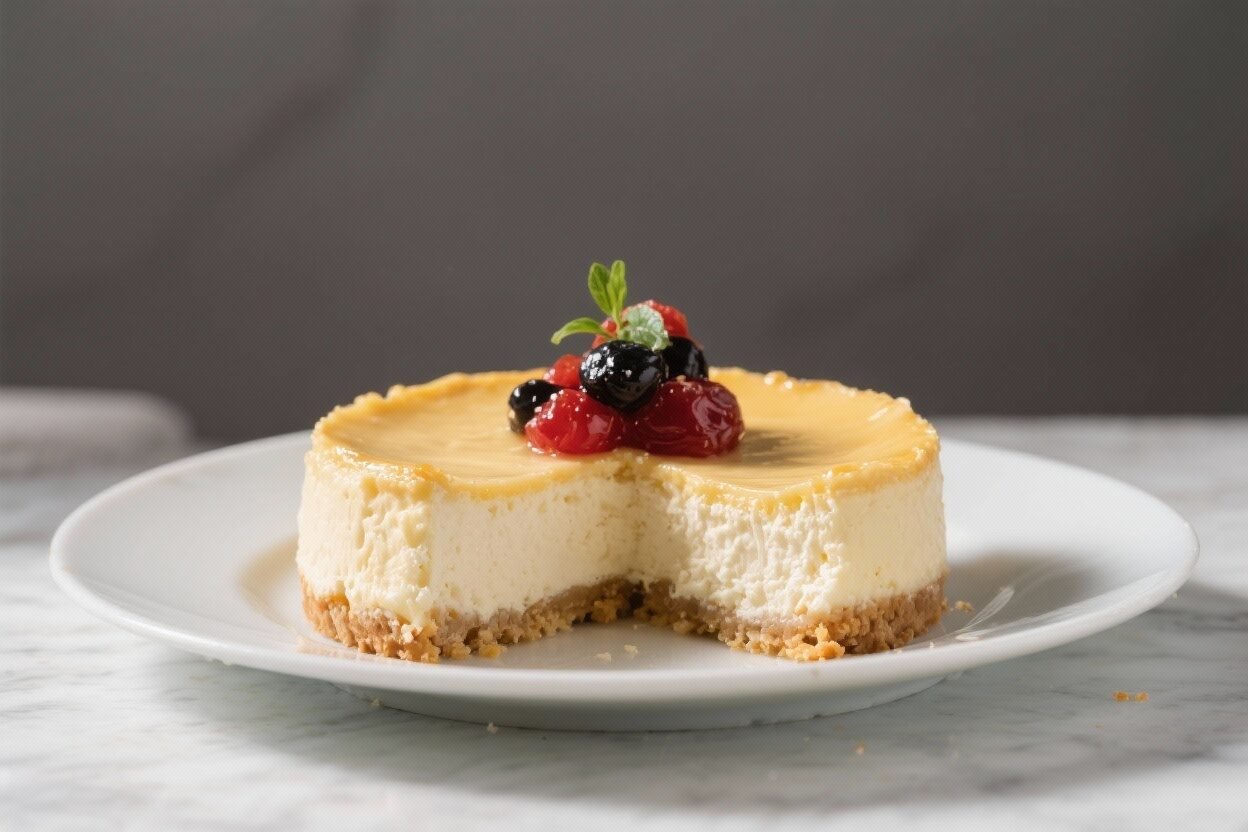
Italian Ricotta Cheesecake – Light, Luscious, and Classic

Italian ricotta cheesecake is the kind of dessert that feels special without trying too hard. It’s lighter than New York–style cheesecake, softly sweet, and creamy in a way that tastes like sunshine and holidays. You get a tender, custard-like texture with just enough richness to feel indulgent.
A hint of lemon, a touch of vanilla, and a barely sweet crust keep it elegant. It’s the cake you bring to brunch, special dinners, or when you want a dessert that’s comforting and unfussy.
Why This Recipe Works
- Ricotta adds lightness: Instead of a dense, heavy filling, ricotta keeps the texture airy and pleasantly creamy.
- Combination of ricotta and cream cheese: A small amount of cream cheese gives structure and silky smoothness without turning the cake heavy.
- Starch ensures a clean slice: A spoonful of cornstarch stabilizes the custard so it sets neatly and doesn’t weep.
- Gentle baking method: A moderate oven and a brief cool in the oven help prevent cracks and overbaking.
- Bright flavor balance: Lemon zest and vanilla keep the flavor clean, not cloying.
Ingredients
- For the crust:
- 1 1/2 cups plain biscotti or graham cracker crumbs
- 3 tablespoons granulated sugar
- 6 tablespoons unsalted butter, melted
- Pinch of fine sea salt
- For the filling:
- 24 ounces whole-milk ricotta, well-drained
- 8 ounces cream cheese, softened
- 3/4 cup granulated sugar
- 3 large eggs, at room temperature
- 1/4 cup sour cream or plain whole-milk yogurt
- 2 tablespoons cornstarch
- 1 teaspoon pure vanilla extract
- 1 teaspoon finely grated lemon zest
- 1/4 teaspoon almond extract (optional, but lovely)
- 1/4 teaspoon fine sea salt
- To serve (optional):
- Powdered sugar for dusting
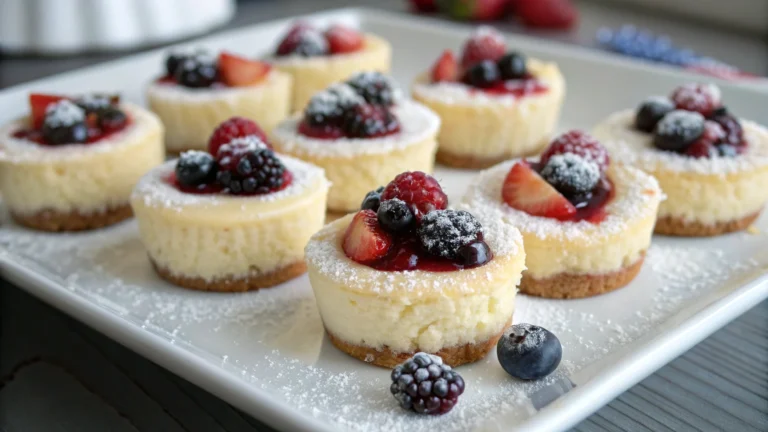
- Fresh berries or a spoonful of berry compote
- Lemon zest curls or a drizzle of honey
Instructions
- Prep the ricotta: If your ricotta is very moist, spoon it into a fine-mesh sieve over a bowl and let it drain for 30–60 minutes. This prevents a watery filling and helps the cake set cleanly.
- Heat the oven: Preheat to 325°F (165°C).
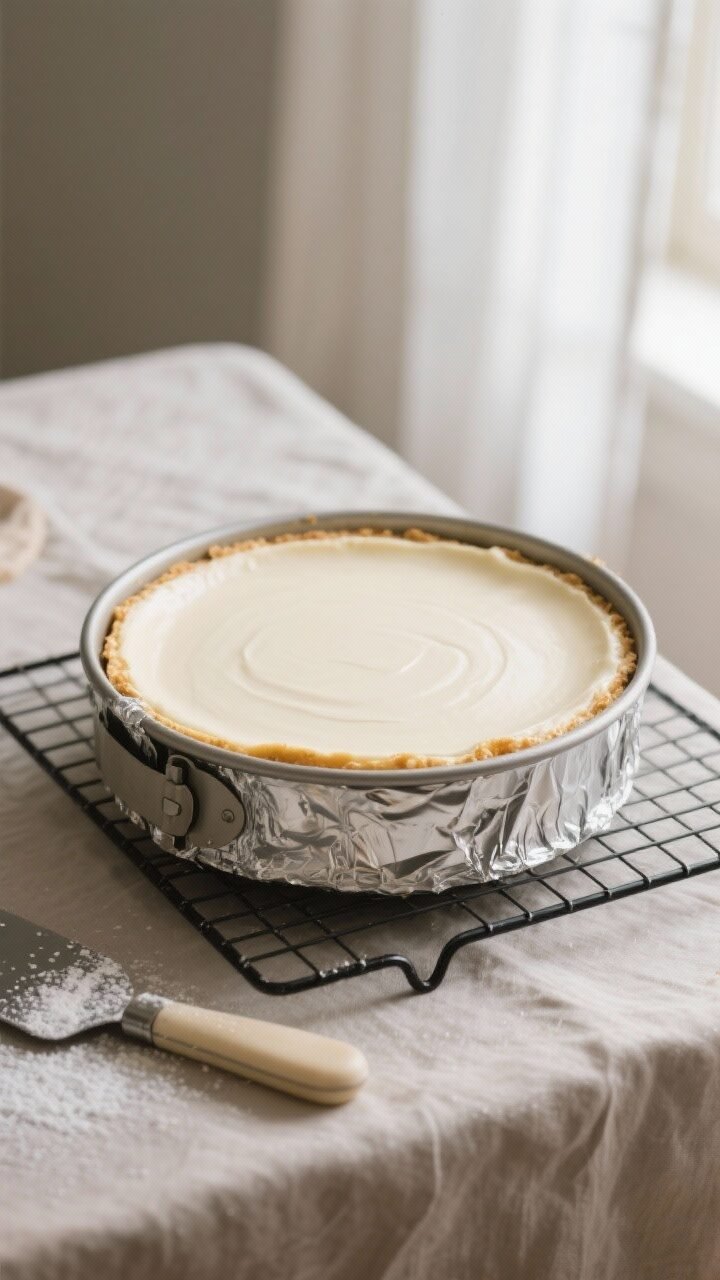
Lightly butter a 9-inch springform pan. Wrap the outside of the pan with a layer of foil to catch any leaks.
- Make the crust: Mix crumbs, sugar, salt, and melted butter until the texture resembles wet sand. Press firmly into the bottom of the pan.
Use the bottom of a glass to compact it. Bake for 10 minutes, then cool while you make the filling.
- Blend the cheeses: In a large bowl, beat the ricotta and cream cheese together until smooth, 2–3 minutes. A hand mixer on medium speed works well.
Scrape down the bowl as needed.
- Add sugar and flavorings: Beat in the granulated sugar, vanilla, lemon zest, almond extract (if using), and salt until fully combined and creamy.
- Thicken the filling: Sprinkle in the cornstarch and mix just until blended. Add the sour cream and mix to combine.
- Finish with eggs: Add eggs one at a time, mixing on low until just incorporated. Avoid overbeating; you don’t want too much air in the batter.
- Fill and smooth: Pour the filling over the crust.
Smooth the top with an offset spatula and tap the pan gently on the counter to release bubbles.
- Bake gently: Bake at 325°F for 55–70 minutes. The edges should be set, and the center should still have a slight wobble. If the top is browning too quickly, tent loosely with foil.
- Cool slowly: Turn off the oven, crack the door, and let the cake rest inside for 30 minutes.
Then remove and cool to room temperature on a rack.
- Chill to set: Refrigerate, uncovered, for at least 4 hours, preferably overnight. This improves flavor and texture.
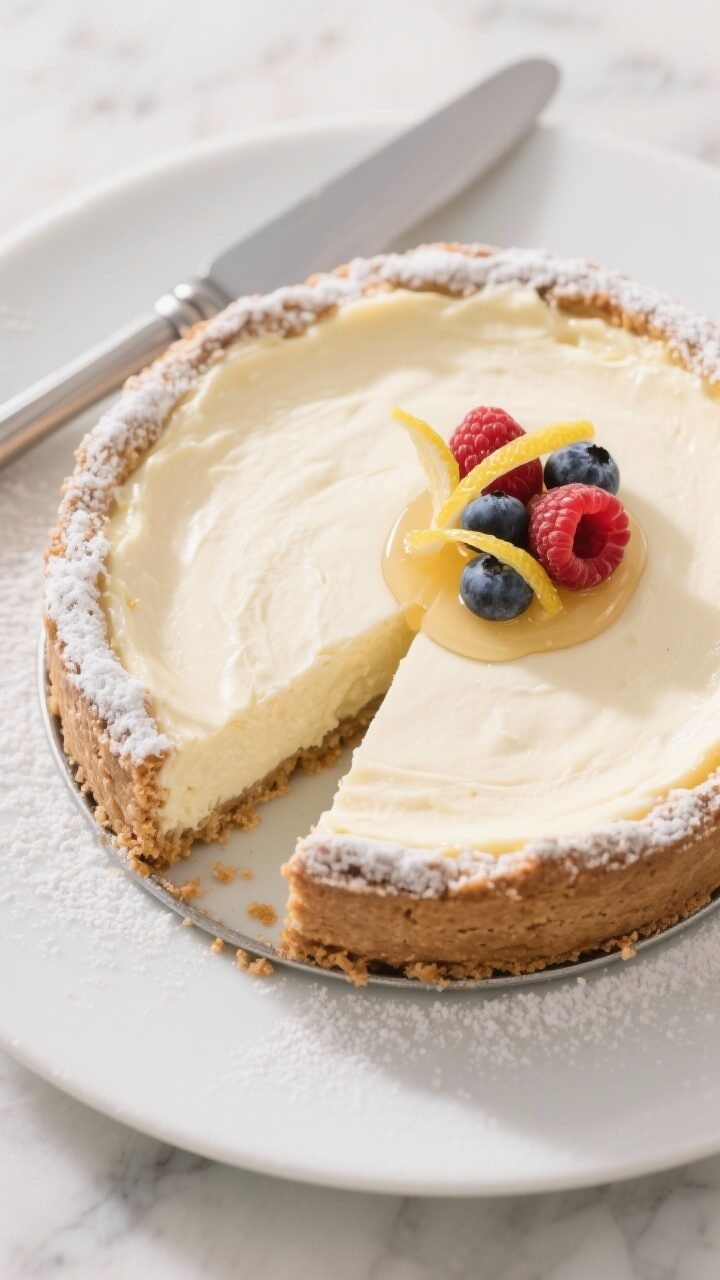
- Serve: Loosen the sides with a thin knife and release the springform. Dust with powdered sugar and top with berries, honey, or lemon zest if you like.
Slice with a warm, clean knife for neat wedges.
Keeping It Fresh
- Refrigeration: Store covered in the fridge for up to 5 days. Keep it on a flat shelf so it doesn’t absorb odors.
- Freezing: Chill until firm, then wrap slices in plastic and foil. Freeze for up to 1 month.
Thaw overnight in the fridge.
- Serving from cold: For the best flavor and texture, let slices sit at room temperature for 20–30 minutes before serving.
Benefits of This Recipe
- Lighter feel, full flavor: Ricotta delivers a creamy bite without the weight.
- Less fussy than classic cheesecake: No water bath needed, and the slow cool minimizes cracking.
- Make-ahead friendly: It tastes even better the next day, making it perfect for gatherings.
- Versatile topping options: Fresh berries, citrus, or a drizzle of honey all work beautifully.
- Balanced sweetness: The filling is gently sweet, so it doesn’t overwhelm after a meal.
What Not to Do
- Don’t skip draining wet ricotta: Excess moisture leads to a loose, soggy center.
- Don’t overmix the eggs: Too much air can cause cracks and a fluffy, uneven texture.
- Don’t overbake: Pull it when the center still wobbles slightly; it sets as it cools.
- Don’t cut it warm: Slicing before it’s fully chilled will smear the filling and collapse the structure.
- Don’t overload the crust with butter: A greasy crust turns dense and hard to slice.
Alternatives
- No-crust option: Butter the pan and dust with fine breadcrumbs or almond flour. Bake as directed for a simple, traditional finish.
- Citrus twist: Increase lemon zest to 2 teaspoons or add 1 teaspoon orange zest for a brighter profile.
- Gluten-free crust: Use gluten-free cookie crumbs or almond flour mixed with a little sugar and butter.
- Honey-sweetened version: Replace half the sugar with 1/4 cup honey and reduce sour cream by 1 tablespoon to balance moisture.
- Chocolate variation: Fold in 1/2 cup mini chocolate chips and skip the almond extract.
- Liqueur accent: Add 1 tablespoon limoncello or amaretto to the filling for a subtle, fragrant note.
FAQ
Do I need to strain the ricotta?
If your ricotta looks very wet or loose, yes. Draining helps the cheesecake set and prevents a watery texture.
If it’s thick and scoopable, a short drain or none at all is fine.
Can I make this a day ahead?
Absolutely. Cheesecake improves with time. Make it the day before and chill overnight for the best flavor and clean slices.
Why did my cheesecake crack?
Cracks usually come from overbaking or too much air in the batter.
Mix the eggs gently, bake until just set with a slight wobble, and let it cool slowly in the oven with the door cracked.
What size pan should I use?
A 9-inch springform pan is ideal. An 8-inch pan will make a taller cake and may need extra baking time; a 10-inch pan will bake faster and yield a thinner cake.
Can I skip the cream cheese?
You can, but the texture will be looser and more custard-like. If going ricotta-only, drain it very well and add an extra teaspoon of cornstarch for better structure.
How do I know when it’s done?
The edges will be set, and the center will jiggle slightly when you nudge the pan.
If it looks glossy and wet on top, give it a few more minutes.
What toppings go best?
Fresh berries, a dusting of powdered sugar, a thin layer of berry compote, or a drizzle of honey work beautifully. Keep it light to let the ricotta shine.
Can I use part-skim ricotta?
You can, but whole-milk ricotta gives a creamier, more satisfying texture. If using part-skim, make sure it’s well-drained and don’t cut back on the sour cream.
In Conclusion
Italian ricotta cheesecake is proof that simple ingredients can feel luxurious.
With its gently sweet flavor, creamy-but-light texture, and easy make-ahead nature, it’s a dessert that fits any occasion. Keep your ricotta well-drained, bake it low and slow, and let it chill fully. You’ll end up with a classic, elegant cheesecake that everyone wants a second slice of.