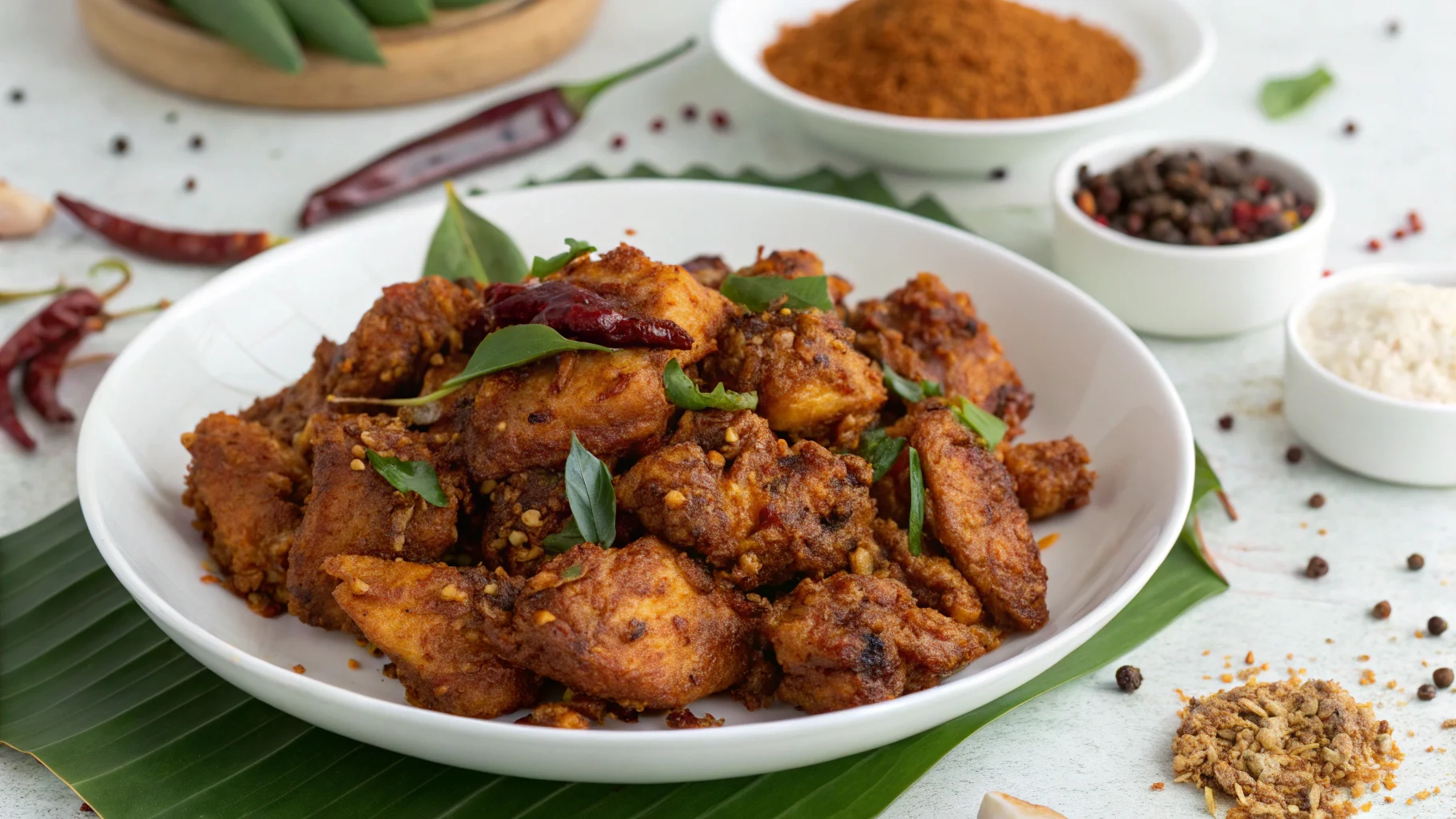
Kerala Style Chicken Ghee Roast: Fiery, Buttery Magic You’ll Crave

You know that dish that makes the whole table go silent? This is it.
Kerala Style Chicken Ghee Roast is unapologetically bold—smoky, tangy, buttery, and a little wild. It’s the culinary equivalent of a mic drop: scarlet red, glossy, and loaded with spice swagger.
If your chicken dinners have been boring lately, this one fixes it in 30 minutes flat. Prepare to lick the spoon—no judgment here.
The Special Touch in This Recipe
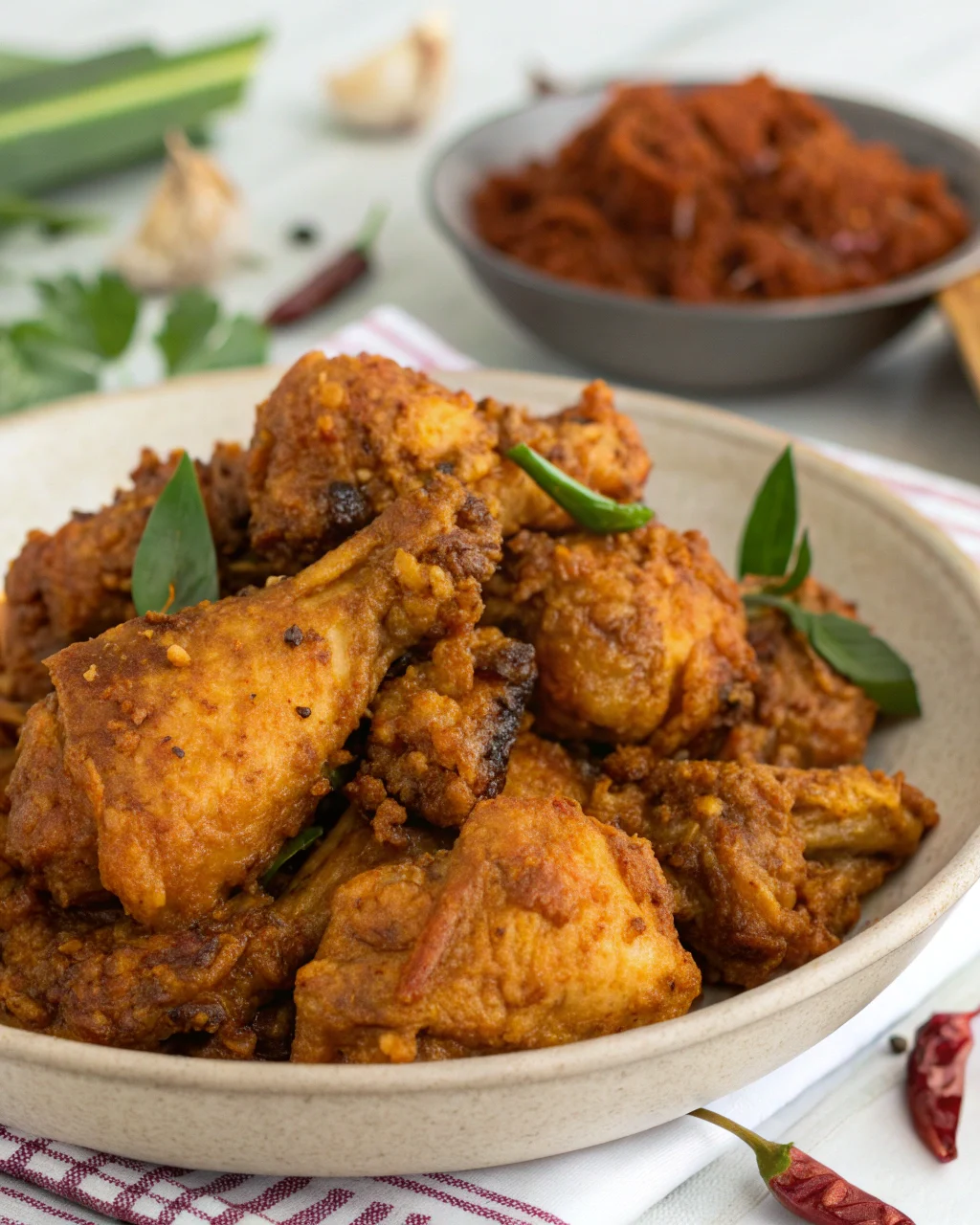
The magic comes from two things: a slow-roasted spice paste and a generous hit of ghee.
We toast whole spices until aromatic, grind them with tamarind and jaggery, and reduce everything in ghee till it clings to the chicken like velvet. Fresh curry leaves and a splash of coconut vinegar give it that unmistakable Kerala edge.
The result? Heat that’s balanced, not brutal—layered, fragrant, and ridiculously addictive.

Kerala Style Chicken Ghee Roast: Fiery, Buttery Magic You’ll Crave
Course: Dinner, High-Protein4
servings20
minutes30
minutes430
kcalIngredients
Dried red chilies: 8–10 (mix Kashmiri for color and regular for heat)
Coriander seeds: 2 tablespoons
Cumin seeds: 1 teaspoon
Black peppercorns: 1/2 teaspoon
Fennel seeds: 1/2 teaspoon
Fenugreek seeds: 1/4 teaspoon
Cloves: 3
Green cardamom: 2 pods
Cinnamon: 1 small piece
Turmeric powder: 1/2 teaspoon
Step-by-Step Instructions
- Marinate the chicken: Toss chicken with salt, 1 tablespoon yogurt, and a pinch of turmeric. Rest 30 minutes. This keeps it juicy and adds subtle tang.
- Roast the chilies: Destem and deseed some of the dried chilies for a milder version. Dry-roast on low heat until they darken slightly and smell smoky. Do not burn—bitter is not the vibe.
- Toast whole spices: In the same pan, dry-roast coriander, cumin, pepper, fennel, fenugreek, cloves, cardamom, and cinnamon for 1–2 minutes until fragrant. Cool completely.
- Grind the masala: Blend roasted chilies and spices with turmeric, tamarind paste, and a splash of water to a thick, smooth paste. It should be spreadable, not runny.
- Sauté aromatics: Heat 2 tablespoons ghee in a heavy pan. Add curry leaves, then sliced onion/shallots. Cook on medium until golden. Stir in crushed garlic and grated ginger; cook till raw smell disappears.
- Cook the chicken: Push onions to the side, add marinated chicken, and sear on medium-high for 3–4 minutes until lightly browned.
- Add the masala: Stir in the spice paste and 1/2 cup water. Season with salt. Cover and cook on medium-low for 12–15 minutes, stirring occasionally.
- Reduce and roast: Once the chicken is cooked, remove the lid. Add 1–2 tablespoons ghee and the jaggery. Roast on medium-high, stirring, until the gravy turns thick, glossy, and coats the chicken—about 5–7 minutes.
- Finish strong: Toss in fresh curry leaves and a final teaspoon of ghee. Taste and adjust salt, heat, or tang. It should be spicy, slightly sweet, and tangy.
- Serve: Best with Kerala parotta, neer dosa, ghee rice, or even warm appams. Napkins mandatory.
How Long Does It Keep?
Refrigerator: Up to 3 days in an airtight container.
Flavors deepen overnight—chef’s kiss. Freezer: Up to 2 months; thaw in the fridge and reheat gently with a teaspoon of ghee. Reheat: Low heat, splash of water if needed; don’t microwave on high, unless you enjoy dry chicken (no one does).
Why This Recipe Rocks
- Authentic flavor, simple method: Whole spices = layered flavor without complexity overload.
- Balanced heat: Kashmiri chilies bring color without turning your mouth into a campfire.
- Ghee glow-up: The fat carries the spices and gives that restaurant-grade shine and aroma.
- Weeknight-friendly: 30 minutes cooking, big weekend energy.
Nutrition Stats
- Calories: ~430 per serving
- Protein: ~28 g
- Fat: ~28 g (mostly from ghee; use less if you prefer)
- Carbohydrates: ~12 g
- Fiber: ~3 g
- Sodium: varies by salt
FYI, you can trim fat by reducing ghee to 3 tablespoons, but the gloss and richness will take a tiny hit. Your call.
Preventing Common Errors
- Over-roasting spices: Burnt spices = bitter sauce.
Keep heat low and remove as soon as they’re aromatic.
- Thin masala: If the paste is watery, it won’t cling. Grind thick and reduce properly during roasting.
- Under-salting: Spicy dishes need enough salt to pop.
Taste at the end and adjust.
- Skipping jaggery: It’s not dessert; it’s balance. A teaspoon tames the heat and lifts the tang.
- Dry chicken: Don’t overcook.
Bone-in cuts are forgiving; boneless needs careful timing.
Creative Alternatives
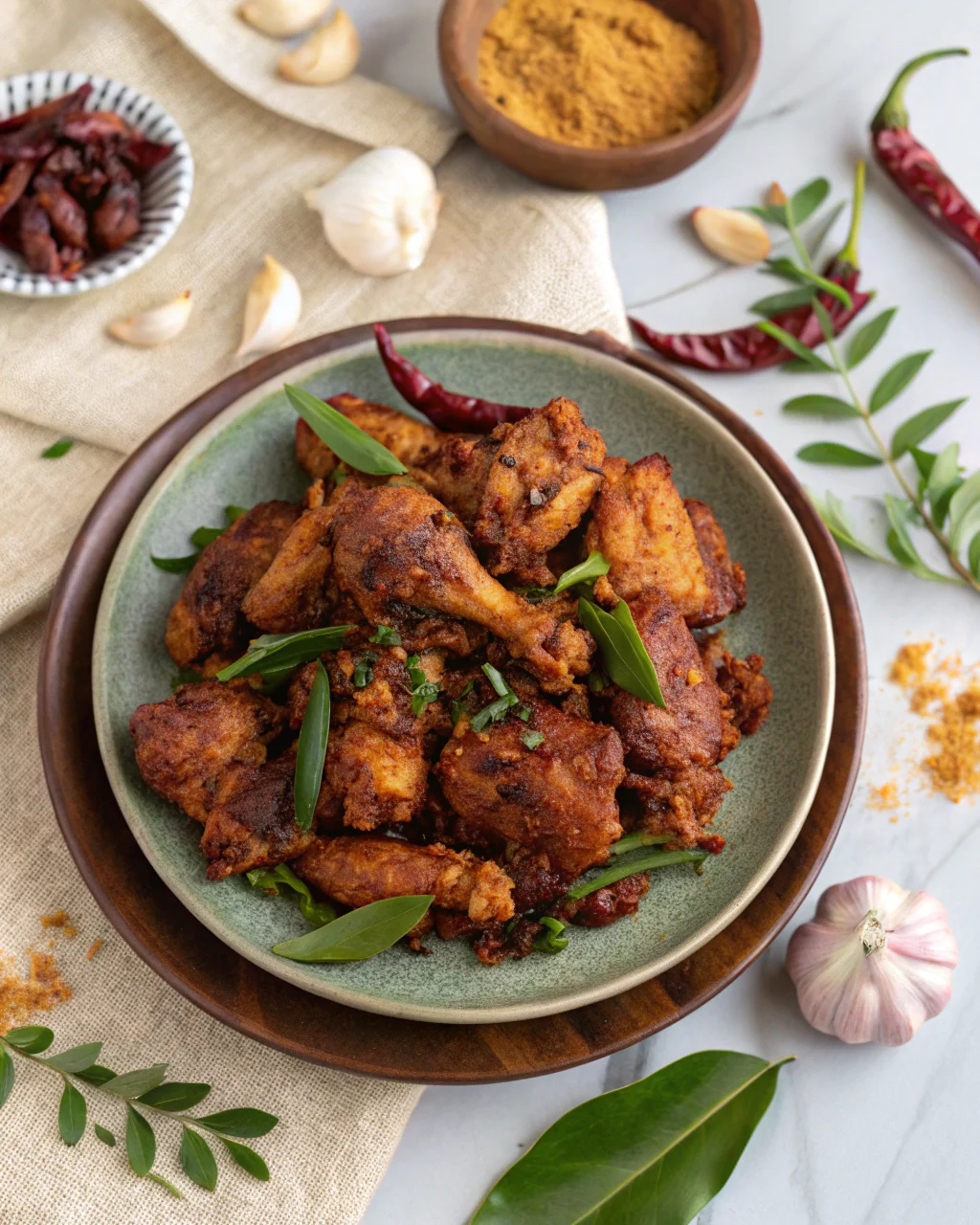
- Protein swap: Prawns (cook less time), paneer, or mushrooms for a stellar vegetarian version.
- Dairy tweak: Replace yogurt with coconut milk (2 tablespoons) for silky richness and a Kerala nod.
- Acid options: No tamarind? Use 1–2 teaspoons coconut vinegar or malt vinegar.
- Heat control: Use more Kashmiri, fewer regular chilies for a milder batch; add a pinch of chili flakes for extra kick.
- Make-ahead masala: Double the paste, freeze in portions; instant flavor bomb for future you.
FAQ
Can I use boneless chicken?
Yes—thighs are best.
Reduce covered cooking time to about 8–10 minutes to keep them juicy, then roast in ghee until the masala clings.
Is ghee mandatory?
It’s the soul of this dish. You can mix in a neutral oil to lighten it, but keep at least 2 tablespoons ghee for aroma and authenticity.
How do I reduce the spice without losing flavor?
Use mostly Kashmiri chilies, deseed them, and keep pepper and fenugreek as listed.
Balance with a touch more jaggery and tamarind.
What’s the best pan?
A heavy cast-iron or thick-bottomed skillet. It helps with even heat and that final “roast” that makes the masala glossy and intense.
Can I make it ahead?
Absolutely.
Cook fully, cool, and refrigerate. Reheat with a splash of water and 1 teaspoon ghee.
Flavors bloom on day two, IMO.
What do I serve it with?
Kerala parotta, neer dosa, appam, ghee rice, or even crusty bread. A cooling raita or simple cucumber salad pairs nicely.
Chef’s Notes
- Flavor booster: Add a tiny pinch of ground star anise for a whisper of licorice warmth.
- Color hack: A teaspoon of paprika enhances the red without extra heat if your chilies are pale.
- Texture tip: Leave some onions chunky for sweet bites between the heat.
- Final check: Your sauce should be thick, shiny, and clingy—not soupy.
If it’s runny, keep roasting.
- Serving move: Warm the plate slightly and finish with a few crisp curry leaves for drama. Because why not?