Lemon Roasted Vegetables – Bright, Simple, and Delicious

Roasting vegetables with lemon is one of those small kitchen tricks that delivers big results. The heat concentrates their sweetness, while the lemon adds brightness that makes everything taste fresh. It’s simple enough for a weeknight and impressive enough for a dinner party.
You can use a mix of whatever you have on hand. The best part? It’s hard to mess up, and it always tastes good.

Lemon Roasted Vegetables - Bright, Simple, and Delicious
Ingredients
Method
- Preheat the oven. Set your oven to 425°F (220°C). A hot oven is key for browning and crisp edges.
- Prep your vegetables. Wash and dry them well. Cut everything into similar-sized pieces so they cook evenly.Halve Brussels sprouts, slice carrots into coins, and cut broccoli and cauliflower into medium florets.
- Use a large sheet pan. Choose a rimmed baking sheet or two if needed. Don’t overcrowd—space between pieces helps them roast instead of steam.
- Make the lemon dressing. In a small bowl, whisk together olive oil, lemon zest, lemon juice, garlic, salt, pepper, and dried herbs. Taste and adjust; it should be bright but balanced.
- Toss to coat. Add the vegetables to the sheet pan and drizzle the dressing over the top. Use your hands or a spatula to coat everything evenly.If using red pepper flakes or smoked paprika, sprinkle them on now.
- Roast the vegetables. Place the pan on the middle rack and roast for 20–30 minutes, stirring once halfway through. Cook time depends on the vegetables and size of the pieces. You’re looking for deep golden edges and tender centers.
- Finish with freshness. Right out of the oven, taste and adjust seasoning.Add more salt, a squeeze of lemon, or a drizzle of olive oil if needed. Sprinkle with chopped parsley or dill, or grate a little Parmesan on top.
- Serve warm. Pair with grilled chicken, salmon, pasta, or quinoa. They’re also great in grain bowls or tucked into wraps.
Why This Recipe Works
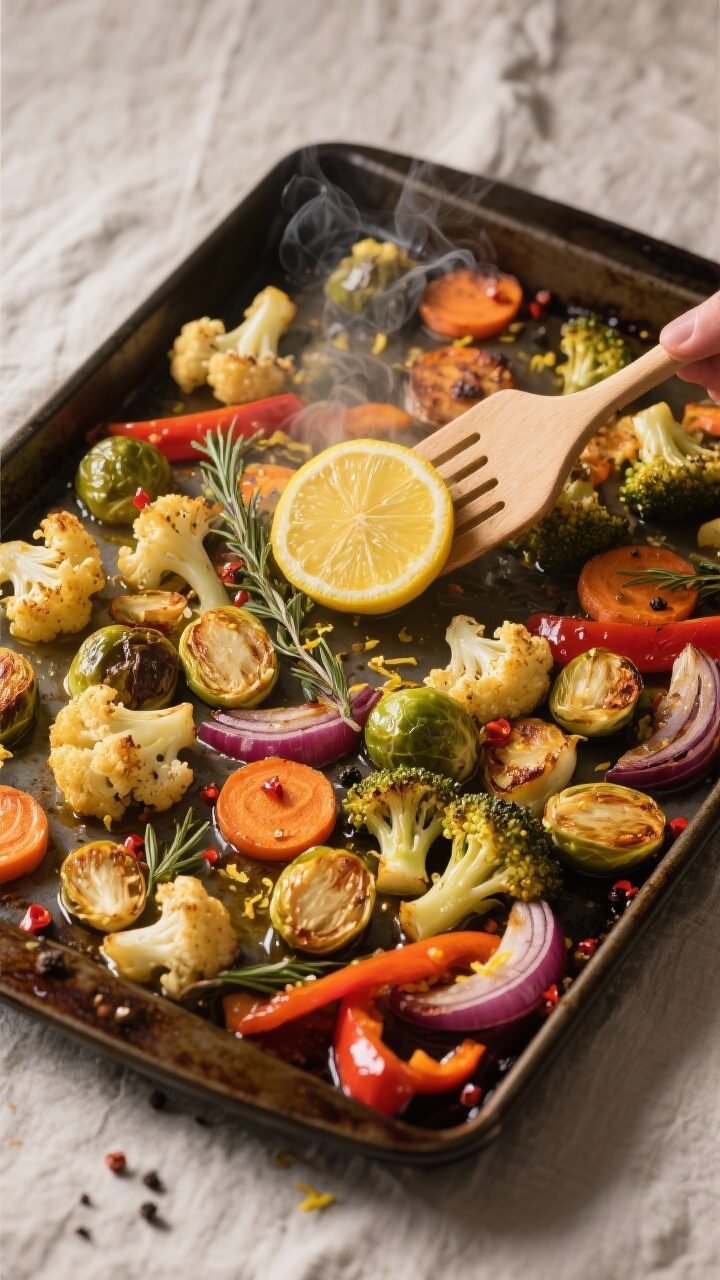
Roasting gives vegetables a lightly crisp exterior and tender interior.
The lemon juice and zest add a clean, citrusy lift that cuts through richness and wakes up earthy flavors. A high oven temperature helps drive off moisture, encouraging caramelization and color. The combination of olive oil, garlic, and herbs creates a savory base that complements the lemon rather than competing with it.
With just a few simple steps, you get big flavor with very little effort.
What You’ll Need
- Assorted vegetables (about 8 cups total): Broccoli, cauliflower, carrots, Brussels sprouts, red onion, bell peppers, zucchini, or baby potatoes
- 1 large lemon: Zest and juice
- 3 tablespoons extra-virgin olive oil
- 3 garlic cloves, minced (or 1 teaspoon garlic powder)
- 1 teaspoon kosher salt (adjust to taste)
- 1/2 teaspoon freshly ground black pepper
- 1 teaspoon dried oregano or thyme (or 1 tablespoon fresh, chopped)
- Optional add-ins: Red pepper flakes, smoked paprika, grated Parmesan, a handful of fresh parsley or dill for serving
Step-by-Step Instructions

- Preheat the oven. Set your oven to 425°F (220°C). A hot oven is key for browning and crisp edges.
- Prep your vegetables. Wash and dry them well. Cut everything into similar-sized pieces so they cook evenly.Halve Brussels sprouts, slice carrots into coins, and cut broccoli and cauliflower into medium florets.
- Use a large sheet pan. Choose a rimmed baking sheet or two if needed. Don’t overcrowd—space between pieces helps them roast instead of steam.
- Make the lemon dressing. In a small bowl, whisk together olive oil, lemon zest, lemon juice, garlic, salt, pepper, and dried herbs. Taste and adjust; it should be bright but balanced.
- Toss to coat. Add the vegetables to the sheet pan and drizzle the dressing over the top. Use your hands or a spatula to coat everything evenly.If using red pepper flakes or smoked paprika, sprinkle them on now.
- Roast the vegetables. Place the pan on the middle rack and roast for 20–30 minutes, stirring once halfway through. Cook time depends on the vegetables and size of the pieces. You’re looking for deep golden edges and tender centers.
- Finish with freshness. Right out of the oven, taste and adjust seasoning.Add more salt, a squeeze of lemon, or a drizzle of olive oil if needed. Sprinkle with chopped parsley or dill, or grate a little Parmesan on top.
- Serve warm. Pair with grilled chicken, salmon, pasta, or quinoa. They’re also great in grain bowls or tucked into wraps.
Storage Instructions
- Refrigerator: Store leftovers in an airtight container for up to 4 days.
- Reheat: For best texture, reheat on a sheet pan at 400°F (205°C) for 8–10 minutes.The oven restores crispness better than the microwave.
- Freezer: Not ideal for most vegetables, as they can turn mushy. Potatoes and carrots freeze better than zucchini or peppers, but freshness is best.
- Make-ahead: You can cut and prep veggies 2–3 days ahead. Store them dry, then toss with the dressing just before roasting.
Benefits of This Recipe
- Flexible: Works with what you have—mix and match vegetables based on season and preference.
- Healthy and satisfying: Packed with fiber, vitamins, and natural sweetness from caramelization.
- Quick prep, easy cleanup: One bowl and one sheet pan keep things simple.
- Great for meal prep: Tastes good hot or cold, and pairs with proteins, grains, or eggs.
- Bright flavor: Lemon lifts and balances the dish without heavy sauces.
Pitfalls to Watch Out For
- Overcrowding the pan: Too many vegetables will steam instead of roast.Use two pans if needed.
- Uneven cuts: Large chunks next to tiny pieces lead to uneven cooking. Aim for similar sizes.
- Not drying vegetables: Excess water prevents browning. Pat them dry after washing.
- Adding lemon too early for delicate veggies: The acid can soften zucchini and peppers.If using lots of tender vegetables, add a final squeeze of lemon after roasting.
- Skipping the stir: Tossing halfway ensures even color and prevents sticking.
Recipe Variations
- Mediterranean: Add cherry tomatoes in the last 10 minutes and finish with olives, feta, and fresh oregano.
- Garlic-Parmesan: Add 1/2 teaspoon garlic powder before roasting and 1/3 cup grated Parmesan right after it comes out of the oven.
- Herby Dill and Mustard: Whisk 1 teaspoon Dijon mustard into the lemon dressing and finish with chopped dill.
- Smoky Paprika: Add 1 teaspoon smoked paprika to the seasoning for deeper flavor.
- Spicy Lemon: Add 1/2 teaspoon red pepper flakes to the dressing and finish with extra lemon zest.
- Sheet-Pan Meal: Add drained chickpeas to the pan for protein. Toss them in the same lemon dressing.
- Winter Veg Mix: Use carrots, parsnips, Brussels sprouts, and red onion. Roast a bit longer for robust caramelization.
- Summer Veg Mix: Use zucchini, bell peppers, and cherry tomatoes.Roast at 425°F but reduce time to avoid mushiness.
FAQ
Which vegetables roast best with lemon?
Sturdy options like broccoli, cauliflower, carrots, Brussels sprouts, potatoes, and red onion roast beautifully. Bell peppers and zucchini also work, but keep them in larger pieces and watch the timing so they don’t soften too much.
Can I use bottled lemon juice?
Yes, but fresh is better. Fresh lemon juice and zest add brightness and aroma that bottled juice can’t match.
What temperature is best for roasting?
A hot oven—425°F (220°C)—gives you caramelized edges and tender centers.
If your oven runs hot, 400°F (205°C) also works, but add a few minutes.
How do I prevent soggy vegetables?
Dry them thoroughly, don’t crowd the pan, and use enough heat. Toss halfway through and use a light, even coat of oil.
Can I make this without garlic?
Absolutely. Skip it or use a pinch of garlic powder for a gentler flavor.
You could also add shallot or a sprinkle of onion powder instead.
What proteins pair well with lemon roasted vegetables?
Grilled chicken, salmon, shrimp, tofu, and chickpeas are great. They also mix nicely into quinoa, couscous, or pasta.
How do I know when they’re done?
Edges should be browned and crisp, and the centers should be fork-tender. Taste a piece—if it’s flavorful and soft in the middle, you’re there.
Can I add the lemon after roasting instead?
Yes.
Tossing with zest before roasting adds aroma, while finishing with a squeeze of lemon adds brightness. You can do both for the best of each.
Final Thoughts
Lemon roasted vegetables are a simple, reliable way to make everyday produce taste special. The method is straightforward, the ingredients are flexible, and the results are consistently good.
Once you try it, you’ll find yourself using this as a base for countless meals. Keep a lemon in the fridge, a sheet pan in the oven, and you’re halfway to dinner.