Mongolian Beef Stir-Fry With Broccoli – A Fast, Flavor-Packed Weeknight Favorite

Mongolian beef is the kind of dish that tastes like takeout but cooks faster than delivery. It’s savory, a little sweet, and full of that glossy sauce that clings to every bite. Add crisp-tender broccoli and you’ve got a full meal in one pan.
This version keeps the flavor bold and the steps simple, so you can get dinner on the table without stress. It’s perfect for busy nights and still impressive enough for company.

Mongolian Beef Stir-Fry With Broccoli – A Fast, Flavor-Packed Weeknight Favorite
Ingredients
Method
- Prep the beef: Freeze the steak for 15–20 minutes to firm it up.Slice thinly against the grain. Toss the slices with 3 tablespoons cornstarch until lightly coated. Set aside while you prepare the sauce.
- Make the sauce: In a bowl, whisk soy sauce, brown sugar, water (or broth), 1 tablespoon cornstarch, rice vinegar, and sesame oil until smooth.Taste and adjust sweetness or saltiness as you like.
- Blanch or steam broccoli: Bring a small pot of water to a boil and cook broccoli for 1 minute, then drain and rinse under cold water. Pat dry. This step keeps broccoli vibrant and crisp-tender.
- Heat the pan: Set a large skillet or wok over medium-high heat.Add 1 tablespoon oil until shimmering.
- Sear the beef in batches: Add a layer of beef slices without crowding. Sear 1–2 minutes per side until browned with a little crust. Transfer to a plate and repeat with remaining beef, adding oil as needed.Don’t overcook—it will finish in the sauce.
- Sauté aromatics: Lower heat slightly. Add a bit more oil if the pan looks dry. Add garlic, ginger, red pepper flakes, and the white parts of the scallions.Stir for 30 seconds until fragrant.
- Combine and sauce: Return the beef to the pan. Add broccoli. Whisk the sauce again and pour it in.Stir and let it bubble for 1–2 minutes until glossy and thickened. If it gets too thick, add a splash of water. If too thin, simmer another minute.
- Finish and serve: Turn off the heat.Sprinkle in the green parts of the scallions and sesame seeds. Serve over steamed rice or noodles while hot.
What Makes This Special
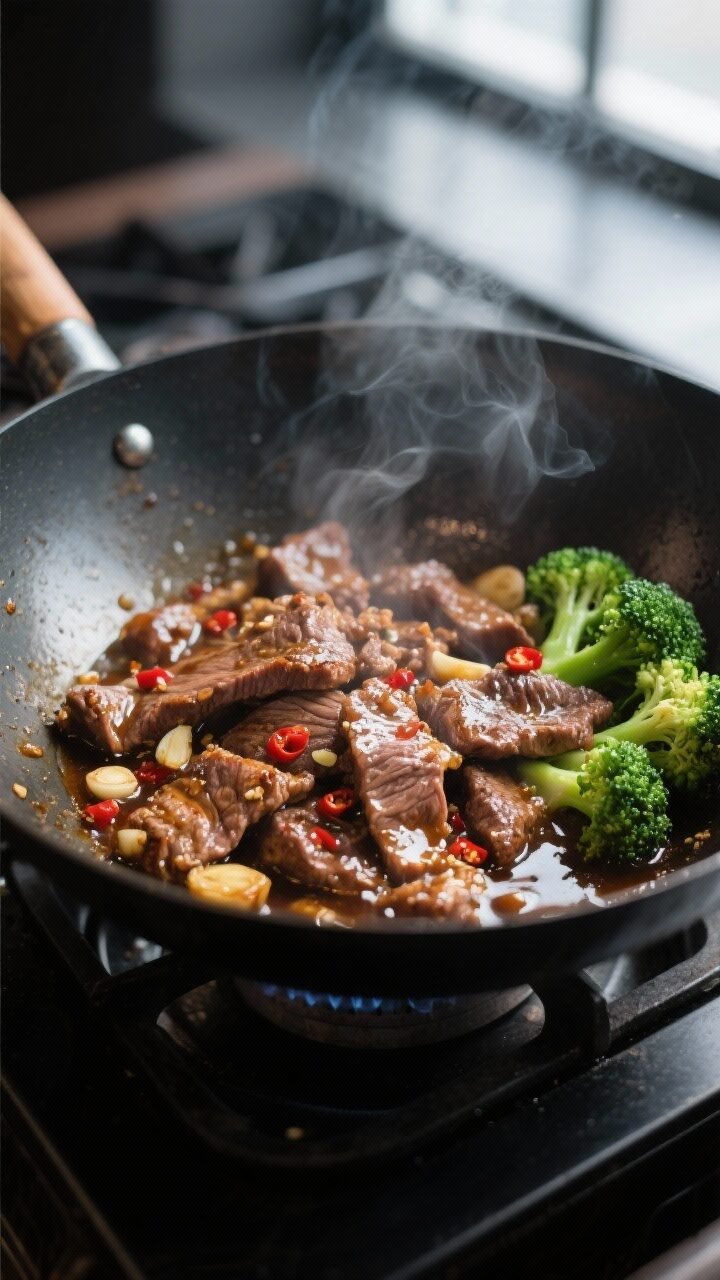
This stir-fry balances sweet, salty, and savory flavors with a touch of ginger warmth. Thinly sliced beef sears quickly, so it stays tender while gaining that caramelized edge.
Broccoli soaks up the sauce without getting soggy, giving you freshness and crunch in every forkful. The sauce uses pantry staples and comes together in minutes—no bottled sauce needed. It’s fast, flexible, and deeply satisfying.
What You’ll Need
- 1 lb (450 g) flank steak or sirloin, sliced thinly against the grain
- 3 cups broccoli florets, bite-sized
- 3 tablespoons cornstarch (for coating the beef)
- 2 tablespoons neutral oil (canola, avocado, or peanut), plus more as needed
- 4 cloves garlic, minced
- 1 tablespoon fresh ginger, minced or grated
- 3–4 scallions, sliced (whites and greens separated)
- 1/2 teaspoon red pepper flakes or to taste (optional)
- Sesame seeds for garnish (optional)
For the sauce:
- 1/2 cup low-sodium soy sauce
- 1/3 cup brown sugar (light or dark)
- 1/2 cup water or low-sodium beef broth
- 1 tablespoon cornstarch
- 1 tablespoon rice vinegar (or apple cider vinegar)
- 1 teaspoon toasted sesame oil
Optional add-ins: sliced bell pepper, snow peas, mushrooms, or a splash of Shaoxing wine for complexity.
Instructions
- Prep the beef: Freeze the steak for 15–20 minutes to firm it up.Slice thinly against the grain. Toss the slices with 3 tablespoons cornstarch until lightly coated. Set aside while you prepare the sauce.
- Make the sauce: In a bowl, whisk soy sauce, brown sugar, water (or broth), 1 tablespoon cornstarch, rice vinegar, and sesame oil until smooth.Taste and adjust sweetness or saltiness as you like.
- Blanch or steam broccoli: Bring a small pot of water to a boil and cook broccoli for 1 minute, then drain and rinse under cold water. Pat dry. This step keeps broccoli vibrant and crisp-tender.
- Heat the pan: Set a large skillet or wok over medium-high heat.Add 1 tablespoon oil until shimmering.
- Sear the beef in batches: Add a layer of beef slices without crowding. Sear 1–2 minutes per side until browned with a little crust. Transfer to a plate and repeat with remaining beef, adding oil as needed.Don’t overcook—it will finish in the sauce.
- Sauté aromatics: Lower heat slightly. Add a bit more oil if the pan looks dry. Add garlic, ginger, red pepper flakes, and the white parts of the scallions.Stir for 30 seconds until fragrant.
- Combine and sauce: Return the beef to the pan. Add broccoli. Whisk the sauce again and pour it in.Stir and let it bubble for 1–2 minutes until glossy and thickened. If it gets too thick, add a splash of water. If too thin, simmer another minute.
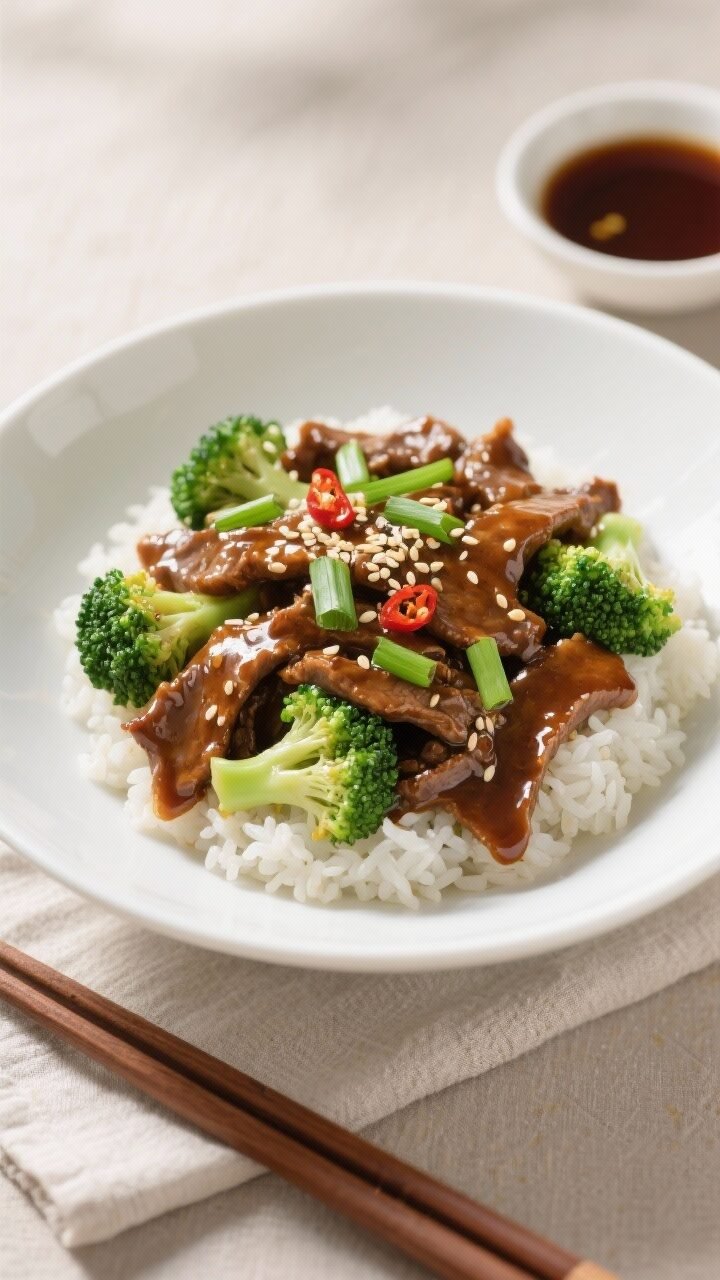
- Finish and serve: Turn off the heat.Sprinkle in the green parts of the scallions and sesame seeds. Serve over steamed rice or noodles while hot.
How to Store
- Refrigerate: Cool completely, then store in an airtight container for up to 4 days.
- Reheat: Warm gently in a skillet over medium heat with a splash of water to loosen the sauce. Microwave in short bursts, stirring between intervals.
- Freeze: Best within 2 months.Thaw overnight in the fridge, then reheat on the stove. Note that broccoli may soften a bit after freezing.
- Meal prep tip: Keep cooked rice separate so it doesn’t absorb all the sauce during storage.
Why This Is Good for You
This dish offers a practical balance of protein, fiber, and flavor. Beef provides iron, zinc, and B vitamins, which support energy and immune health. Broccoli brings fiber, vitamin C, vitamin K, and antioxidants, adding bulk and nutrients with few calories. Using a homemade sauce lets you control sodium and sugar, and you can make simple swaps—like low-sodium soy sauce and less sugar—without losing character.
If you serve it with brown rice, you’ll add even more fiber for a steadier, more satisfying meal.
What Not to Do
- Don’t overcrowd the pan. Crowding steams the beef and prevents browning. Cook in batches for the best texture.
- Don’t skip the cornstarch on the beef. It helps create that silky, restaurant-style coating and improves browning.
- Don’t overcook the broccoli. Aim for crisp-tender; mushy broccoli won’t hold up in the sauce.
- Don’t use high-sodium soy without tasting. The sauce can turn too salty fast; adjust with water or low-sodium soy.
- Don’t walk away during the final simmer. The sauce thickens quickly. Keep stirring to avoid clumps or scorching.
Alternatives
- Protein swaps: Use chicken thighs, pork tenderloin, or extra-firm tofu.For tofu, press it well, toss in cornstarch, and pan-fry until crisp before saucing.
- Veggie variations: Add snow peas, baby corn, bok choy, or bell peppers. Keep total veg to about 4 cups so the sauce coats everything nicely.
- Gluten-free: Use tamari instead of soy sauce and confirm your cornstarch is certified gluten-free.
- Lower sugar: Reduce brown sugar to 2–3 tablespoons and add a splash more vinegar for balance.
- Spice lovers: Add chili-garlic sauce or sliced fresh chiles. A drizzle of chili oil at the end is great, too.
- Noodle option: Toss with cooked lo mein or rice noodles instead of serving with rice.Add a splash of water to loosen the sauce.
FAQ
What cut of beef works best?
Flank steak is a favorite for its flavor and texture. Sirloin or flat iron also work well. The key is to slice thinly against the grain so it stays tender.
Can I make this without cornstarch?
Yes, but you’ll lose some of that glossy, clingy texture.
Potato starch or tapioca starch are good substitutes. If you skip it entirely, simmer the sauce a bit longer to reduce and thicken.
How do I keep the beef tender?
Slice thin, sear hot and fast, and don’t overcook. Coating in cornstarch helps protect the meat.
If you have time, a quick 15-minute marinade in 1 tablespoon soy sauce and 1 teaspoon oil before coating can add a touch more tenderness.
Can I use frozen broccoli?
Yes. Thaw and pat dry first to reduce water. Skip blanching and add it directly to the pan to heat through in the sauce.
What should I serve it with?
Steamed jasmine or brown rice is classic.
Cauliflower rice keeps it lighter, and noodles make it extra comforting. Add a simple cucumber salad or quick pickled carrots for contrast.
Is this very sweet?
It’s gently sweet—typical of Mongolian-style sauces. If you prefer less sweetness, start with 2 tablespoons brown sugar and add more to taste.
Vinegar and chili flakes help balance sweetness nicely.
Can I double the recipe?
Absolutely. Sear the beef in more batches and use a large wok or Dutch oven. Double the sauce ingredients exactly and adjust thickness with a splash of water if needed.
What oil is best for stir-frying?
Use a high-heat neutral oil like canola, avocado, peanut, or sunflower.
Avoid extra-virgin olive oil—it can smoke at stir-fry temperatures.
In Conclusion
Mongolian Beef Stir-Fry with Broccoli delivers bold flavor with minimal fuss. With a quick-seared beef, crisp veggies, and a glossy, balanced sauce, it’s the kind of meal you’ll want in your regular rotation. Keep the steps simple, avoid crowding the pan, and adjust the sauce to your taste.
Serve hot over rice or noodles, and enjoy a takeout favorite made better at home.