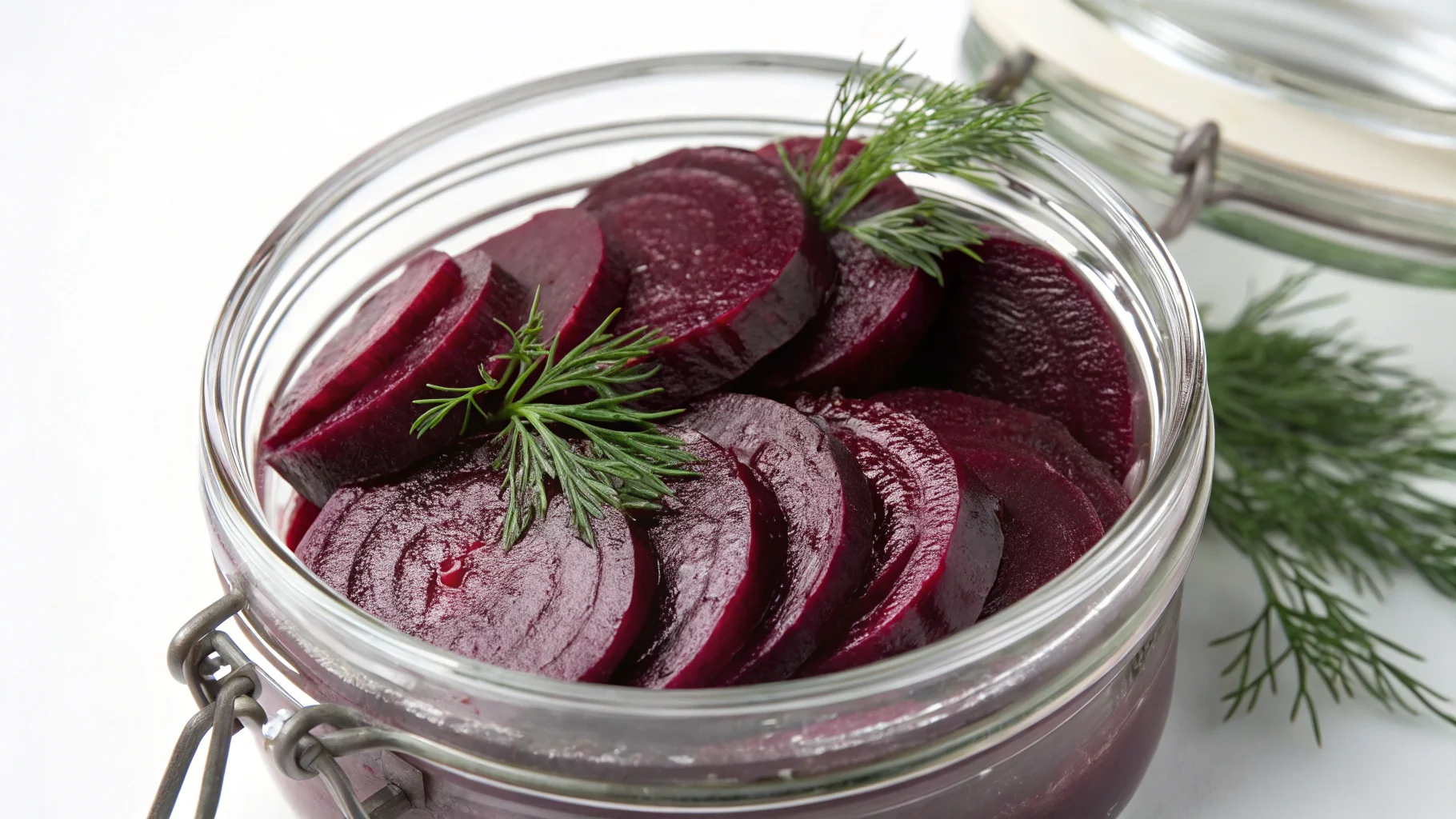
Pickled Beets for Canning: Bright, Bold, and Shelf-Stable Glory

You don’t need a farmhouse or a root cellar to feel like a canning legend. You need beets, a pot, and a plan.
This jarred ruby gold turns basic sandwiches into show-offs and ho-hum salads into “who made this?” moments.
The flavor? Sweet-tangy with a little spice swagger. Make a batch once, and you’ll wonder why you ever settled for the store stuff.
The Secret Behind This Recipe
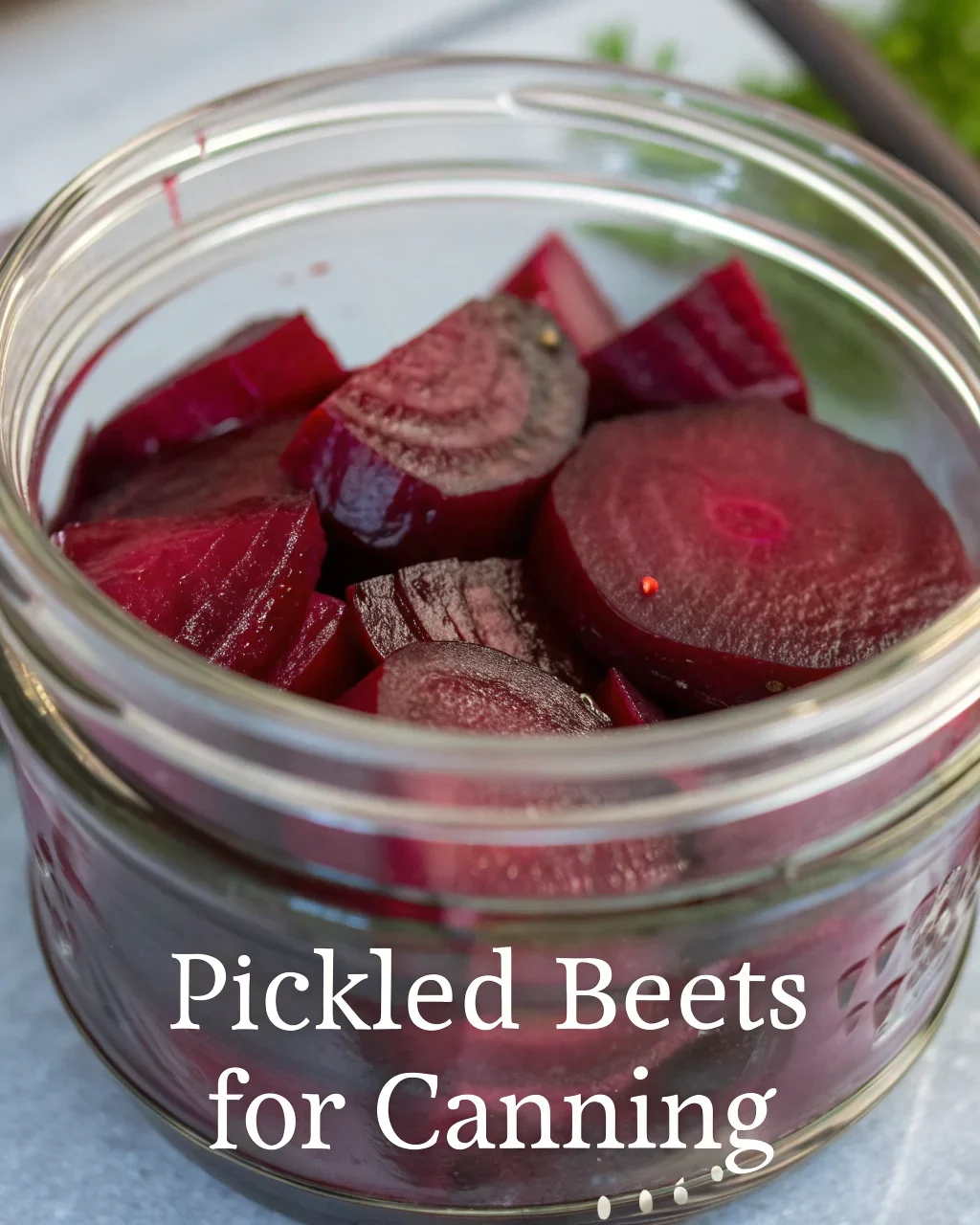
This recipe mirrors classic, tested canning guidance while dialing in a balanced brine: not too sweet, not too sharp.
The key is using a 1:1 ratio of vinegar to water for safe acidity, plus just enough sugar to bring out beet earthiness. A quick pre-boil softens the beets; a hot pack method seals in color and flavor. Small warm spices add depth without hijacking the show.
Servings, Prep time, Cooking time, Calories
- Servings: About 6 pint jars (12–18 servings)
- Prep Time: 30–40 minutes
- Cooking Time: 60–75 minutes (includes beet simmer + water bath)
- Calories: ~80 per 1/2-cup serving
What You’ll Gather
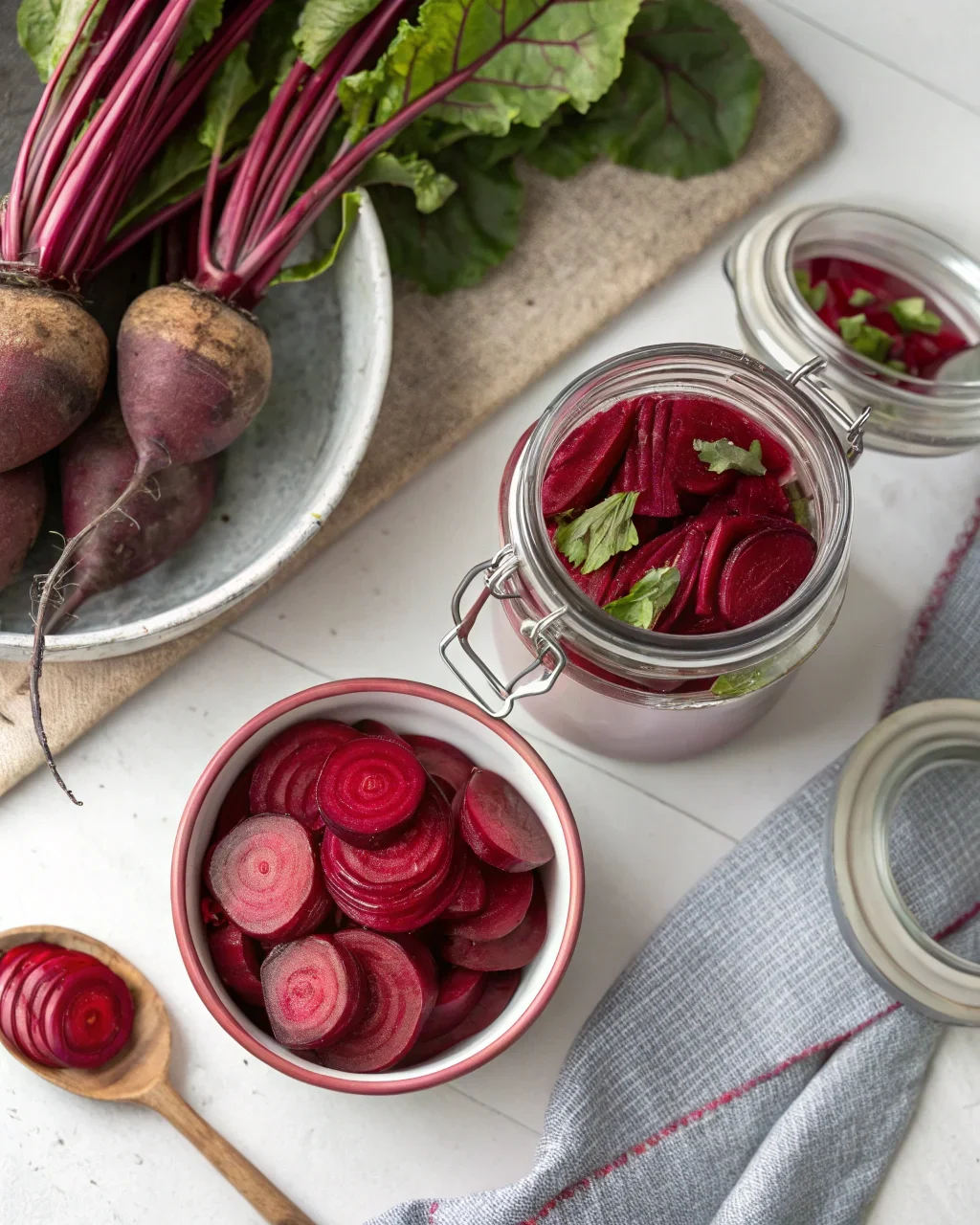
- 4–5 pounds fresh beets (medium, firm, with tops trimmed to 1 inch)
- 4 cups distilled white vinegar (5% acidity)
- 4 cups water
- 1 1/2 to 2 cups granulated sugar (2 cups for classic sweet-tangy; scale to taste)
- 2 teaspoons pickling salt (or kosher, non-iodized)
- 1 large yellow onion, thinly sliced (optional but recommended)
- Whole spices (per pint jar):
- 1/2 teaspoon yellow mustard seeds
- 4–6 whole black peppercorns
- 1 small piece cinnamon stick
- 2–3 whole cloves
- Equipment: 6 sterilized pint jars, new lids, bands, large pot, canning rack, jar lifter, ladle, funnel
Cooking Instructions
- Prep the beets: Trim beet greens to 1 inch (save greens for sautéing, you legend).
Scrub beets well to remove dirt.
- Cook the beets: Place beets in a large pot, cover with water, and simmer 25–35 minutes until just tender when pierced. Don’t overcook—soft, not mush.
- Cool and peel: Drain, then run beets under cool water. Skins should slip off with a gentle rub.
Slice into 1/4-inch rounds or wedges.
- Make the brine: In a clean pot, combine vinegar, water, sugar, and salt. Bring to a boil, stirring to dissolve. Keep hot.
- Heat your jars: Keep jars warm (in a 180°F oven or in hot water) to avoid thermal shock.
Bring your water bath canner to a simmer.
- Pack the jars: Into each hot pint jar, add the spices (mustard seed, peppercorns, cinnamon, cloves) and a few onion slices.
- Add beets: Pack beets snugly without crushing. Leave 1/2-inch headspace at the top.
- Pour brine: Ladle hot brine over beets to 1/2-inch headspace. Remove bubbles with a non-metallic tool; top up brine if needed to maintain headspace.
- Wipe and seal: Wipe rims with a damp cloth.
Center lids, apply bands finger-tight (not gorilla-tight).
- Process: Place jars in boiling water bath with at least 1 inch of water over tops. Process 30 minutes for pints (adjust for altitude; see below).
- Cool: Remove jars, set on a towel, and let stand 12–24 hours. Don’t touch the bands while cooling.
Listen for those glorious pops.
- Check seals: Lids should be concave and not flex when pressed. Label and store.
How Long Does It Keep?
Properly processed jars keep up to 12–18 months in a cool, dark place. For best flavor and texture, wait at least 1–2 weeks before opening to let the spices mingle.
Refrigerate after opening and use within 4–6 weeks. If a jar ever looks off, leaks, or smells weird—toss it. No heroics.
What’s Great About This
- Balanced brine: Sweet meets tang without a sugar crash.
- Flexible flavors: Spices are classic, but not bossy.
- Meal upgrade: Sandwiches, salads, and charcuterie go from meh to memorable, fast.
- Budget-friendly: Peak-season beets + pantry staples = big yield, low cost.
- Color therapy: That magenta?
Instant joy. Science probably agrees, IMO.
Nutrition Stats
Per 1/2-cup serving (approximate):
- Calories: ~80
- Carbohydrates: ~18 g
- Sugar: ~15 g
- Fiber: ~2 g
- Protein: ~1 g
- Sodium: ~160 mg
- Key micronutrients: Folate, manganese, potassium, nitrates
These are estimates—actual values vary by beet size and sugar preference.
Easy-to-Miss Errors
- Wrong vinegar strength: Always use 5% acidity vinegar. Anything lower risks unsafe acidity.
- Overcooking beets: Mushy beets = sad texture.
Stop when just tender.
- Skipping headspace: Less than 1/2 inch can cause siphoning; more can trap air and affect seals.
- Cold jars + hot brine: That’s a cracked-jar party. Keep jars warm.
- Altitude oops: Not adjusting time can underprocess your jars. See FAQ for how.
- Dirty rims: Any stickiness can kill seals.
Wipe well
Optional Substitutions
- Vinegar: Swap up to half the white vinegar with apple cider vinegar (still 5% acidity) for a softer, fruitier tang.
- Sweetener: Use brown sugar for molasses notes. Avoid honey for canning (flavor can dominate and flow differs), but it’s fine for refrigerator-only pickles.
- Spices: Add bay leaf, coriander seed, or a thin slice of fresh ginger per jar. Don’t overload—the beets should still star.
- Onion-free: Skip onions if you prefer pure beet flavor; replace volume with more beets.
- Golden or chioggia beets: Totally fine.
Colors may bleed less with golden beets; flavor stays on point.
FAQ
Do I need to peel the beets?
Yes. The skins can be tough and dusty-tasting. Luckily, after boiling, the skins slip off easily with your fingers or a paper towel.
Can I pressure-can these instead?
You can, but it’s not necessary for pickles.
The tested method for pickled beets is a boiling water bath due to the high acidity. If you pressure-can, follow a tested recipe designed for pressure processing times and pressures.
How do I adjust for altitude?
For water bath canning, add time based on altitude: 1,001–3,000 ft add 5 minutes; 3,001–6,000 ft add 10 minutes; above 6,000 ft add 15 minutes. So 30 minutes becomes 35, 40, or 45 respectively.
Can I reduce the sugar?
Yes, within reason.
The sugar is for flavor and texture, not safety. You can drop to 1 cup, but the brine will be sharper and less rounded. Keep the vinegar-to-water ratio the same.
Can I use red wine vinegar?
If it’s 5% acidity, yes—expect a slightly different color and a smoother, winey tang.
White vinegar keeps the color brightest and flavor cleanest, FYI.
Why did my liquid level drop after processing?
That’s siphoning—usually from rapid temperature changes or overpacked jars. As long as the seal is intact and food is still covered, it’s typically fine. Next time, pack a bit looser and avoid sudden temp swings.
Are refrigerator-only pickled beets an option?
Totally.
Pack cooked beets in clean jars, pour hot brine over, cool, and refrigerate. They’re ready in 24–48 hours and last 4–6 weeks. No water bath needed.
What should I serve these with?
Go classic with goat cheese and arugula, stack in a turkey sandwich, toss with oranges and pistachios, or chop into a tangy beet relish for grilled meats.
They also crush it on charcuterie boards.
Recipe Reflections
Canning is part craft, part patience, part victory lap. This version respects tested acidity and timing while giving you flavor control via spices and sugar. Batch one turns into batch two because the jars vanish faster than you think.
And the payoff? A pantry that looks like you mean business—and tastes like it too.