Pork Noodle Stir Fry – A Quick, Flavor-Packed Weeknight Dinner

This Pork Noodle Stir Fry brings together tender pork, springy noodles, and crisp vegetables in a savory, slightly sweet sauce. It’s the kind of meal that hits the table fast and tastes like you planned it all day. The flavors are bold but balanced, and the textures are exactly what you want in a stir fry—juicy, chewy, and crisp.
Whether you’re feeding a family or cooking for one with leftovers in mind, this dish delivers. You only need one pan, a handful of pantry staples, and about 30 minutes.
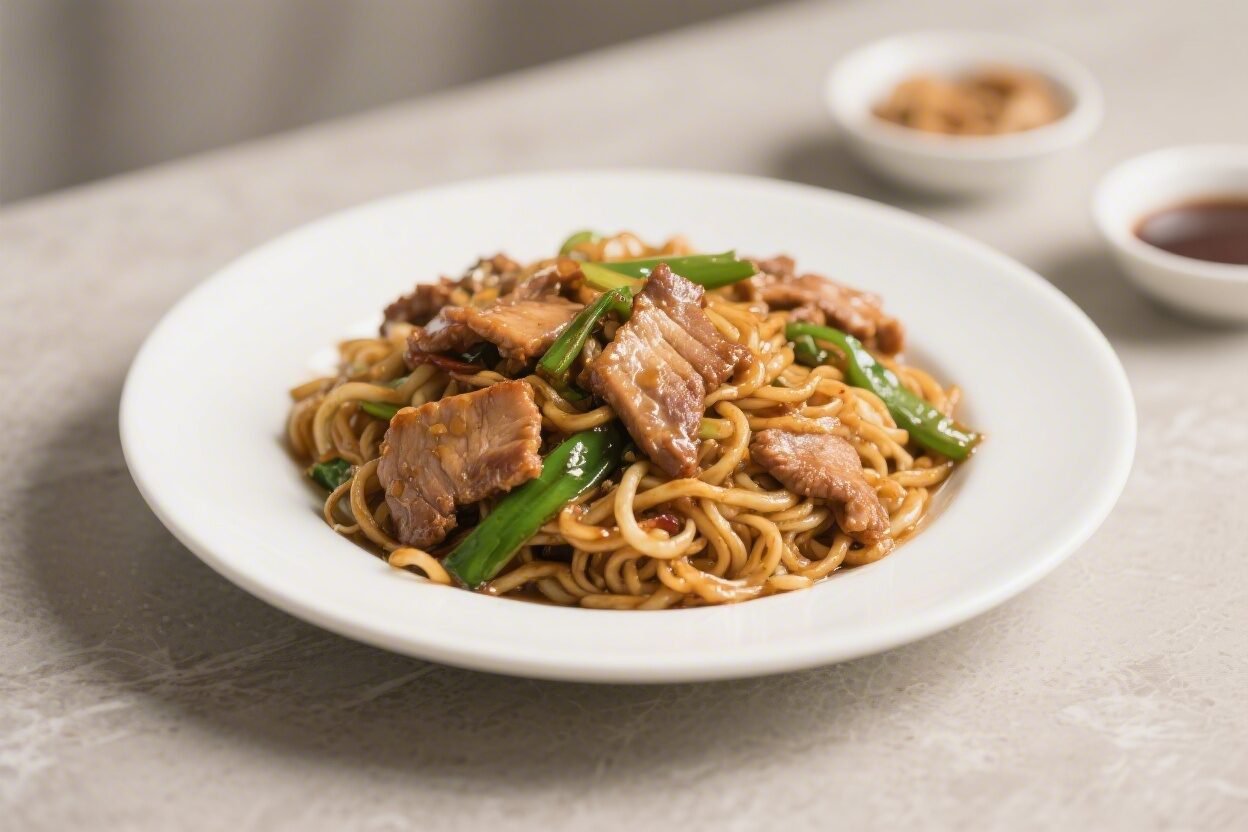
Pork Noodle Stir Fry - A Quick, Flavor-Packed Weeknight Dinner
Ingredients
Method
- Prep the pork: Freeze the pork for 15 minutes to firm it up, then slice against the grain into thin strips.Toss with a pinch of salt, black pepper, and half the cornstarch. This helps the pork sear and stay tender.
- Make the sauce: In a small bowl, mix soy sauce, oyster sauce, hoisin (if using), dark soy (if using), rice vinegar, sugar, remaining cornstarch, and 2 tablespoons of water. Stir until smooth.
- Cook the noodles: Boil noodles until just shy of done (al dente).Drain and rinse briefly under cool water to stop cooking. Toss with a little oil to prevent sticking and set aside.
- Heat the pan: Place a large wok or skillet over high heat. Add 1 tablespoon of oil and swirl to coat until shimmering.
- Stir-fry the pork: Add pork in a single layer.Let it sear for 60–90 seconds without moving, then stir-fry until just cooked through. Remove to a plate. Do not crowd the pan; cook in batches if needed.
- Aromatics: Add another tablespoon of oil.Add garlic, ginger, and the white parts of the scallions. Stir-fry for 20–30 seconds until fragrant.
- Veggies: Add onion and bell pepper; cook 2 minutes. Add snap peas and cabbage; cook another 2–3 minutes until crisp-tender.Season lightly with salt and pepper.
- Combine: Return pork and any juices to the pan. Add noodles and pour in the sauce. Toss vigorously over high heat for 1–2 minutes until the sauce thickens and coats everything.
- Finish: Turn off the heat.Drizzle with sesame oil, add the green parts of the scallions, and sprinkle red pepper flakes if you like heat. Taste and adjust seasoning.
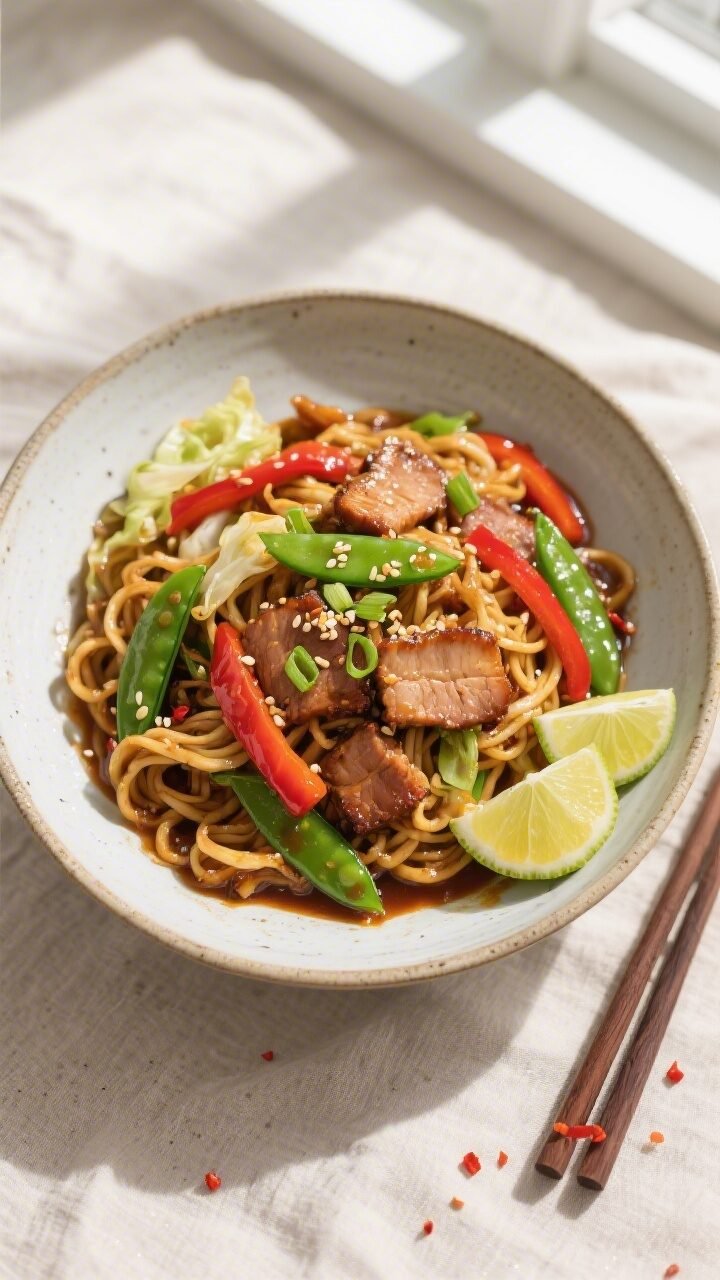
- Serve: Plate immediately. Garnish with sesame seeds and lime wedges for a fresh pop.
What Makes This Special
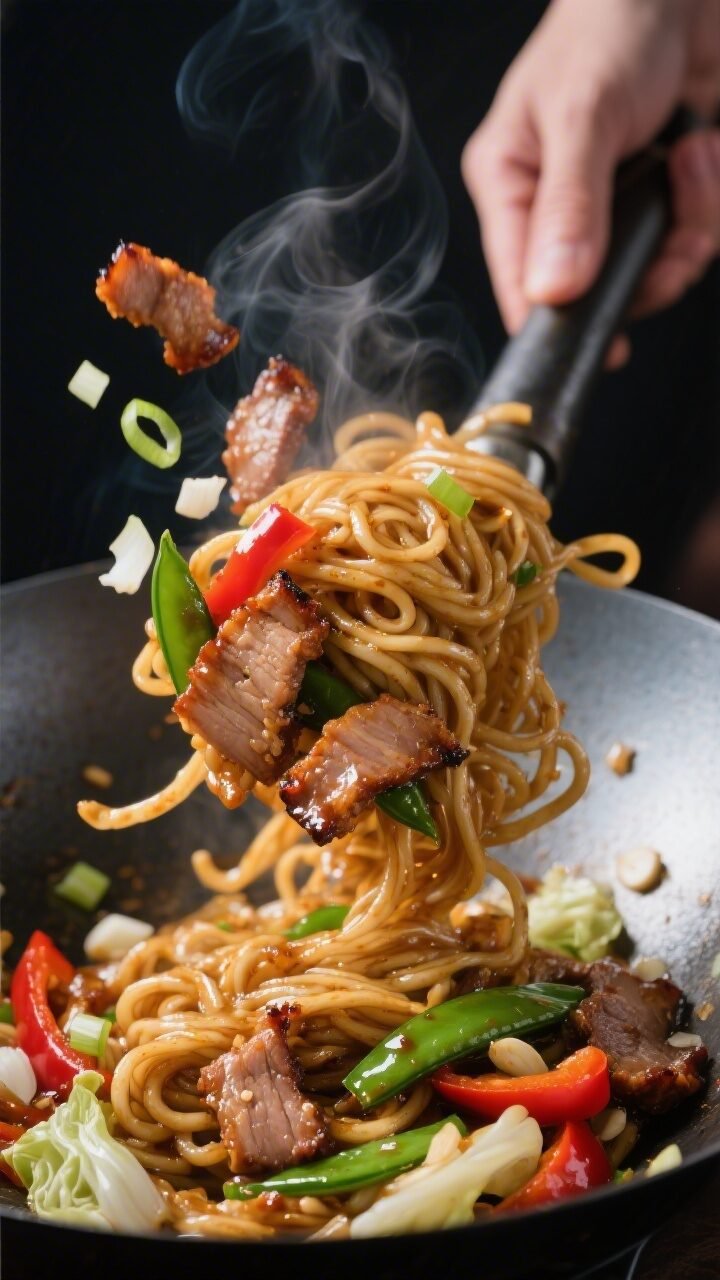
This stir fry is built around high-heat cooking that sears the pork and locks in flavor. The sauce is a simple mix of soy, oyster sauce, a touch of sugar, and rice vinegar for brightness.
It clings to the noodles without turning them soggy. You can easily swap in different veggies or noodles, and it still works. It’s also budget-friendly and scales well for meal prep.
Ingredients
- 8 oz dried wheat noodles (lo mein, ramen, or spaghetti) or 12 oz fresh stir-fry noodles
- 12 oz pork, thinly sliced (tenderloin, shoulder, or boneless chops)
- 2 tbsp soy sauce (low-sodium if preferred)
- 1 tbsp oyster sauce
- 1 tbsp hoisin sauce (optional for extra sweetness)
- 1 tsp dark soy sauce (optional for color and depth)
- 1 tbsp rice vinegar
- 1 tsp sugar or honey
- 1 tsp cornstarch (for thickening)
- 2–3 tbsp neutral oil (canola, peanut, or avocado)
- 3 cloves garlic, minced
- 1-inch piece ginger, peeled and minced
- 1 small onion, thinly sliced
- 1 red bell pepper, thinly sliced
- 1 cup snap peas or green beans, trimmed
- 2 cups cabbage, thinly sliced (napa or green)
- 2 scallions, sliced (white and green parts separated)
- 1–2 tsp sesame oil
- Red pepper flakes or fresh chili (optional, to taste)
- Salt and black pepper, to taste
- To garnish: toasted sesame seeds, extra scallions, lime wedges (optional)
Instructions
- Prep the pork: Freeze the pork for 15 minutes to firm it up, then slice against the grain into thin strips.Toss with a pinch of salt, black pepper, and half the cornstarch. This helps the pork sear and stay tender.
- Make the sauce: In a small bowl, mix soy sauce, oyster sauce, hoisin (if using), dark soy (if using), rice vinegar, sugar, remaining cornstarch, and 2 tablespoons of water. Stir until smooth.
- Cook the noodles: Boil noodles until just shy of done (al dente).Drain and rinse briefly under cool water to stop cooking. Toss with a little oil to prevent sticking and set aside.
- Heat the pan: Place a large wok or skillet over high heat. Add 1 tablespoon of oil and swirl to coat until shimmering.
- Stir-fry the pork: Add pork in a single layer.Let it sear for 60–90 seconds without moving, then stir-fry until just cooked through. Remove to a plate. Do not crowd the pan; cook in batches if needed.
- Aromatics: Add another tablespoon of oil.Add garlic, ginger, and the white parts of the scallions. Stir-fry for 20–30 seconds until fragrant.
- Veggies: Add onion and bell pepper; cook 2 minutes. Add snap peas and cabbage; cook another 2–3 minutes until crisp-tender.Season lightly with salt and pepper.
- Combine: Return pork and any juices to the pan. Add noodles and pour in the sauce. Toss vigorously over high heat for 1–2 minutes until the sauce thickens and coats everything.
- Finish: Turn off the heat.Drizzle with sesame oil, add the green parts of the scallions, and sprinkle red pepper flakes if you like heat. Taste and adjust seasoning.
- Serve: Plate immediately. Garnish with sesame seeds and lime wedges for a fresh pop.
How to Store
Let leftovers cool, then pack into an airtight container. Refrigerate for up to 4 days. For best results, reheat in a hot skillet with a splash of water to loosen the sauce and revive the noodles.
You can microwave in short bursts, stirring in between, but the skillet keeps the texture better. Avoid freezing; noodles can turn mushy after thawing.
Health Benefits
- Balanced macros: Lean pork offers high-quality protein for muscle repair, while noodles provide energy-rich carbs. Vegetables add fiber and micronutrients.
- Iron and B vitamins: Pork is a good source of iron, B6, and B12, which support energy levels and brain health.
- Vegetable variety: Bell peppers and cabbage bring vitamin C and antioxidants that support immune function.
- Customizable sodium: Using low-sodium soy sauce and adding salt at the end gives you control over sodium intake.
- Healthy fats: Cooking with a small amount of high-heat oil and finishing with sesame oil adds flavor without excess fat.
Common Mistakes to Avoid
- Overcooking noodles: If they’re too soft before they hit the pan, they’ll break and turn gummy.Keep them al dente.
- Crowding the pan: This steams the pork and veggies. Cook the pork in batches and keep the heat high.
- Skipping the cornstarch: That small amount helps the sauce cling to the noodles and keeps the pork tender.
- Too much sauce: It’s tempting, but extra liquid can make the dish soggy. The goal is a glossy coating, not a pool.
- No prep before cooking: Stir fries move fast.Have everything chopped and the sauce mixed before you turn on the heat.
Alternatives
- Noodles: Swap in rice noodles, udon, soba, or even zucchini noodles. Adjust cooking time to keep them firm.
- Protein: Chicken thigh, beef flank, shrimp, or extra-firm tofu all work well. For tofu, press and pan-fry until crisp before adding.
- Vegetables: Broccoli, carrots, baby corn, mushrooms, bok choy, or bean sprouts can replace or join the mix.
- Sauce tweaks: Add chili-garlic sauce for heat, a spoon of peanut butter for richness, or a splash of fish sauce for umami.
- Gluten-free: Use tamari or coconut aminos, gluten-free oyster sauce, and rice noodles.
- Lower carb: Use shirataki noodles or spiralized vegetables and reduce the sugar in the sauce.
FAQ
Can I use ground pork instead of sliced pork?
Yes.
Brown 12 oz of ground pork in a hot pan, breaking it into small pieces. Drain any excess fat, then proceed with the aromatics and vegetables. The flavor is great and the texture is slightly different but still satisfying.
What’s the best cut of pork for stir fry?
Pork tenderloin is lean and tender, making it easy to slice thin.
Pork shoulder or butt works too and offers more richness; just trim excess fat and slice thinly against the grain. Boneless chops are a good middle ground.
How do I keep noodles from sticking together?
Cook to al dente, rinse briefly, and toss with a teaspoon of oil. Have the pan hot and ready so the noodles don’t sit too long.
If they clump, loosen them with a splash of water in the pan as you toss.
Is oyster sauce necessary?
It adds deep, savory-sweet flavor, but you can replace it with an extra teaspoon of soy sauce and a small pinch of sugar. For a fish-free option, use a vegetarian “oyster” mushroom sauce or a thickened soy-mushroom mixture.
Can I make this ahead?
You can slice the pork and vegetables and mix the sauce a day ahead. Cook the noodles just before stir-frying, or undercook them slightly if you plan to reheat.
Leftovers reheat well in a skillet with a bit of water.
How spicy is this?
As written, it’s mild. Add red pepper flakes, fresh chili, or a spoon of chili crisp at the end to dial up the heat. Taste and adjust so it’s right for you.
What if I don’t have a wok?
A large, heavy skillet works fine.
The key is space and heat—avoid crowding and let the pan get very hot before each step. Cast iron or stainless steel is ideal.
Can I use pre-cooked pork?
Yes, but add it near the end only to warm through. Pre-cooked pork won’t sear the same way, so focus on building flavor with the aromatics and sauce.
In Conclusion
Pork Noodle Stir Fry is a reliable, flexible meal that tastes like takeout but cooks faster than delivery.
With a smart sauce, high heat, and a few crisp vegetables, you get big flavor in under 30 minutes. Keep the technique simple, season to your taste, and make it your own with the swaps you love. It’s a weeknight staple you’ll come back to again and again.