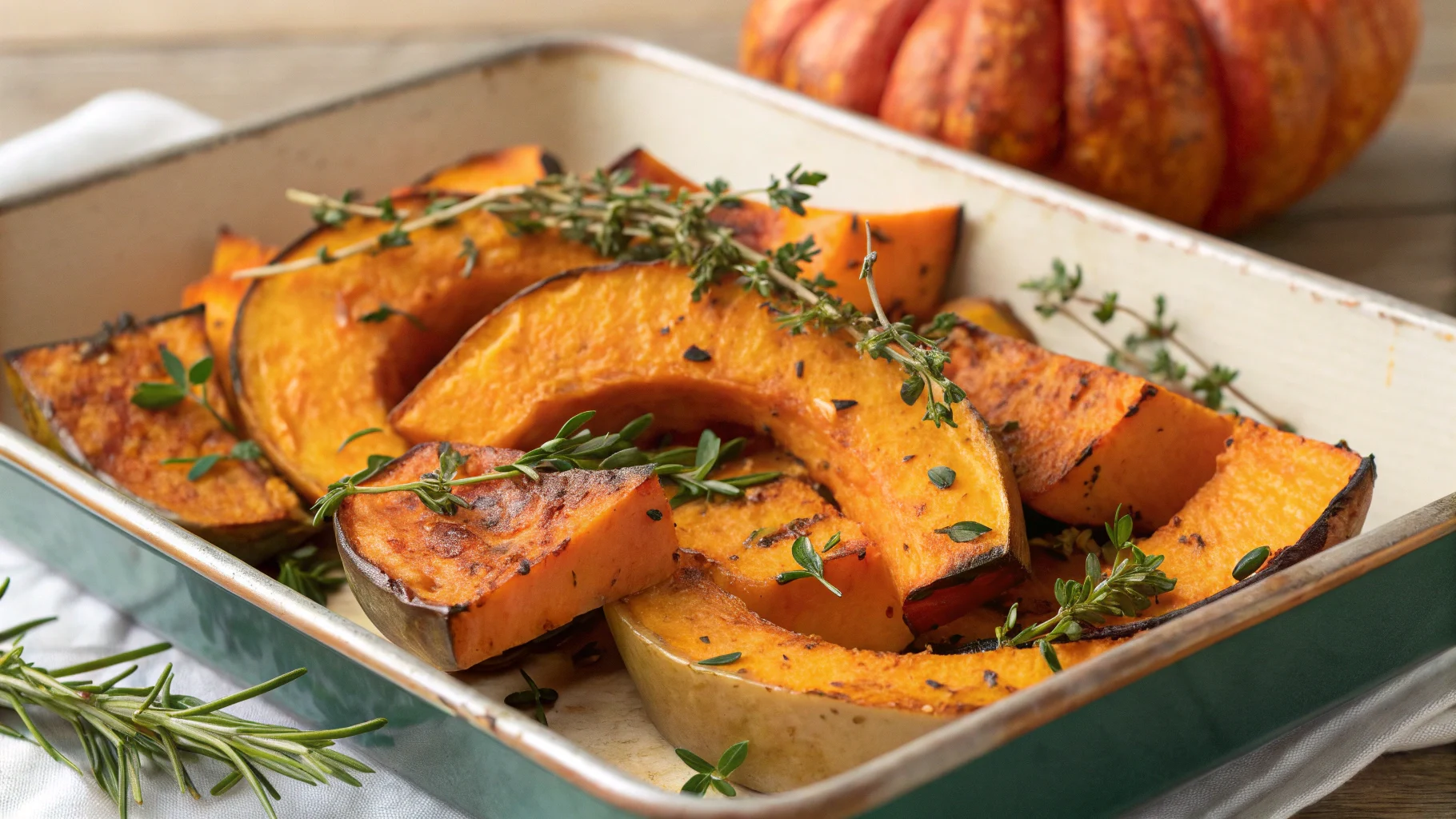
Roasted Kabocha Squash with Herbs: Crispy Edges, Cozy Flavor

You want a side dish that flexes on the table like it owns the room? This is it.
Kabocha squash goes in humble and walks out with caramelized edges, buttery insides, and herby swagger. It’s the kind of “simple” that tastes like somebody’s grandma and a Michelin chef teamed up.
You’ll use a handful of ingredients and somehow get layers of flavor. And yes, it’s weeknight easy but special-occasion good—your guests won’t know the difference.
Why This Recipe Never Fails
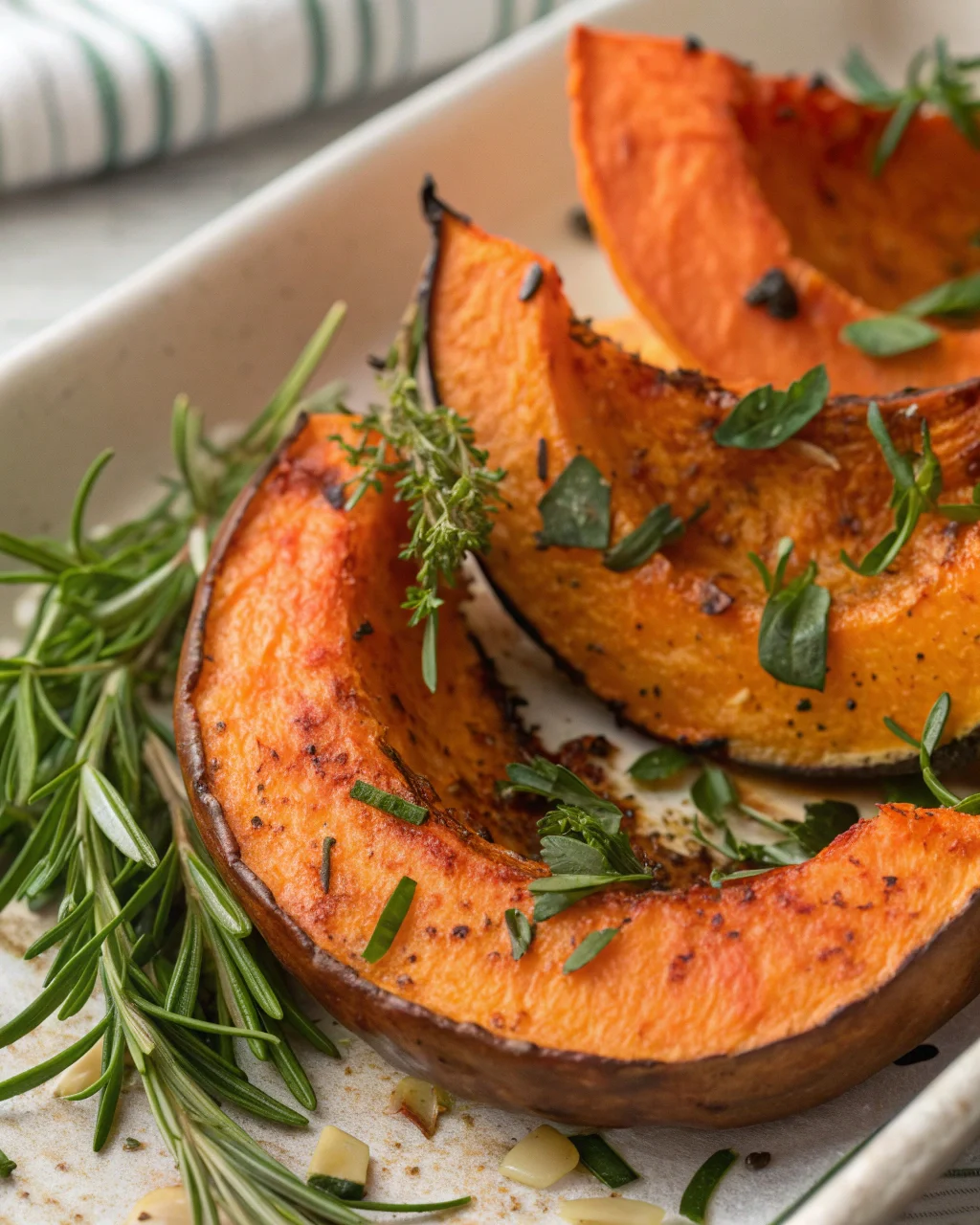
This recipe leans on kabocha’s natural sweetness and dense, velvety texture, then boosts it with high-heat roasting and fresh herbs.
The squash’s low moisture means you get crisp edges without babying the pan. A hit of lemon and garlic makes it bright, not boring.
Plus, you can roast the peel; it turns tender and delicious, which means less prep and more flavor. Minimal fuss, maximum payoff—exactly how home cooking should be.
Servings, Prep Time, Cooking Time, Calories
- Servings: 4 as a side
- Prep Time:
- Cooking Time: 30–35 minutes
- Calories: ~210 per serving
Ingredients
- 1 medium kabocha squash (about 2.5–3 lb), scrubbed
- 3 tbsp extra-virgin olive oil
- 1 tsp kosher salt (plus more to taste)
- 1/2 tsp freshly ground black pepper
- 2 tsp fresh thyme leaves (or 1 tsp dried)
- 1 tbsp chopped fresh rosemary (or 1 tsp dried)
- 2 cloves garlic, finely grated or minced
- 1/2 tsp smoked paprika (optional, for warmth)
- 1 tbsp lemon zest
- 1–2 tsp lemon juice, to finish
- 2 tbsp chopped flat-leaf parsley, for garnish
- Flaky sea salt, to finish (optional but excellent)
Preparation Steps
- Preheat like you mean it: Set your oven to 425°F (220°C).
A hot oven is your ticket to crisp edges and caramelized sweetness.
- Prep the squash: Halve the kabocha and scoop out the seeds with a spoon. No need to peel—the skin roasts tender.
Slice into 1-inch wedges or 1-inch thick half-moons for balanced texture.
- Season smart: In a large bowl, combine olive oil, salt, pepper, thyme, rosemary, garlic, and smoked paprika (if using). Add squash and toss until every piece glistens.
- Pan matters: Spread squash in a single layer on a large, rimmed baking sheet.
Give each piece space. If they’re touching, they’ll steam—nobody wants squash sauna.
- Roast and flip: Roast for 18–20 minutes, flip the pieces, then roast another 10–15 minutes until edges are deeply golden and the centers are tender.
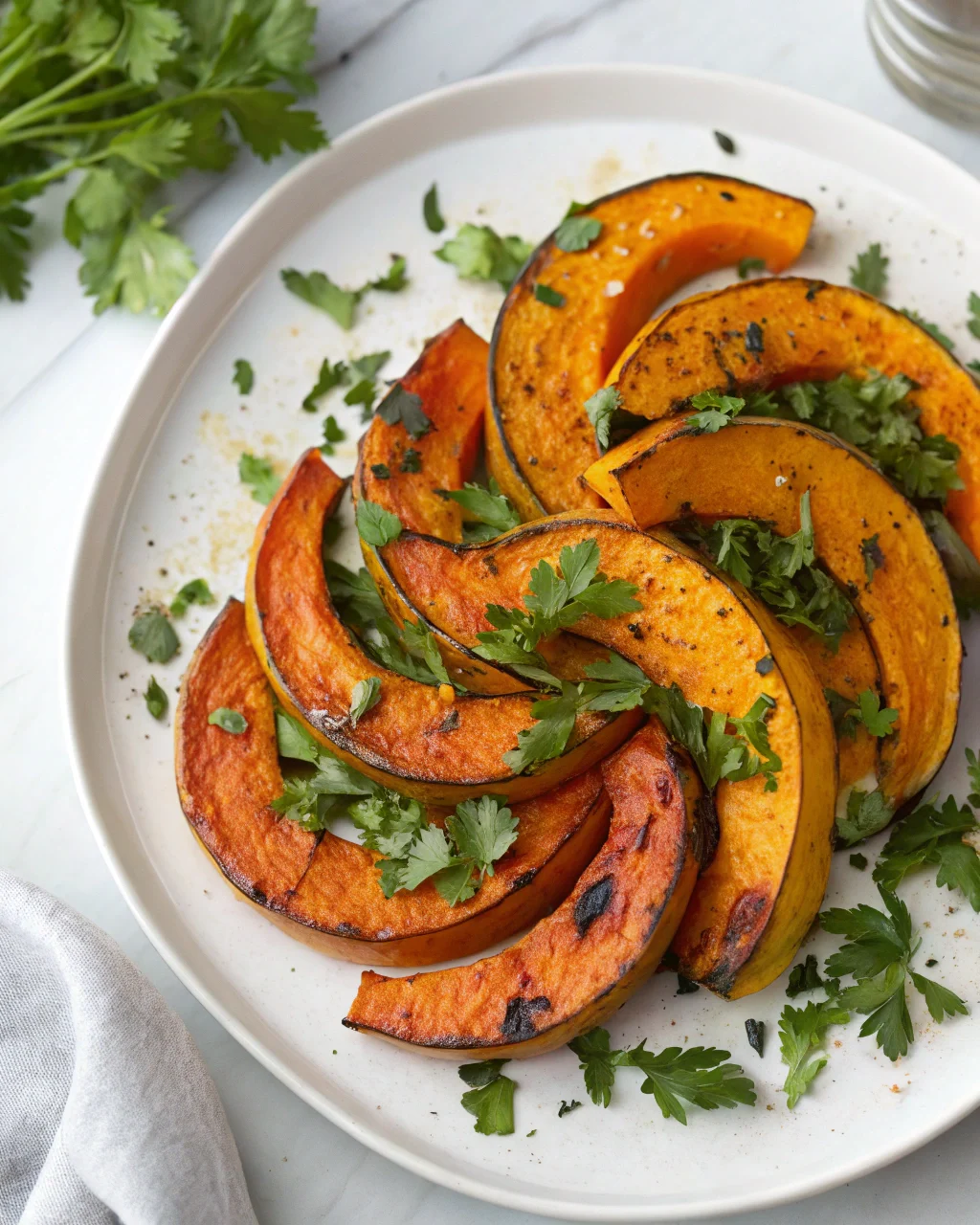
- Finish bright: While hot, toss with lemon zest and a squeeze of lemon juice.
Shower with parsley and a pinch of flaky sea salt.
- Taste and adjust: Add more salt, pepper, or lemon to taste. Serve immediately while crisp and proud.
Storage Instructions
- Fridge: Store leftovers in an airtight container for up to 4 days.
- Reheat: Use a 400°F (205°C) oven or air fryer for 6–8 minutes to revive crispness.
Microwave works in a pinch, but you’ll lose the edge factor.
- Freezer: Not ideal. The texture goes mushy, IMO.
If you must, freeze on a sheet pan first, then bag; re-crisp in a hot oven.
Why This is Good for You
Kabocha is like the overachiever of winter squashes. It’s loaded with beta-carotene for eye and skin health, plus fiber for digestion and steady energy.
The herbs bring antioxidants, while olive oil supports nutrient absorption and heart health. Lemon and garlic add anti-inflammatory perks and brightness without extra calories.
It’s comfort food that quietly supports your goals—sneaky, right?
Nutrition Stats
- Calories: ~210 per serving
- Carbohydrates: ~28 g
- Fiber: ~5 g
- Protein: ~3 g
- Fat: ~9–10 g (mostly from olive oil)
- Vitamin A: Over 100% Daily Value
- Vitamin C: ~20% Daily Value
- Potassium: ~15% Daily Value
- Sodium: Varies with salt use; start modest and finish to taste
Values are estimates based on common databases. Adjust if you tweak oil or portion sizes.
Common Mistakes to Avoid
- Crowding the pan: If pieces touch, they steam.
Use two sheets if needed.
- Skipping the hot oven: Lower temps won’t caramelize; you’ll get soft, pale squash. Sad.
- Uneven cuts: Thick and thin pieces cook at different speeds.
Aim for consistent 1-inch thickness.
- Adding lemon too early: Acid can dull browning. Finish with lemon after roasting.
- Overdoing the garlic: Raw garlic burns fast.
Toss it with oil and keep the pieces small so they perfume, not char.
Variations You Can Try
- Parmesan Crunch: In the last 5 minutes, sprinkle 1/3 cup finely grated Parmesan over the squash for a savory crust.
- Maple-Chile Glaze: Mix 1 tbsp maple syrup with 1 tsp Aleppo pepper and 1 tsp apple cider vinegar; brush on during the last 10 minutes.
- Tahini Drizzle: Whisk 2 tbsp tahini with lemon juice, warm water, and a pinch of cumin; drizzle before serving.
- Sage and Brown Butter: Brown 2 tbsp butter with sage leaves and spoon over the hot squash. Decadent and holiday-ready.
- Miso-Herb Twist: Stir 1 tsp white miso into the olive oil before tossing for umami depth.
- Protein Boost: Add roasted chickpeas to the pan in the last 15 minutes for crunch and plant protein.
FAQ
Do I need to peel kabocha squash?
Nope.
The skin roasts up tender and adds texture and nutrients. Just scrub well and trim any rough spots.
How do I cut the squash safely?
Microwave the whole squash for 60–90 seconds to soften slightly.
Use a sharp chef’s knife, slice off a thin piece from the bottom to create a flat base, then halve and wedge.
Can I use different herbs?
Absolutely. Oregano, marjoram, or sage all work.
If using dried herbs, use about one-third the amount of fresh since they’re more concentrated.
What protein pairs well with this?
Roasted chicken, seared salmon, or lentil salad all play nice. For a quick plant-based plate, add quinoa and a garlicky yogurt or tahini sauce.
Can I make this ahead?
Yes.
Roast up to a day ahead, then reheat on a hot sheet pan to restore crispness. Add lemon and parsley after reheating.
What if my squash is watery?
It might be under-roasted or crowded on the pan.
Give it more space and time, and bump the oven to 450°F for the last 5 minutes to drive off moisture.
Is kabocha the same as Japanese pumpkin?
Basically, yes. Kabocha is often called Japanese pumpkin and is known for its dense, sweet flesh and velvety texture.
A Few Last Words
This is the side dish that makes the main dish jealous.
It’s fast, gorgeous, and shamelessly delicious, with just enough herb and lemon to keep it lively. Keep it classic or riff with one of the variations—either way, you’ll get crisp, golden edges and soft, buttery insides.
Big flavor, low effort. Your kind of win, right?