Shirataki Noodles Carbonara – A Light, Creamy Weeknight Favorite

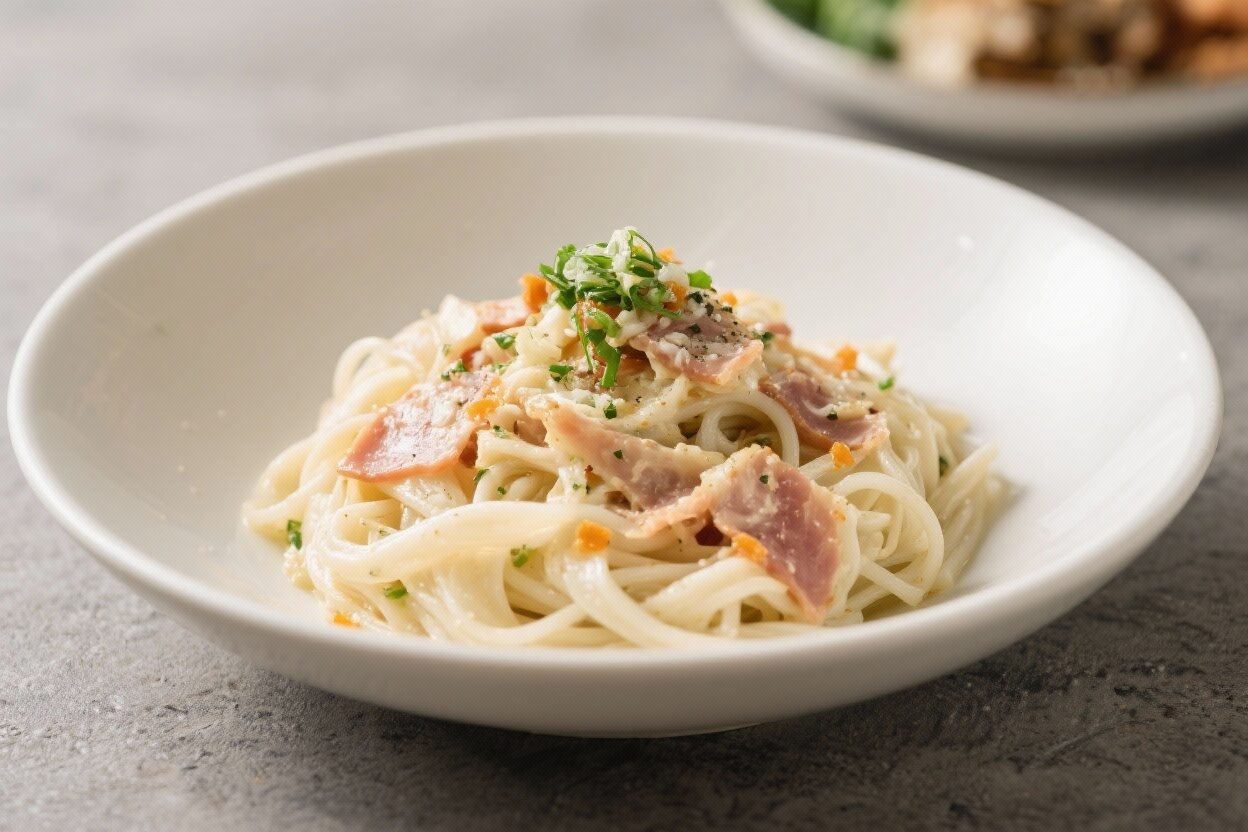
Carbonara is comfort food at its best: creamy, salty, and deeply satisfying. This version keeps everything you love about the dish while swapping traditional pasta for shirataki noodles, making it lighter without losing the magic. The sauce is silky, the pancetta is crisp, and the finish is glossy and rich.
If you’re watching carbs or just curious about a new twist on a classic, this recipe delivers big flavor with minimal fuss.
Shirataki Noodles Carbonara – A Light, Creamy Weeknight Favorite
Ingredients
Method
- Prep the shirataki noodles: Open the packages and drain the liquid. Rinse the noodles under cold water for 1–2 minutes to remove any odor. This step is essential for a clean taste.
- Boil briefly (optional but helpful): Bring a small pot of water to a boil and simmer the noodles for 2–3 minutes.Drain well. This helps neutralize any lingering aroma.
- Dry the noodles in a pan: Place the drained noodles in a dry skillet over medium heat. Cook for 3–5 minutes, stirring occasionally, until they release steam and feel a bit squeaky.You want them as dry as possible so they’ll absorb the sauce.
- Crisp the pancetta: In a separate large skillet, cook the pancetta over medium heat until golden and crisp, about 5–7 minutes. Add the smashed garlic cloves to the fat in the last minute to infuse flavor, then remove and discard the garlic.
- Make the egg-cheese mixture: In a bowl, whisk the eggs, yolk, and grated Pecorino until smooth. Add a generous amount of black pepper.The mixture should be thick and creamy.
- Combine noodles and pancetta: Add the dried shirataki noodles to the skillet with the pancetta and toss to coat in the rendered fat. If the pan looks dry, add a small knob of butter for extra richness.
- Reduce heat and add the sauce: Turn the heat to low. Remove the skillet from the burner for 15–20 seconds to cool slightly.Pour in the egg-cheese mixture, tossing constantly with tongs for 1–2 minutes. You want a glossy, silky coating—not scrambled eggs. If needed, briefly return the pan to low heat while continuously tossing.
- Adjust seasoning: Taste and add more black pepper.Salt only if needed—often the cheese and pancetta provide enough.
- Serve: Plate immediately. Top with a shower of grated cheese, a twist of pepper, and a sprinkle of chopped parsley if you like.
What Makes This Special

Shirataki noodles are made from the konjac plant and are famous for being very low in calories and carbs. That makes them a great partner for carbonara’s indulgent sauce. The trick is treating the noodles right so they absorb flavor and don’t taste watery.
With a quick pan-dry and a gentle sauce technique, you get a dish that’s comforting, balanced, and surprisingly light. Another win: this recipe comes together fast. You can be eating in under 25 minutes, and most of that time is hands-off.
It’s a restaurant-level dinner that works perfectly for a weeknight.
What You’ll Need
- 2 packages (7–8 oz each) shirataki noodles (spaghetti or fettuccine style)
- 4 oz pancetta or guanciale, diced (bacon works in a pinch)
- 2 large eggs
- 1 large egg yolk
- 3/4 cup finely grated Pecorino Romano (or a mix of Romano and Parmesan)
- 2 cloves garlic, smashed
- Freshly ground black pepper, to taste
- Salt, as needed (go light; the cheese and pancetta are salty)
- 1–2 tablespoons unsalted butter (optional, for extra gloss)
- Fresh parsley, chopped (optional, for garnish)
Step-by-Step Instructions

- Prep the shirataki noodles: Open the packages and drain the liquid. Rinse the noodles under cold water for 1–2 minutes to remove any odor. This step is essential for a clean taste.
- Boil briefly (optional but helpful): Bring a small pot of water to a boil and simmer the noodles for 2–3 minutes.Drain well. This helps neutralize any lingering aroma.
- Dry the noodles in a pan: Place the drained noodles in a dry skillet over medium heat. Cook for 3–5 minutes, stirring occasionally, until they release steam and feel a bit squeaky.You want them as dry as possible so they’ll absorb the sauce.
- Crisp the pancetta: In a separate large skillet, cook the pancetta over medium heat until golden and crisp, about 5–7 minutes. Add the smashed garlic cloves to the fat in the last minute to infuse flavor, then remove and discard the garlic.
- Make the egg-cheese mixture: In a bowl, whisk the eggs, yolk, and grated Pecorino until smooth. Add a generous amount of black pepper.The mixture should be thick and creamy.
- Combine noodles and pancetta: Add the dried shirataki noodles to the skillet with the pancetta and toss to coat in the rendered fat. If the pan looks dry, add a small knob of butter for extra richness.
- Reduce heat and add the sauce: Turn the heat to low. Remove the skillet from the burner for 15–20 seconds to cool slightly.Pour in the egg-cheese mixture, tossing constantly with tongs for 1–2 minutes. You want a glossy, silky coating—not scrambled eggs. If needed, briefly return the pan to low heat while continuously tossing.
- Adjust seasoning: Taste and add more black pepper.Salt only if needed—often the cheese and pancetta provide enough.
- Serve: Plate immediately. Top with a shower of grated cheese, a twist of pepper, and a sprinkle of chopped parsley if you like.
Storage Instructions
Shirataki noodles hold up better than wheat pasta after saucing, but carbonara is still best fresh. If you have leftovers:
- Refrigerate: Store in an airtight container for up to 2 days.
- Reheat gently: Warm in a nonstick skillet over low heat with a splash of water or a small knob of butter.Stir constantly until just heated through.
- Avoid the microwave: It can overcook the eggs and make the sauce grainy.
Health Benefits
- Lower in carbs and calories: Shirataki noodles are mostly fiber and water, making this a lighter option than traditional carbonara.
- High in soluble fiber: Konjac (glucomannan) fiber may help with fullness and support healthy digestion.
- Protein from eggs and pancetta: The sauce provides quality protein that helps keep you satisfied.
- Customizable fat content: You can reduce pancetta and butter without losing the creamy texture, thanks to the egg-cheese emulsion.
What Not to Do
- Don’t skip drying the noodles: Wet noodles dilute the sauce and make the dish watery.
- Don’t cook the egg mixture over high heat: You’ll end up with scrambled eggs instead of a smooth sauce.
- Don’t add cream: Traditional carbonara relies on eggs, cheese, and fat from the pancetta. Cream can muddy the flavor and texture.
- Don’t over-salt: Taste first; the cheese and cured meat are naturally salty.
- Don’t use pre-shredded cheese: It often contains anti-caking agents that prevent smooth melting. Grate it fresh.
Variations You Can Try
- Turkey bacon carbonara: Use turkey bacon to lower saturated fat.Add a teaspoon of olive oil to mimic pancetta richness.
- Mushroom and pea twist: Sauté sliced mushrooms until browned, then toss in a handful of peas. Add to the noodles before the egg mixture for a springy, veggie-forward version.
- Spicy carbonara: Add a pinch of red pepper flakes to the pancetta while it cooks for a gentle kick.
- Dairy-forward blend: Use half Pecorino and half Parmesan for a rounder, slightly less sharp flavor.
- Garlic-lemon finish: Grate a little lemon zest over the final dish for brightness without adding acidity to the sauce.
- Higher-protein option: Stir in extra yolk off heat for an even silkier, richer finish.
FAQ
Do shirataki noodles taste like traditional pasta?
They have a different texture—springy and slightly chewy—but when dried properly and coated in sauce, they absorb flavor well. They won’t mimic wheat pasta exactly, but they work beautifully in creamy dishes like carbonara.
How do I get rid of the shirataki noodle smell?
Rinse thoroughly for 1–2 minutes, simmer briefly, then pan-dry.
Those three steps remove the odor and improve texture significantly.
Can I make this without pork?
Yes. Use turkey bacon, chicken bacon, or a plant-based smoky “bacon.” Add a splash of olive oil to provide the fat needed to carry the sauce.
Is it safe to use raw eggs?
The residual heat from the pan and noodles gently cooks the eggs into a sauce. Use fresh, high-quality eggs.
If you’re concerned, look for pasteurized eggs.
Can I add cream to stabilize the sauce?
You can, but it’s not necessary and changes the character of carbonara. If you want extra stability, add an additional yolk or reduce the heat and toss longer to emulsify.
What cheese works best?
Pecorino Romano delivers classic sharpness and salt. Parmesan adds nuttiness.
A 50/50 blend is a great middle ground.
How do I prevent scrambled eggs?
Lower the heat, remove the pan from the burner before adding the egg mixture, and toss constantly. If it thickens too fast, lift the pan off the heat and keep tossing until smooth.
Can I make it ahead?
Carbonara tastes best right after it’s made. You can prep components—dice pancetta, grate cheese, and rinse/dry noodles—then cook and assemble in minutes when you’re ready to eat.
In Conclusion
Shirataki Noodles Carbonara brings comfort and lightness together in one pan.
With proper noodle prep and a gentle hand on the heat, you’ll get a glossy, creamy sauce that clings to every strand. It’s quick, satisfying, and easy to tweak to your taste. Keep this method in your back pocket, and carbonara can be your weeknight go-to—no heavy feeling required.