Slow-Cooker Beef Minestrone Soup That Practically Cooks Itself

You want dinner that tastes like you spent hours in Nonna’s kitchen—but you’ve got emails, errands, and exactly zero patience.
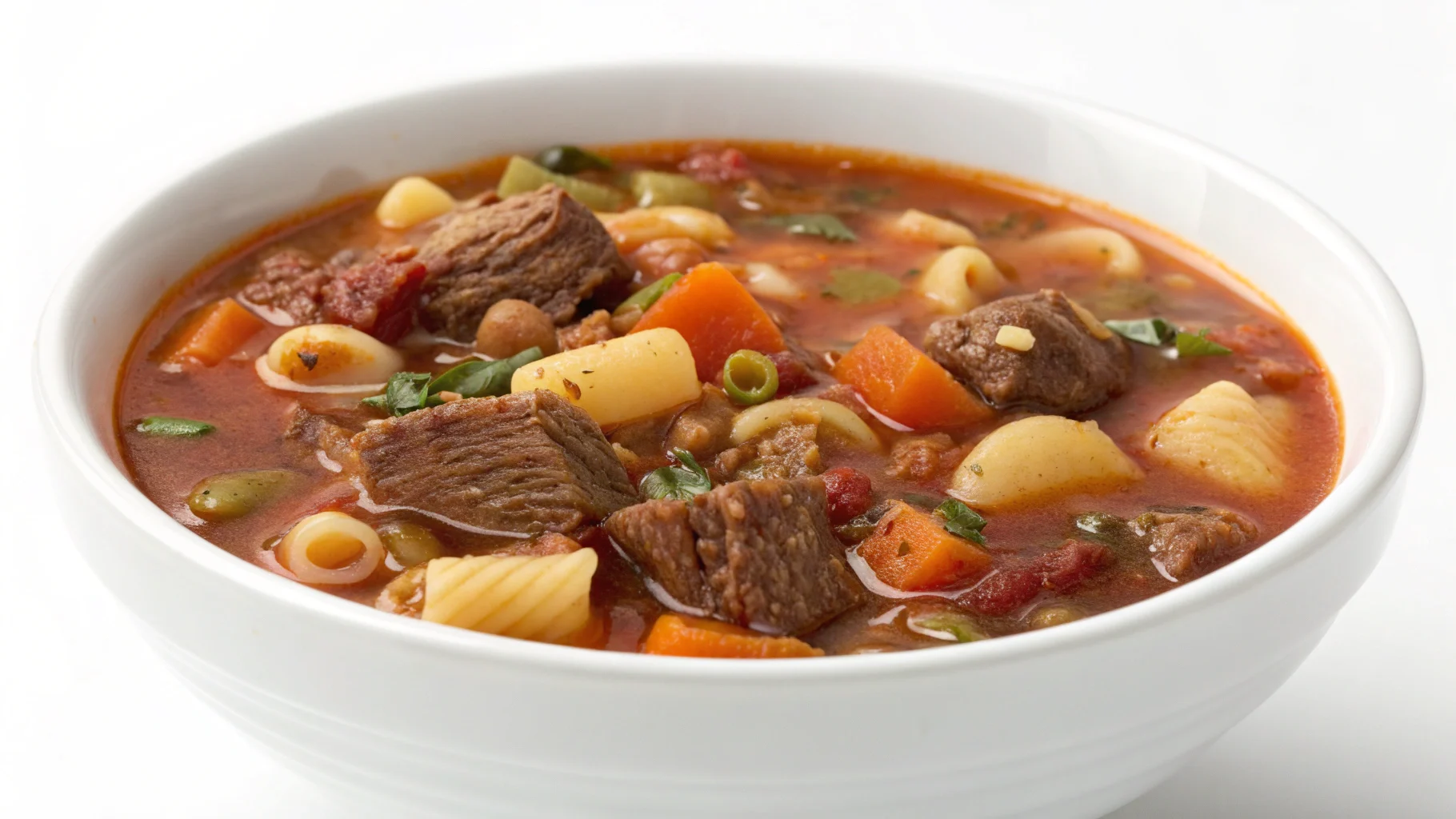
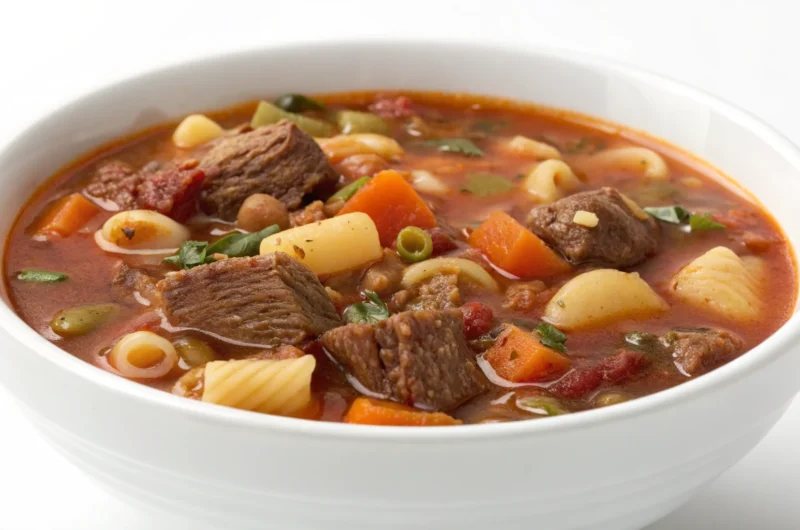
This Slow-Cooker Beef Minestrone Soup hits like a cozy Italian hug with the effort level of pressing a button. It’s hearty, fragrant, and loaded with vegetables so you can feel smug and satisfied.
The beef turns melt-in-your-mouth tender, the broth gets rich and tomatoey, and the noodles soak up just enough flavor to make you believe in weeknight magic again.
Why This Recipe Never Fails
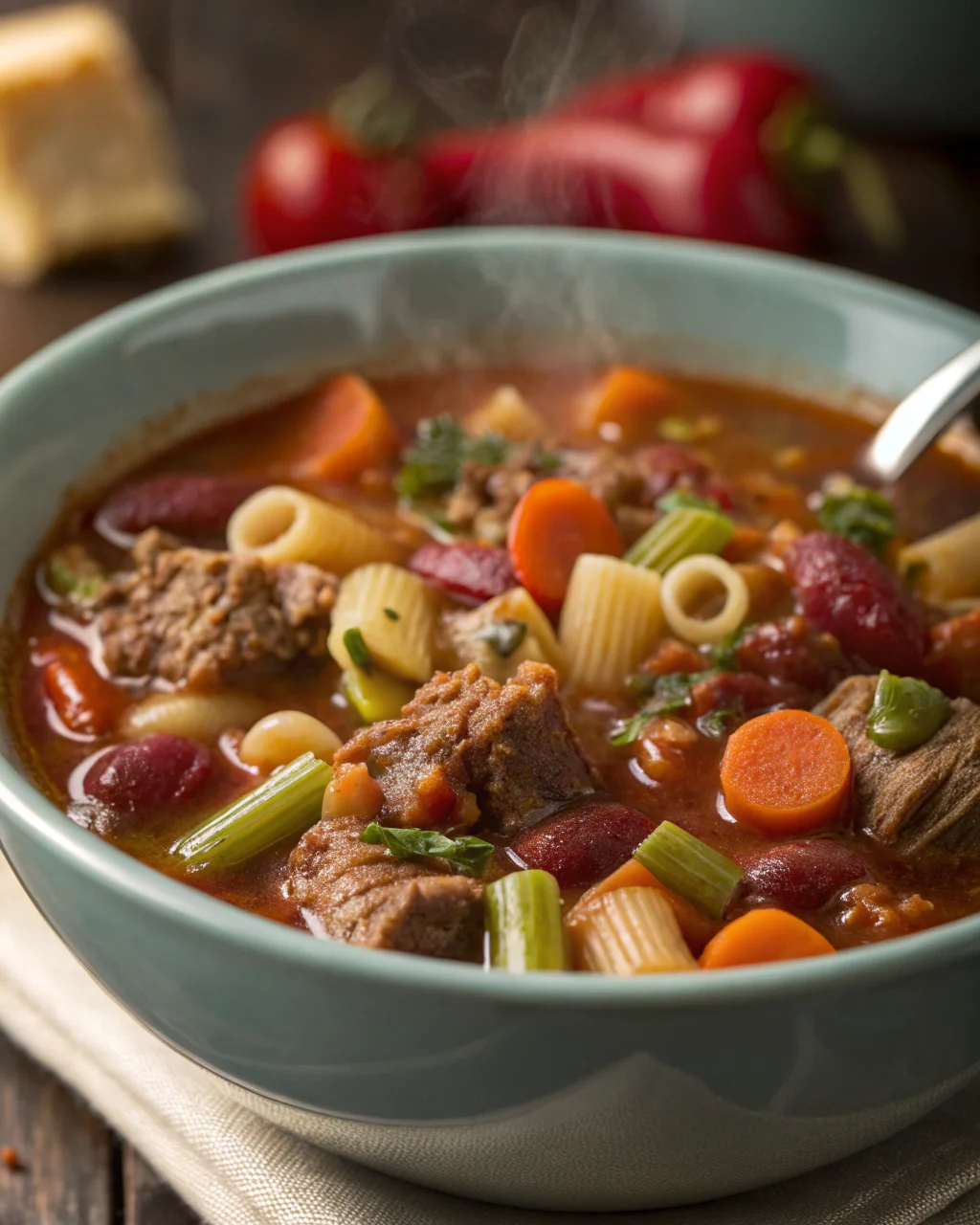
Slow-cooking does the heavy lifting, transforming budget-friendly beef into something luxurious. Beans, veggies, and pasta bring texture and balance, so every spoonful is complete.
The flavor base—garlic, herbs, tomato, and umami—locks in consistency, even if you eyeball a measurement or two.
Plus, it’s wildly forgiving: swap veggies, tweak pasta, change the beans, and it still tastes like a win.
Servings, Prep Time, Cooking Time, Calories
- Servings: 6–8
- Prep Time: 20 minutes
- Cook Time: 6–8 hours on Low (or 3–4 hours on High)
- Calories: ~420 per serving (estimate; see Nutrition Stats)
Slow-Cooker Beef Minestrone Soup That Practically Cooks Itself
Course: Soup6
servings20
minutes6
hours420
kcalIngredients
1.5 lb beef chuck, trimmed and cut into 1-inch cubes
2 tbsp olive oil (for searing; optional but recommended)
1 large yellow onion, diced
3 carrots, peeled and sliced
3 celery stalks, sliced
4 garlic cloves, minced
1 medium zucchini, halved and sliced
1 red bell pepper, diced
1 (15-oz) can diced tomatoes with juices
1 (15-oz) can crushed tomatoes
6 cups low-sodium beef broth
1 (15-oz) can cannellini beans, drained and rinsed
1 (15-oz) can kidney beans, drained and rinsed
1 cup small pasta (ditalini, small shells, or elbows)
2 bay leaves
1.5 tsp dried oregano
1 tsp dried basil
1/2 tsp dried thyme
1 tsp smoked paprika (optional but awesome)
1–2 tsp kosher salt, to taste
1/2 tsp black pepper, plus more to finish
1–2 tbsp tomato paste, for extra richness
1 cup chopped fresh spinach or kale
1 tbsp balsamic vinegar or lemon juice (finishing acid)
Fresh parsley, chopped, for garnish
Grated Parmesan, for serving
Step-by-Step Instructions
- Brown the beef (optional, but do it). Heat olive oil in a skillet over medium-high. Sear beef cubes on two sides until browned, 3–4 minutes per side. This adds deep flavor. Transfer to the slow cooker.
- Build the base. Add onion, carrots, celery, garlic, zucchini, and bell pepper to the slow cooker.
- Add liquids and seasonings. Pour in diced tomatoes, crushed tomatoes, and beef broth. Stir in tomato paste, bay leaves, oregano, basil, thyme, smoked paprika, salt, and pepper.
- Slow-cook. Cover and cook on Low for 6–8 hours (or High for 3–4) until the beef is fork-tender.
- Bean boost. Stir in cannellini and kidney beans during the last 45 minutes of cooking.
- Pasta time. Add pasta during the final 20–25 minutes, stirring occasionally so it doesn’t clump. Cook until al dente.
- Greens + acid = magic. Stir in spinach or kale and let wilt, 3–5 minutes. Add balsamic vinegar or lemon juice to brighten flavors. Remove bay leaves.
- Taste and tweak. Adjust salt and pepper. If it’s too thick, splash in broth or water. Too thin? Let it bubble uncovered for 10 minutes.
- Serve. Ladle into bowls and top with parsley and a shower of Parmesan. Crusty bread on the side? Obviously.
Storage Tips
- Fridge: Cool completely and store in airtight containers for 3–4 days.
- Freezer: For best texture, freeze without the pasta up to 3 months. Add fresh-cooked pasta when reheating.
- Reheat: Stovetop over medium until hot, adding a splash of broth as needed. Microwave works in a pinch, stir halfway.
- Make-ahead: Prep all chopped veggies and seasonings in a container 24 hours ahead; dump-and-go in the morning.
FYI, flavors deepen overnight.
Health Benefits
This soup brings a legit balance of protein, fiber, and micronutrients. Beef provides iron, zinc, and vitamin B12 for energy and muscle repair. Beans add plant-based protein and soluble fiber to support heart health and steady blood sugar.
Veggies deliver antioxidants like lycopene (tomatoes) and beta-carotene (carrots), plus potassium for blood pressure support. It’s comfort food with receipts.
Nutrition Stats
Per serving (approx., 1/8 of recipe):
- Calories: ~420
- Protein: ~29 g
- Carbohydrates: ~44 g
- Fiber: ~10 g
- Total Fat: ~12 g
- Saturated Fat: ~4 g
- Sodium: ~720 mg (varies by broth and added salt)
- Added Sugars: 0 g
These values will shift based on your pasta choice, broth brand, and how heavy your Parmesan pour gets. No judgment.
Tips to Prevent Errors
- Don’t add pasta too early: It will bloat and go mushy.
Last 20–25 minutes is the sweet spot.
- Season in layers: Light salt upfront, then adjust at the end. Broth reduces; your salt shouldn’t skyrocket.
- Cut uniform cubes: Beef and veggies should be similar sizes for even cooking.
- Sear for flavor: Browning the beef adds depth; skipping it is legal but mildly tragic.
- Watch the liquid: Pasta absorbs broth; have extra on hand to loosen the soup before serving.
- Greens last: Add spinach or kale right at the end to keep color and nutrients intact.
Recipe Variations
- Lower-carb: Skip pasta and add extra zucchini, mushrooms, or riced cauliflower.
- Gluten-free: Use GF pasta or swap in diced potatoes (add with beans to avoid mush).
- Spicy Tuscan: Add 1/2–1 tsp red pepper flakes and sub some beef with Italian sausage.
- Mediterranean twist: Stir in olives and a swirl of pesto at the end; finish with feta instead of Parmesan.
- Lean & mean: Use lean stew meat or even ground beef (brown and drain first); skim fat if needed.
- Herb-forward: Replace dried herbs with 1/4 cup chopped fresh basil and parsley at the end.
FAQ
Can I cook the pasta separately?
Yes. Boil it in salted water to al dente, then stir into bowls before serving.
This keeps leftovers from getting soggy and gives you perfect texture control. IMO, it’s the best move if you plan to freeze.
What cut of beef works best?
Beef chuck is ideal because its connective tissue melts into tenderness during slow cooking. Stew meat is fine, but chuck usually wins on flavor and texture.
Avoid super-lean cuts—they can turn tough and dry.
How do I thicken the soup?
Simmer uncovered for 10–15 minutes at the end, or mash a few beans against the pot wall to release starch. You can also add a spoonful of tomato paste earlier for body and richness.
Can I make this vegetarian?
Absolutely. Skip the beef, use vegetable broth, and add extra beans or plant-based sausage.
The flavor stays bold thanks to tomatoes, herbs, and umami from the beans.
Is searing the beef really necessary?
Not strictly, but it’s a flavor cheat code. Searing creates caramelized bits that boost the broth. If time is tight, at least brown half the beef for a noticeable upgrade.
How do I reduce the sodium?
Use low-sodium broth and canned beans, rinse beans well, and salt at the end.
A squeeze of lemon or splash of vinegar can make it taste “saltier” without adding more salt. Sneaky, right?
The Bottom Line
Slow-Cooker Beef Minestrone Soup is your set-it-and-win dinner: hearty beef, loads of veg, beans for fiber, and just enough pasta to make everyone happy. It’s flexible, budget-friendly, and almost impossible to mess up.
Make it once, and it’ll enter the weekly rotation—because who doesn’t love a meal that basically cooks itself and tastes like Sunday at grandma’s? FYI: leftovers are even better tomorrow.