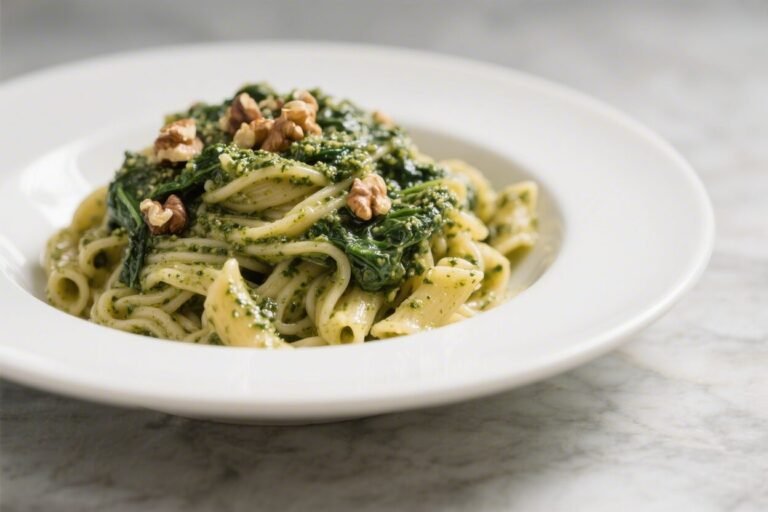
Spinach Walnut Pesto Pasta – Bright, Nutty, and Weeknight-Friendly

If you love pesto but want something a little lighter, this Spinach Walnut Pesto Pasta brings all the fresh, herbaceous flavor without being heavy. It’s quick enough for a weeknight and special enough for company. The sauce blends baby spinach, basil, toasted walnuts, lemon, and good olive oil into a glossy, vibrant green.
Tossed with hot pasta and a splash of starchy cooking water, it clings beautifully to every bite. The result is a bowl that tastes clean, lively, and deeply satisfying.
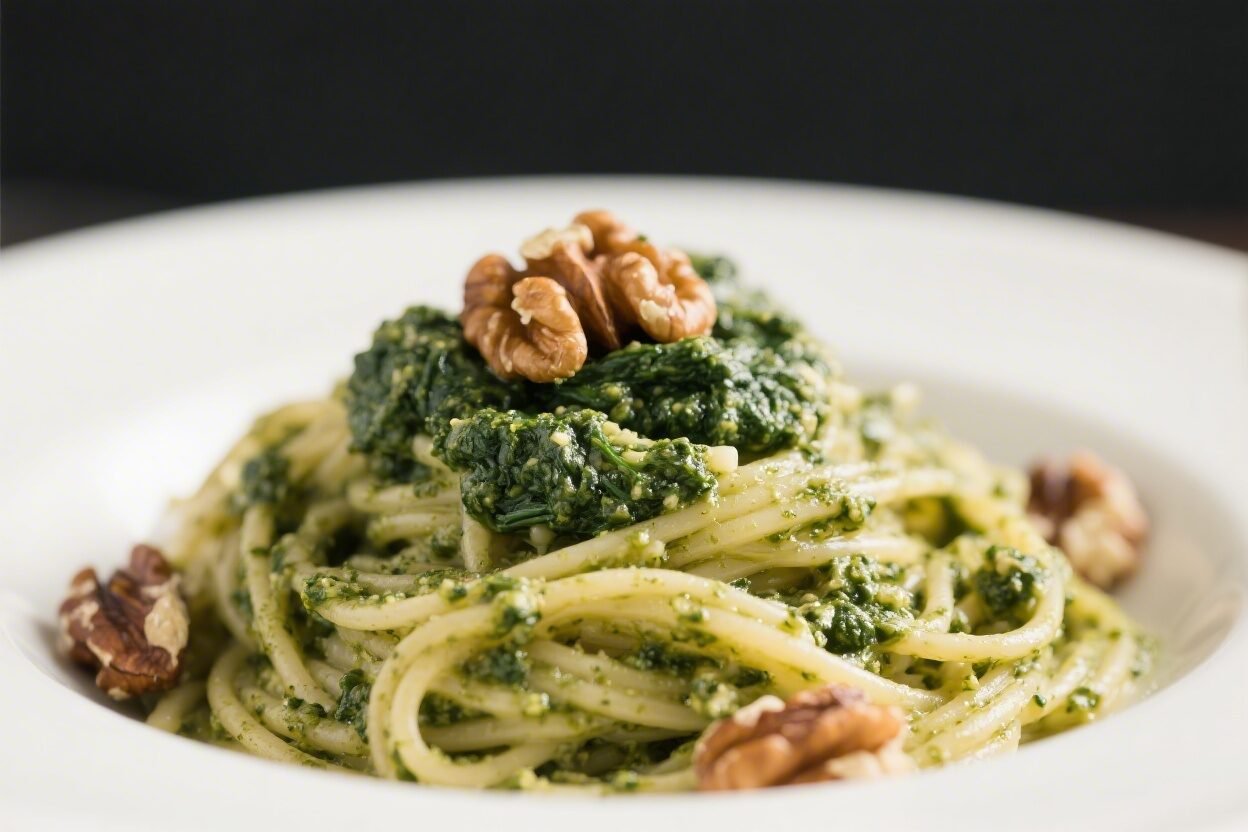
Spinach Walnut Pesto Pasta - Bright, Nutty, and Weeknight-Friendly
Ingredients
Method
- Toast the walnuts. Warm a dry skillet over medium heat.Add the walnuts and toast, shaking the pan, until fragrant and slightly darker, about 3–4 minutes. Let them cool to avoid melting the spinach in the blender.
- Boil the pasta. Bring a large pot of generously salted water to a boil. Cook the pasta until just shy of al dente. Reserve 1 cup of pasta water, then drain.
- Build the pesto base. In a food processor, add the cooled walnuts, garlic, lemon zest, and a pinch of salt.Pulse until finely chopped. This releases flavor and keeps the final sauce smooth.
- Add greens and cheese. Add spinach, basil, and grated Parmesan. Pulse to combine, scraping down the sides as needed.You want a rough, even mixture before adding oil.
- Stream in olive oil. With the machine running, slowly pour in 1/3 cup olive oil. If it looks thick or dry, add more oil or a splash of reserved pasta water until it becomes creamy and scoopable.
- Season and brighten. Add 1 tablespoon lemon juice and a few grinds of black pepper. Taste and adjust with more lemon, salt, or a pinch of red pepper flakes for heat.
- Toss with pasta. Return the hot pasta to the pot.Add the pesto and 1/4 cup of reserved pasta water. Toss over low heat for 30–60 seconds until the sauce glossy-coats the noodles. Add more water if needed to loosen.
- Finish and serve. Top with extra Parmesan, a drizzle of olive oil, and a crack of pepper.Serve immediately while it’s bright and aromatic.
What Makes This Special
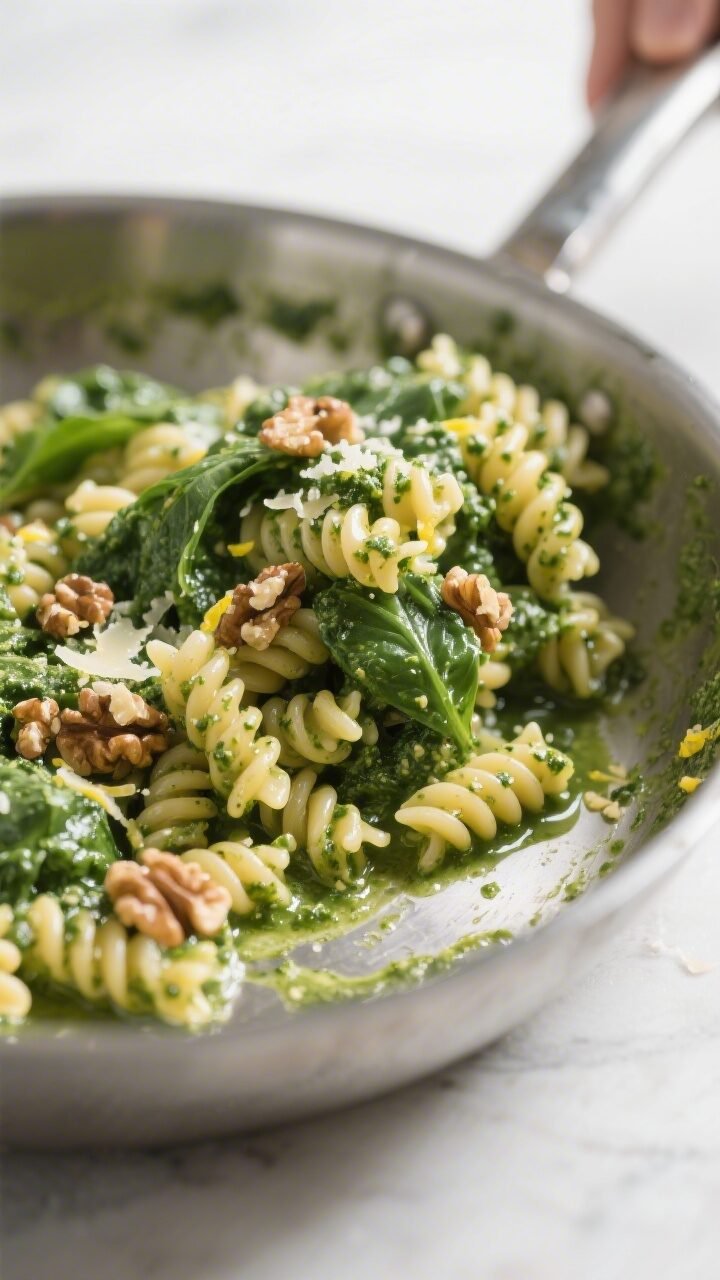
This version swaps the usual pine nuts for walnuts, which add a toasty, slightly sweet richness that balances the greens. Fresh spinach bulks up the pesto and keeps it vividly green and budget-friendly while basil brings that classic pesto aroma.
A touch of lemon brightens the sauce so it never tastes flat. And because the sauce is uncooked, the whole dish comes together fast—just blend, toss, and eat. It’s also easy to tweak: make it dairy-free, swap the pasta shape, or add a protein without losing the soul of the dish.
Shopping List
- Pasta: 12 ounces of your favorite shape (spaghetti, fusilli, or penne)
- Baby spinach: 4 packed cups (about 4 ounces)
- Fresh basil: 1 packed cup
- Walnuts: 1/2 cup, preferably raw for toasting
- Parmesan or Pecorino Romano: 1/2 cup, finely grated (plus more for serving)
- Garlic: 1–2 small cloves
- Lemon: 1 (zest and 1–2 tablespoons juice)
- Extra-virgin olive oil: 1/3 to 1/2 cup
- Salt and black pepper: to taste
- Red pepper flakes (optional): a pinch for mild heat
How to Make It
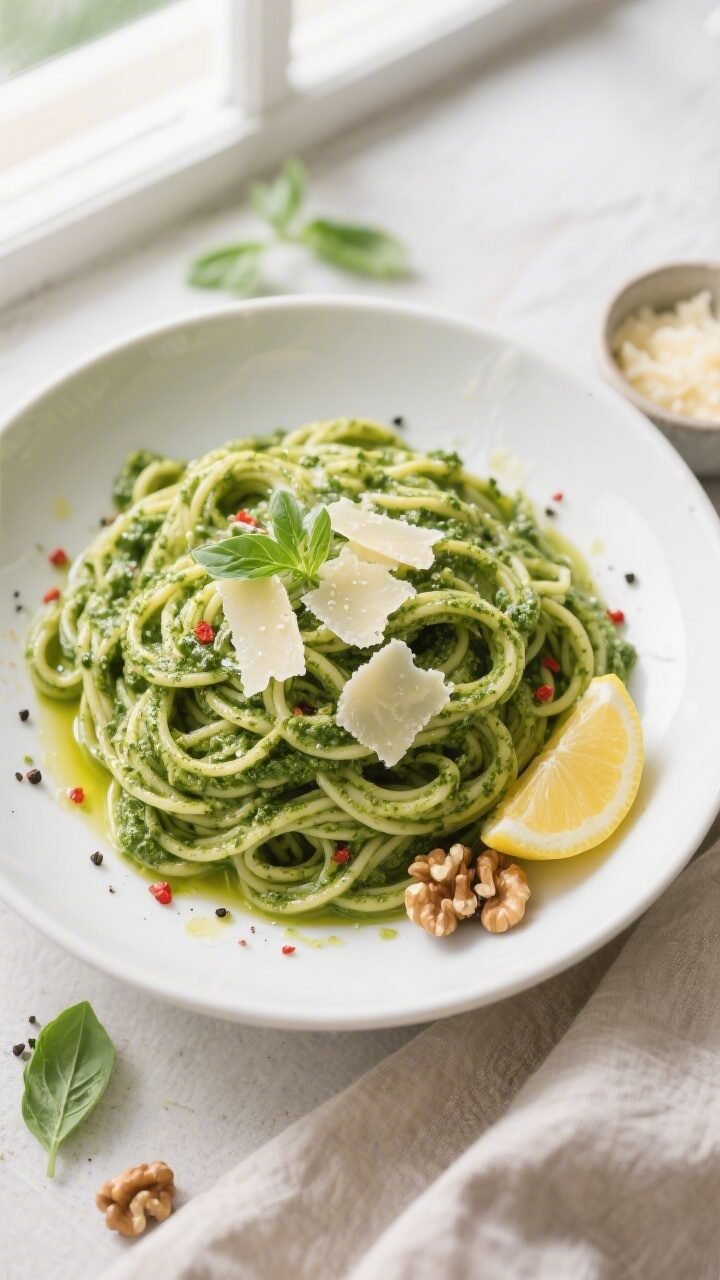
- Toast the walnuts. Warm a dry skillet over medium heat.Add the walnuts and toast, shaking the pan, until fragrant and slightly darker, about 3–4 minutes. Let them cool to avoid melting the spinach in the blender.
- Boil the pasta. Bring a large pot of generously salted water to a boil. Cook the pasta until just shy of al dente. Reserve 1 cup of pasta water, then drain.
- Build the pesto base. In a food processor, add the cooled walnuts, garlic, lemon zest, and a pinch of salt.Pulse until finely chopped. This releases flavor and keeps the final sauce smooth.
- Add greens and cheese. Add spinach, basil, and grated Parmesan. Pulse to combine, scraping down the sides as needed.You want a rough, even mixture before adding oil.
- Stream in olive oil. With the machine running, slowly pour in 1/3 cup olive oil. If it looks thick or dry, add more oil or a splash of reserved pasta water until it becomes creamy and scoopable.
- Season and brighten. Add 1 tablespoon lemon juice and a few grinds of black pepper. Taste and adjust with more lemon, salt, or a pinch of red pepper flakes for heat.
- Toss with pasta. Return the hot pasta to the pot.Add the pesto and 1/4 cup of reserved pasta water. Toss over low heat for 30–60 seconds until the sauce glossy-coats the noodles. Add more water if needed to loosen.
- Finish and serve. Top with extra Parmesan, a drizzle of olive oil, and a crack of pepper.Serve immediately while it’s bright and aromatic.
Keeping It Fresh
Pesto tastes best right after blending, when the herbs are vibrant. If you’re making it ahead, press a piece of plastic wrap directly onto the surface or pour a thin layer of olive oil on top to limit exposure to air. Store in an airtight container in the fridge for up to 3 days.
For longer storage, scoop into ice cube trays, freeze, then transfer cubes to a bag; it keeps for 1–2 months. Thaw gently in the fridge or toss a frozen cube into a warm pan with a splash of pasta water.
Benefits of This Recipe
- Fast and flexible: From start to finish, you’re looking at about 25 minutes, and the pesto plays well with many pasta shapes and add-ins.
- Budget-friendly: Walnuts and spinach keep costs down while delivering flavor and texture.
- Nutrient-dense: Spinach provides iron and vitamins, walnuts add healthy fats, and olive oil supports a heart-healthy profile.
- Make-ahead friendly: The sauce can be prepped in advance and frozen for quick meals.
- Easy to scale: Double the pesto and save half for another night, or make a smaller batch for one or two.
What Not to Do
- Don’t skip salting the pasta water. This is your main chance to season the pasta itself; bland noodles will dull the whole dish.
- Don’t overheat the pesto. Prolonged heat can turn it dark and muted. Toss briefly off the heat or over very low heat.
- Don’t add all the oil at once. Drizzling it in helps the sauce emulsify instead of separating.
- Don’t forget the pasta water. It’s the key to a silky, cohesive sauce that clings instead of clumping.
- Don’t go heavy on raw garlic. A little goes a long way; too much can overpower the spinach and basil.
Alternatives
- Dairy-free: Skip the cheese and add 2 tablespoons nutritional yeast for savory depth.Taste and adjust salt.
- No walnuts? Use almonds, cashews, or sunflower seeds. Toast them first for better flavor.
- Herb swaps: Replace some basil with parsley, arugula, or mint. Arugula brings peppery bite; mint adds freshness.
- Protein add-ins: Fold in shredded rotisserie chicken, sautéed shrimp, or white beans.For a vegetarian boost, try roasted chickpeas.
- Veggie boosters: Stir in blistered cherry tomatoes, roasted zucchini, or peas for sweetness and color.
- Gluten-free: Use your favorite gluten-free pasta; watch the cook time closely to avoid mushiness.
- Whole-grain: Whole-wheat pasta pairs well with the nutty pesto and adds extra fiber.
FAQ
Can I make the pesto without a food processor?
Yes. A blender works well—add a little extra oil and pasta water to keep it moving. For a rustic texture, chop everything finely by hand with a sharp knife, then mash with a mortar and pestle while streaming in the oil.
How do I keep the pesto from turning brown?
Use fresh spinach and basil, don’t overheat the sauce, and add a bit of lemon juice for acidity.
When storing, press plastic wrap directly on the surface or add a thin oil layer to minimize air exposure.
What pasta shape is best for this?
Short shapes like fusilli and penne catch the sauce in their spirals and ridges, while spaghetti gives a classic twirl. Choose what you enjoy—just cook to al dente and save that pasta water.
Can I reduce the oil?
You can. Start with 1/4 cup and thin with pasta water to reach a creamy consistency.
The texture will be slightly lighter but still tasty, thanks to the emulsifying starch in the water.
Is this good served cold?
Yes, it makes a great pasta salad. Rinse the pasta quickly to cool, toss with pesto, and add extras like cherry tomatoes or mozzarella. Adjust seasoning and add a splash of lemon before serving.
How salty should the pasta water be?
A good rule is 1–1.5 tablespoons of kosher salt per 4 quarts of water.
It should taste like the sea—this is essential for well-seasoned pasta.
Can I use frozen spinach?
Use fresh if you can. If using frozen, thaw completely and squeeze out excess water. The flavor is slightly earthier, and you may need extra lemon to brighten it.
What cheese works best?
Parmesan offers nutty, mellow depth, while Pecorino Romano is saltier and sharper.
Use what you have, and taste before adding extra salt.
In Conclusion
Spinach Walnut Pesto Pasta is a bright, flexible dish that rewards a few simple techniques: toast your nuts, salt your water, and save that starchy splash. With tender pasta and a silky, lemony green sauce, it tastes fresh without being fussy. Keep a batch of pesto in the freezer and dinner is never far away.
It’s the kind of recipe you make once and then crave on repeat.