Thin Crust Pizza Dough That Snaps, Not Sags

Forget floppy slices. You want a crust that shatters, a center that stays crisp under molten cheese, and edges that crunch like a good chip.
This isn’t a breadstick in disguise; it’s the lean, mean foundation of real-deal pizza.
Five ingredients, one bowl, and a little patience turn into restaurant-level results. If your last pie drooped like a sad hammock, this is your redemption arc.
What Makes This Special
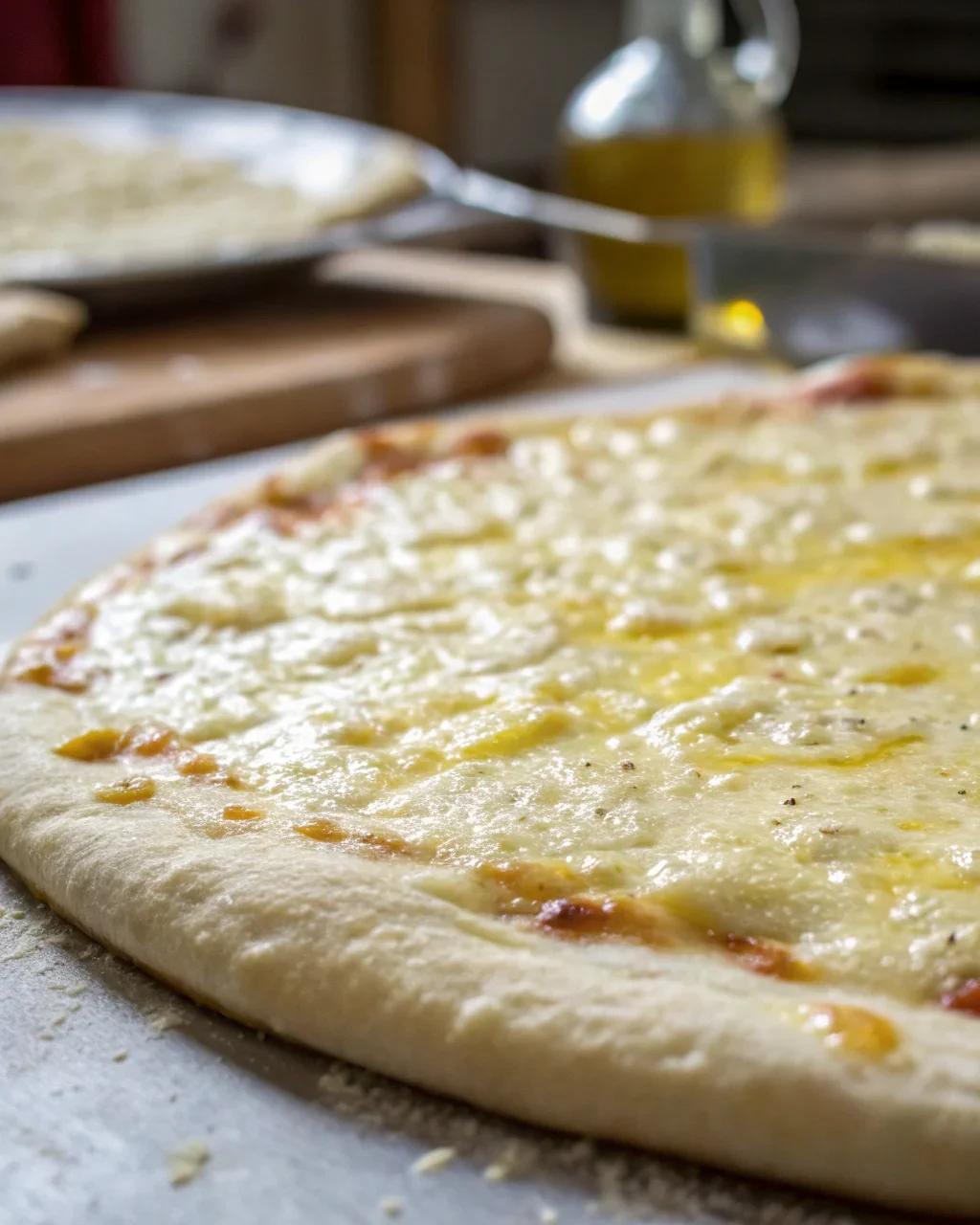
This thin crust dough leans on a higher hydration and a touch of oil to deliver that signature crispness with just enough chew. A slow, cold rise develops deep, nuanced flavor without sourdough drama.
The method uses a short knead and a generous rest, letting gluten relax so the dough stretches paper-thin instead of springing back.
And yes, it performs in a home oven—no wood-fired bragging rights required.
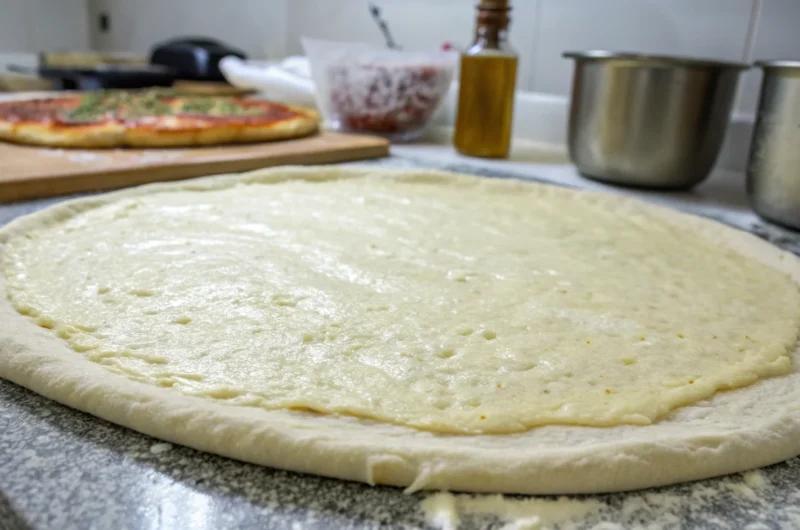
Thin Crust Pizza Dough That Snaps, Not Sags
Course: Dinner, Vegetarian12
servings20
minutes6
minutes220
kcalIngredients
2 1/2 cups (315 g) bread flour (or strong all-purpose; bread flour gives more snap)
1 teaspoon (6 g) fine sea salt
1 teaspoon (4 g) granulated sugar (helps browning)
3/4 cup + 2 tablespoons (210 g) warm water (about 100–105ºF)
1 teaspoon (3 g) instant yeast (or 1 1/4 tsp active dry)
1 tablespoon (12 g) olive oil
Semolina or cornmeal for dusting (optional, for sliding)
Flour for the bench
Step-by-Step Instructions
- Bloom (if needed): If using active dry yeast, stir it into the warm water with the sugar and let stand 5–10 minutes until foamy. If using instant yeast, skip blooming and add yeast straight to flour.
- Combine the dry stuff: In a large bowl, whisk flour and salt. If using instant yeast, add it now.
- Hydrate: Pour in the water (with bloomed yeast if using) and olive oil. Mix with a spoon until a shaggy dough forms. It should be slightly tacky, not sticky.
- Knead briefly: Turn onto a lightly floured surface and knead 3–5 minutes until smooth-ish. We’re not chasing a baguette here; moderate gluten is enough.
- Rest and tighten: Cover and let rest 10 minutes, then give it 3–4 gentle folds to strengthen. You’ll feel it tighten up—very satisfying.
- Divide and ball: Split into two equal pieces. Shape into tight balls by tucking edges underneath and rotating against the counter.
- Cold ferment: Lightly oil two containers, add dough balls, cover, and refrigerate 12–48 hours. Longer = better flavor. This is where the magic happens.
- Warm up: Remove dough 60–90 minutes before baking so it reaches room temp. Cold dough is stubborn; warm dough stretches like a dream.
- Preheat for real: Place a stone or steel on the top-middle rack. Preheat to the max your oven allows (500–550ºF) for at least 45 minutes. Broiler off for now.
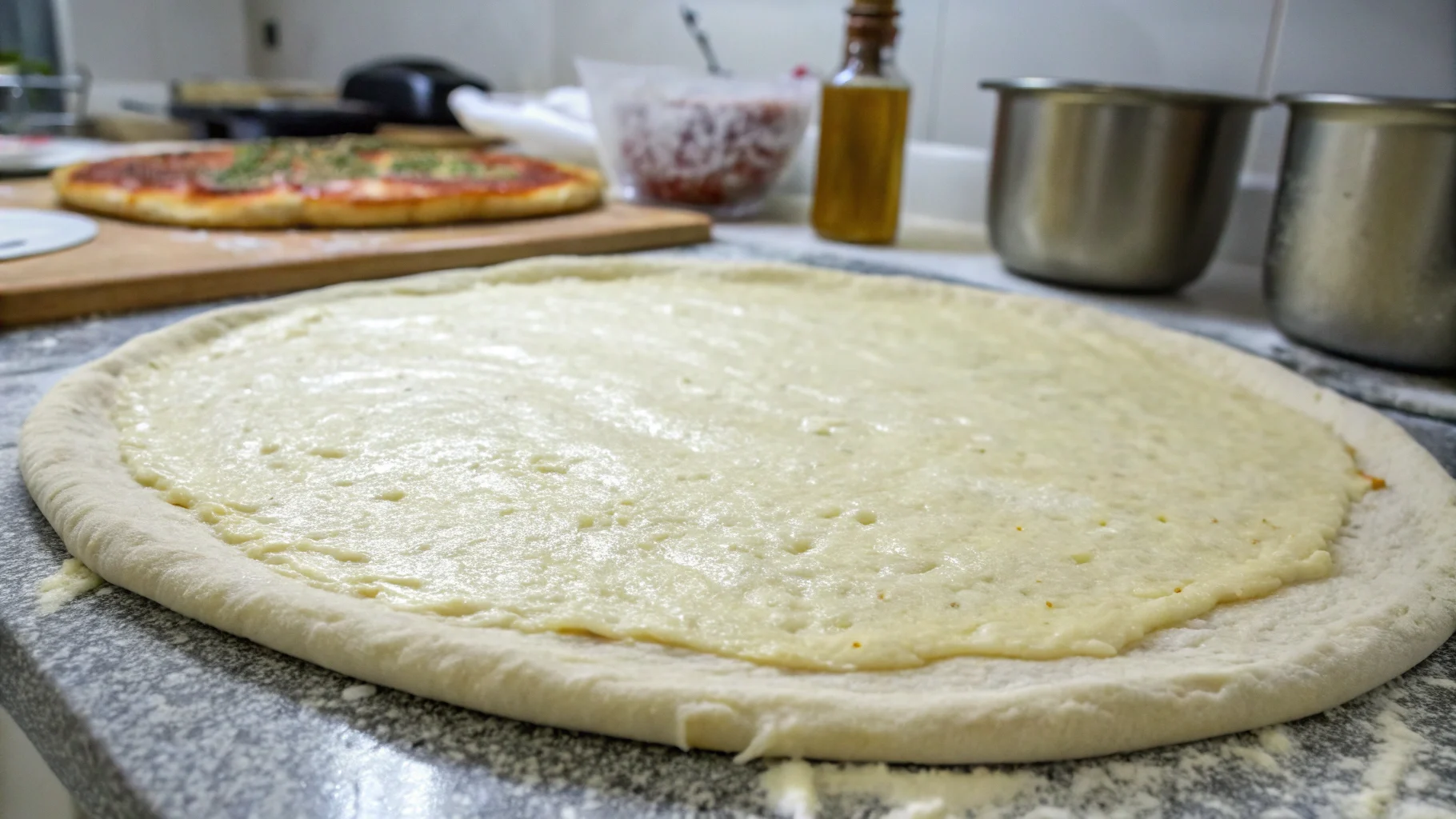
- Shape thin: Dust the counter lightly. Press the dough from the center outward with fingertips, leaving a whisper-thin center and a modest rim. Lift and knuckle-stretch to 12 inches. No rolling pin unless you absolutely must.
- Top lightly: Transfer to a floured peel or upside-down sheet pan dusted with semolina. Add thin sauce, scattered cheese, and minimal toppings. Thin crust hates heavy loads, FYI.
- Bake hot and fast: Slide onto the stone/steel. Bake 6–8 minutes until the crust is leopard-spotted and the underside is deeply golden. For extra char, broil the last 30–45 seconds, watching like a hawk.
- Rest briefly, then slice: Cool 2 minutes so cheese sets. Slice and flex that crisp base with zero flop. Victory.
How Long Does It Keep?
The dough stays excellent in the fridge for up to 72 hours, with peak flavor usually around 24–48 hours. After that, it can over-proof and weaken.
To freeze, wrap each dough ball tightly and freeze for up to 3 months. Thaw overnight in the fridge, then bring to room temp before stretching.
Wholesome Benefits
Thin crust means fewer carbs per slice compared to pillowy, pan-style pies. The olive oil adds a touch of heart-healthy fats and helps with satiety.
A thin base also encourages restraint with toppings—more balance, less lead weight. And by fermenting longer, you get better digestibility and flavor without dumping in sugar or additives.
Nutrition Stats
Per slice (1/8 of a 12-inch pizza, dough only):
- Calories: ~130
- Carbs: ~24 g
- Protein: ~4 g
- Fat: ~2 g
- Sodium: ~220 mg
Add-ons will shift totals, obviously. A light brush of sauce and modest cheese bump calories to roughly 200–230 per slice.
Use low-moisture mozzarella and go easy on the oil if you’re tracking macros, IMO.
Things to Be Careful About
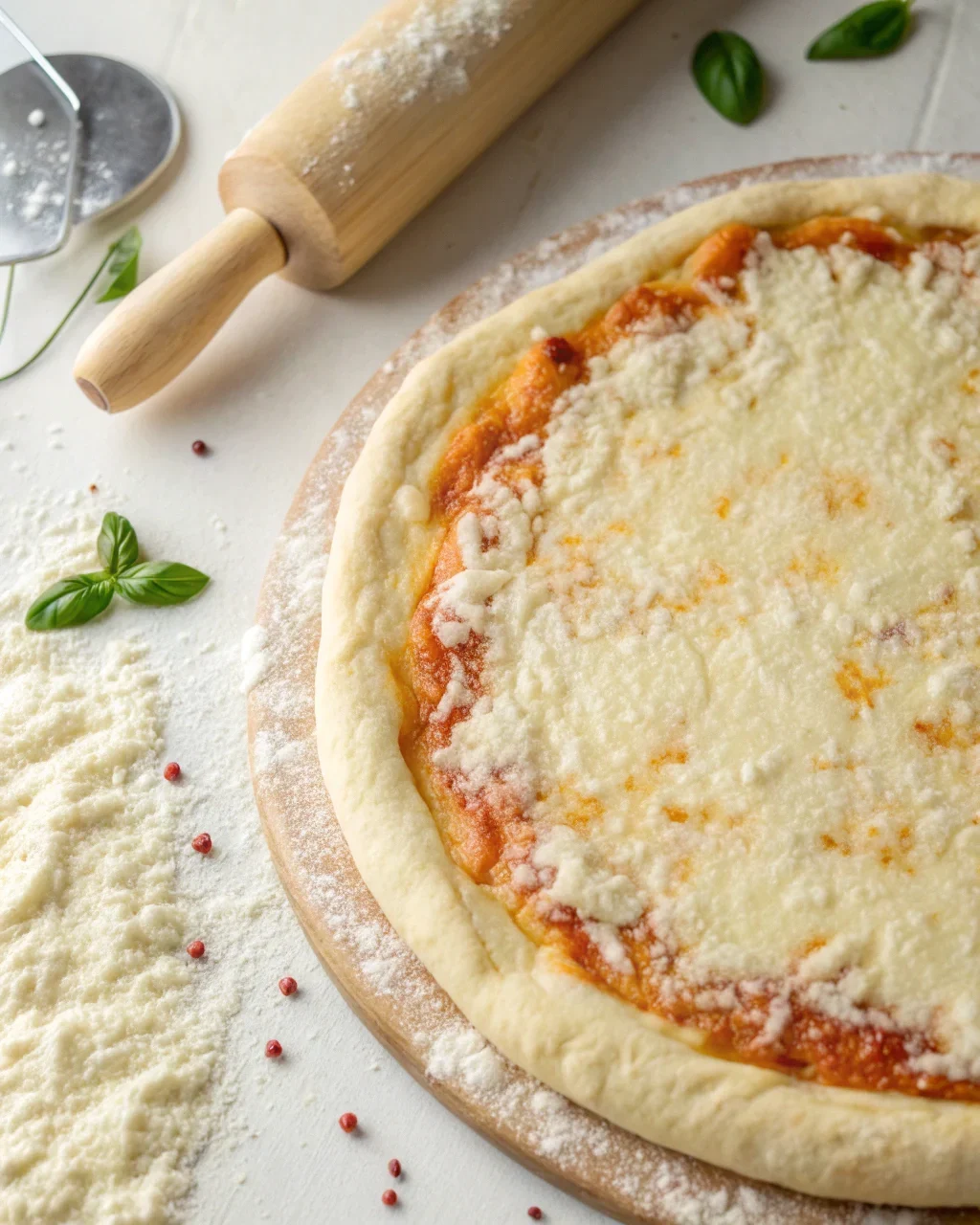
- Overloading toppings: Heavy sauce and wet vegetables make soggy centers. Pat veggies dry and go light.
- Insufficient preheat: A lukewarm oven guarantees pale, rubbery crust. Give your stone/steel 45–60 minutes.
- Too much flour on the peel: Excess flour burns and tastes bitter.
Use a light dusting or semolina.
- Over-proofing: Dough that doubles and collapses will tear and bake dense. Keep an eye on volume and timing.
- Rough handling: If the dough fights you, let it rest 5 minutes. Forcing it will tear gluten and your patience.
Different Takes
- 00 Flour Edition: Swap bread flour for Tipo 00 for silkier stretch and delicate crunch; lower water by 1–2 tablespoons if dough is slack.
- Garlic-Herb Crust: Add 1 teaspoon garlic powder and 1 teaspoon dried oregano to the dry mix for pizzeria vibes.
- Semolina Blend: Replace 1/2 cup flour with fine semolina for a golden hue and extra snap.
- Sourdough Hybrid: Replace 100 g water and 100 g flour with 200 g active starter; cut yeast to a pinch.
Extend cold ferment to 24–72 hours.
- Gluten-Light Try: Use high-protein AP flour and hydrate well; keep the dough very thin to maintain crispness. Not gluten-free, just gentler chew.
FAQ
Can I make this same-day without a cold ferment?
Yes, but flavor will be milder. Let the dough rise at room temperature for 60–90 minutes, then ball and rest another 30–45 minutes.
It’ll work; it just won’t flex that deep, nutty complexity.
Do I need a pizza stone or steel?
Not mandatory, but highly recommended. A preheated stone/steel stores intense heat for blistered bottoms. Without one, use an inverted sheet pan preheated in the oven and expect slightly less browning.
Why is my dough shrinking when I stretch it?
That’s tight gluten.
Cover and rest 5–10 minutes to relax, then try again. Also, avoid over-kneading; you want strength, not a trampoline.
How thin is “thin” anyway?
Aim for 2–3 mm in the center—nearly translucent when held up to light—with a minimal 1 cm rim. If you can read a text through it, you’re in the zone.
Cheeky, but accurate.
What sauce works best with thin crust?
A light, bright tomato sauce: crushed tomatoes, salt, a touch of olive oil, and maybe a pinch of sugar if your tomatoes are sharp. Keep it sparse to protect the crisp.
Can I par-bake the crust?
You can, but it’s usually unnecessary at high heat. If using extra-wet toppings, par-bake 2–3 minutes, then top and finish to preserve crunch.
How do I prevent sticking when launching the pizza?
Dust the peel with a mix of flour and semolina, build the pizza quickly, and shimmy the peel to ensure it slides.
If it sticks, lift an edge and blow a little air under—sounds goofy, works great.
Closing Notes
Great thin crust is a vibe: lean dough, hot deck, light toppings, big flavor. Follow the cold ferment, preheat like you mean it, and treat the dough gently.
Do that, and you’ll get that crisp, glassy bottom and addictive chew every time.
Your delivery app might get lonely—don’t feel bad.