Tomato & Basil Sourdough Focaccia: Crispy, Cloudy, Irresistible

Forget boring bread. This is the kind of focaccia that makes people hover near the kitchen like it’s a backstage pass.
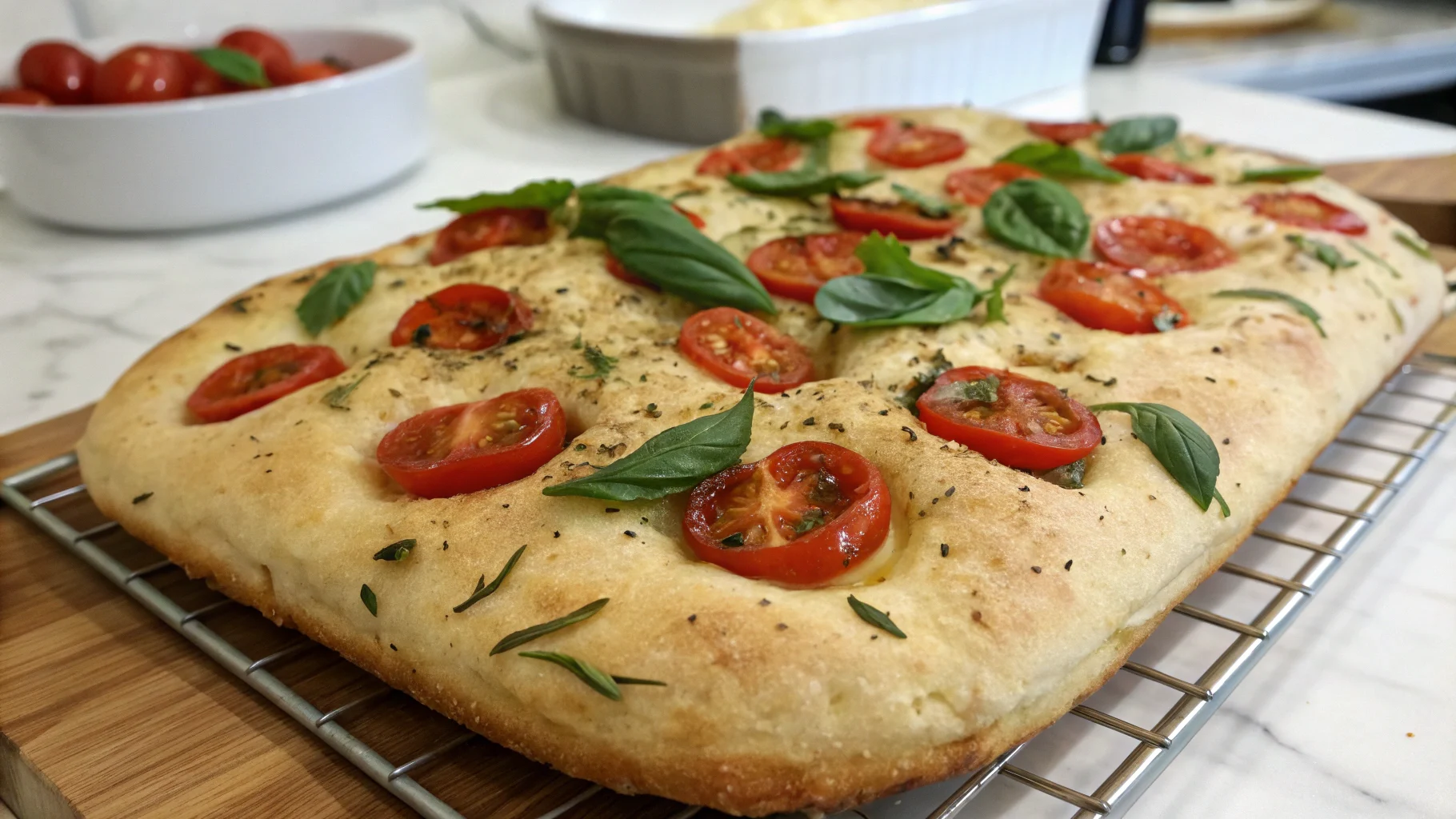
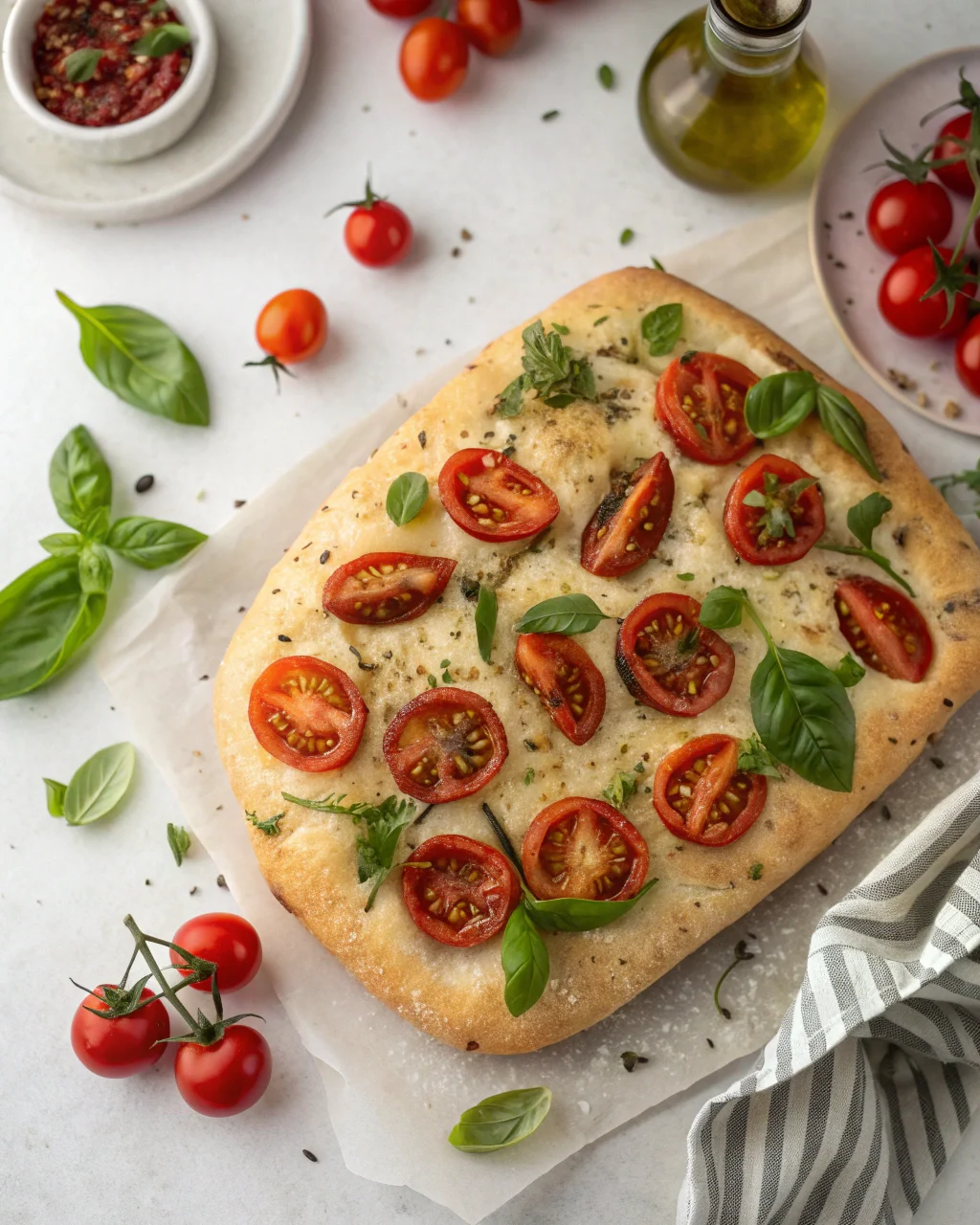
Juicy roasted tomatoes burst into sweet acidity, basil perfumes the air, and the sourdough tang keeps you going back for “just one more square.” It’s rustic, dramatic, and dangerously simple to demolish.
Consider this your new party trick—and yes, it’s also Tuesday-night easy.
Why You’ll Love This Recipe
- Big flavor, minimal effort: Sourdough tang, roasted tomato sweetness, and herbaceous basil do all the heavy lifting.
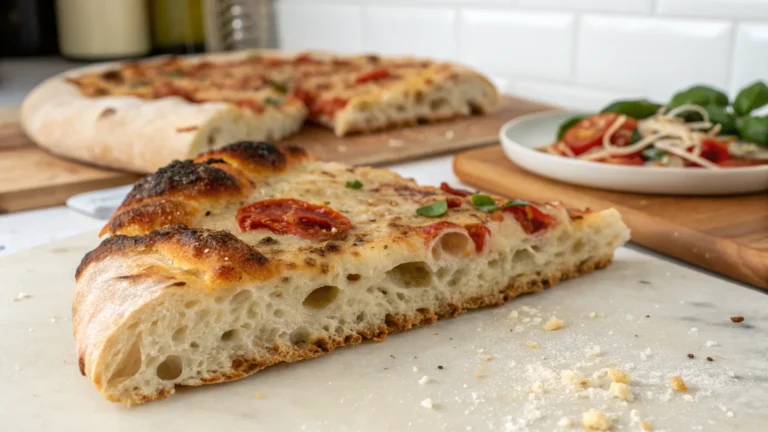
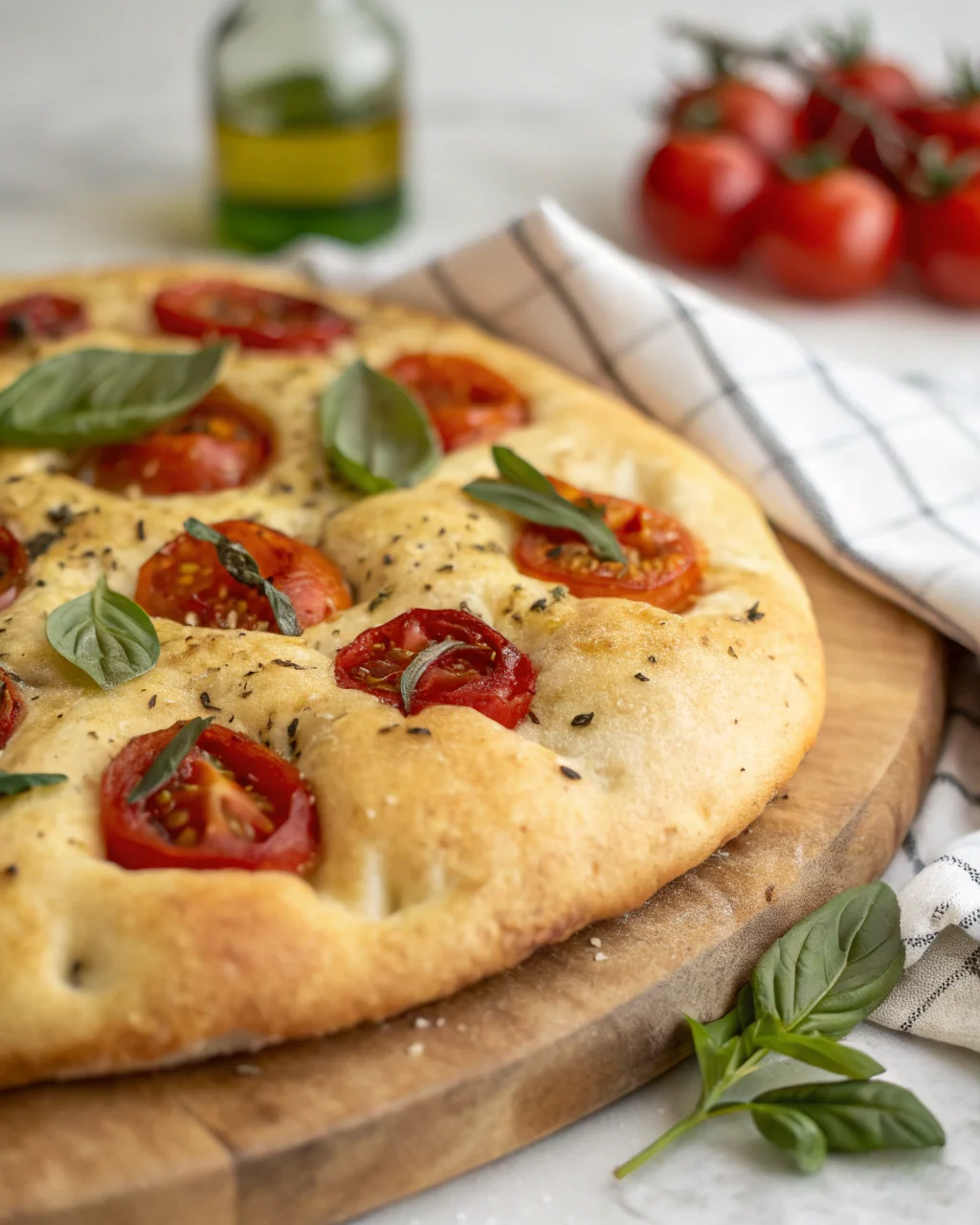
- Showstopper texture: Golden, olive-oil crisp edges with a soft, airy crumb that practically levitates.
- Flexible schedule: Overnight cold proofing or same-day rise—your choice.
- Zero kneading drama: Gentle folds replace elbow grease. Your stand mixer can relax.
- Meal-prep friendly: Keeps well, reheats like a dream, and doubles as the world’s best sandwich base.
Tomato & Basil Sourdough Focaccia: Crispy, Cloudy, Irresistible
Course: Dinner, Vegetarian12
servings25
minutes8
hours300
kcalIngredients
500 g bread flour (about 4 cups), plus extra for dusting
400 g water (about 1 2/3 cups), room temp
120 g active sourdough starter (100% hydration, bubbly)
12 g fine sea salt (about 2 tsp)
60–80 ml extra-virgin olive oil (4–5 tbsp), divided
250 g cherry or grape tomatoes, halved
Fresh basil leaves, a generous handful
2–3 garlic cloves, thinly sliced
Flaky sea salt, for topping
Optional: pinch of red pepper flakes, cracked black pepper
Step-by-Step Instructions
- Mix the dough: In a large bowl, whisk water and starter until milky. Add flour and salt. Stir with a spatula until no dry streaks remain. The dough will look shaggy—perfect.
- Rest (autolyse): Cover and let sit 30 minutes. This hydrates the flour and makes your life easier later.
- Strengthen with folds: Wet your hand, then perform 3–4 sets of stretch-and-folds over 60–90 minutes, every 20–30 minutes. Each set: grab one edge, stretch up, fold over; rotate the bowl and repeat 4 times. Dough should become smoother and bouncier.
- Bulk ferment: Cover and let rise until roughly 60–80% larger, 2–4 hours at 75ºF/24ºC. If your kitchen is cooler, extend the time. Think puffy, not doubled.
- Pan and oil: Generously coat a 9×13-inch pan (or two 8x8s) with 2–3 tbsp olive oil. Tip the dough into the pan, drizzle another tablespoon on top, and gently tug it toward the corners.
- Cold proof (flavor booster): Cover and refrigerate 8–18 hours. Short on time? Counter-proof 1–2 hours until very bubbly and relaxed, then continue.
- Preheat and prep toppings: Heat oven to 450ºF/232ºC. Toss tomatoes with 1 tbsp oil, a pinch of salt, and pepper. Slice garlic; pluck basil leaves.
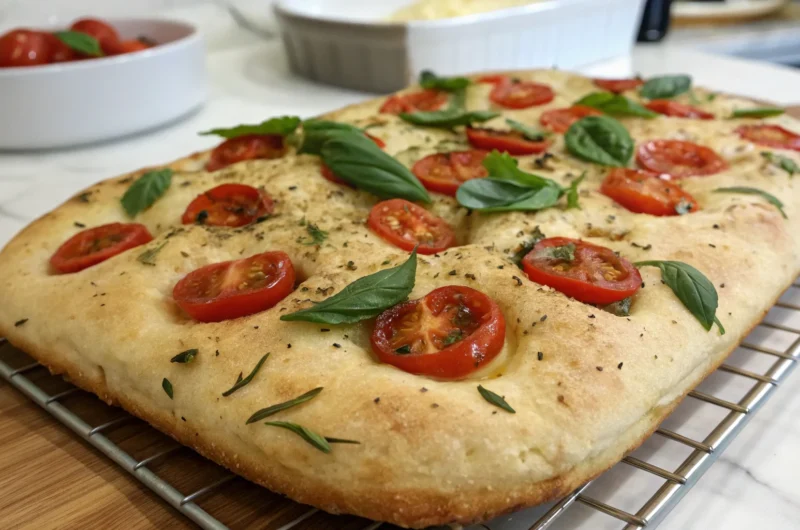
- Dimple like you mean it: Oil your fingertips and press straight down into the dough to create deep dimples. Scatter tomatoes (cut side up), tuck in basil and garlic, and drizzle with 1–2 tbsp oil. Finish with flaky salt and red pepper flakes if you like chaos.
- Bake: Bake 22–28 minutes until the top is deeply golden and edges are sizzling. If using two pans, rotate halfway. You want crisp edges that sing.
- Cool and finish: Rest 10–15 minutes in the pan, then transfer to a rack. Brush with a whisper of oil if you love extra shine. Add a few fresh basil leaves for aroma.
- Slice and serve: Square it up and serve warm. Try not to eat half while “tasting.”
How to Store It Right
- Room temp: Wrap loosely in parchment or a bread bag for up to 2 days. Avoid airtight containers—they soften the crust.
- Reheat: 375°F/190°C for 6–8 minutes to revive the crisp edges.
Toaster oven works great.
- Freeze: Slice, wrap individually, and freeze up to 2 months. Reheat from frozen at 400°F/205°C for 10–12 minutes.
- Don’t refrigerate: It dries out the crumb faster. Bread prison, basically.
Why You’ll Love It
- Balanced flavor: Tangy sourdough meets sweet tomatoes and fragrant basil—no single note shouts over the band.
- All-purpose hero: Appetizer, side, sandwich base, midnight snack.
It moonlights like a pro.
- Beginner-friendly: Forgiving dough, easy technique, bakery-level results at home, IMO.
Nutrition Stats
Per serving (1 of 12): ~230 calories, 9 g fat (mostly from olive oil), 33 g carbs, 6 g protein, 2 g fiber, plus lycopene from tomatoes and antioxidants from basil. Sodium varies with your salt hand. It’s bread with benefits—not a salad, but definitely not junk.
Don’t Make These Errors
- Under-proofing: If the dough isn’t puffy and bubbly, it’ll bake dense.
Wait for visible jiggle.
- Skimping on oil: Oil equals crisp edges and flavor. Dry pan = tragic sticking and pale crust.
- Overloading toppings: Too many wet tomatoes can sog the top. Keep them cut-side up and spaced.
- Baking too cool: You need a hot oven for lift and color.
Preheat fully. Patience, padawan.
- Cutting too soon: Let it rest 10 minutes so steam redistributes and the crumb sets.
Optional Substitutions
- Flour: Swap up to 20% bread flour for whole wheat for nuttiness; add 10–15 g extra water if needed.
- Tomatoes: Use sun-dried tomatoes (oil-packed, drained) for concentrated sweetness.
- Herbs: Basil plus thyme or rosemary? Yes.
Dried herbs work in a pinch, but use sparingly.
- Garlic: No fresh? Use 1/2 tsp garlic powder mixed into the oil topping.
- No sourdough starter: Use 7 g instant yeast + 430 g water, skip starter; rise times will shorten substantially (bulk 1–2 hours, proof 45–90 minutes).
- Dairy flair: Add torn fresh mozzarella or dollops of ricotta in the last 8–10 minutes of baking.
FAQ
How do I know my sourdough starter is ready?
It should be bubbly, doubled within 4–6 hours of feeding, and pass the float test (a small spoonful floats in water). If it smells like gym socks, feed it and wait—good things come to those who ferment.
Can I make this same day without cold proofing?
Yes.
After panning, let it proof at room temp 1–2 hours until airy and jiggly. You’ll get a solid rise, but the flavor won’t be as deep as the overnight version. Still delicious, FYI.
What pan works best?
A heavy, light-colored metal pan or seasoned cast iron gives the crispest edges.
Dark pans brown faster—watch closely in the last minutes.
Why is my focaccia dense?
Likely under-proofed or the dough wasn’t strengthened with folds. Also check water temperature and starter activity. Cold dough is sluggish; give it warmth and time.
Can I add more toppings?
Sure—think olives, caramelized onions, or roasted peppers.
Keep the moisture in check and don’t bury the dough or you’ll block the rise.
How do I keep the bottom crisp?
Use enough oil, preheat thoroughly, and place the pan on a preheated baking steel or the lower oven rack. That bottom heat equals crunch.
In Conclusion
This Tomato & Basil Sourdough Focaccia is the bread equivalent of a mic drop: bold flavor, airy crumb, crispy edges, and a fragrance that makes neighbors suspiciously friendly. Master the folds, respect the proof, and don’t fear the olive oil.
Bake it once and you’ll have a new house favorite—plus a very compelling reason to host brunch this weekend.