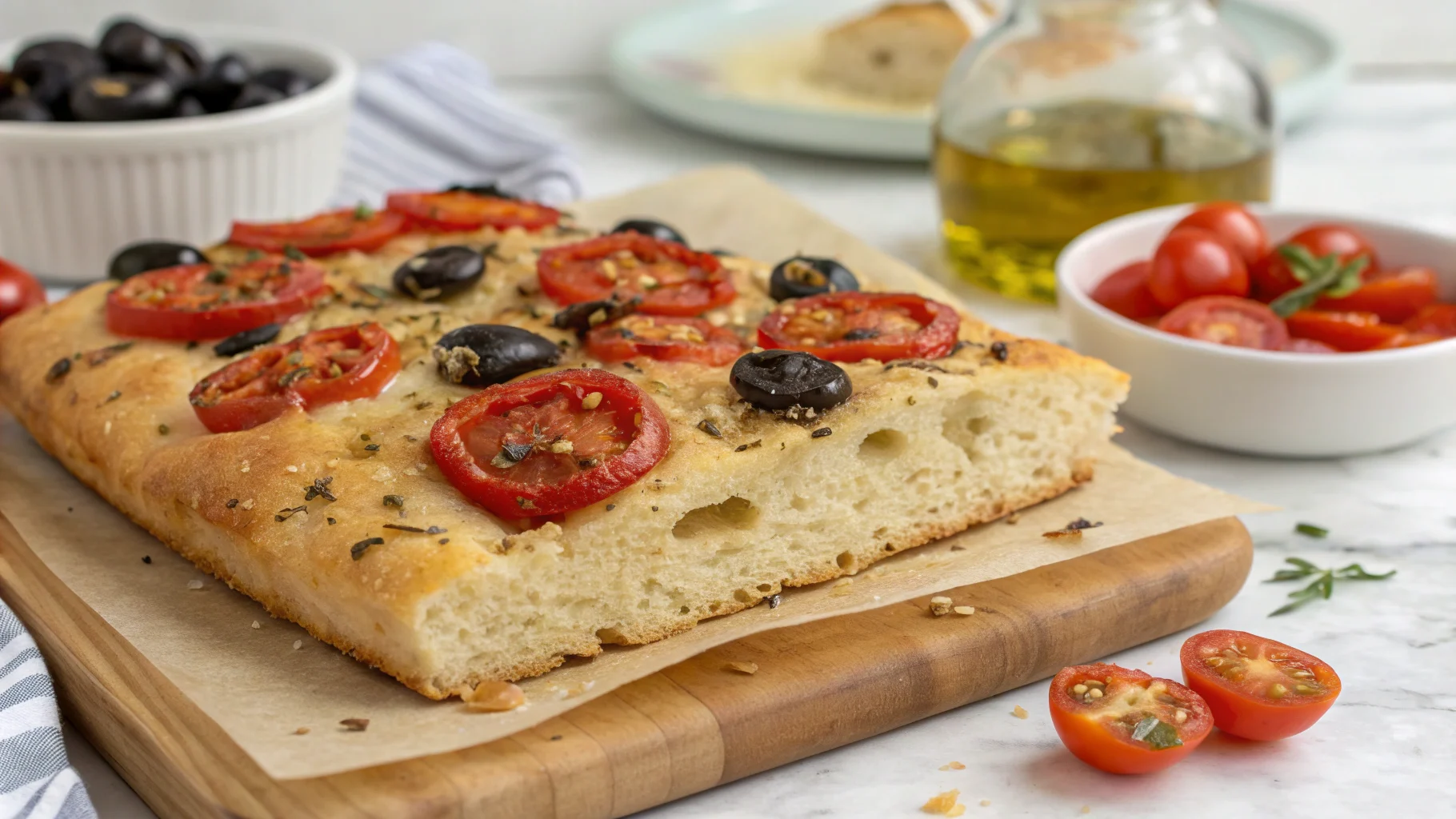
Tomato & Olive Focaccia Bread: Your Crispy, Juicy Crave-Bake

You know that bread you swear you’ll only have “one piece” of? This is that bread—except you’ll eat half the pan and call it research.
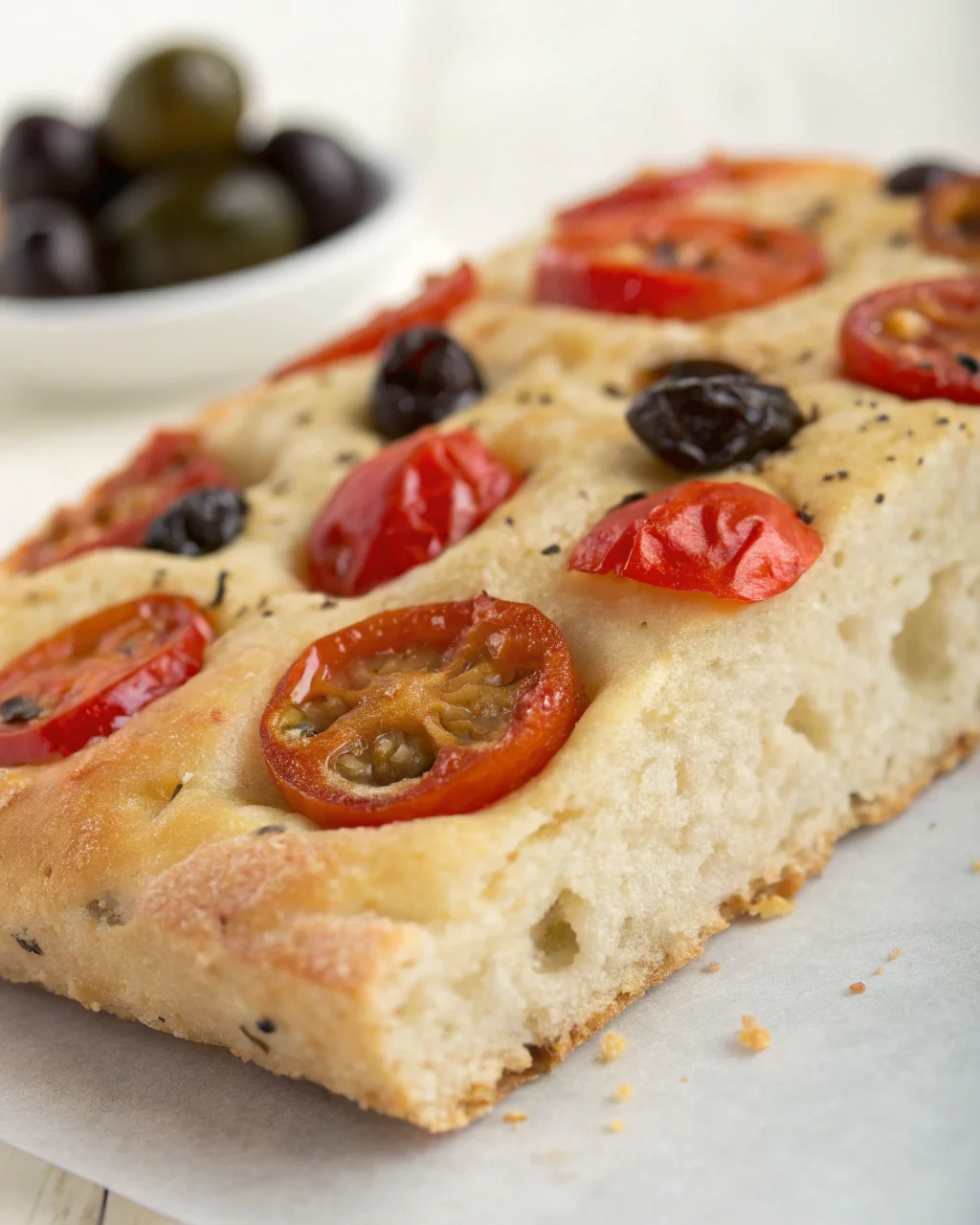
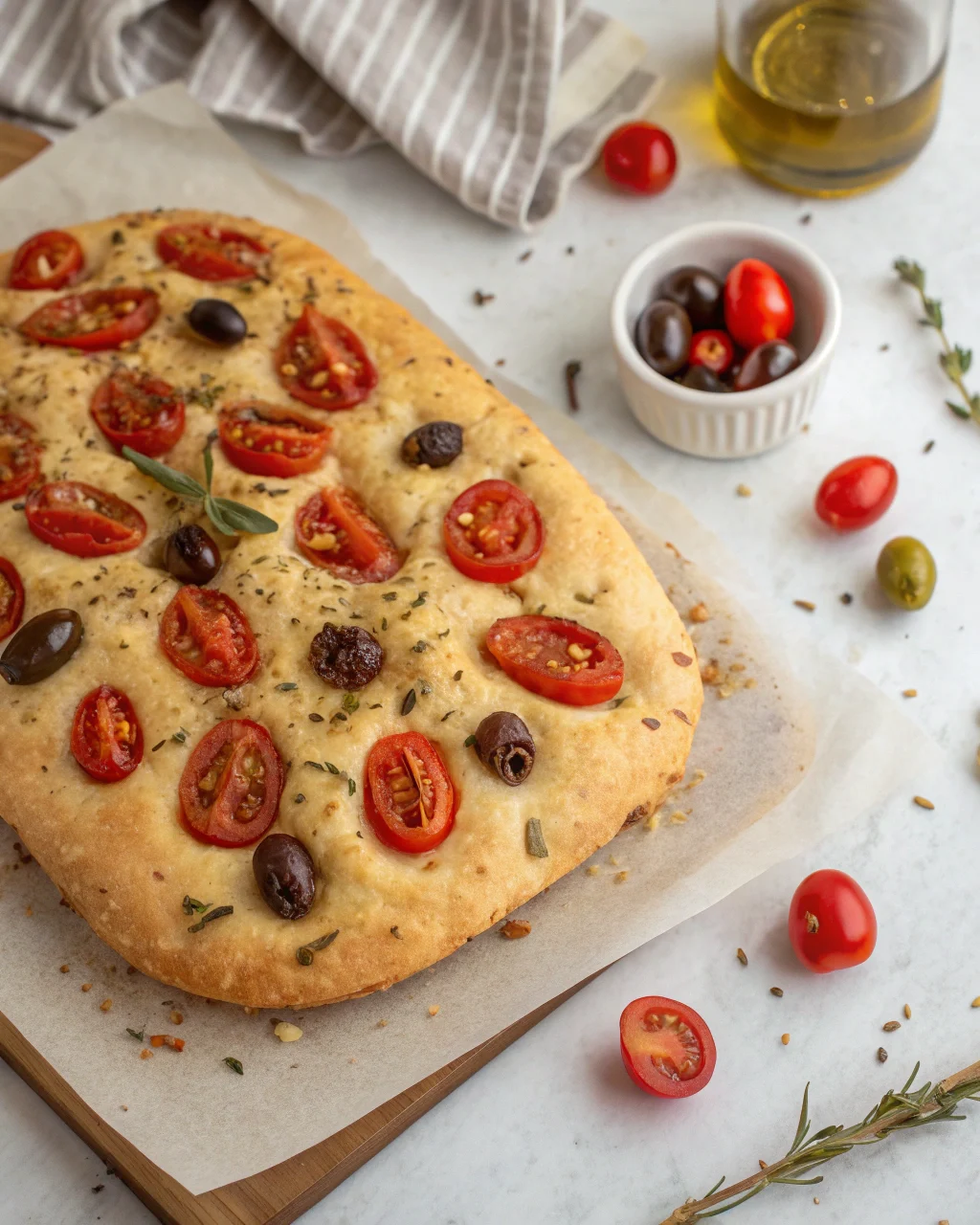
Tomato & Olive Focaccia is salty, juicy, crisp-edged, and fluffy in the middle—like pizza’s cooler sibling that doesn’t try too hard. It’s the bake that turns a simple soup into dinner and an ordinary Tuesday into an “open a bottle” situation.
No fancy gear, just a bowl, time, and the willpower to let it rise (good luck with that).
Why This Recipe Works
This focaccia leans on a high-hydration dough for a light, airy crumb that bubbles up like a dream in the oven. Olive oil—generously used—creates a shatter-crisp bottom and keeps the interior soft for days.
Cherry tomatoes burst and mingle with briny olives, adding built-in umami so you don’t need a condiment lineup to enjoy it. A cold ferment option boosts flavor complexity without complicating the process.
Translation: minimal effort, maximal flex.
Servings, Prep time, Cooking time, Calories
- Servings: 10–12 squares
- Prep Time: 20 minutes active; 2–3 hours rise (or overnight cold ferment)
- Cooking Time: 25–30 minutes
- Calories: ~240 per serving (estimate)
What You’ll Gather
- All-purpose flour: 4 cups (500 g)
- Warm water: 1 3/4 cups (410 g), about 100–105°F
- Instant or active dry yeast: 2 1/4 tsp (7 g)
- Kosher salt: 2 tsp for dough + flaky salt for topping
- Olive oil: 1/3 cup for dough/pan + extra for topping
- Cherry tomatoes: 1 to 1 1/2 cups, halved
- Kalamata or Castelvetrano olives: 3/4 cup, pitted and halved
- Garlic: 2–3 cloves, thinly sliced
- Fresh rosemary or thyme: 1–2 tbsp, chopped (optional but recommended)
- Honey or sugar: 1 tsp (helps yeast wake up)
- Freshly ground black pepper: to taste
Cooking Method
- Bloom the yeast (if using active dry): In a large bowl, whisk warm water with honey and yeast. Let sit 5–10 minutes until foamy.
If using instant yeast, skip the bloom and mix dry with flour and salt.
- Make the dough: Add flour and salt to the bowl. Stir with a spatula until no dry patches remain.
The dough will be sticky—this is good. Drizzle in 2 tbsp olive oil and fold a few times to coat.
- First rise: Cover the bowl and let rise at warm room temp until doubled, about 60–90 minutes.
For better flavor, refrigerate 8–24 hours; bring back to room temp for 45 minutes before proceeding.
- Prep the pan: Pour 3 tbsp olive oil into a 9×13-inch pan (or a well-oiled sheet pan for thinner focaccia). Swirl to coat.
Yes, it’s a lot. That’s the point.
- Pan the dough: Transfer dough to the pan.
Gently stretch toward the edges. If it springs back, wait 10 minutes and try again.
No wrestling matches, please.
- Top it right: Scatter halved tomatoes, olives, and garlic over the dough. Press your fingertips into the dough to create deep dimples, pushing some toppings into the surface.
Drizzle 2–3 tbsp olive oil over the top. Sprinkle with flaky salt, pepper, and herbs.
- Second rise: Let the topped dough rise 30–45 minutes, until puffy and slightly jiggly.
Preheat oven to 450°F (230°C).
- Bake: Bake 25–30 minutes until the top is deep golden and the edges are crisp. If the top browns too quickly, tent loosely with foil for the last 5 minutes.
- Finish and rest: Brush with a final spoonful of olive oil.
Cool 10–15 minutes in the pan before slicing. That wait is heroic—but it sets the crumb and keeps the steam from turning it gummy.
- Serve: Slice into squares.
Ideal with soft cheeses, salads, soups, or unapologetically on its own.
Storage Instructions
- Room temperature: Wrap loosely in parchment and keep in an airtight container for up to 2 days.
- Refrigerator: Not ideal (dries it out), but OK for 3 days; reheat to revive.
- Freezer: Wrap slices in foil, then bag. Freeze up to 2 months.
Reheat at 375°F (190°C) for 8–10 minutes straight from frozen.
- Reheat: Oven or toaster oven at 375°F brings back the crisp. Microwave only if you like sadness.
Better-for-You Benefits
- Olive oil = heart-friendly fats: Rich in monounsaturated fats and antioxidants that support cardiovascular health.
- Tomatoes bring lycopene: A potent antioxidant that’s more bioavailable after roasting.
Science-backed excuse for seconds? Yes.
- Olives add minerals: Small doses of iron and copper, plus satisfying saltiness that reduces the need for extra cheese.
- Homemade beats store-bought: Fewer additives, clean ingredients, and you control the salt and oil.
IMO, worth the minimal effort.
Nutrition Stats
Per serving (1 of 12), approximate:
- Calories: 240
- Total Fat: 11 g (mostly from olive oil)
- Carbohydrates: 31 g
- Protein: 5 g
- Fiber: 2 g
- Sodium: 380 mg (varies based on olives and salt)
Note: Numbers will shift based on toppings and how enthusiastically you pour the oil. You know who you are.
What to Avoid
- Cold tomatoes straight from the fridge: They can collapse and waterlog the dough.
Let them come to room temp.
- Under-oiling the pan: You’ll lose the signature crisp bottom and risk sticking. Fear the dry corner.
- Over-proofing: If the dough deflates when poked, it’s gone too far.
Bake earlier next time.
- Thin sheet pans with hot spots: Leads to scorched bottoms. Use a sturdy pan or lower the rack slightly.
- Salting too early: Salt draws moisture from tomatoes.
Season just before baking to avoid puddles.
Switch It Up
- Herb garden: Swap rosemary for oregano, basil (after baking), or za’atar for a Middle Eastern twist.
- Cheesy moment: Add 1/2 cup grated Parm or pecorino during the last 5 minutes of baking.
- Heat lovers: Sprinkle red pepper flakes or sliced Calabrian chilies.
- Citrus zing: Add lemon zest to the olive oil drizzle for brightness.
- Whole wheat boost: Replace 1 cup AP flour with whole wheat. Add 1–2 tbsp extra water if needed.
- Onion jam-up: Nestle thinly sliced red onions with the tomatoes for sweet-savory vibes.
FAQ
Can I make this gluten-free?
Use a high-quality 1:1 gluten-free baking flour designed for yeasted doughs and increase hydration slightly.
Expect a denser crumb, but the olive oil and toppings still deliver huge flavor.
Do I have to cold ferment?
No, but it’s a flavor cheat code. A same-day rise works great; an overnight rest adds depth, better browning, and a more complex aroma.
Your schedule, your rules.
Why is my focaccia dense?
Common culprits: expired yeast, water too hot (yeast murder), or not enough hydration. Also, rough handling after the second rise knocks out gas—be gentle.
Can I use sun-dried tomatoes?
Yes.
Pat them dry and chop. They add sweet-tart intensity and less moisture.
Reduce added salt slightly if they’re packed in brine.
What if I don’t have a 9×13 pan?
Use a large cast-iron skillet for a round loaf or a rimmed sheet pan for thinner, extra-crispy focaccia. Adjust bake time by a few minutes and watch the color.
How do I keep the bottom from burning?
Use a heavy pan, bake on the middle rack, and consider sliding a second empty sheet pan under it halfway through.
If your oven runs hot, drop to 425°F.
Chef’s Notes
- Olive oil quality matters: A peppery, fruity extra-virgin olive oil elevates every bite. This is not where you use the dusty bottle from 2019.
- Dimpling technique: Oil your fingertips and press all the way down to the pan to create pools for oil and juices.
That’s the flavor reservoir, FYI.
- Timing the salt: Sprinkle flaky salt and pepper right before baking for crisp crystals, not soggy sadness.
- Let it rest: Ten minutes post-bake lets steam redistribute, keeping the crumb airy. Yes, the aroma is rude.
Stay strong.
- Serve smart: Pair with whipped ricotta, balsamic-glazed greens, or grilled fish. Or just tear and eat.
No one’s judging.