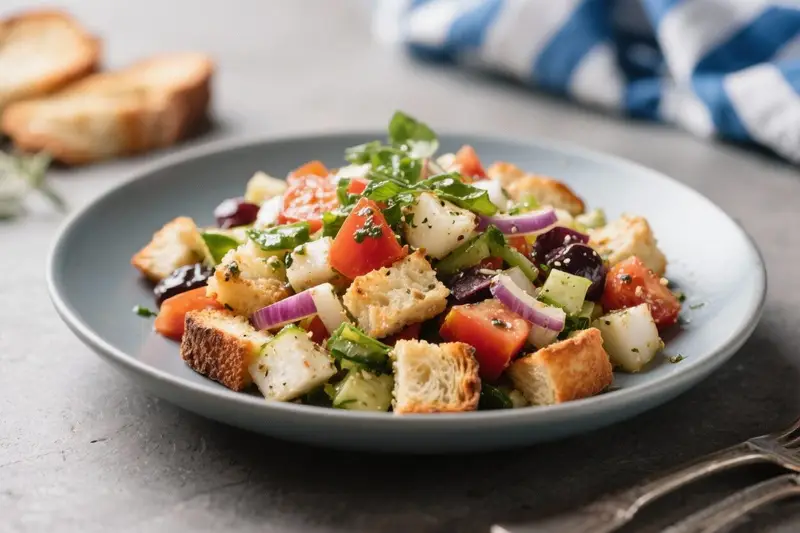
Traditional Greek Panzanella Salad – Bright, Fresh, and Satisfying

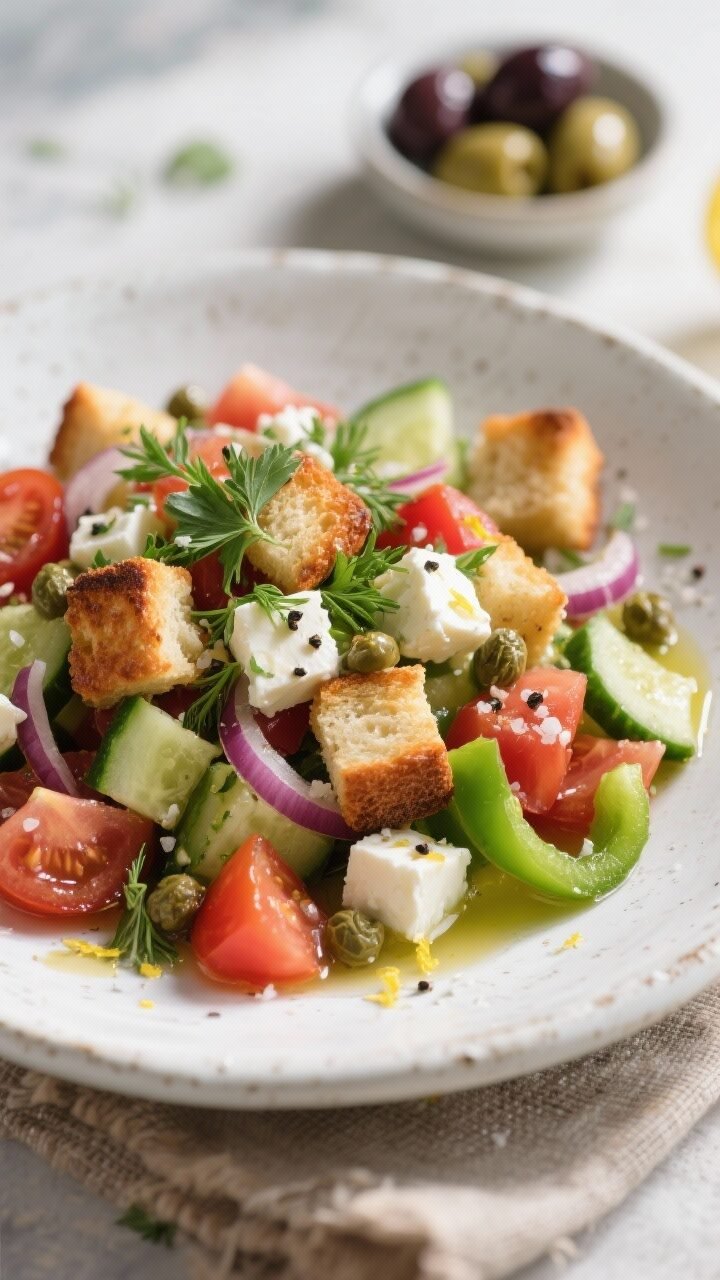
Panzanella is classic Italian, but this version takes a sunny Greek turn with briny olives, creamy feta, and plenty of crisp vegetables. It’s the kind of salad that feels like a light meal, thanks to hearty toasted bread that soaks up a vibrant lemon-oregano dressing. The flavors are bold, fresh, and balanced—salty, tangy, and just a little sweet from ripe tomatoes.
It comes together quickly, uses simple ingredients, and works beautifully for lunch, dinner, or a picnic. If you like food that tastes like summer, this is your bowl.
What Makes This Recipe So Good
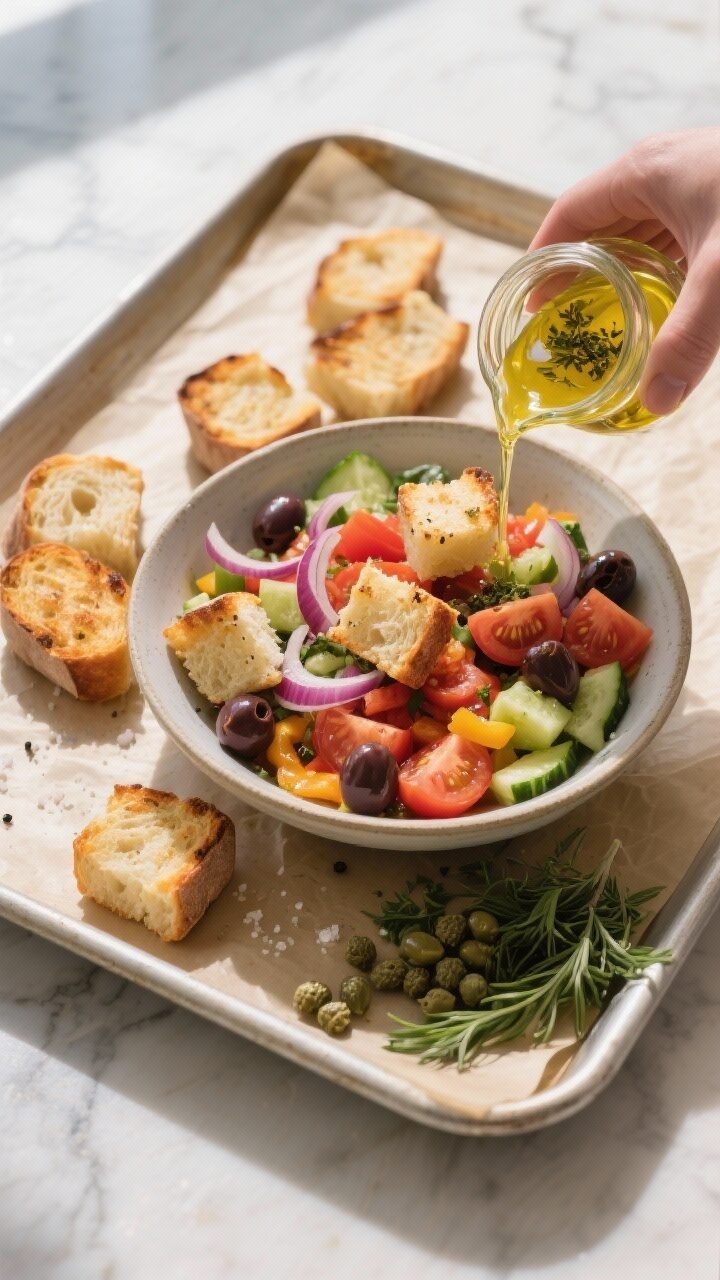
- Big flavor, simple ingredients: Juicy tomatoes, cucumbers, onion, olives, and feta bring clean Mediterranean flavors that never fail.
- Perfect texture contrast: Toasted bread cubes soak up the dressing while staying a bit chewy, giving the salad structure and bite.
- Great make-ahead potential: The components can be prepped ahead and tossed before serving, ideal for gatherings.
- Naturally budget-friendly: Stale bread and pantry staples make this a thrifty, satisfying dish.
- Versatile: Easy to scale and adapt for vegetarian, vegan, or gluten-free needs.
Shopping List
- Bread: 5–6 cups day-old rustic bread (ciabatta, country loaf, or sourdough), cut into 1-inch cubes
- Tomatoes: 4–5 ripe tomatoes (vine, Roma, or heirloom), chopped
- Cucumber: 1 large English cucumber, halved lengthwise and sliced
- Red onion: 1 small, thinly sliced
- Bell pepper: 1 green or red bell pepper, chopped
- Kalamata olives: 3/4 cup, pitted and halved
- Feta cheese: 6–8 ounces, cut into small cubes or crumbled
- Capers (optional): 1–2 tablespoons, rinsed
- Fresh herbs: 1/2 cup chopped parsley and/or dill; a few sprigs of fresh oregano if available
- Extra-virgin olive oil: 1/2 cup, plus more for toasting bread
- Lemon: Zest of 1 lemon and 3 tablespoons lemon juice
- Red wine vinegar: 2 tablespoons
- Garlic: 1–2 cloves, finely grated or minced
- Dried oregano: 1–2 teaspoons
- Sea salt and black pepper: to taste
Instructions
- Toast the bread: Preheat the oven to 375°F (190°C). Toss bread cubes with a drizzle of olive oil and a pinch of salt.
Spread on a baking sheet and bake 10–15 minutes until lightly golden and dry at the edges, but still a little chewy. Let cool.
- Salt the tomatoes: Place chopped tomatoes in a bowl with a pinch of salt. Let them sit 10 minutes to release juices.
This makes the salad extra flavorful.
- Make the dressing: In a small bowl, whisk olive oil, lemon juice, red wine vinegar, lemon zest, garlic, dried oregano, 1/2 teaspoon salt, and several grinds of black pepper until glossy.
- Prep the vegetables: Slice cucumber, onion, and bell pepper. Halve the olives. Rinse capers if using.
Pat the feta dry and cut into small cubes or crumble.
- Combine: In a large salad bowl, add toasted bread, tomatoes with their juices, cucumber, onion, bell pepper, olives, and capers. Pour most of the dressing over and toss well. The bread should start to soften slightly.
- Add herbs and feta: Gently fold in parsley, dill, and feta.
Taste and adjust with more dressing, salt, or pepper as needed.
- Rest briefly: Let the salad sit 10–15 minutes so the bread absorbs more flavor. Serve at room temperature for the best taste.
How to Store
- Short-term: Keep leftovers in an airtight container in the fridge for up to 1 day. The bread will soften more, but the flavors remain great.
- Prep ahead: Store components separately—dressing in a jar, chopped veg and olives in containers, toasted bread at room temp.
Toss just before serving.
- Revive leftovers: Add a handful of fresh tomatoes or cucumber and a splash of olive oil and vinegar to brighten the next day.
Health Benefits
- Heart-healthy fats: Extra-virgin olive oil provides monounsaturated fats and polyphenols that support cardiovascular health.
- Antioxidants galore: Tomatoes, peppers, onions, and herbs deliver vitamin C, lycopene, quercetin, and other protective compounds.
- Balanced meal: Carbs from bread, protein and calcium from feta, and fiber from vegetables create a satisfying, well-rounded plate.
- Lower sodium option: You control the salt. Rinse olives and capers and use a modest amount of feta if watching sodium.
- Mediterranean pattern: This aligns with eating patterns linked to better long-term health outcomes.
Pitfalls to Watch Out For
- Using fresh, soft bread: It turns mushy. Day-old bread, toasted until dry at the edges, gives the right chew.
- Skipping the tomato rest: You’ll miss out on those flavorful juices that act like a natural sauce for the bread.
- Overdressing early: Add most of the dressing, then adjust.
Too much liquid and the salad can get soggy fast.
- Under-seasoning: The salad needs enough salt and acid to pop. Taste and tweak before serving.
- Refrigerating too long: Cold temperatures dull flavor and texture. Serve at room temp when possible.
Variations You Can Try
- Protein boost: Add grilled chicken, shrimp, or chickpeas for a heartier meal.
- Vegan version: Skip the feta and add creamy avocado or marinated tofu.
Use a touch more olives and herbs for richness.
- Gluten-free: Use your favorite sturdy gluten-free loaf, toasted well so it holds up.
- Roasted vegetable twist: Add roasted eggplant or zucchini for a deeper flavor, especially in cooler months.
- Herb-forward: Go heavy on dill and fresh oregano for a truly Greek profile, or add mint for a fresh kick.
- Citrus swap: Use all lemon for a brighter, zippier dressing, or add a splash of sherry vinegar for extra complexity.
FAQ
Can I make this salad ahead of time?
Yes—prep the components in advance, but wait to combine until 15–30 minutes before serving. If you toss too early, the bread can get overly soft.
What’s the best bread to use?
A sturdy country loaf, ciabatta, or sourdough works best. You want a crumb that toasts well and stays a little chewy after soaking up dressing.
Do I have to peel the cucumber?
No.
English cucumbers have thin skin, so peeling is optional. If you use standard cucumbers, peeling and seeding can improve texture.
How do I keep the onion from being too sharp?
Slice it thin and soak in cold water for 10 minutes, then drain. This tames the bite without losing flavor.
Can I use cherry tomatoes?
Absolutely.
Halve them and still salt for a few minutes to draw out juices. They’re sweet, consistent, and great year-round.
Is there a good substitute for Kalamata olives?
Yes—use any meaty black olive you like, such as Niçoise or Gaeta. Just make sure they’re pitted and not overly salty.
What if I don’t have red wine vinegar?
Use white wine vinegar or more lemon juice.
Balsamic is a bit sweet here, so use sparingly if that’s your only option.
How can I make it spicier?
Add a pinch of red pepper flakes to the dressing or thinly sliced fresh chili. Start small and build to taste.
In Conclusion
Traditional Greek Panzanella Salad is a bright, satisfying twist on a classic, full of crisp vegetables, tangy olives and feta, and hearty bread that soaks up every drop of flavor. It’s easy to make, flexible, and perfect for sharing.
With a few smart techniques—day-old bread, a zesty dressing, and ripe tomatoes—you’ll have a salad that tastes like it came straight from a sunny coastal kitchen. Keep it simple, season boldly, and enjoy it at room temperature for the best experience.