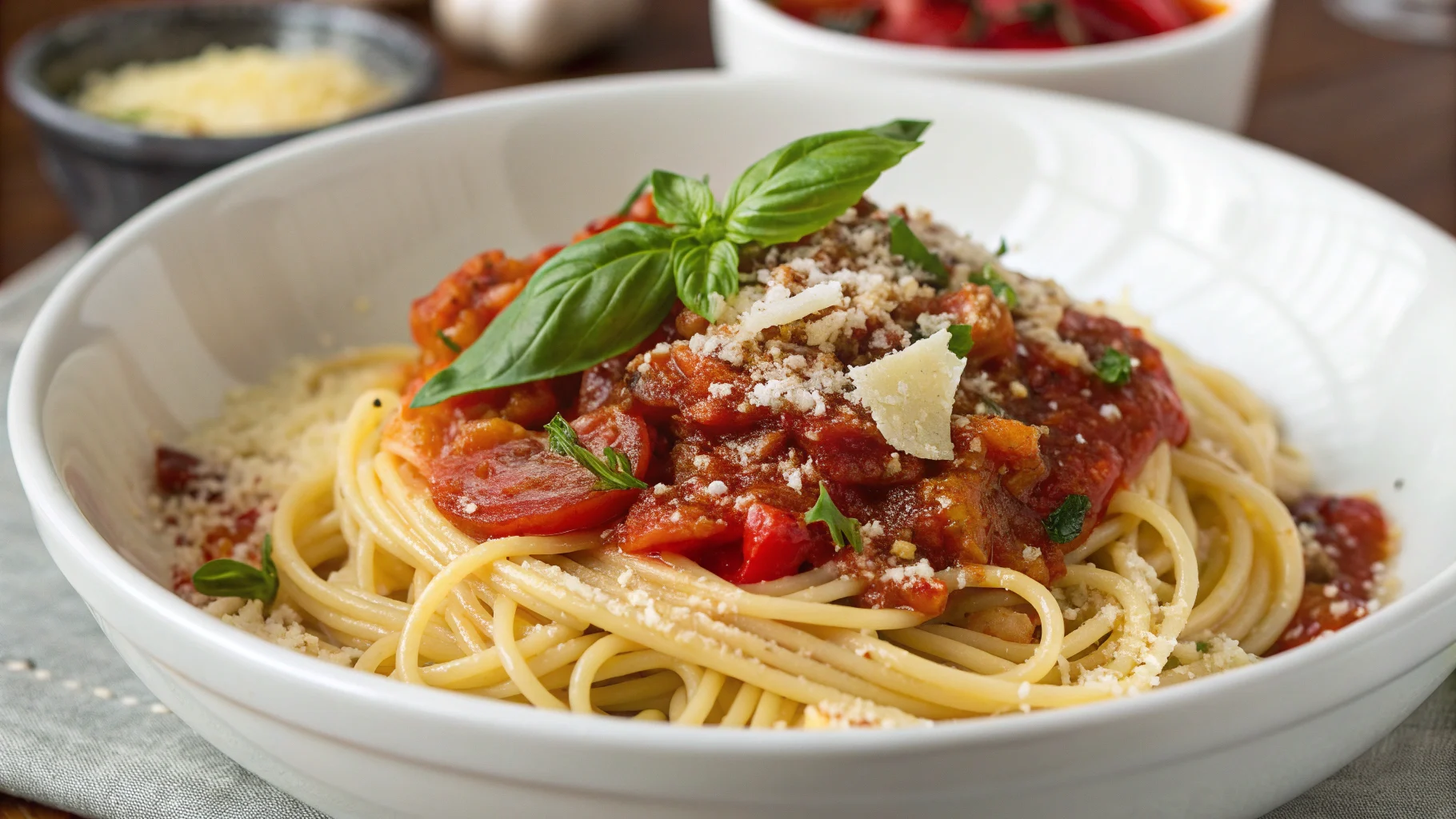
Traditional Spaghetti Napolitana: Simple Sauce, Big Flex

Forget complicated. This is humble pasta that eats like a victory lap. No cream, no gimmicks—just ripe tomatoes, garlic, and the kind of olive oil that makes you daydream.
It’s the dish you think you can’t mess up… until you do. Then you learn the tiny moves that make it taste like a sunny afternoon in Naples. Ready to cook like a nonna with a deadline?
Let’s go.
What Makes This Recipe So Good
This sauce is proof that minimalism wins—when each ingredient is quality and treated right. The slow simmer unlocks sweetness from tomatoes while anchoring them with garlic, basil, and a whisper of chili.
The pasta isn’t just “with” sauce; it’s tossed and married to it like it means it.
And yes, we finish in the pan with starchy water because that’s how the sauce hugs every strand. Cheap ingredients, elite results.
Traditional Spaghetti Napolitana: Simple Sauce, Big Flex
Course: Dinner, Pasta, Vegetarian4
servings10
minutes35
minutes520
kcalShopping List – Ingredients
Spaghetti: 12 oz (340 g), bronze-cut if possible
Extra-virgin olive oil: 3–4 tablespoons, good quality
Garlic: 4 cloves, thinly sliced
San Marzano whole peeled tomatoes: 1 can (28 oz/800 g)
Tomato paste: 1 tablespoon (optional, for depth)
Crushed red pepper flakes: pinch (to taste)
Fresh basil: 1 small bunch, leaves torn
Sea salt: to taste
Freshly ground black pepper: to taste
Parmigiano–Reggiano or Pecorino Romano: for serving
Making This Recipe
- Prep your tomatoes: Pour the canned tomatoes into a bowl and crush by hand until chunky. Keep all the juices. If you’re not into rustic textures, pulse with an immersion blender a few times. Don’t overdo it—Napolitan isn’t tomato soup.
- Warm the oil: In a wide sauté pan, heat olive oil over medium. Add sliced garlic and a pinch of red pepper flakes. Cook 60–90 seconds until the garlic smells amazing and looks lightly golden. If it browns too fast, pull the pan off the heat. Burnt garlic = bitter city.
- Tomato time: Stir in tomato paste (if using) and cook 30 seconds. Add the crushed tomatoes and all their liquid. Season with a solid pinch of salt and a crack of black pepper.
- Simmer low and steady: Bring to a gentle simmer and cook 20–25 minutes, uncovered, stirring occasionally. You want a soft bubble, not a volcanic eruption. The sauce should thicken slightly and taste sweeter.
- Salt your pasta water like the sea: Bring a large pot of water to a boil and add salt generously. Think 1–2 tablespoons per quart. This is where flavor starts.
- Cook the spaghetti: Drop the pasta and cook until shy of al dente (about 1 minute less than package directions). Reserve at least 1 cup of starchy pasta water.
- Marry the sauce and pasta: Add the drained spaghetti to the simmering sauce. Toss over medium heat for 1–2 minutes, splashing in reserved pasta water as needed to create a silky coating. The sauce should cling, not puddle.
- Basil and finish: Tear in fresh basil, toss again, and taste. Adjust salt and pepper. If you like a glossy finish, add a final tablespoon of olive oil. Not traditional, but delicious—don’t @ me.
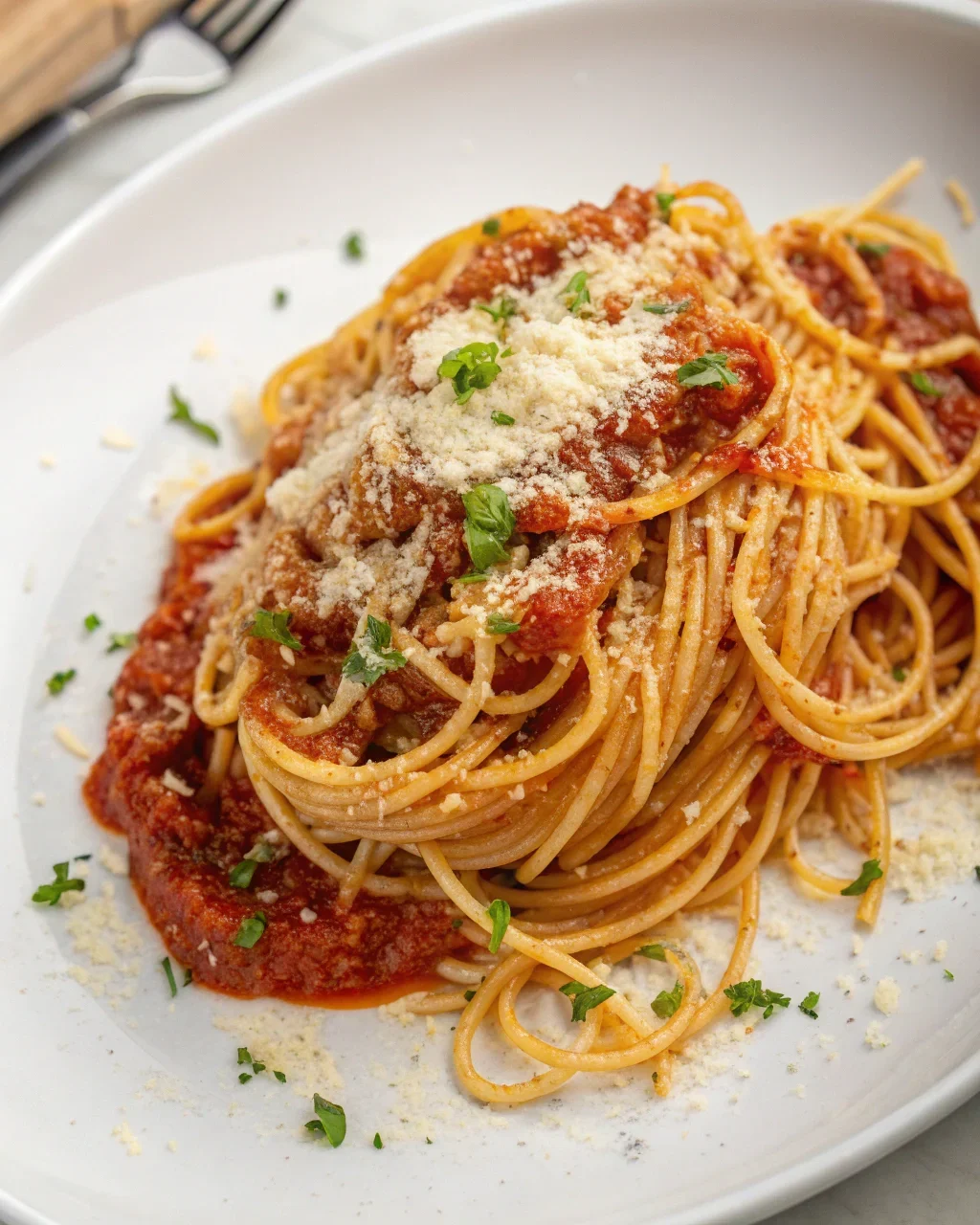
- Serve like you mean it: Twirl onto warm plates. Shower with Parmigiano-Reggiano or Pecorino Romano. A few extra basil leaves never hurt anyone.
Storage Tips
- Fridge: Store cooled leftovers in an airtight container for up to 3 days. Rewarm gently with a splash of water or olive oil.
- Freezer: Freeze just the sauce (not the pasta) for up to 3 months.
Thaw overnight, then heat and toss with fresh spaghetti.
- Make-ahead: Sauce improves after a night in the fridge—flavors meld, and you look like a genius.
Why This is Good for You
Tomato sauce isn’t just comfort food—it’s stealth nutrition. Cooked tomatoes are rich in lycopene, an antioxidant linked to heart health.
Olive oil brings monounsaturated fats and helps absorb fat-soluble nutrients.
Garlic supports cardiovascular health and immunity, and basil delivers anti-inflammatory compounds.
Plus, spaghetti is a legit source of complex carbohydrates for steady energy. Balance it with a green salad, and you’re winning dinner.
Nutrition Stats
- Per serving (approximate): 520 calories
- Protein: 16 g
- Carbohydrates: 78 g
- Fat: 16 g
- Fiber: 6 g
- Sodium: 700–850 mg (varies with salt and cheese)
Numbers vary based on pasta brand, how salty you get, and how aggressive your cheese rain is.
FYI, Pecorino skews saltier than Parmigiano.
Don’t Do This!
- Don’t burn the garlic. It turns bitter and ruins the vibe. Keep heat moderate.
- Don’t skip salting the pasta water. Sauce can’t fix bland noodles. Season early.
- Don’t overcook the pasta. Mushy spaghetti won’t hold sauce.
Aim for firm-tender.
- Don’t drown the pasta. You want a coating, not a soup. Use pasta water strategically.
- Don’t add sugar automatically. If tomatoes are good and simmered right, sweetness happens naturally.
Recipe Variations
- Anchovy umami boost: Melt 1–2 anchovy fillets with the garlic. It disappears but adds depth.
- Olive & caper vibe: Stir in chopped black olives and capers for a puttanesca-adjacent twist.
- Roasted tomato flex: Roast cherry tomatoes with olive oil and salt at high heat, then fold into the sauce for extra intensity.
- Herb swap: Try oregano instead of basil for a more rustic, southern Italian flavor.
- Spicy version: Double the chili flakes or finish with Calabrian chili paste, if you like heat.
- Gluten-free: Use a high-quality gluten-free spaghetti and handle gently when tossing.
- Dairy-free: Skip the cheese and add a drizzle of great olive oil and extra basil.
Still fantastic.
FAQ
Can I use fresh tomatoes instead of canned?
Yes, especially in peak season. Use 2 pounds of ripe plum or Roma tomatoes, peel and core them, then crush. You’ll likely need a longer simmer and a pinch more salt.
Is San Marzano really necessary?
Not mandatory, but they’re reliably sweet and low-acid.
If using other brands, taste and adjust—quality matters a lot in such a simple sauce.
Do I need tomato paste?
Optional. It adds concentrated tomato flavor and color, useful if your tomatoes are shy. Keep it to about a tablespoon to avoid overpowering the sauce.
Why finish pasta in the sauce?
The pasta releases starch that helps the sauce emulsify, cling, and taste luxurious.
Tossing in the pan turns “pasta with sauce” into one unified dish. It’s the pro move, IMO.
What cheese is more traditional—Parm or Pecorino?
Both are used. Parmigiano-Reggiano is nuttier and milder; Pecorino Romano is sharper and saltier.
Choose your personality.
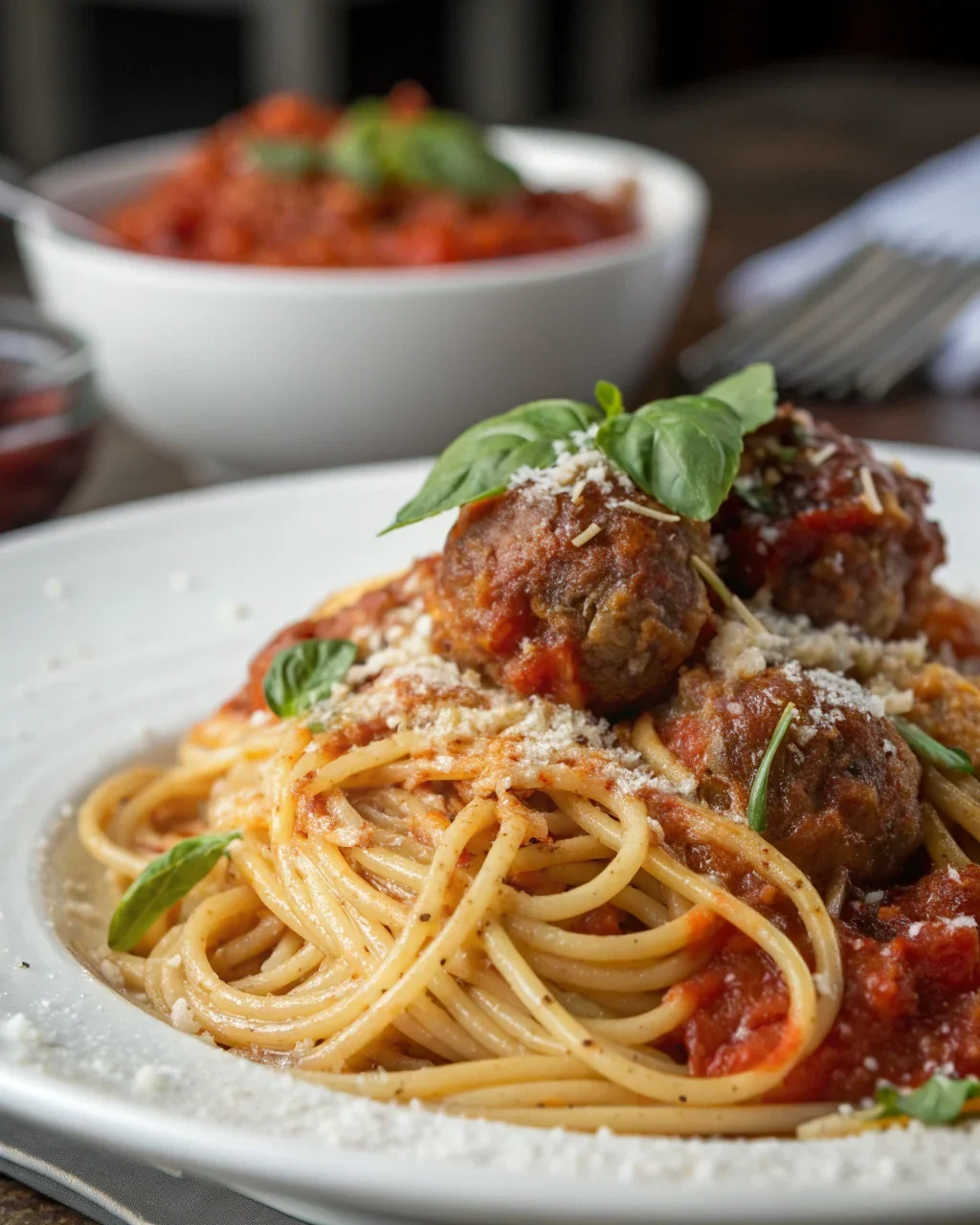
Can I add meatballs or sausage?
You can, but then it isn’t strictly Napolitana. If you want protein, serve meatballs on the side and keep the sauce clean.
How do I fix a sour or tinny sauce?
Simmer longer, add a splash of olive oil, and a pinch more salt. If it’s still harsh, a tiny pinch of sugar or butter can round it out—tiny being the keyword.
Bringing It All Together
Traditional Spaghetti Napolitana is what happens when restraint meets skill.
A few ingredients, cooked with intention, become weeknight gold or date-night power. Respect the garlic, simmer the tomatoes, and marry the pasta to the sauce like you mean it.
Do that, and you’ll have a plate that tastes like sunshine and discipline—no plane ticket to Naples required.