Classic Italian Charcuterie Board – Simple, Savory, And Shareable

A Classic Italian Charcuterie Board is the kind of spread that makes people lean in, chat longer, and savor every bite. It’s unfussy, elegant, and packed with texture and flavor. Think silky prosciutto, bold salami, briny olives, and hunks of good cheese—balanced with sweet fruit and crunchy bread.
You don’t need chef skills to make it shine, just a little intention and a good mix of ingredients. This is the kind of board that works for a weeknight nibble or a weekend gathering.
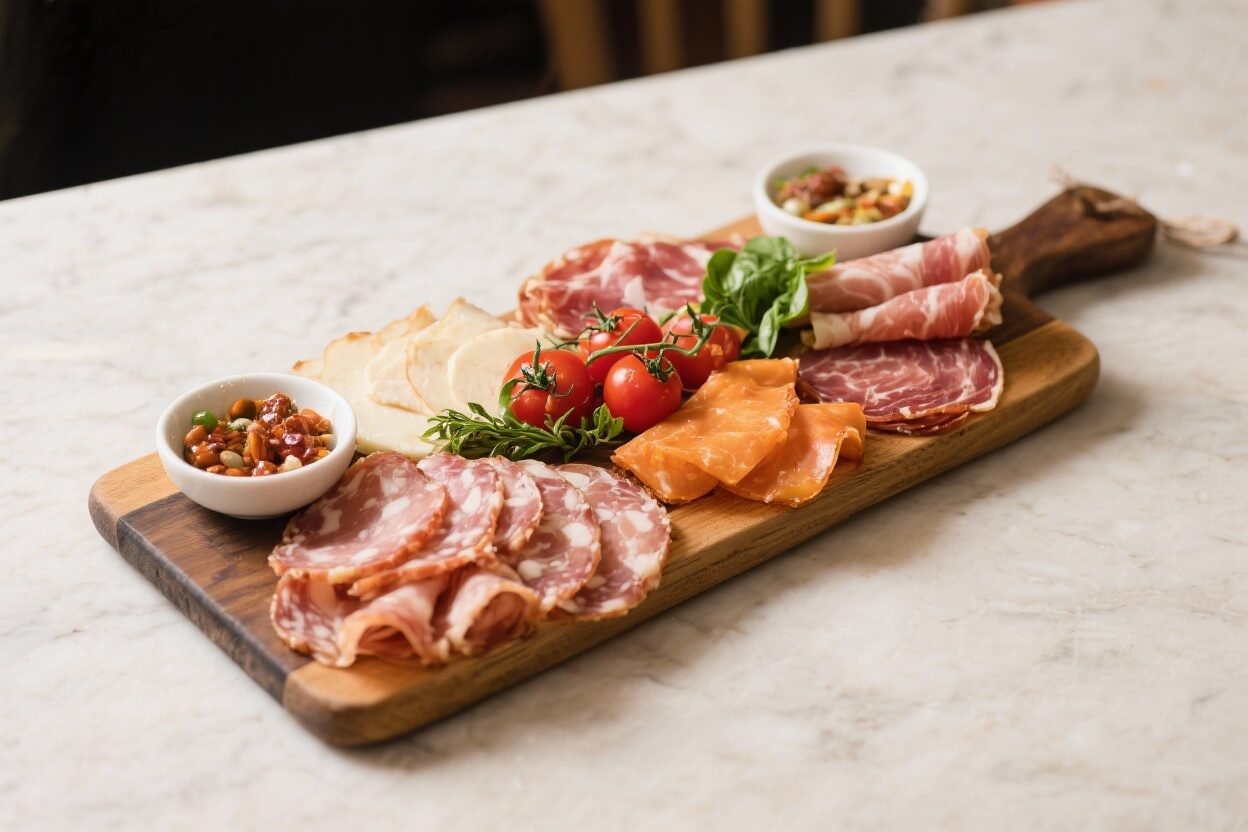
Classic Italian Charcuterie Board - Simple, Savory, And Shareable
Ingredients
Method
- Choose your board. Pick a wooden board, slate, or large platter with enough space for clusters and small bowls. Aim for visual balance, not symmetry.
- Anchor with bowls.Place small bowls for olives, artichokes, and spreads first. This sets the layout and keeps oily brines contained.
- Add the cheeses. Space them around the board.Offer a mix: one hard, one soft, one semi-soft, and one fresh. Pre-cut some pieces and leave some whole for texture.
- Layer the meats. Fold prosciutto into loose ribbons, fan salami slices, and roll soppressata.Keep types separate so flavors don’t blur. Add bresaola in neat stacks.
- Fill with produce. Tuck grapes, figs, or pear slices into open spots.Think in small clusters so guests can grab a few pieces at a time.
- Add crunch. Slide crostini, grissini, and crackers around edges. Scatter nuts in gaps for texture and a warm, toasty note.
- Finish with accents.Drizzle honey near the hard cheeses, and set a small pot of fig jam. Add a splash of olive oil on mozzarella or burrata with a pinch of salt and pepper, and a squeeze of lemon if you like.
- Garnish and serve. Tuck in rosemary sprigs or basil leaves for aroma.Include cheese knives, spoons, and picks so people can serve themselves easily.
- Taste and tweak. Try a bite of each section. If it feels too salty, add more fruit.If it’s too rich, add extra pickled items or a crisp salad on the side.
Why This Recipe Works

This board hits all the key notes: salty, creamy, sweet, and crisp. It blends cured meats with cheeses and bright, acidic sides that keep your palate interested.
There’s a clear structure—meat, cheese, brine, sweet, crunch—so nothing feels random. It’s flexible, too. You can swap in seasonal produce or adjust for dietary preferences without losing the Italian spirit.
Most of all, it’s effortless to assemble but looks tailored and thoughtful.
What You’ll Need
- Cured Meats:
- Prosciutto di Parma or San Daniele (thinly sliced)
- Genoa salami or Finocchiona (fennel salami)
- Spicy Calabrese or Soppressata
- Bresaola (optional, for a leaner option)
- Cheeses:
- Parmigiano-Reggiano (aged, for shaving or chunking)
- Pecorino Romano or Pecorino Toscano
- Fresh mozzarella or burrata
- Taleggio or Fontina (soft/semi-soft option)
- Briny + Savory Sides:
- Mixed olives (Castelvetrano, Gaeta, or Taggiasca)
- Marinated artichokes
- Roasted red peppers
- Sun-dried tomatoes in oil
- Cornichons or Italian giardiniera
- Sweet Balance:
- Fresh figs or grapes
- Sliced pears or apples
- Honey or fig jam
- Dark chocolate squares (optional)
- Crunch + Carbs:
- Crostini or toasted baguette slices
- Grissini (thin breadsticks)
- Taralli crackers
- Walnuts or Marcona almonds
- Finishing Touches:
- Extra-virgin olive oil
- Flaky sea salt and cracked black pepper
- Fresh herbs (rosemary, basil)
- Lemon wedges (for drizzling over burrata or mozzarella)
- Equipment:
- Large wooden board or platter
- Small bowls for wet items
- Cheese knives and small spoons
- Tongs or toothpicks
How to Make It
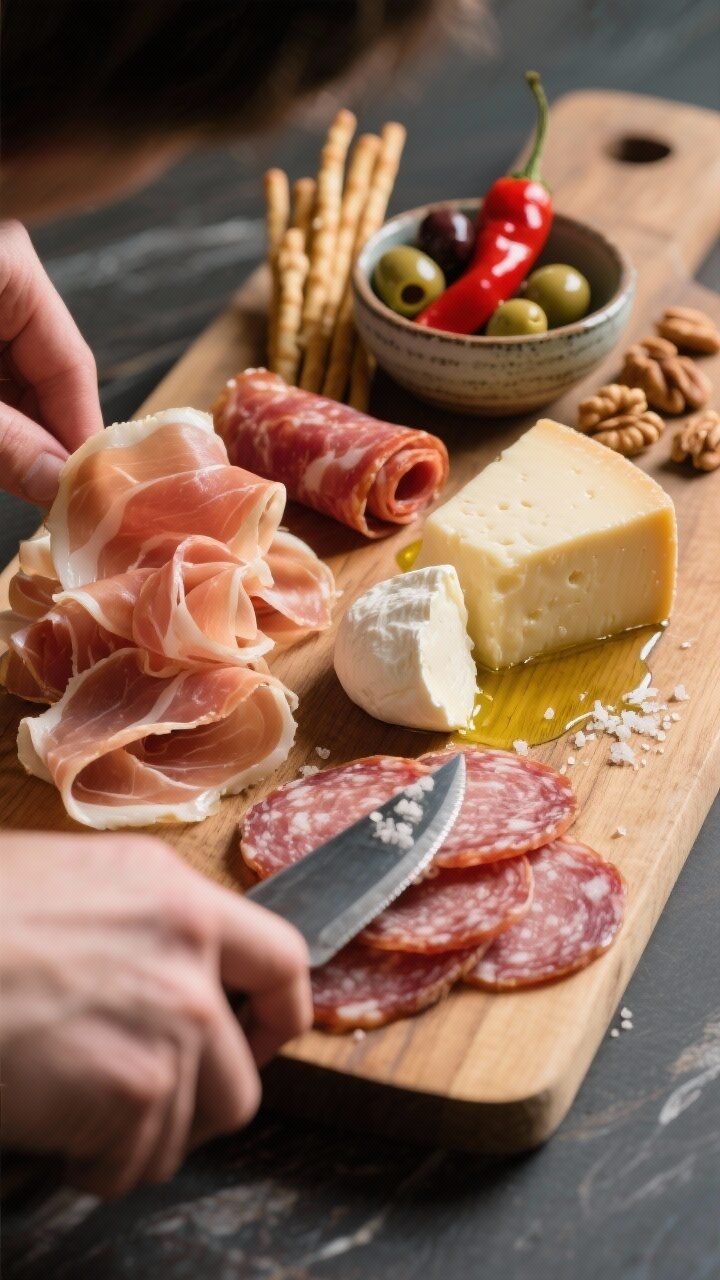
- Choose your board. Pick a wooden board, slate, or large platter with enough space for clusters and small bowls. Aim for visual balance, not symmetry.
- Anchor with bowls.Place small bowls for olives, artichokes, and spreads first. This sets the layout and keeps oily brines contained.
- Add the cheeses. Space them around the board.Offer a mix: one hard, one soft, one semi-soft, and one fresh. Pre-cut some pieces and leave some whole for texture.
- Layer the meats. Fold prosciutto into loose ribbons, fan salami slices, and roll soppressata.Keep types separate so flavors don’t blur. Add bresaola in neat stacks.
- Fill with produce. Tuck grapes, figs, or pear slices into open spots.Think in small clusters so guests can grab a few pieces at a time.
- Add crunch. Slide crostini, grissini, and crackers around edges. Scatter nuts in gaps for texture and a warm, toasty note.
- Finish with accents.Drizzle honey near the hard cheeses, and set a small pot of fig jam. Add a splash of olive oil on mozzarella or burrata with a pinch of salt and pepper, and a squeeze of lemon if you like.
- Garnish and serve. Tuck in rosemary sprigs or basil leaves for aroma.Include cheese knives, spoons, and picks so people can serve themselves easily.
- Taste and tweak. Try a bite of each section. If it feels too salty, add more fruit.If it’s too rich, add extra pickled items or a crisp salad on the side.
Keeping It Fresh
Use separate bowls for wet items so they don’t sog out bread or cheese. Keep soft cheeses like burrata chilled until the last five minutes, then bring them out to shine. Cover meats with a light wrap if you’re prepping ahead, and refrigerate until serving time.
After serving, store leftovers in airtight containers: meats and cheeses separately, and bread at room temperature in a paper bag to keep it from getting chewy.
Why This is Good for You
A balanced board offers protein, healthy fats, and fiber when you add fruit, nuts, and olives. Hard cheeses like Parmigiano-Reggiano deliver calcium and flavor, so you don’t need large portions. Olives and quality extra-virgin olive oil provide heart-friendly monounsaturated fats.
When paired with fresh produce, you get antioxidants and natural sweetness that keep the board from feeling heavy.
Pitfalls to Watch Out For
- Overcrowding the board. Leave space so guests can serve themselves without knocking things over.
- Too much sameness. If everything is salty and rich, it gets tiring.Add sweet fruit and bright pickled items for contrast.
- Serving cheese too cold. Cheese tastes muted straight from the fridge. Let it sit out 20–30 minutes for full flavor.
- Ignoring textures.You need creamy, firm, crunchy, and juicy elements. That variety makes the board feel complete.
- Low-quality bread. Stale or soft bread drags everything down.Use fresh baguette, crisp crostini, or artisanal crackers.
Variations You Can Try
- All-Northern: Speck, bresaola, Taleggio, Fontina, cornichons, and walnuts with apples and honey.
- Spicy Southern: Calabrese salami, ’nduja, Pecorino, roasted peppers, olives, and orange slices.
- Seafood Twist: Add oil-packed tuna, boquerones (white anchovies), lemony aioli, and capers alongside lighter cheeses.
- Vegetarian: Skip meats and load up on cheeses, marinated mushrooms, herbed white beans, grilled zucchini, and extra nuts.
- Budget-Friendly: One premium cheese (Parmigiano-Reggiano) and one soft cheese, plus salami, olives, grapes, and homemade crostini.
FAQ
How much should I buy per person?
Plan about 2–3 ounces of meat and 2 ounces of cheese per person for appetizers. If this is the main event, increase both by about 50% and add more bread and fruit.
Can I make it ahead?
Yes. You can arrange the cheeses and bowls a few hours ahead, then wrap and chill.
Add meats, fruit, and bread within 30 minutes of serving to keep everything fresh and perky.
What wine pairs well with this board?
Try a crisp Prosecco, a bright Pinot Grigio, or a light red like Chianti or Barbera. For bold, salty cheeses, a fuller red works; for delicate prosciutto and fresh mozzarella, keep it light and zippy.
What if I can’t find certain Italian meats or cheeses?
Swap with similar styles. Any quality prosciutto-style ham, fennel-accented salami, and an aged hard cheese will do.
Aim for variety in texture and intensity rather than chasing exact labels.
How do I keep bread from getting soggy?
Serve crostini and crackers on the side or around the edges. Keep wet items in bowls, and offer olive oil in a separate dish for dipping rather than drizzling directly onto bread.
Is there a gluten-free option?
Yes. Use gluten-free crackers, grissini, or polenta rounds.
Most meats, cheeses, olives, and produce are naturally gluten-free—just check labels on marinated items.
How long can the board sit out?
Two hours is a safe window for most items. If you’re hosting longer, refresh with chilled backups and rotate out soft cheeses and meats to maintain food safety.
In Conclusion
A Classic Italian Charcuterie Board is all about balance and abundance without complication. With a few good ingredients and a thoughtful layout, you can create something that feels special and welcoming.
Keep the mix lively—salty, creamy, sweet, and crunchy—and let people build their perfect bite. It’s generous, easy, and always the first thing to disappear.