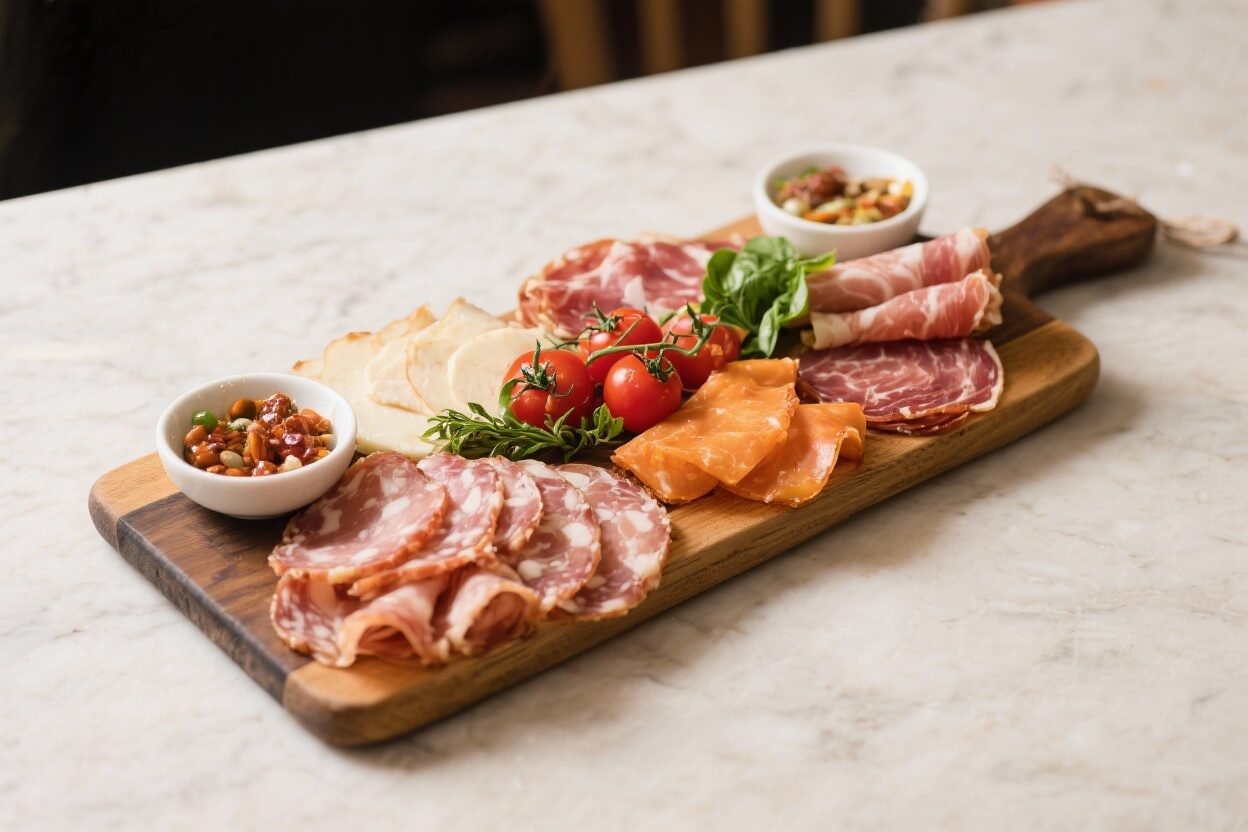
Choose your board. Pick a wooden board, slate, or large platter with enough space for clusters and small bowls. Aim for visual balance, not symmetry.
Anchor with bowls.
Place small bowls for olives, artichokes, and spreads first. This sets the layout and keeps oily brines contained.
Add the cheeses. Space them around the board.
Offer a mix: one hard, one soft, one semi-soft, and one fresh. Pre-cut some pieces and leave some whole for texture.
Layer the meats. Fold prosciutto into loose ribbons, fan salami slices, and roll soppressata.
Keep types separate so flavors don’t blur. Add bresaola in neat stacks.
Fill with produce. Tuck grapes, figs, or pear slices into open spots.
Think in small clusters so guests can grab a few pieces at a time.
Add crunch. Slide crostini, grissini, and crackers around edges. Scatter nuts in gaps for texture and a warm, toasty note.
Finish with accents.
Drizzle honey near the hard cheeses, and set a small pot of fig jam. Add a splash of olive oil on mozzarella or burrata with a pinch of salt and pepper, and a squeeze of lemon if you like.
Garnish and serve. Tuck in rosemary sprigs or basil leaves for aroma.
Include cheese knives, spoons, and picks so people can serve themselves easily.
Taste and tweak. Try a bite of each section. If it feels too salty, add more fruit.
If it’s too rich, add extra pickled items or a crisp salad on the side.