Homemade Egg Pasta That Ruins Store-Bought Forever

You know that moment when you eat something so good, your standards permanently upgrade? That’s what homemade egg pasta does.
It’s fast, stupidly simple, and tastes like you bribed an Italian nonna with gold. No fancy gear, no culinary diploma—just flour, eggs, and a little swagger.
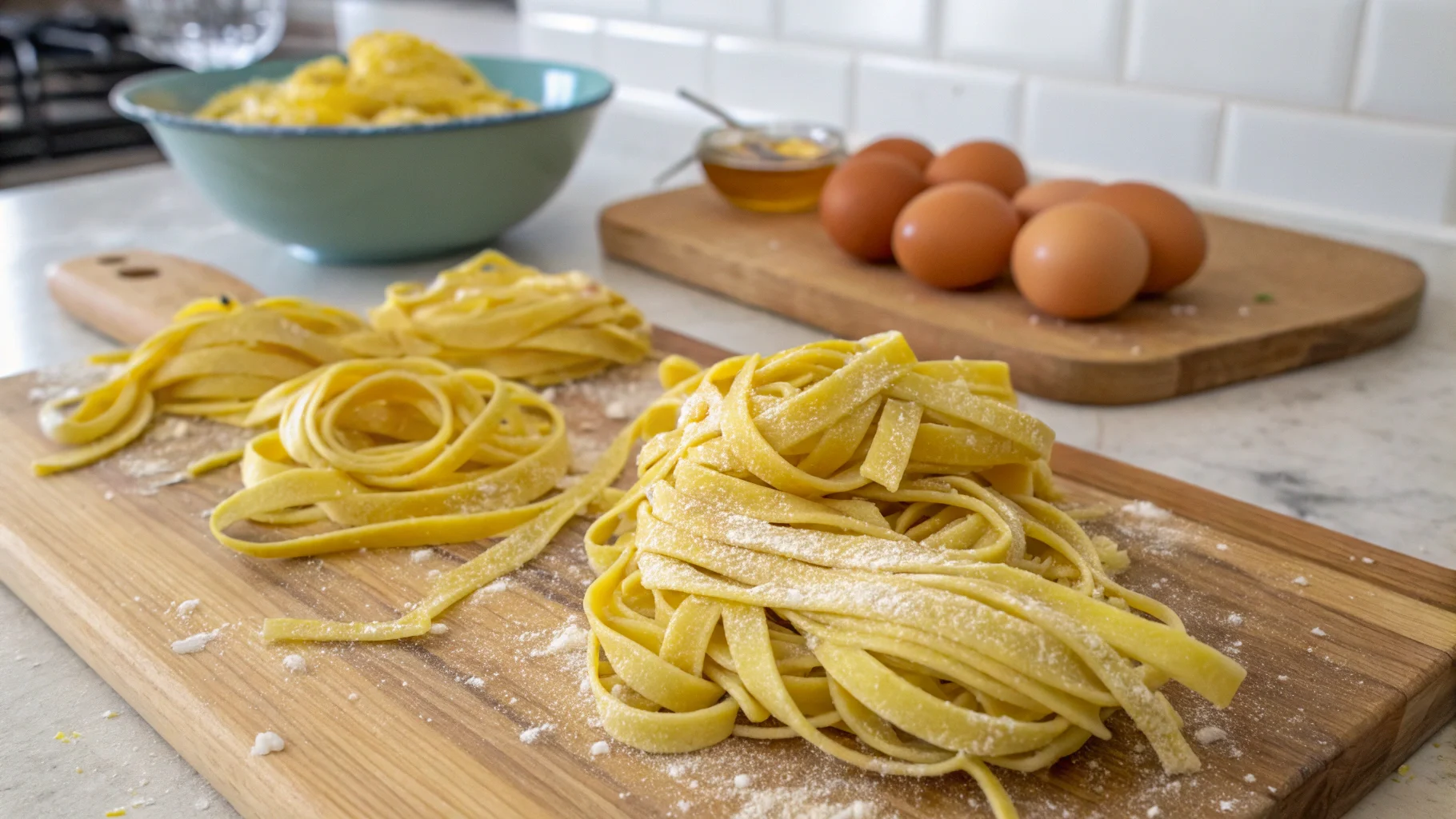
Once you roll this dough and watch silky ribbons fall from your hands, you’ll wonder why you ever settled for boxed noodles.
The Special Touch in This Recipe
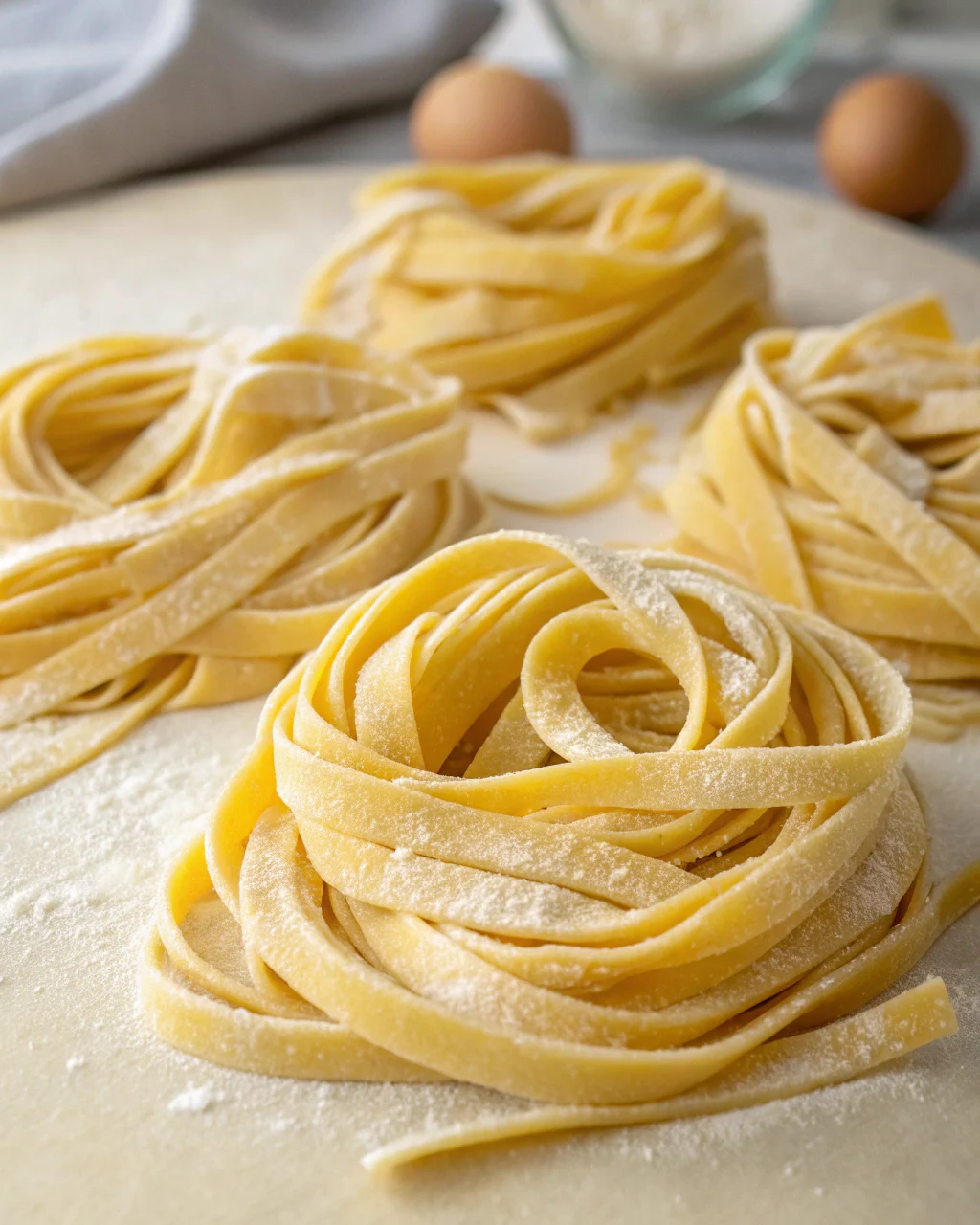
The secret is twofold: hydration control and rest. We use a blend of regular all-purpose flour for tenderness and fine semolina for that springy bite.
Then we knead until the dough turns smooth and elastic, and let it rest so the gluten chills out. The result?
Pasta that cooks evenly, clings to sauce like it means it, and makes every forkful feel like a flex.
Servings, Prep time, Cooking time, Calories
- Servings: 4 (as a main) or 6 (as a starter)
- Prep Time: 25 minutes active, 30 minutes resting
- Cooking Time: 2–3 minutes per batch
- Calories: ~320 per serving (plain pasta)
Ingredient Checklist
- 2 cups (240 g) all-purpose flour
- 1 cup (140 g) fine semolina flour (aka semola rimacinata)
- 4 large eggs (room temperature)
- 1–2 tbsp water (as needed)
- 1/2 tsp fine sea salt
- 1 tsp olive oil (optional, for elasticity)
- Extra flour or semolina for dusting
Making This Recipe
- Build the flour “volcano.” On a clean counter, mix all-purpose flour, semolina, and salt. Mound it, then make a deep well.
- Whisk the wet. Crack eggs into the well.Add olive oil. Use a fork to whisk, pulling in flour from the sides gradually so the dam doesn’t collapse.
If it does? Scrape, breathe, keep going.
- Form the dough. When it’s shaggy and sticky, switch to hands.Press and fold until everything comes together. If dry, add water 1 tsp at a time.
If sticky, dust with flour.
- Knead for structure. Knead 8–10 minutes until smooth and elastic. The dough should spring back when poked and feel firm but not stiff.Think Play-Doh with a gym membership.
- Rest the dough. Wrap tightly and rest at room temp for 30 minutes. This relaxes gluten and makes rolling easy.
- Divide and flatten. Cut into 4 pieces.Keep unused pieces wrapped. Flatten one piece into a thick oval with a rolling pin or your palm.
- Roll or machine it.
- By hand: Roll from center out, rotate often, dust lightly.Aim for 1 mm thickness—almost translucent.
- By machine: Start on the widest setting. Feed the dough, fold into thirds, repeat 2–3 times.Then reduce thickness one notch at a time until you reach your preferred thinness (usually 5–6 on most machines).
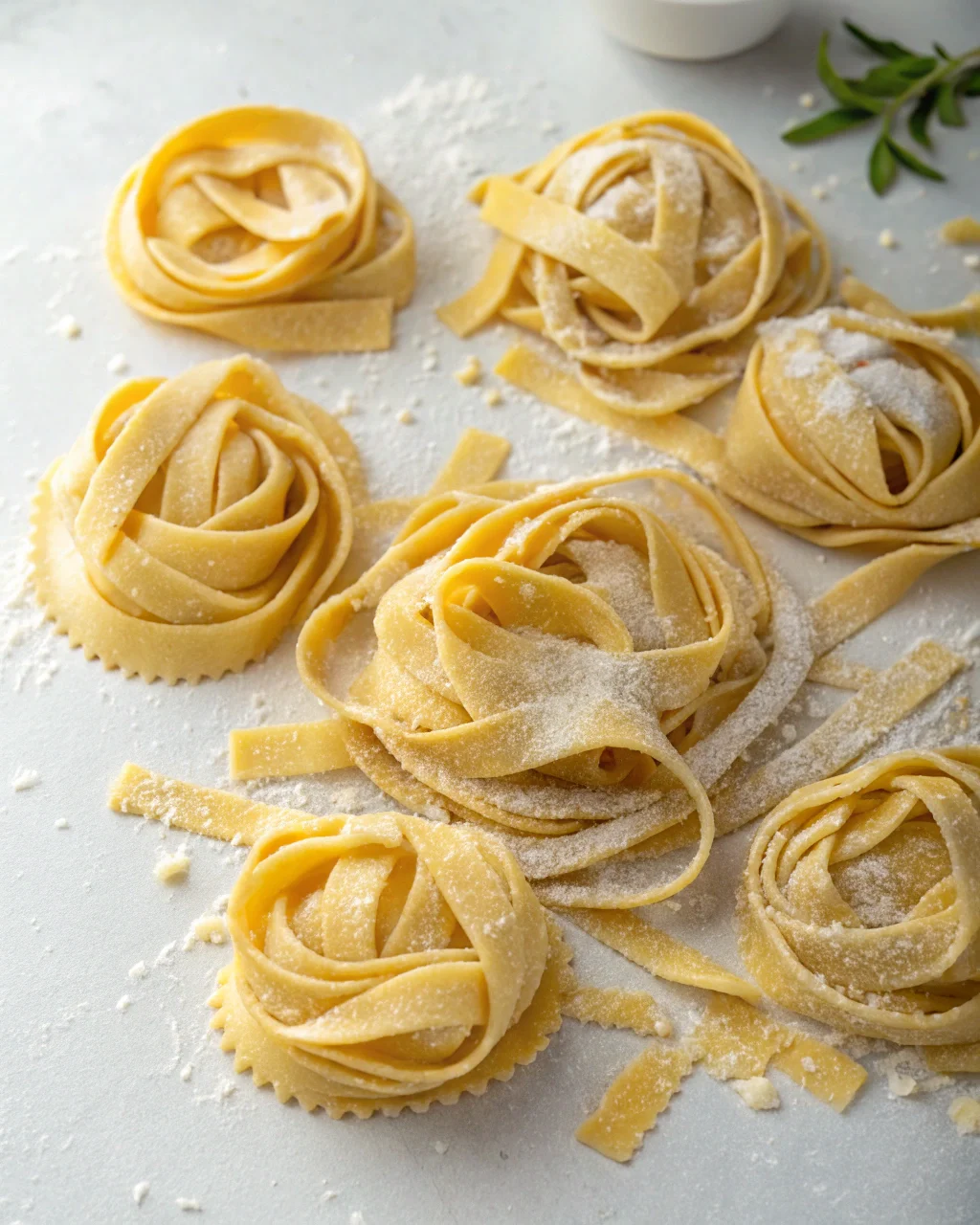
- Shape it. Dust sheets with semolina. For fettuccine/tagliatelle, fold the sheet loosely into thirds and slice 1/4–1/2 inch strips.Unfurl and toss with semolina. For pappardelle, cut wider.
For lasagna, cut rectangles.
- Cook like you mean it. Bring a large pot of salted water to a rolling boil. Add pasta and cook 2–3 minutes until al dente.Fresh pasta cooks fast; blink and you’ll overdo it.
- Finish in sauce. Transfer pasta straight to your warmed sauce with a bit of pasta water. Toss over medium heat until glossy and married.Serve immediately with zero shame.
Make-Ahead & Storage Guide
- Short rest: Wrapped dough can sit at room temp up to 2 hours.
- Fridge: Wrap tightly and refrigerate up to 2 days. Let warm slightly before rolling.
- Freeze dough: Wrap well and freeze up to 2 months.Thaw overnight in the fridge.
- Freeze cut pasta: Arrange on a floured sheet pan in loose nests. Freeze until solid, then bag for up to 2 months.Cook from frozen, adding 30–60 seconds.
- Drying: Air-dry cut pasta 12–24 hours until firm, then store airtight at room temp up to 1 month. Humid climates may vary—trust your fingertips.
- Leftovers: Cooked pasta keeps 2–3 days in the fridge.Reheat gently in sauce with a splash of water. IMO, fresh is best.
Nutritional Perks
- Protein from eggs: Helps keep you full and supports muscle repair.
- Lower sodium than store-bought: You control the salt—your blood pressure says thanks.
- Cleaner ingredient list: No preservatives, no mystery stabilizers.Just flour, eggs, and glory.
- Customizable flours: Add whole grain or high-protein blends for more fiber and chew.
Nutrition Stats
Per serving (1/4 of recipe, plain): Approx. 320 kcal; 12 g protein; 54 g carbs; 5 g fat; 2 g fiber; 220 mg sodium (depends on salt usage). Sauce and cheese will change these numbers—deliciously.
Little Mistakes, Big Impact
- Too much flour: Over-dusting makes tough pasta.Use just enough to prevent sticking.
- Skipping the rest: Rolling becomes a workout montage. Resting saves your arms and your sanity.
- Rolling too thick: Heavy noodles soak sauce and feel gummy.Aim thin; they plump slightly in the boil.
- Undersalting water: Pasta water should taste like the sea. Bland water = bland pasta.
- Overcooking: Fresh pasta goes from perfect to mush faster than your phone battery drops at 2%.
- Not finishing in sauce: Tossing in sauce pan-side creates emulsification and that pro-level gloss.
Easy Swaps & Alternatives
- No semolina? Use all all-purpose; dough will be softer.Add 1–2 extra minutes of kneading.
- Whole wheat version: Swap up to 40% of the flour with whole wheat. Add a teaspoon more water as needed.
- Gluten-free: Use a 1:1 gluten-free blend with xanthan gum.Roll between parchment; dough is more delicate.
- Extra-rich pasta: Add 1 extra yolk for silkier texture. Reduce water accordingly.
- Herb-speckled: Finely chop parsley or basil and knead into the dough for flavor and flair.
- Flavored dough: Whisk 1 tbsp tomato paste or spinach puree into the eggs; adjust flour if sticky.
FAQ
Can I make this without a pasta machine?
Absolutely.
Use a rolling pin and patience. Rotate the dough frequently, dust lightly, and aim for nearly translucent sheets.
It’s a vibe—and a forearm workout.
Why is my dough cracking when I roll it?
It’s too dry or under-rested. Mist with a tiny bit of water, knead briefly, and rest another 15 minutes.
Dry climates might need an extra teaspoon of water.
How do I keep noodles from sticking?
Toss cut pasta with semolina and keep it in loose nests. Don’t stack.
If boiling later, give the water a strong stir right after adding pasta to keep strands separate.
What sauces work best?
Butter-sage, cacio e pepe, marinara, or a quick cream sauce. Fresh pasta shines with simple, high-quality sauces—don’t bury the lead.
Can I use 00 flour?
Yes. 00 flour plus semolina is a killer combo for silky-yet-springy noodles.
If using only 00, you may need a touch less water.
How thin should I roll the dough?
For ribbons, about 1 mm thick—thin enough to see light through but not tearing. On most machines, that’s a 5–6 setting.
For ravioli, go a notch thinner.
Is olive oil necessary?
No, but it adds elasticity and a subtle richness. If your eggs are very large or the climate is humid, you can skip it to avoid over-hydration.
Closing Notes
Pasta isn’t a science fair volcano; it’s simpler.
Flour, eggs, and a short rest turn into something luxurious enough for date night and easy enough for Tuesday. Once you nail the feel of the dough—supple, smooth, slightly firm—you’re unstoppable.
Consider this your permission slip to retire the box, flex a little in the kitchen, and eat like you’ve got an Italian grandma on speed dial. FYI: leftovers rarely survive.