Mediterranean Hummus Platter That Steals the Show

You know that one dish everyone crowds around at a party? This is it.
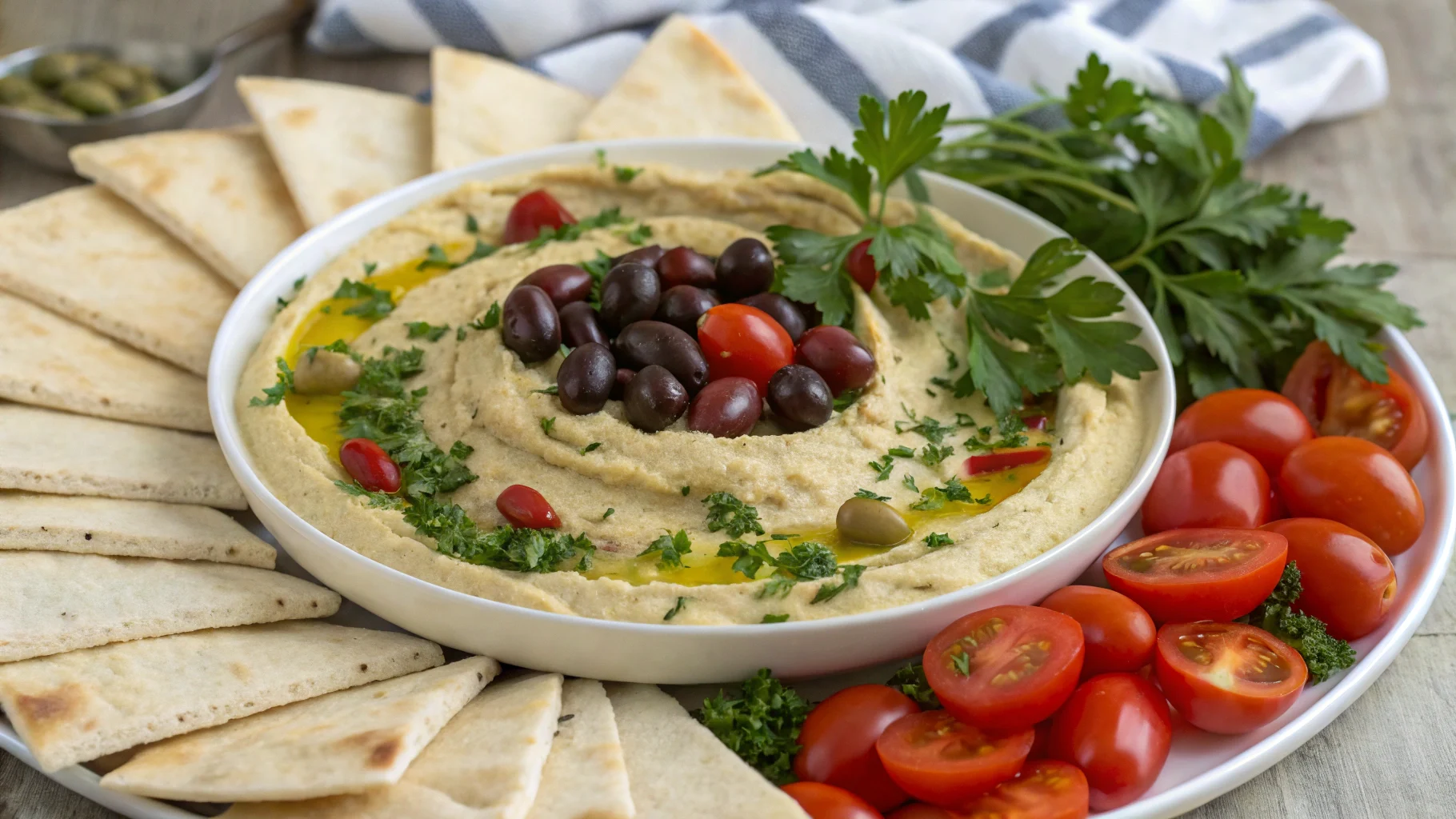
The Mediterranean Hummus Platter is the edible version of a mic drop: simple, gorgeous, and crazy satisfying. No culinary degree required—just bold flavors, quick knife work, and a blender that isn’t shy.
Make this once, and suddenly you’re “the person who brings the good stuff.” Ready to turn chickpeas and veggies into your signature flex?
The Story Behind This Dish
The hummus platter grew from the mezze tradition—small plates meant for sharing, debating, and lingering. It’s the kind of food that invites connection: scoop, swipe, repeat.
My version leans on silky hummus, briny hits of olives and feta, bright citrus, and crunchy veg for contrast. Think street-market energy with just enough polish to look impressive at any table.
Servings, Prep Time, Cooking Time, Calories
- Servings: 6 as an appetizer, 3–4 as a light meal
- Prep Time: 20 minutes
- Cooking Time: 0–10 minutes (only if warming bread)
- Calories: ~320 per appetizer serving (varies with toppings)
Gather Your Ingredients
- For the hummus base:
- 1 can (15 oz) chickpeas, drained and rinsed
- 3 tablespoons tahini (well-stirred)
- 2 tablespoons fresh lemon juice
- 1 small garlic clove, minced
- 3–4 tablespoons ice-cold water
- 2 tablespoons extra-virgin olive oil, plus more to finish
- 1/2 teaspoon fine sea salt (adjust to taste)
- 1/2 teaspoon ground cumin (optional but recommended)
- For the platter toppings:
- 1/2 cup cherry tomatoes, halved
- 1/2 cup cucumber, diced
- 1/3 cup kalamata olives, pitted and sliced
- 1/4 cup red onion, thinly sliced
- 1/3 cup crumbled feta (or dairy-free feta)
- 2 tablespoons capers, drained
- 2 tablespoons toasted pine nuts or slivered almonds
- Fresh herbs: parsley and/or dill, chopped
- 1 teaspoon sumac or smoked paprika
- Lemon zest from 1/2 lemon
- For serving:
- Warm pita or flatbread, cut into wedges
- Crunchy veg: carrots, bell peppers, radishes, endive
- Extra olive oil and flaky salt
How to Put It All Together
- Blitz the hummus. In a food processor, combine chickpeas, tahini, lemon juice, garlic, cumin, and salt.
Run it until pasty, then drizzle in ice water and olive oil while processing until ultra-smooth and airy. Adjust salt and lemon to taste.
- Plate like a pro. Spoon the hummus onto a wide plate or shallow bowl.
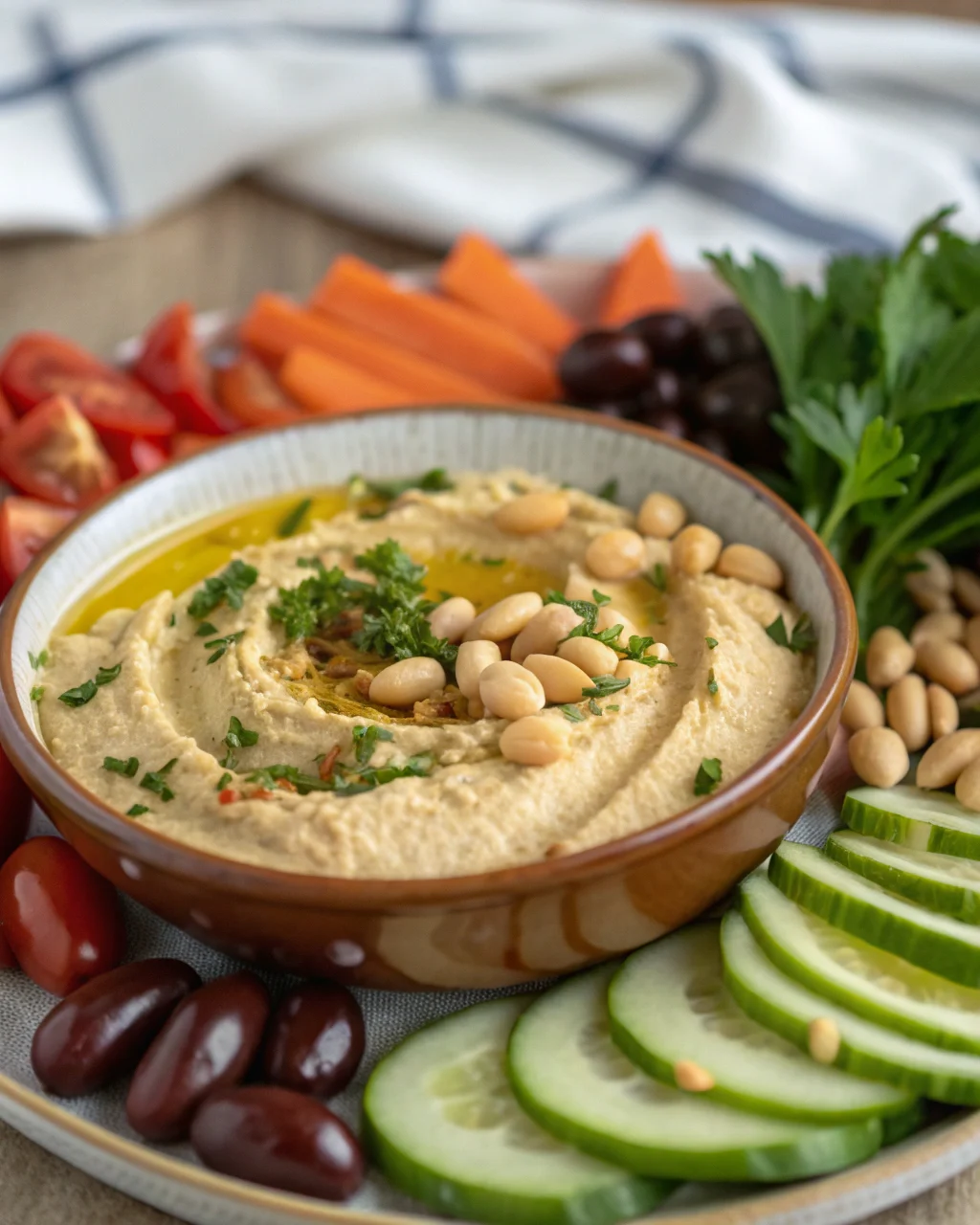
Use the back of a spoon to create swoops and wells—those grooves hold toppings and oil like champs.
- Add the color. Scatter tomatoes, cucumber, olives, onion, capers, and feta over the hummus. Don’t overload; leave pockets of hummus visible.
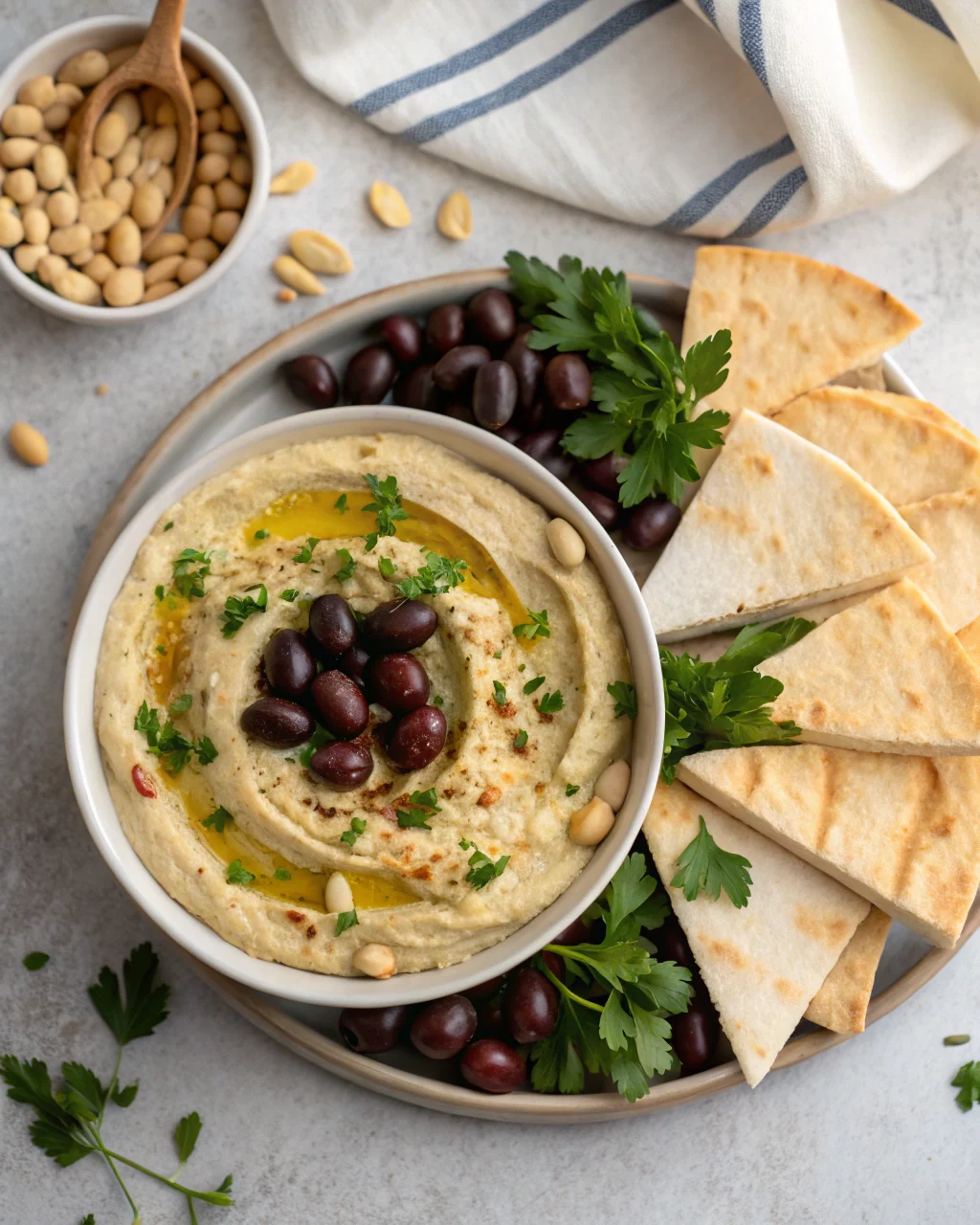
- Finish strong. Drizzle olive oil generously, dust with sumac or smoked paprika, sprinkle nuts, herbs, and lemon zest.
Add a pinch of flaky salt. Boom—restaurant vibes.
- Warm the bread. Quickly warm pita in a skillet or oven until soft and steamy.
Slice into wedges.
- Serve immediately. Surround the platter with bread and crisp veggies. Encourage scooping, not dainty dipping.
This is communal food.
Preservation Guide
- Hummus: Store in an airtight container up to 4–5 days. Cover the surface with a thin layer of olive oil to keep it creamy.
- Toppings: Keep chopped veg and herbs separate in the fridge for 2–3 days.
Salt tomatoes and cucumber right before serving to prevent sogginess.
- Freezing: Hummus freezes well for up to 2 months. Thaw overnight in the fridge and re-whip with a splash of water or lemon.
- Bread: Wrap pita and store at room temp for 1 day or freeze.
Reheat in a damp-towel-wrapped bundle for softness.
Why This is Good for You
- Plant-powered protein and fiber: Chickpeas and tahini keep you full, not foggy. Expect steady energy, not a nap attack.
- Heart-healthy fats: Extra-virgin olive oil and sesame deliver monounsaturated fats that support cardiovascular health.
- Micronutrient boost: Fresh vegetables and herbs bring vitamins C, K, folate, and antioxidants.
Small toppings, big benefits.
- Smart sodium control: You choose how salty it gets. Use capers/olives strategically instead of blindly salting.
Nutrition Stats
Approximate per appetizer serving (1/6 of platter with bread): 320 calories, 10–12 g protein, 25–30 g carbs, 18–20 g fat, 6–8 g fiber, ~520 mg sodium (varies with olives/feta).
This isn’t diet food; it’s good-food-that-loves-you-back. FYI, skip feta and reduce olives to cut sodium fast.
Little Mistakes, Big Impact
- Skipping the ice water: That chill shocks the tahini and whips air in.
Without it, your hummus can be dense and sulky.
- Using old tahini: Rancid or separated tahini kills flavor. Stir well and taste before using.
- Overloading toppings: If you bury the hummus, it eats like a salad.
Leave some creamy canvas exposed.
- Raw garlic overload: One small clove is plenty. Want more?
Mellow it by soaking minced garlic in lemon juice for 5 minutes first.
- Neglecting texture: You need crunch (nuts/veg) against the cream. Otherwise it’s just beige puree and vibes.
Variations You Can Try
- Roasted red pepper hummus: Blend in 1/2 cup roasted peppers and a pinch of smoked paprika.
- Green goddess hummus: Add a handful of parsley, dill, and spinach with extra lemon for a bright, herby twist.
- Spicy harissa platter: Swirl 1–2 teaspoons harissa into the hummus; top with roasted carrots and pistachios.
- Protein upgrade: Add grilled shrimp or spiced chickpeas (pan-toast with cumin, coriander, and chili flakes) for a meal-level platter.
- Dairy-free elegance: Swap feta with marinated artichokes and extra herbs.
No one will miss the cheese, promise.
- Crunch factor: Use dukkah or za’atar instead of nuts for a toasty, aromatic finish.
FAQ
Can I make hummus without a food processor?
Yes. Use a high-speed blender and add a bit more ice water to keep it moving.
Worst case, mash by hand with a potato masher; it’ll be rustic but still tasty.
Do I need to peel the chickpeas?
No, but peeling yields extra-smooth hummus. If you’re chasing velvet, pinch skins off or rub chickpeas in a clean towel.
If you’re busy, skip it—the ice water trick compensates.
What if my hummus is too thick?
Add ice-cold water, one tablespoon at a time, and blend again. A small splash of lemon or olive oil can restore both texture and flavor.
How do I keep leftovers from drying out?
Smooth the top, drizzle a thin olive oil film, and seal the container.
Stir in a tablespoon of water before serving to revive it. Works like magic, IMO.
Is canned chickpea liquid (aquafaba) useful here?
Yes.
Replace some of the water with aquafaba for extra creaminess and a tiny protein bump. It also helps the hummus whip up lighter.
What bread works best besides pita?
Try lavash, naan, or crusty sourdough.
Gluten-free? Seeded crackers or grilled polenta wedges are excellent scoops.
Can I make this ahead for a party?
Absolutely.
Prep hummus and chop toppings 1 day in advance. Assemble and finish with oil, herbs, and spices right before guests arrive for peak freshness.
A Few Last Words
This platter punches above its weight: pantry basics turned into a centerpiece that feeds conversation.
It’s flexible, fast, and photogenic—aka perfect for real life. Keep the hummus silky, the toppings bold, and the bread warm.
Do that, and your only problem will be running out too soon.