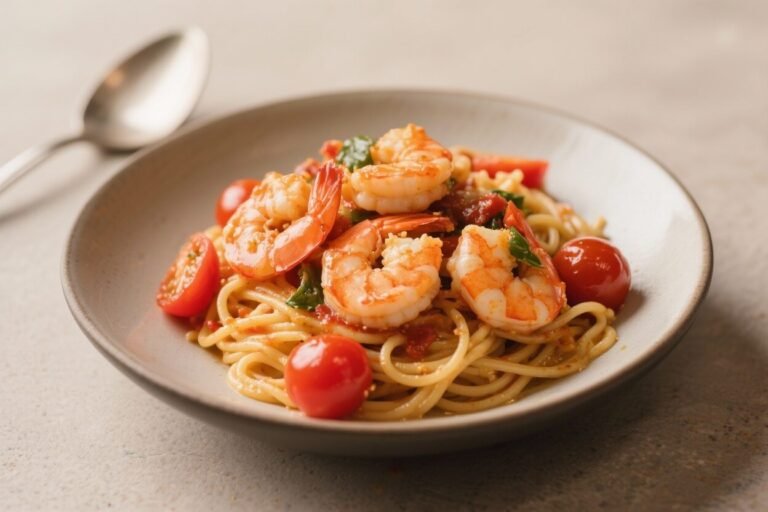
One-Pot Tomato Pasta – Simple, Comforting, and Ready Fast

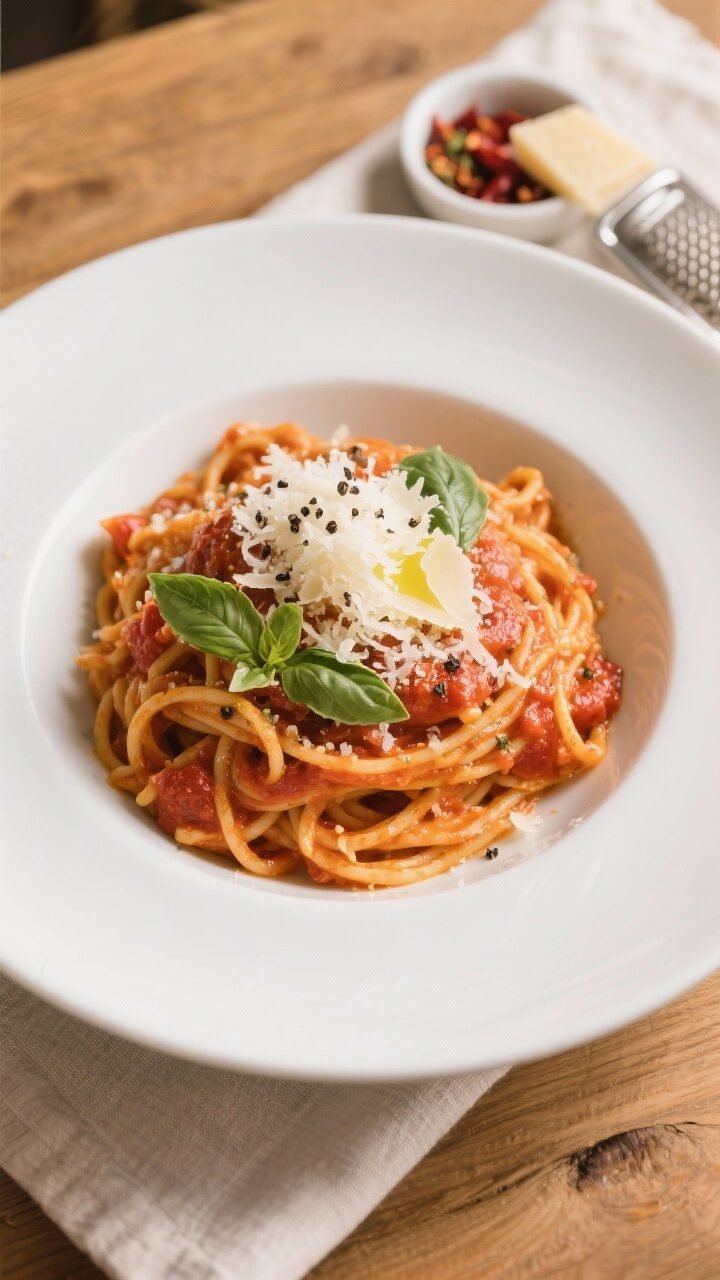
This is the kind of weeknight dinner that makes life easier. One pot, a handful of pantry staples, and dinner is on the table in about 25 minutes. The pasta cooks right in the tomato sauce, soaking up flavor and releasing starch to make everything silky.
No draining, no juggling pans, and barely any dishes. It’s cozy, satisfying, and tastes like something you spent way more time on.

One-Pot Tomato Pasta - Simple, Comforting, and Ready Fast
Ingredients
Method
- Warm the pot: Set a large, wide pot or deep skillet over medium heat. Add olive oil and let it shimmer.
- Sauté aromatics: Add onion with a pinch of salt. Cook 3–4 minutes until softened and translucent.Stir in garlic and red pepper flakes; cook 30–45 seconds until fragrant.
- Add tomatoes and seasoning: Pour in crushed tomatoes. Stir in oregano, a good pinch of salt, and black pepper. Simmer 2 minutes to meld.
- Add liquid and pasta: Pour in 3 cups water or broth and bring to a gentle boil.Add the pasta and stir immediately to prevent sticking.
- Simmer and stir: Reduce to a steady simmer. Cook uncovered, stirring every 1–2 minutes to keep pasta from clumping. If the sauce gets too thick before the pasta is tender, add more hot water, 1/4 cup at a time.
- Taste for balance: When pasta is al dente (about 10–12 minutes, depending on shape), taste the sauce.If it’s too acidic, add a pinch of sugar or a few drops of balsamic. Adjust salt and pepper.
- Finish with herbs and cheese: Turn off heat. Stir in chopped basil or parsley and a drizzle of olive oil.Let the pasta rest 1–2 minutes to thicken slightly.
- Serve: Twirl into bowls and top with freshly grated Parmesan. Add more herbs and a crack of pepper if you like.
Why This Recipe Works

The magic of one-pot pasta is in the starch. As the pasta simmers in the sauce, it releases starch into the liquid, which thickens and binds everything together.
That means a naturally glossy, clingy sauce without cream or tons of cheese.
Cooking the aromatics first builds a strong flavor base. Then tomatoes, water, and pasta go in together and simmer until the pasta is tender. The result is a balanced sauce with a gentle sweetness, a little tang, and just enough richness from olive oil.
It’s also flexible.
You can swap in different pasta shapes, use fresh or canned tomatoes, and add spinach, olives, or chili flakes to make it your own.
What You’ll Need
- Pasta: 12 ounces dried spaghetti, linguine, or short pasta like penne or fusilli
- Olive oil: 2 tablespoons for sautéing and richness
- Garlic: 3–4 cloves, thinly sliced or minced
- Onion or shallot: 1 small, finely chopped (optional but recommended)
- Crushed tomatoes: 1 can (28 ounces), or 2 cups cherry tomatoes plus 1 cup tomato passata
- Water or broth: 3 to 3 1/2 cups, as needed
- Salt and pepper: To taste
- Red pepper flakes: A pinch for gentle heat (optional)
- Dried oregano or Italian seasoning: 1 teaspoon
- Fresh basil or parsley: A handful, chopped, for finishing
- Parmesan or pecorino: Freshly grated, for serving
- Sugar or balsamic vinegar: 1/2 teaspoon, only if needed to balance acidity
Step-by-Step Instructions
- Warm the pot: Set a large, wide pot or deep skillet over medium heat. Add olive oil and let it shimmer.
- Sauté aromatics: Add onion with a pinch of salt. Cook 3–4 minutes until softened and translucent.Stir in garlic and red pepper flakes; cook 30–45 seconds until fragrant.
- Add tomatoes and seasoning: Pour in crushed tomatoes. Stir in oregano, a good pinch of salt, and black pepper. Simmer 2 minutes to meld.
- Add liquid and pasta: Pour in 3 cups water or broth and bring to a gentle boil.Add the pasta and stir immediately to prevent sticking.
- Simmer and stir: Reduce to a steady simmer. Cook uncovered, stirring every 1–2 minutes to keep pasta from clumping. If the sauce gets too thick before the pasta is tender, add more hot water, 1/4 cup at a time.
- Taste for balance: When pasta is al dente (about 10–12 minutes, depending on shape), taste the sauce.If it’s too acidic, add a pinch of sugar or a few drops of balsamic. Adjust salt and pepper.
- Finish with herbs and cheese: Turn off heat. Stir in chopped basil or parsley and a drizzle of olive oil.Let the pasta rest 1–2 minutes to thicken slightly.
- Serve: Twirl into bowls and top with freshly grated Parmesan. Add more herbs and a crack of pepper if you like.
How to Store
Let leftovers cool completely, then transfer to an airtight container. Refrigerate for up to 4 days.
To reheat, add a splash of water or broth and warm gently on the stove or in the microwave, stirring halfway through. The sauce will thicken in the fridge, so loosening it with liquid helps bring it back to a silky texture.
For freezing, portion into freezer-safe containers and freeze up to 2 months. Thaw overnight in the fridge before reheating.
The pasta may soften a bit, but the flavors will still be great.
Benefits of This Recipe
- Minimal cleanup: One pot from start to finish keeps the sink empty and the process simple.
- Fast and reliable: Ready in about 25 minutes with ingredients you likely have on hand.
- Budget-friendly: Pasta, canned tomatoes, and aromatics are inexpensive and widely available.
- Balanced flavor: Savory, slightly sweet, and naturally creamy from the pasta starch.
- Customizable: Easy to adapt with vegetables, protein, or different herbs.
Common Mistakes to Avoid
- Not stirring enough: Pasta can clump or stick to the bottom. Stir every minute or two during the cook.
- Using too little liquid: If the sauce tightens before the pasta is done, add hot water gradually. Don’t be afraid to adjust.
- Adding dairy too early: Cheese can seize or clump if added while simmering hard.Finish off the heat.
- Skipping the taste test: Tomatoes vary. Always taste and adjust salt, pepper, and acidity at the end.
- Overcooking the pasta: Pull it when it’s just al dente. It will continue to soften as it rests.
Recipe Variations
- Garlicky spinach: Stir in 3–4 cups baby spinach during the last 2 minutes until wilted.
- Olive and caper: Add 1/3 cup sliced olives and 1 tablespoon capers for a briny punch.
- Creamy tomato: Swirl in 1/4 cup heavy cream or a spoonful of mascarpone off the heat.
- Protein boost: Brown crumbled Italian sausage or diced chicken first, then proceed with the recipe.Add a bit more liquid as needed.
- Roasted cherry tomatoes: If you have fresh cherry tomatoes, roast them with olive oil and salt at 425°F (220°C) for 15 minutes, then add with the crushed tomatoes.
- Herb-forward: Swap oregano for thyme and finish with lots of fresh basil and lemon zest.
- Gluten-free: Use gluten-free pasta and watch closely—these cook faster and may need slightly less liquid.
FAQ
Can I use fresh tomatoes instead of canned?
Yes. Use about 2 pounds of ripe tomatoes, chopped or grated, plus 1–1 1/2 cups water. Simmer a few extra minutes to break them down before adding the pasta.
If the sauce tastes sharp, balance with a pinch of sugar.
What pasta shape works best?
Spaghetti and linguine give you a classic texture, but short shapes like penne, rigatoni, or fusilli work well too. Just keep an eye on cooking time and add liquid as needed.
Can I make this ahead?
It’s best fresh, but you can cook it slightly under al dente, cool, and refrigerate. Reheat with a splash of water and finish cooking to your preferred texture.
How do I make it vegetarian or vegan?
It’s naturally vegetarian as written.
To make it vegan, skip the cheese or use a vegan Parmesan. A drizzle of good olive oil at the end adds richness.
Why is my sauce too thick or too thin?
If it’s too thick, add hot water a little at a time and stir. If it’s too thin, simmer a minute longer, stirring often, until the starch tightens the sauce.
It will thicken more as it cools.
What if I don’t have fresh herbs?
Use 1–2 teaspoons dried Italian seasoning or oregano. Add it with the tomatoes so it has time to hydrate and bloom.
Can I add vegetables?
Absolutely. Bell peppers, zucchini, mushrooms, or spinach work well.
Sauté firmer vegetables with the onion before adding tomatoes; tender greens can go in at the end.
Is broth better than water?
Broth adds depth, but water works perfectly and keeps the tomato flavor front and center. If using salted broth, adjust the salt in the recipe.
In Conclusion
One-Pot Tomato Pasta keeps dinner easy without sacrificing flavor. It’s quick, customizable, and uses simple ingredients in a smart way.
Whether you’re cooking for one or feeding a family, this recipe delivers cozy comfort with minimal fuss. Keep it in your weeknight rotation and make it your own with a few simple tweaks.