Pasta Primavera With Fresh Veggies – A Bright, Weeknight-Friendly Classic

Pasta Primavera is the kind of meal that makes dinner feel easy and uplifting. It’s colorful, full of crisp-tender vegetables, and comes together in one pan plus a pot for pasta. The sauce is light and silky, letting the veggies shine while still tasting comforting.
You don’t need fancy ingredients, just a good mix of seasonal produce and a few pantry staples. If you’re craving a fresh, satisfying bowl of pasta that doesn’t weigh you down, this is it.
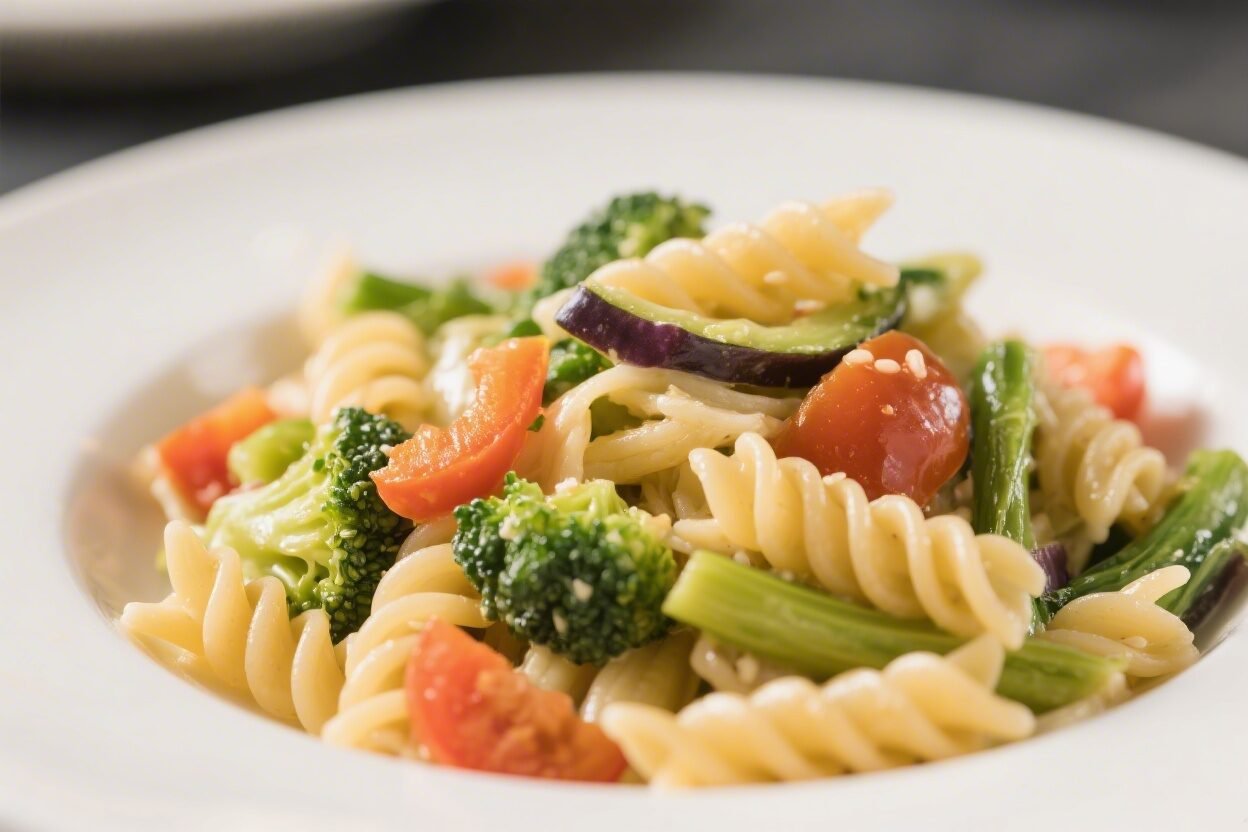
Pasta Primavera With Fresh Veggies - A Bright, Weeknight-Friendly Classic
Ingredients
Method
- Boil the pasta: Bring a large pot of salted water to a boil. Cook the pasta until just shy of al dente.Reserve 1 cup of pasta water, then drain.
- Prep the veggies: While the water heats, slice and chop all vegetables so they’re ready to go. Aim for bite-size pieces for even cooking.
- Sauté aromatics: In a large skillet, heat olive oil over medium. Add the onion and a pinch of salt.Cook 3–4 minutes until softened. Stir in the garlic and red pepper flakes; cook 30 seconds until fragrant.
- Add sturdy vegetables: Add broccoli and asparagus with a splash of pasta water (2–3 tablespoons). Cook 3 minutes, stirring, until bright green and just tender.
- Add quick-cooking vegetables: Stir in zucchini, yellow squash, and cherry tomatoes.Cook 3–4 minutes until the squash is crisp-tender and tomatoes are slightly burst.
- Finish the sauce: Reduce heat to low. Add butter, lemon zest, and lemon juice. Stir until the butter melts and everything looks glossy.Add peas and warm through for 1 minute.
- Toss with pasta: Add the drained pasta to the skillet. Sprinkle in Parmesan and half the basil. Add 1/3 to 1/2 cup reserved pasta water, tossing until the sauce clings.Season generously with salt and black pepper.
- Adjust and serve: Taste and add more lemon, cheese, or pasta water if needed. Top with remaining basil and extra Parmesan. Serve warm.
What Makes This Special
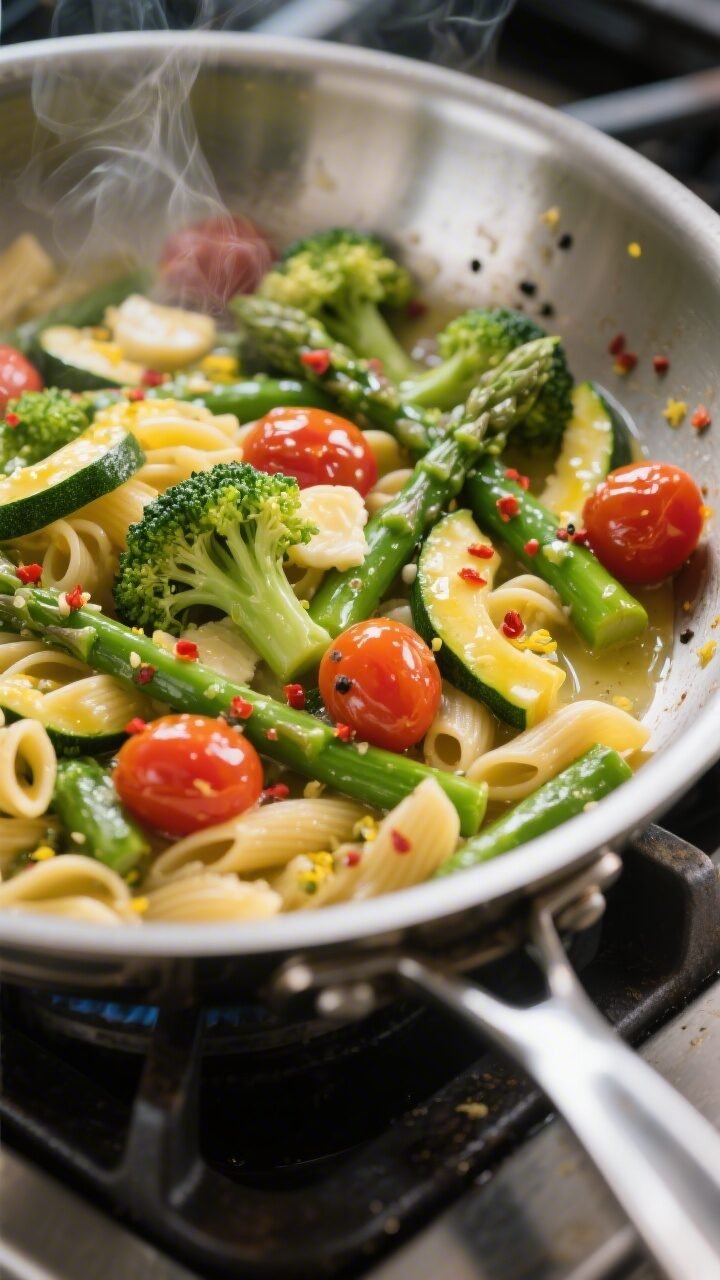
This Pasta Primavera leans into simple techniques and fresh flavor. The secret is layering: cook the vegetables in stages so everything stays vibrant and crisp, then finish with a quick butter, garlic, and lemon sauce that coats every strand.
A splash of starchy pasta water pulls it all together into a light, glossy finish.
It’s adaptable, affordable, and perfect for using up what’s in your crisper drawer. Best of all, it’s ready in under 40 minutes and tastes great warm or at room temperature.
Ingredients
- 12 ounces pasta (penne, farfalle, or spaghetti)
- 2 tablespoons olive oil
- 2 tablespoons unsalted butter
- 3 cloves garlic, thinly sliced
- 1 small red onion or 2 shallots, thinly sliced
- 1 cup cherry tomatoes, halved
- 1 cup asparagus, cut into 1-inch pieces
- 1 cup broccoli florets, small
- 1 small zucchini, halved lengthwise and sliced
- 1 small yellow squash, halved lengthwise and sliced
- 1/2 cup peas (fresh or frozen)
- 1/2 teaspoon red pepper flakes (optional)
- 1 lemon (zest and 2 tablespoons juice)
- 1/3 cup grated Parmesan or Pecorino Romano, plus more for serving
- 1/4 cup fresh basil, chopped (or a mix of basil and parsley)
- Salt and freshly ground black pepper
Instructions
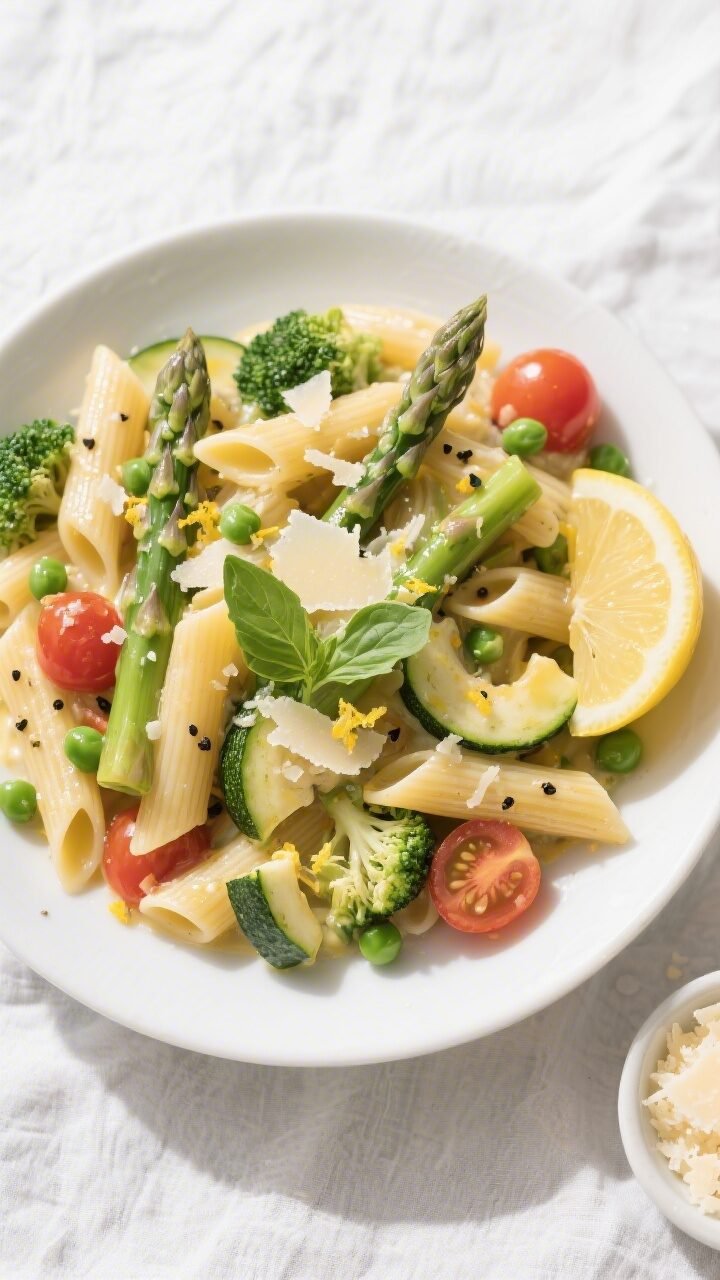
- Boil the pasta: Bring a large pot of salted water to a boil. Cook the pasta until just shy of al dente.Reserve 1 cup of pasta water, then drain.
- Prep the veggies: While the water heats, slice and chop all vegetables so they’re ready to go. Aim for bite-size pieces for even cooking.
- Sauté aromatics: In a large skillet, heat olive oil over medium. Add the onion and a pinch of salt.Cook 3–4 minutes until softened. Stir in the garlic and red pepper flakes; cook 30 seconds until fragrant.
- Add sturdy vegetables: Add broccoli and asparagus with a splash of pasta water (2–3 tablespoons). Cook 3 minutes, stirring, until bright green and just tender.
- Add quick-cooking vegetables: Stir in zucchini, yellow squash, and cherry tomatoes.Cook 3–4 minutes until the squash is crisp-tender and tomatoes are slightly burst.
- Finish the sauce: Reduce heat to low. Add butter, lemon zest, and lemon juice. Stir until the butter melts and everything looks glossy.Add peas and warm through for 1 minute.
- Toss with pasta: Add the drained pasta to the skillet. Sprinkle in Parmesan and half the basil. Add 1/3 to 1/2 cup reserved pasta water, tossing until the sauce clings.Season generously with salt and black pepper.
- Adjust and serve: Taste and add more lemon, cheese, or pasta water if needed. Top with remaining basil and extra Parmesan. Serve warm.
Keeping It Fresh
Use vegetables that are in season for the best flavor and texture.
Spring asparagus, summer tomatoes, or fall broccoli all work beautifully. If your veggies look a little tired, refresh them in a bowl of ice water for 10 minutes before cooking.
Don’t overcook. Pull the pasta at al dente and keep the vegetables crisp-tender. The residual heat will carry them the rest of the way.
Finish with bright elements like fresh lemon and herbs so the dish tastes lively, not heavy.
Benefits of This Recipe
- Weeknight-friendly: Comes together fast with minimal fuss and cleanup.
- Veggie-forward: A generous mix of vegetables makes the plate colorful and nutrient-rich.
- Light but satisfying: A butter-olive oil emulsion gives silkiness without a heavy cream sauce.
- Flexible: Swap produce based on season or what you have on hand.
- Budget-conscious: Relies on pantry staples and common vegetables.
Pitfalls to Watch Out For
- Mushy pasta: Overcooking ruins the texture. Set a timer and taste early.
- Overcrowded pan: Too many veggies in a small skillet steam instead of sear. Use a large pan or cook in batches.
- Skipping pasta water: The starch is key for a cohesive, silky sauce.Always reserve some before draining.
- Under-seasoning: Vegetables need salt at each stage. Taste and adjust as you go.
- Flat flavors: Without acid and herbs, the dish can taste dull. Lemon and fresh basil wake everything up.
Variations You Can Try
- Creamy Primavera: Stir in 1/4 to 1/3 cup heavy cream or half-and-half with the butter for a richer sauce.
- Protein boost: Add grilled chicken, sautéed shrimp, or a can of chickpeas for extra protein.
- Go green: Use only green vegetables—broccolini, snap peas, asparagus, zucchini—and finish with mint and lemon.
- Whole grain or gluten-free: Swap in whole-wheat pasta or a gluten-free brand.Adjust cooking time per package directions.
- Cheese swap: Try feta or goat cheese crumbles for tang, or Pecorino Romano for a saltier bite.
- Roasted twist: Roast the vegetables at 425°F with olive oil and salt until caramelized, then toss with pasta and sauce.
FAQ
Can I make this ahead?
You can prep the vegetables and cook the pasta a few hours in advance. Rinse the pasta briefly to stop cooking, toss with a little oil, and store separately. Reheat everything in the skillet with a splash of water and finish with lemon, cheese, and herbs right before serving.
What pasta shape works best?
Short shapes like penne, farfalle, and rotini hold onto vegetables nicely.
Spaghetti or linguine also work if you prefer a twirlable option. Choose what you like and adjust the cooking time for al dente.
How do I keep the vegetables from turning soggy?
Cut them evenly, cook in stages, and avoid crowding the pan. Use medium heat and stop when they’re crisp-tender.
The carryover heat will finish them without turning them mushy.
Is there a dairy-free option?
Yes. Use olive oil only and skip the butter and Parmesan. Add a spoonful of nutritional yeast for a savory note, or finish with toasted pine nuts for richness.
Can I freeze Pasta Primavera?
It’s not ideal.
The vegetables can go soft and the pasta can lose texture after thawing. If you need to store leftovers, refrigerate in an airtight container for up to 3 days and rewarm gently with a splash of water.
What if I don’t have lemon?
Use a splash of white wine vinegar or red wine vinegar in a pinch. Add it gradually and balance with a little extra olive oil or a touch of butter for roundness.
How do I make it spicier?
Increase red pepper flakes, or finish with a drizzle of Calabrian chili oil.
You can also sauté a chopped fresh chili with the onion for more heat.
In Conclusion
Pasta Primavera with Fresh Veggies is a simple, cheerful meal that celebrates good produce and smart technique. With a quick sauce, bright lemon, and a handful of herbs, it turns everyday ingredients into something special. Keep the pasta al dente, the vegetables crisp, and the seasoning generous, and you’ll have a bowl that tastes like sunshine—any night of the week.