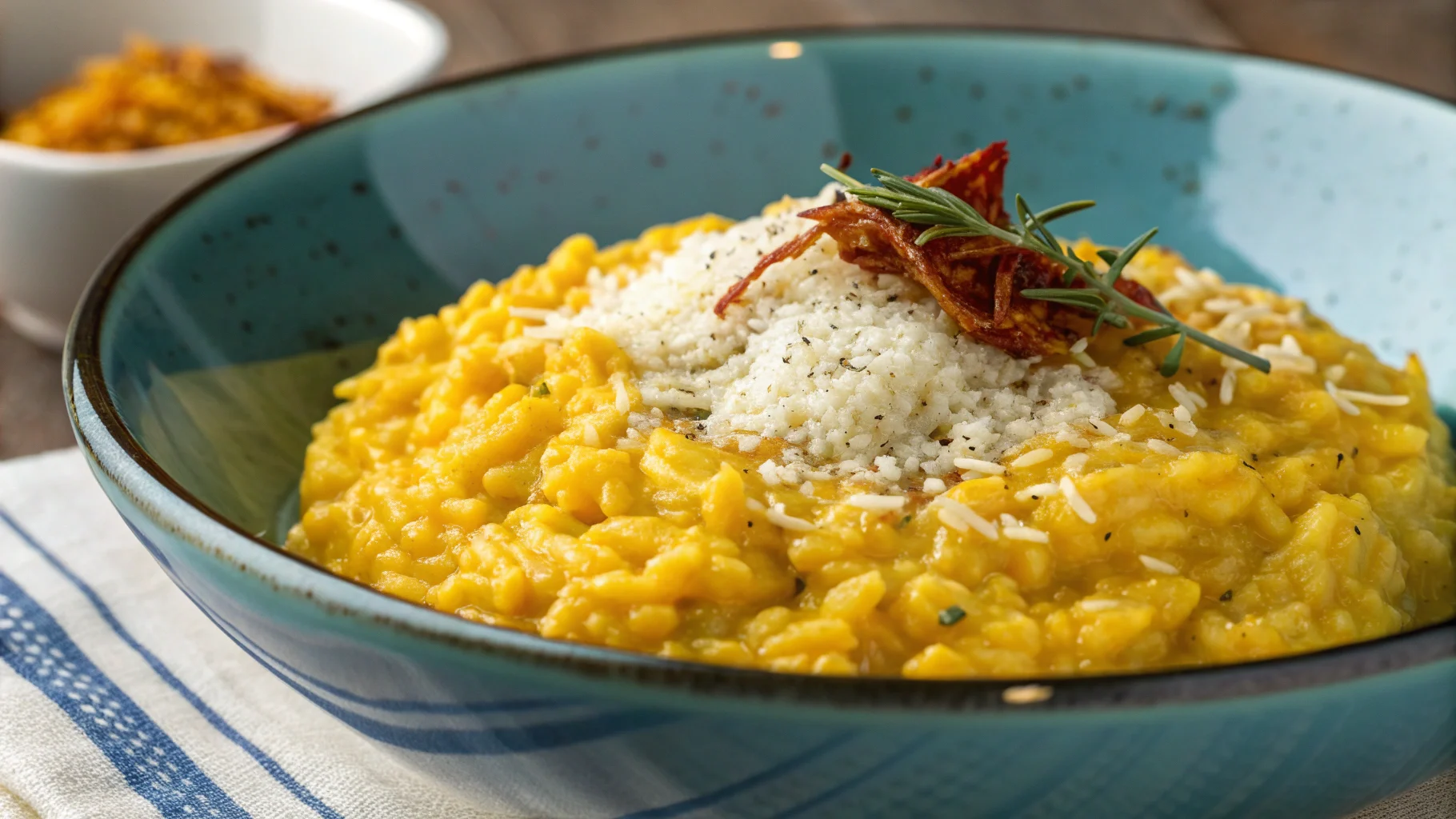
Risotto alla Milanese with Saffron Recipe

You don’t need a plane ticket to Milan to eat like a CEO—just a pot, some patience, and a pinch of saffron worth its weight in gold.
This risotto is silky, bold, and unapologetically luxurious without trying too hard. It’s the kind of dish that turns a Tuesday into a celebration and a dinner guest into a fan for life.
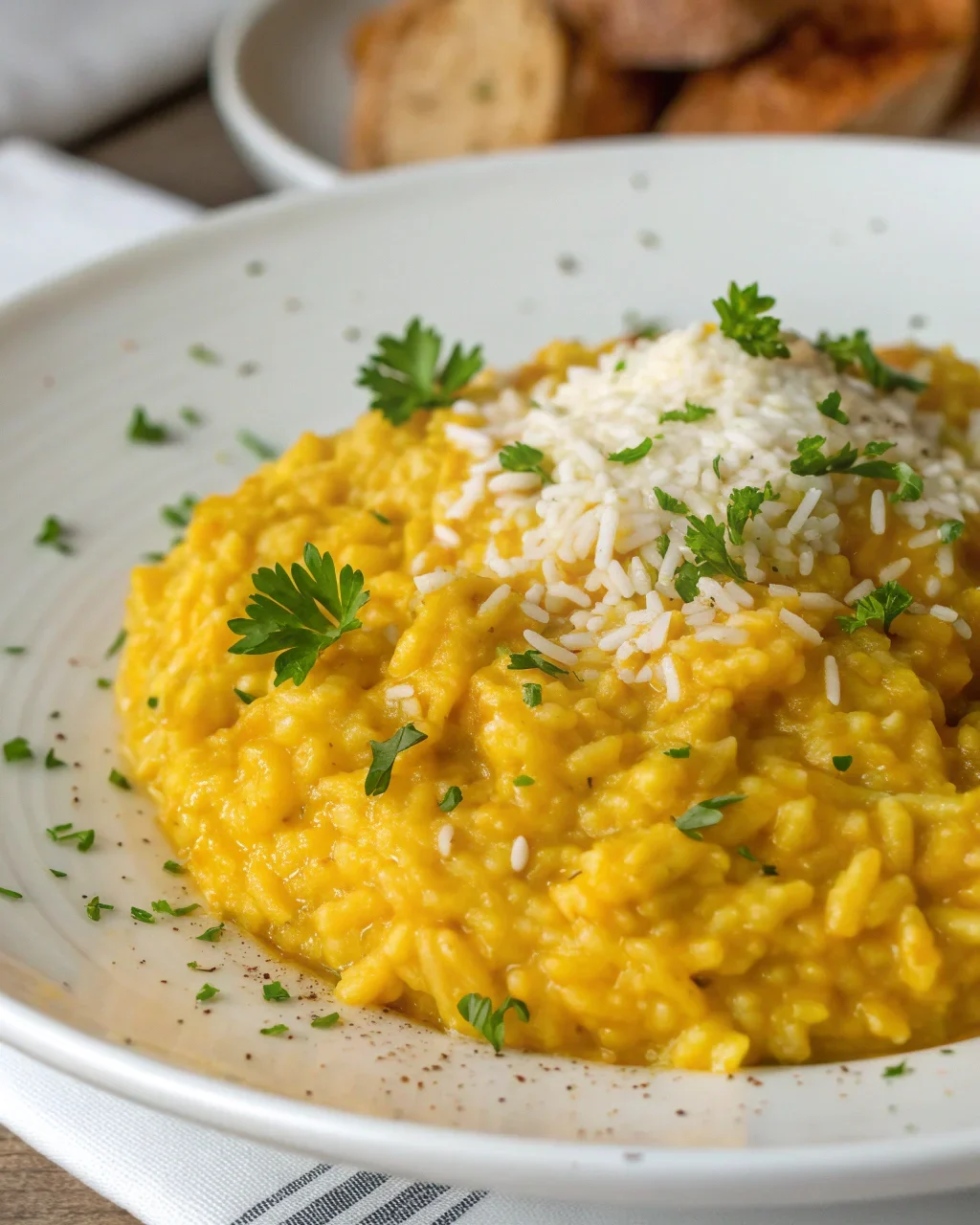
Want restaurant-level results at home? Nail the technique, and this bowl of sunshine will do the talking.
Why Everyone Loves This Recipe
- Flavor that pops: Saffron brings a floral, honeyed aroma you can’t fake. Add butter and cheese, and it’s game over.
- Texture perfection: Creamy without being mushy, with grains that stay intact—comfort food with standards.
- Simple but elite: Minimal ingredients, maximum payoff.
The technique does the heavy lifting.
- Plays well with others: Great solo or paired with osso buco, seared mushrooms, or grilled seafood.
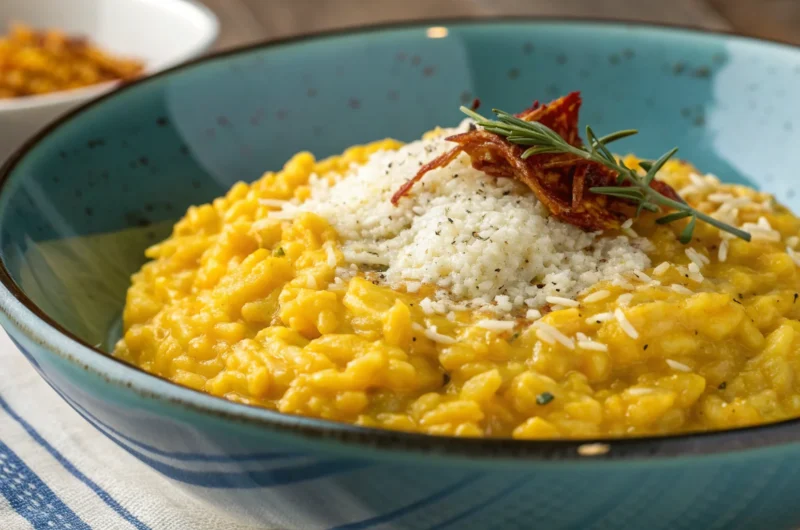
Risotto alla Milanese with Saffron: Golden Comfort, Zero Fluff
Course: Dinner4
servings10
minutes25
minutes480
kcalIngredients
1 1/2 cups (300 g) Arborio or Carnaroli rice: Carnaroli is ideal for creaminess and bite; Arborio is fine.
1 small onion or 1 large shallot, finely minced: Sweet, not sharp; supports the saffron.
3 tbsp unsalted butter, divided: For sautéing and the final mantecatura (creamy finish).
2 tbsp olive oil: Helps control heat and prevents scorching.
1/2 cup (120 ml) dry white wine: Adds acidity and complexity; Pinot Grigio or Sauvignon Blanc.
4–5 cups (1–1.2 L) hot low-sodium chicken or vegetable stock: Keep it gently simmering; temperature matters.
1 good pinch saffron threads (about 1/2 tsp): The star. Threads > powder; bloom for best flavor and color.
3/4 cup (60 g) finely grated Parmigiano Reggiano: Salty, nutty finish. Don’t skimp.
Salt and freshly ground white pepper: White pepper keeps the color pristine; black works if that’s what you have.
Optional: a splash of beef marrow broth or bone marrow: Traditional Milanese richness, if you want to go full classic.
Step-by-Step Instructions
- Bloom the saffron. Warm 2–3 tbsp of the hot stock. Crumble in the saffron threads and let steep 10 minutes to release color and aroma.
- Heat your base. In a wide, heavy pan, add 1 tbsp butter and the olive oil over medium heat. Soften the minced onion for 3–4 minutes until translucent, not browned.
- Toast the rice. Stir in the rice and cook 2 minutes, coating each grain in fat. Listen for a faint crackle; that’s your cue it’s toasting properly.
- Deglaze. Pour in the white wine. Stir until most of it evaporates. This sets your acidity and aroma foundation.
- Start ladling stock. Add just enough hot stock to barely cover the rice. Stir occasionally—think “frequent nudges,” not boot camp. When it’s almost absorbed, add more.
- Add saffron infusion. Around the 8-minute mark, pour in the saffron stock. Watch the risotto turn a luxurious golden hue. Smells fancy because it is.
- Build the creaminess. Keep adding stock in small additions, stirring gently, until the rice is al dente with a creamy sauce (about 16–18 minutes total). You want it to flow like lava, not sit like mashed potatoes.
- Finish with flair. Remove from heat. Add remaining 2 tbsp butter and the Parmigiano. Stir briskly to emulsify. Adjust with a splash of stock if it tightens too much.
- Season and serve. Taste for salt and white pepper. Serve immediately, with a few extra saffron threads on top if you want to flex.
How Long Does It Keep?
Best served fresh—risotto waits for no one. That said, leftovers can be cooled quickly, refrigerated for up to 2 days, and reheated gently with a splash of stock to revive the texture.
For a glow-up, turn leftovers into arancini (fried risotto balls) the next day. Freezing? Not recommended; the starch structure takes a hit.
Nutritional Perks
- Saffron: Loaded with antioxidants like crocin and safranal; associated with mood and anti-inflammatory benefits.
Tiny but mighty.
- Rice: Provides steady carbs for energy. Carnaroli holds up better, meaning less mush and more satisfaction.
- Cheese and butter: Calcium and fat-soluble flavor carriers. Not “diet” food, but definitely soul food.
- Stock-based cooking: Flavor without frying.
You control sodium and quality—big win, IMO.
Nutrition Stats
- Calories: ~480 per serving
- Protein: ~13 g
- Carbohydrates: ~62 g
- Fat: ~18 g
- Saturated Fat: ~9 g
- Fiber: ~2 g
- Sodium: Varies with stock and cheese; aim for low-sodium stock and season to taste
Estimates based on standard ingredients and four main-course servings. Adjust cheese and butter to tweak macros (but also your happiness levels).
Avoid These Mistakes
- Cold stock: It shocks the rice and stalls cooking. Keep it gently simmering.
- Over-stirring: You’re making risotto, not cement.
Stir often, not nonstop.
- Skipping the toasting step: It locks in texture and adds nutty depth. Don’t rush it.
- Adding all the liquid at once: You lose control over texture and starch release.
- Overcooking: Al dente is non-negotiable. The grains should have a tiny bite.
- Serving too thick: Risotto should “wave” on the plate.
If it clumps, add a splash of hot stock and stir.
- Cheap saffron or powder blends: Many are fakes. Look for deep red threads with no yellow strands.
Alternatives
- Rice swap: Carnaroli > Vialone Nano > Arborio. Avoid long-grain—wrong starch profile.
- Dairy-free: Use olive oil plus a touch of cashew cream for the finish.
Nutritional yeast can mimic some cheesy notes.
- Alcohol-free: Replace wine with extra stock plus a teaspoon of lemon juice for acidity.
- Stock variations: Vegetable stock keeps it lighter; beef marrow broth makes it ultra-traditional and rich.
- Garnish game: Chives, lemon zest, or a drizzle of brown butter. Just don’t overpower the saffron.
FAQ
Can I make this ahead?
Partially. Cook the rice to about 70% done, spread on a tray to cool, then finish with hot stock and the saffron right before serving.
Restaurants do this to keep timing tight.
Do I really need Carnaroli rice?
No, but it helps. Carnaroli has a higher amylose content, meaning better texture and less risk of mush. Arborio works in a pinch—just watch the doneness closely.
Is saffron worth the price?
Yes.
A small pinch transforms the dish. You’re paying for aroma, color, and authenticity. Buy from reputable sources and store in an airtight container away from light.
Can I add proteins?
Sure—just keep it elegant.
Sear scallops, poach shrimp, or add shredded braised veal. Add cooked proteins at the end so they don’t overcook and steal the spotlight.
Why is my risotto gummy?
Likely overcooking, too much stirring, or using the wrong rice. Fix by adding stock gradually, stirring gently, and pulling it off the heat when it’s just al dente.
What wine pairs best?
A crisp, dry white like Gavi, Soave, or Pinot Grigio keeps the palate fresh.
If you’re feeling bold, a light Nebbiolo is fantastic with marrow-rich versions.
A Few Last Words
Risotto alla Milanese with Saffron is proof that technique beats trend every time.
You don’t need a dozen ingredients—just heat control, patience, and good saffron. Master the flow, finish it glossy, and serve it immediately.
Your table will go quiet, and that’s the best review you’ll ever get—FYI, silence means they’re busy eating.