Spinach & Walnut Pesto Pasta – Fresh, Bright, and Weeknight-Friendly

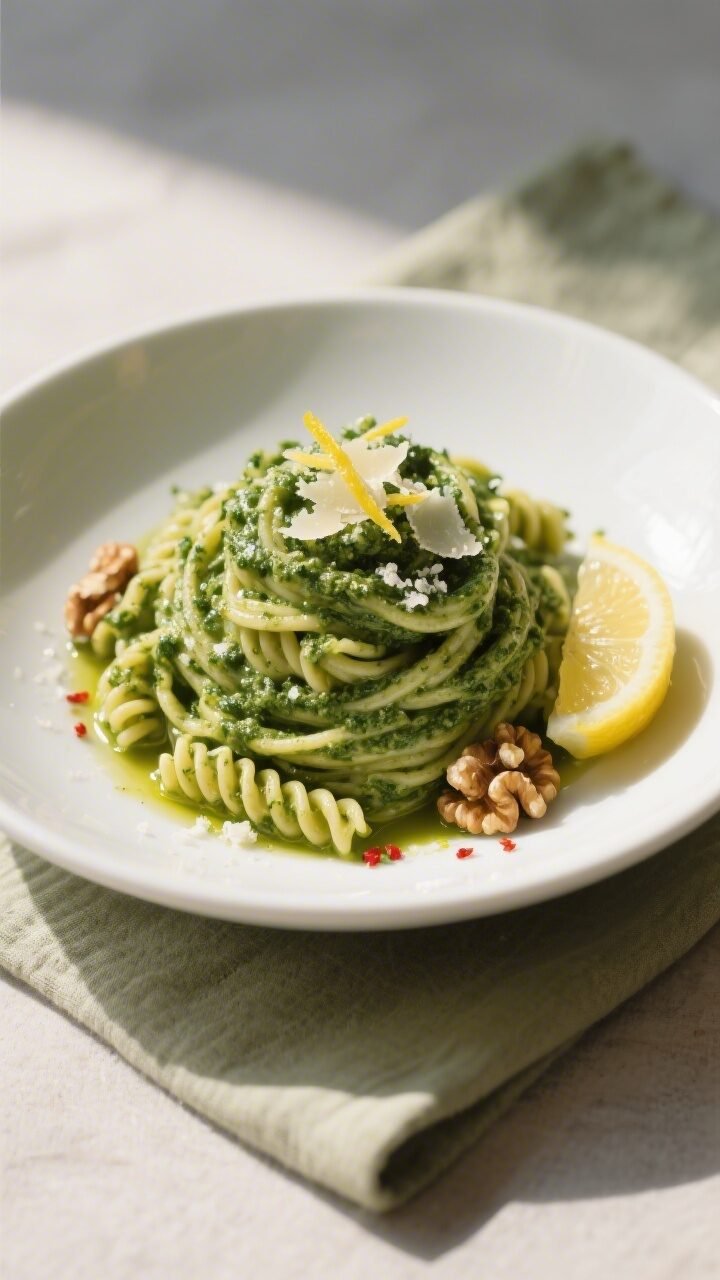
Pesto pasta is one of those meals that feels like a treat but comes together in minutes. This version swaps basil for spinach and uses walnuts instead of pricey pine nuts, keeping things budget-friendly without losing flavor. The sauce is creamy, garlicky, and bright, with a hint of lemon to wake everything up.
It clings beautifully to warm pasta and tastes great hot or at room temperature. Perfect for busy weeknights, packed lunches, or a simple dinner that feels special.
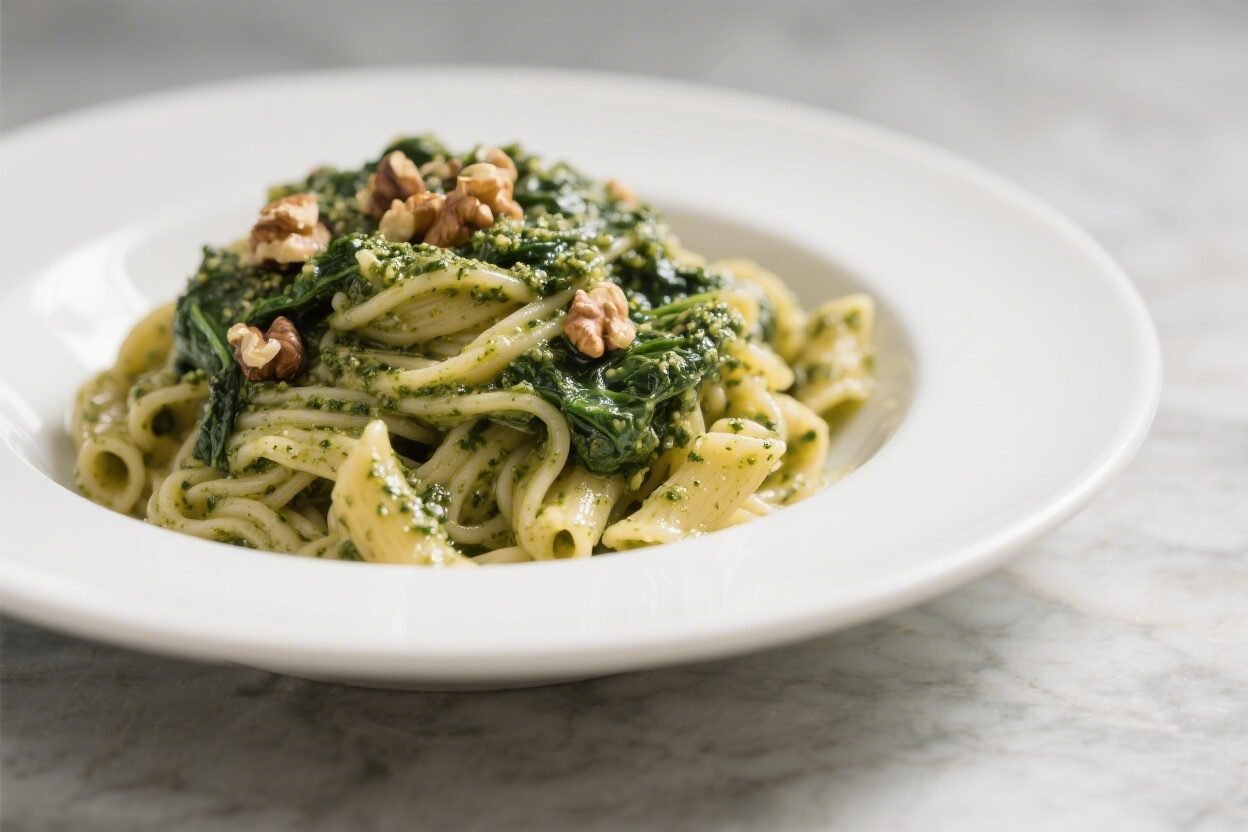
Spinach & Walnut Pesto Pasta - Fresh, Bright, and Weeknight-Friendly
Ingredients
Method
- Boil the pasta. Bring a large pot of well-salted water to a boil.Add pasta and cook until al dente according to package directions. Before draining, reserve 1 cup of pasta water.
- Toast the walnuts. While the pasta cooks, warm a dry skillet over medium heat. Add walnuts and toast for 3–4 minutes, stirring often, until fragrant and lightly golden.Let cool slightly.
- Start the pesto base. In a food processor, add toasted walnuts, garlic, lemon zest, and a pinch of salt. Pulse until finely chopped.
- Add the greens and cheese. Add spinach (and any optional basil or parsley), Parmesan, and a few grinds of black pepper. Pulse a few times to break it down.
- Stream in olive oil. With the processor running, pour in 1/3 cup olive oil.Scrape the sides and check the texture. Add more oil as needed to reach a creamy, scoopable consistency.
- Balance the flavors. Add lemon juice to taste—start with 1 tablespoon and adjust. Season with more salt and pepper as needed.If it’s too thick, blend in a splash of pasta water.
- Combine with pasta. Return the drained pasta to the pot. Add the pesto and 1/4 cup pasta water. Toss over low heat until the sauce coats the noodles.Add more pasta water as needed to create a glossy, silky sauce.
- Finish and serve. Taste and adjust seasoning. Serve with extra grated cheese, a drizzle of olive oil, and a pinch of red pepper flakes if you like.
What Makes This Recipe So Good
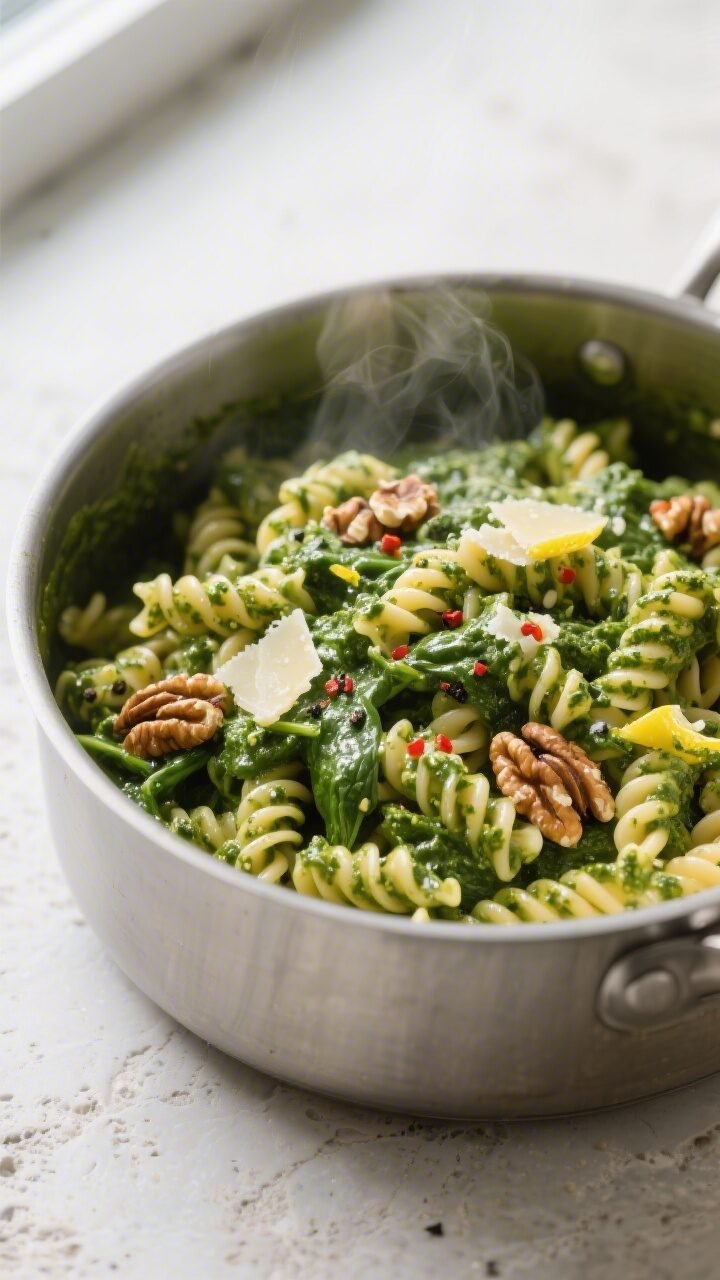
- Quick and easy: The sauce blends in minutes while the pasta cooks. You can have dinner on the table in about 20 minutes.
- Affordable and flexible: Spinach and walnuts are easy to find and cost less than traditional pesto ingredients.
- Fresh flavor: Lemon juice and a touch of cheese make the pesto bright and savory without being heavy.
- Great texture: Toasted walnuts add richness and a subtle crunch that balances the silky sauce.
- Make-ahead friendly: The pesto keeps well, and the pasta can be served warm, cold, or at room temperature.
What You’ll Need
- Pasta: 12 ounces of short pasta like fusilli, rotini, or penne.Long pasta like spaghetti works too.
- Fresh spinach: About 5 packed cups (5–6 ounces). Baby spinach is ideal.
- Walnuts: 1/2 cup, toasted for deeper flavor.
- Parmesan or Pecorino Romano: 1/2 cup, finely grated. Add more for serving.
- Garlic: 1–2 small cloves, depending on how garlicky you like it.
- Lemon: Zest and juice of 1/2 to 1 lemon, to taste.
- Extra-virgin olive oil: 1/3 to 1/2 cup, depending on desired texture.
- Salt and black pepper: To season the pesto and pasta water.
- Optional add-ins: Red pepper flakes for mild heat, a handful of basil or parsley for extra herbiness, and a splash of pasta water for creamier sauce.
Step-by-Step Instructions
- Boil the pasta. Bring a large pot of well-salted water to a boil.Add pasta and cook until al dente according to package directions. Before draining, reserve 1 cup of pasta water.
- Toast the walnuts. While the pasta cooks, warm a dry skillet over medium heat. Add walnuts and toast for 3–4 minutes, stirring often, until fragrant and lightly golden.Let cool slightly.
- Start the pesto base. In a food processor, add toasted walnuts, garlic, lemon zest, and a pinch of salt. Pulse until finely chopped.
- Add the greens and cheese. Add spinach (and any optional basil or parsley), Parmesan, and a few grinds of black pepper. Pulse a few times to break it down.
- Stream in olive oil. With the processor running, pour in 1/3 cup olive oil.Scrape the sides and check the texture. Add more oil as needed to reach a creamy, scoopable consistency.
- Balance the flavors. Add lemon juice to taste—start with 1 tablespoon and adjust. Season with more salt and pepper as needed.If it’s too thick, blend in a splash of pasta water.
- Combine with pasta. Return the drained pasta to the pot. Add the pesto and 1/4 cup pasta water. Toss over low heat until the sauce coats the noodles.Add more pasta water as needed to create a glossy, silky sauce.
- Finish and serve. Taste and adjust seasoning. Serve with extra grated cheese, a drizzle of olive oil, and a pinch of red pepper flakes if you like.
Storage Instructions
- Refrigerator: Store leftover pesto in an airtight container for up to 4 days. Press a thin layer of olive oil on top to minimize browning.
- Freezer: Freeze pesto in small containers or ice cube trays for up to 3 months.Thaw in the fridge or at room temperature.
- Leftover pasta: Keep cooked, sauced pasta in the fridge for 2–3 days. Add a splash of water or olive oil when reheating to loosen the sauce.
- Make-ahead tip: Cook pasta just shy of al dente if you plan to reheat later. Combine with pesto and warm gently with a bit of reserved water.
Health Benefits
- Leafy greens boost: Spinach is rich in vitamin K, folate, and iron.It adds nutrients without heavy calories.
- Healthy fats: Walnuts and olive oil provide heart-friendly unsaturated fats and omega-3s from walnuts.
- Protein and calcium: Parmesan or Pecorino contributes protein and calcium, supporting bones and satiety.
- Balanced meal: Pair with a side of grilled chicken, shrimp, or white beans for extra protein, and add roasted veggies for more fiber.
Pitfalls to Watch Out For
- Under-salting the water: Bland pasta can ruin a great sauce. Salt the water until it tastes like the sea.
- Overheating the pesto: High heat can dull the fresh flavors and turn the sauce oily. Toss over low heat and avoid prolonged cooking.
- Too-thick sauce: If your pesto clumps, add pasta water a little at a time until it’s glossy and smooth.
- Raw garlic bite: If you’re sensitive to sharp garlic, use a small clove, or briefly sauté the chopped garlic in olive oil before blending.
- Skipping the lemon: Acid balances the richness.A squeeze of lemon at the end can make the whole dish pop.
Recipe Variations
- Extra-herby: Swap half the spinach for basil or parsley for a more traditional pesto vibe.
- Dairy-free: Use nutritional yeast instead of cheese and add a pinch of salt and lemon to boost savoriness.
- Creamy version: Stir in a spoonful of ricotta or a splash of cream for a silkier sauce.
- Protein-packed: Add grilled chicken, sautéed shrimp, or a can of white beans. Toss in peas for a sweet, bright touch.
- Crunch factor: Reserve a few chopped toasted walnuts to sprinkle on top right before serving.
- Gluten-free: Use your favorite gluten-free pasta. Reserve pasta water as usual; it still works to emulsify the sauce.
- Roasted garlic: For a mellow, sweeter sauce, replace raw garlic with a few cloves of roasted garlic.
FAQ
Can I use frozen spinach?
Yes, but thaw it fully and squeeze out excess water first.
Use about 1 to 1 1/2 cups of well-drained cooked spinach. The flavor will be slightly earthier, so add extra lemon and a bit more cheese to balance it.
Do I need a food processor?
No. A blender works, though you may need more olive oil and to stop and scrape often.
In a pinch, finely chop everything by hand and mash with a mortar and pestle for a rustic texture.
How can I keep the pesto bright green?
Use fresh spinach, avoid overheating the sauce, and add a little lemon juice. If you’re making it ahead, press plastic wrap directly onto the surface or top with a thin layer of olive oil before refrigerating.
What pasta shape is best?
Short, ridged shapes like fusilli, rotini, or gemelli catch the sauce well. Long noodles like linguine work too, but you may need a touch more pasta water for even coating.
Can I make it nut-free?
Yes.
Swap walnuts for sunflower seeds or pumpkin seeds. The flavor changes slightly, but the texture stays rich and satisfying.
Is this recipe vegetarian?
Typically yes, but note that traditional Parmesan isn’t strictly vegetarian due to animal rennet. Choose a vegetarian-friendly hard cheese if that’s important to you.
How much salt should I add to the pasta water?
Use about 1–1.5 tablespoons of kosher salt for a large pot (4–5 quarts of water).
The pasta should taste seasoned on its own before mixing with the pesto.
In Conclusion
Spinach & Walnut Pesto Pasta delivers big flavor with simple ingredients and minimal effort. It’s fresh, affordable, and easy to tailor to your tastes, whether you go dairy-free, add protein, or keep it classic. With a few pantry staples and a handful of greens, you’ll have a bright, comforting meal any night of the week.
Keep a batch of pesto in the fridge or freezer, and you’re always one pot of boiling water away from dinner.