Traditional Brisket With Potatoes – A Cozy, Slow-Cooked Classic

There’s something special about a pot of brisket slowly braising in the oven. The kitchen smells warm and comforting, and you know dinner will be rich, tender, and deeply satisfying. This version keeps things classic: melt-in-your-mouth beef, soft potatoes, sweet onions, and a savory gravy you’ll want to spoon over everything.
It’s perfect for a family meal, holidays, or a weekend you want to make feel a little more special. Simple ingredients, patient cooking, and a recipe that always brings people back to the table.
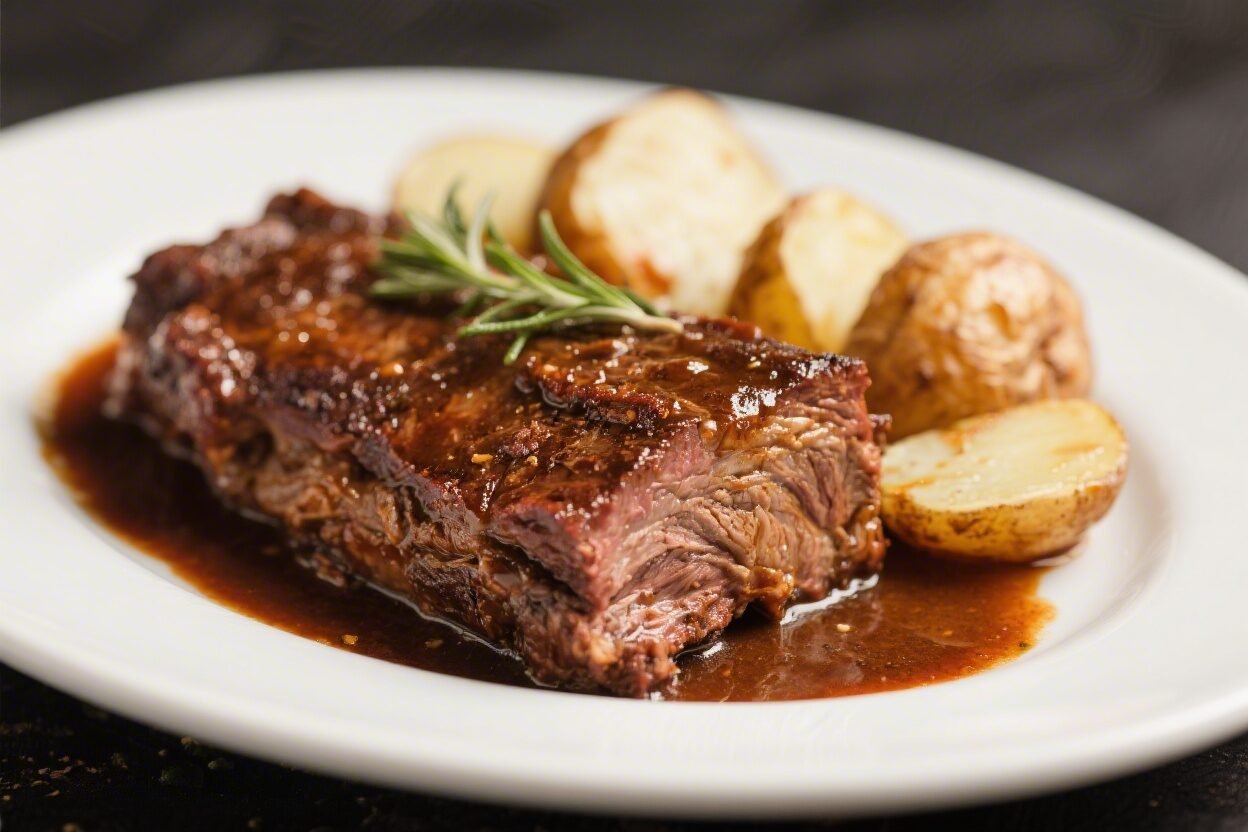
Traditional Brisket With Potatoes - A Cozy, Slow-Cooked Classic
Ingredients
Method
- Prep and season: Pat the brisket dry and season all over with the salt and pepper. Let it sit at room temperature for 20–30 minutes while you prep the vegetables.
- Brown the brisket: Heat the oil in a large Dutch oven over medium-high heat. Sear the brisket, fat-side down first, until well browned, 5–7 minutes per side.Transfer to a plate.
- Build the flavor base: Lower heat to medium. Add onions with a pinch of salt, and cook until softened and lightly browned, about 8–10 minutes. Stir in garlic and tomato paste; cook 1–2 minutes until fragrant and slightly darkened.
- Season the braise: Add paprika, thyme, and bay leaves.Pour in the red wine, scraping up browned bits. Simmer 2–3 minutes to reduce slightly.
- Add liquids: Stir in beef broth and Worcestershire sauce. Bring to a gentle simmer.
- Nestle and cover: Return the brisket to the pot, fat-side up, along with accumulated juices.Spoon some onions over the top. Cover tightly with a lid or foil.
- Slow braise: Transfer to a 325°F (165°C) oven. Cook for 2 hours.
- Add vegetables: Carefully remove the pot.Add potatoes and carrots, tucking them into the liquid around the brisket. If needed, add a little more broth to come about halfway up the meat.
- Braise until tender: Cover and return to the oven for 1–1½ hours more, or until the brisket is fork-tender and the potatoes are soft. Total time is usually 3–3½ hours, depending on thickness.
- Rest and slice: Transfer the brisket to a cutting board.Let rest 15–20 minutes. Skim excess fat from the sauce. Stir in the vinegar to brighten.Slice the brisket against the grain into ¼-inch slices.
- Serve: Arrange slices back into the pot or on a platter with potatoes, carrots, and onions. Spoon sauce over the top. Sprinkle with parsley and adjust seasoning with salt and pepper as needed.
What Makes This Recipe So Good
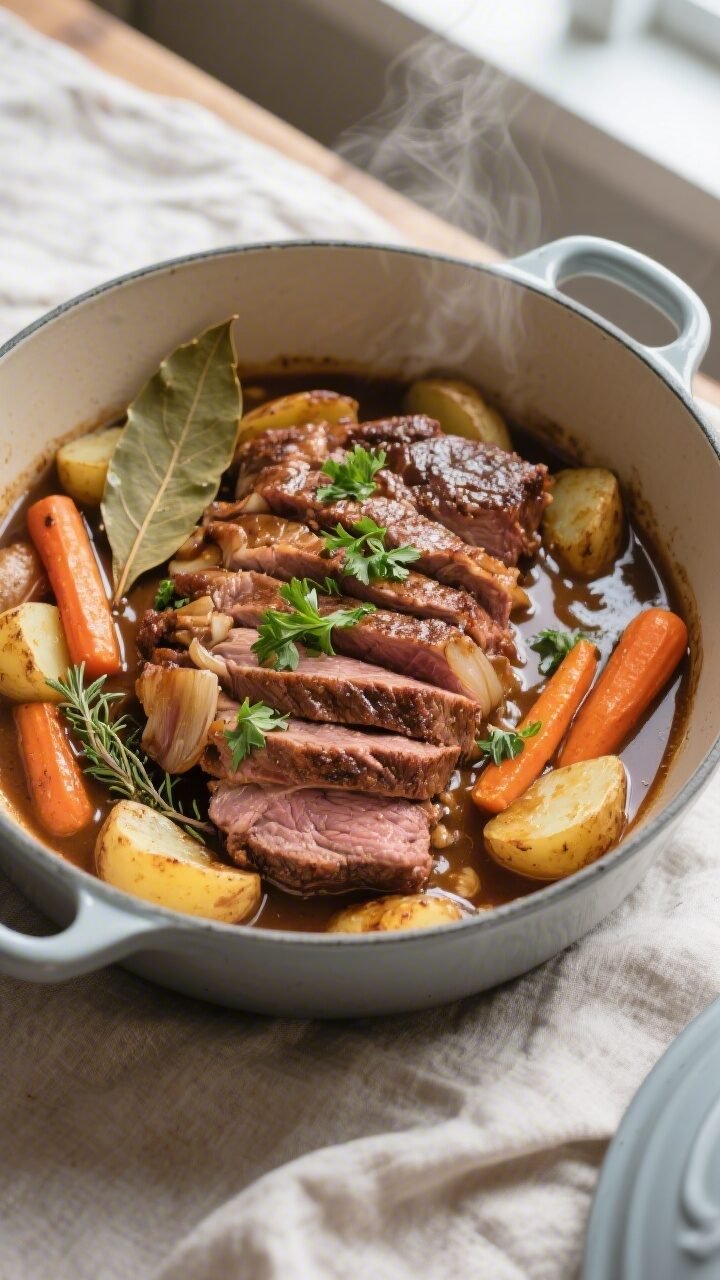
- Deep, layered flavor: Browning the brisket and vegetables builds a savory base, while slow braising creates a rich, glossy sauce.
- Hands-off cooking: Once it’s in the oven, you don’t need to hover. It’s a low-stress main course.
- Comfort food done right: Tender beef, soft potatoes, and sweet onions feel like a hug in a bowl.
- Great for gatherings: Brisket slices beautifully and feeds a crowd.Leftovers taste even better the next day.
- Flexible and forgiving: Works with different potatoes, carrots, or herbs you have on hand.
Ingredients
- 4 to 5 pounds beef brisket (first cut/flat preferred, well-trimmed but with a thin fat cap)
- 2 teaspoons kosher salt, plus more to taste
- 1 teaspoon freshly ground black pepper
- 2 tablespoons neutral oil (canola, grapeseed, or vegetable)
- 3 large yellow onions, sliced
- 5 cloves garlic, smashed
- 2 tablespoons tomato paste
- 1 tablespoon paprika (sweet)
- 1 teaspoon dried thyme or 4 sprigs fresh thyme
- 2 bay leaves
- 1 cup dry red wine (optional but recommended)
- 3 cups low-sodium beef broth
- 1 tablespoon Worcestershire sauce
- 2 pounds potatoes (Yukon Gold or small waxy potatoes), peeled if large and cut into 2-inch chunks
- 3 large carrots, peeled and cut into 2-inch pieces (optional but classic)
- 1 tablespoon cider vinegar or red wine vinegar (for brightness)
- Fresh parsley, chopped, for serving
Instructions
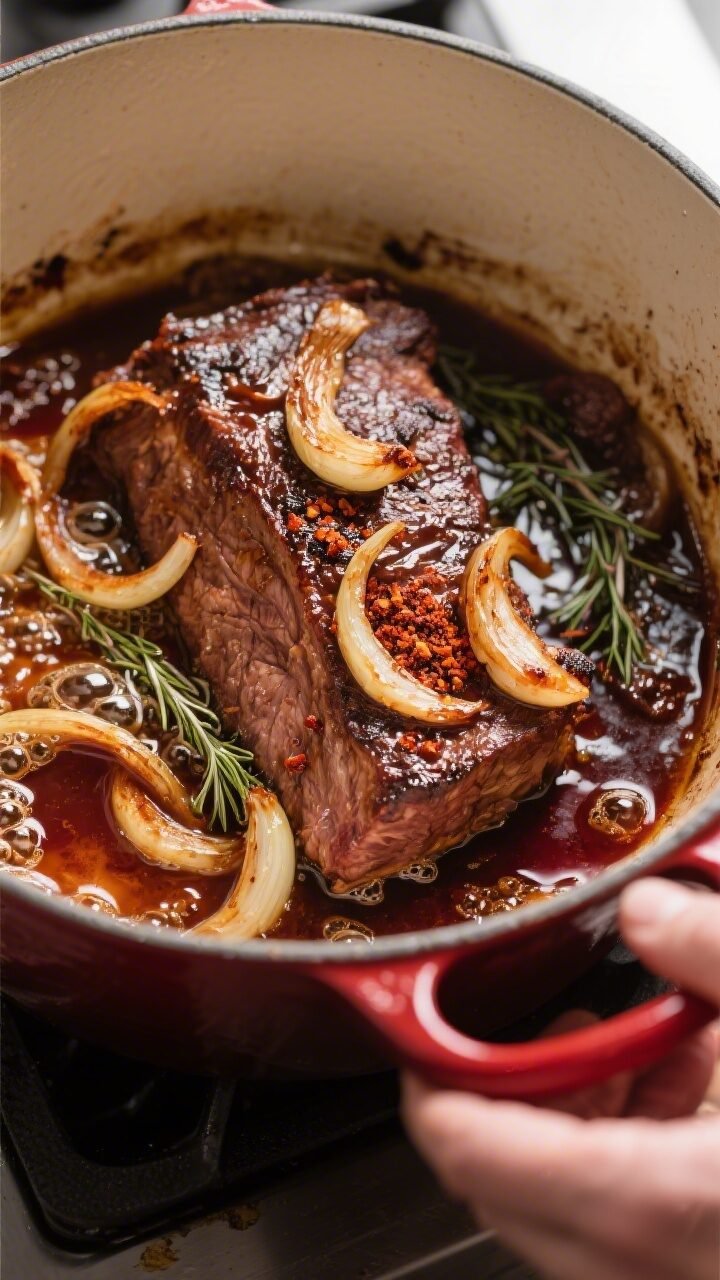
- Prep and season: Pat the brisket dry and season all over with the salt and pepper. Let it sit at room temperature for 20–30 minutes while you prep the vegetables.
- Brown the brisket: Heat the oil in a large Dutch oven over medium-high heat. Sear the brisket, fat-side down first, until well browned, 5–7 minutes per side.Transfer to a plate.
- Build the flavor base: Lower heat to medium. Add onions with a pinch of salt, and cook until softened and lightly browned, about 8–10 minutes. Stir in garlic and tomato paste; cook 1–2 minutes until fragrant and slightly darkened.
- Season the braise: Add paprika, thyme, and bay leaves.Pour in the red wine, scraping up browned bits. Simmer 2–3 minutes to reduce slightly.
- Add liquids: Stir in beef broth and Worcestershire sauce. Bring to a gentle simmer.
- Nestle and cover: Return the brisket to the pot, fat-side up, along with accumulated juices.Spoon some onions over the top. Cover tightly with a lid or foil.
- Slow braise: Transfer to a 325°F (165°C) oven. Cook for 2 hours.
- Add vegetables: Carefully remove the pot.Add potatoes and carrots, tucking them into the liquid around the brisket. If needed, add a little more broth to come about halfway up the meat.
- Braise until tender: Cover and return to the oven for 1–1½ hours more, or until the brisket is fork-tender and the potatoes are soft. Total time is usually 3–3½ hours, depending on thickness.
- Rest and slice: Transfer the brisket to a cutting board.Let rest 15–20 minutes. Skim excess fat from the sauce. Stir in the vinegar to brighten.
Slice the brisket against the grain into ¼-inch slices.
- Serve: Arrange slices back into the pot or on a platter with potatoes, carrots, and onions. Spoon sauce over the top. Sprinkle with parsley and adjust seasoning with salt and pepper as needed.
Storage Instructions
- Refrigerate: Cool completely, then store brisket and vegetables with the sauce in an airtight container for up to 4 days.
- Freeze: Slice the brisket and submerge in sauce to prevent drying.Freeze up to 3 months. Thaw in the fridge overnight.
- Reheat: Warm gently, covered, in a 300°F (150°C) oven until heated through, about 25–35 minutes, or on the stovetop over low. Add a splash of broth if needed.
- Make-ahead tip: Brisket tastes even better the next day.Chill, then slice cold for neater pieces. Reheat slices in the sauce.
Why This is Good for You
- Protein-rich: Brisket provides iron, zinc, and B vitamins that support energy and muscle health.
- Root veggies for balance: Potatoes and carrots offer fiber, potassium, and beta carotene.
- Real-food ingredients: No fillers—just broth, aromatics, and spices you recognize.
- Customizable fat level: Skim the sauce and trim the brisket for a lighter plate without losing flavor.
Pitfalls to Watch Out For
- Skipping the sear: Browning the brisket and onions is key to flavor. Don’t rush this step.
- Too little liquid: The liquid should come at least one-third to halfway up the meat.Add broth if it looks dry.
- Overcooking the potatoes: Add them in the last 60–90 minutes so they stay intact.
- Slicing the wrong way: Always slice against the grain for tenderness. With brisket, this matters a lot.
- Not resting the meat: Resting keeps juices in the brisket, not on your cutting board.
Variations You Can Try
- Onion-Forward: Use 5–6 onions and skip carrots for a sweeter, silkier sauce.
- Smoky Paprika: Swap half the sweet paprika for smoked paprika and add a pinch of cumin.
- Mushroom Boost: Add 8 ounces of cremini mushrooms with the onions for an earthier gravy.
- Herb Garden: Finish with fresh dill and parsley, plus a squeeze of lemon instead of vinegar.
- No-Wine: Replace wine with more beef broth and 1 teaspoon balsamic vinegar.
- Spicy Kick: Add ½ teaspoon crushed red pepper or harissa paste with the tomato paste.
FAQ
What cut of brisket should I buy?
Flat cut (also called first cut) is best for slicing and even cooking. It has a uniform thickness and a manageable fat cap.
Point cut is richer and fattier, but it can be harder to slice neatly.
How do I know when the brisket is done?
It should be fork-tender but not falling apart. A fork should slide in with little resistance. Time is a guide, but tenderness is the real test.
Can I make this in a slow cooker?
Yes.
Brown the brisket and onions on the stovetop first, then transfer everything to a slow cooker. Cook on low for 8–10 hours, adding potatoes and carrots in the last 3–4 hours.
What if my sauce is too thin?
Reduce it on the stovetop, uncovered, for 5–10 minutes. If needed, stir in a slurry of 1 teaspoon cornstarch with 1 tablespoon cold water and simmer briefly.
Do I have to use wine?
No.
Wine adds acidity and depth, but extra broth with a splash of vinegar or a teaspoon of balsamic works well.
Can I prep it a day ahead?
Absolutely. Cook fully, chill overnight, skim the fat, slice the brisket cold, and reheat slices in the sauce. The flavor improves with time.
What potatoes work best?
Yukon Golds or other waxy potatoes hold their shape and turn creamy.
Russets can get mealy and break apart more easily.
In Conclusion
Traditional brisket with potatoes is all about patience and simple technique. Sear well, braise gently, and let the sauce do the heavy lifting. It’s a meal that tastes like home, whether you’re serving a holiday crowd or a quiet Sunday dinner.
With a few key steps and good ingredients, you’ll have a tender, flavorful brisket that earns a spot in your regular rotation.