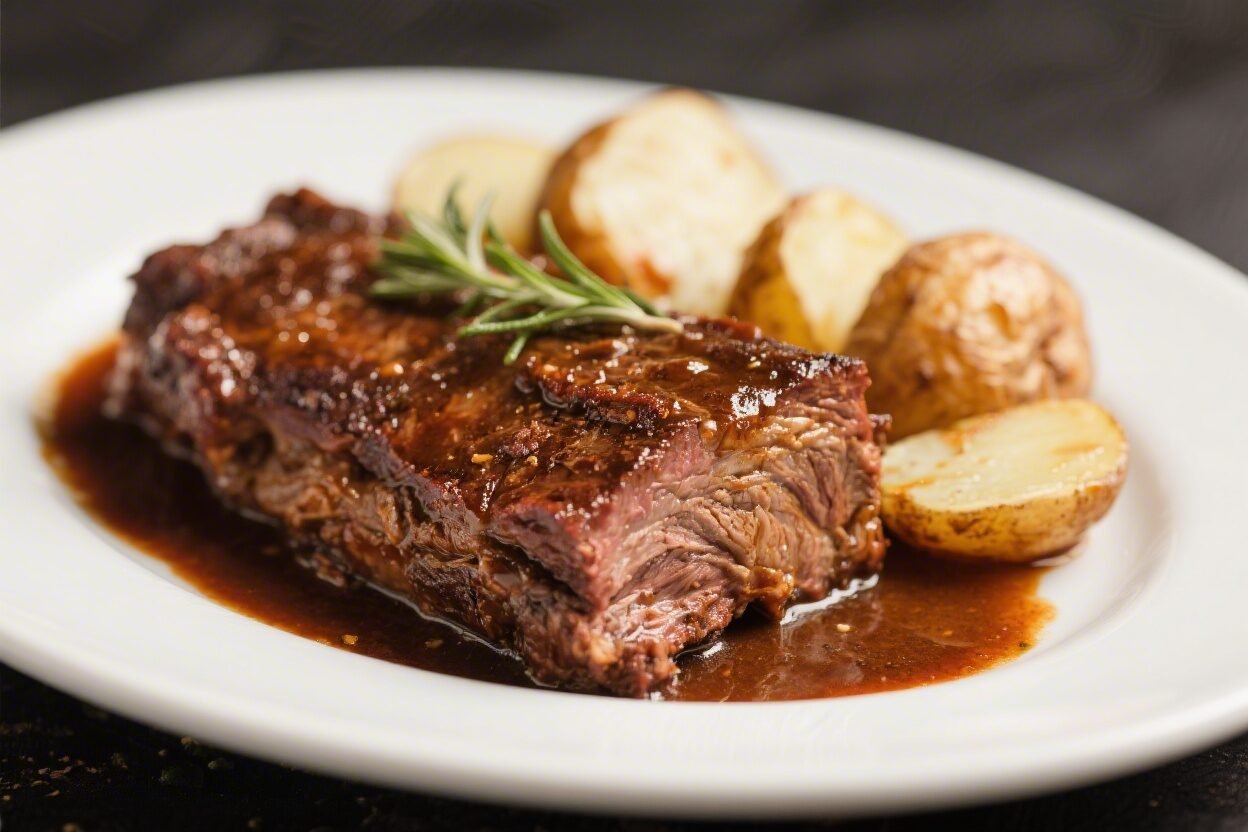
Prep and season: Pat the brisket dry and season all over with the salt and pepper. Let it sit at room temperature for 20–30 minutes while you prep the vegetables.
Brown the brisket: Heat the oil in a large Dutch oven over medium-high heat. Sear the brisket, fat-side down first, until well browned, 5–7 minutes per side.
Transfer to a plate.
Build the flavor base: Lower heat to medium. Add onions with a pinch of salt, and cook until softened and lightly browned, about 8–10 minutes. Stir in garlic and tomato paste; cook 1–2 minutes until fragrant and slightly darkened.
Season the braise: Add paprika, thyme, and bay leaves.
Pour in the red wine, scraping up browned bits. Simmer 2–3 minutes to reduce slightly.
Add liquids: Stir in beef broth and Worcestershire sauce. Bring to a gentle simmer.
Nestle and cover: Return the brisket to the pot, fat-side up, along with accumulated juices.
Spoon some onions over the top. Cover tightly with a lid or foil.
Slow braise: Transfer to a 325°F (165°C) oven. Cook for 2 hours.
Add vegetables: Carefully remove the pot.
Add potatoes and carrots, tucking them into the liquid around the brisket. If needed, add a little more broth to come about halfway up the meat.
Braise until tender: Cover and return to the oven for 1–1½ hours more, or until the brisket is fork-tender and the potatoes are soft. Total time is usually 3–3½ hours, depending on thickness.
Rest and slice: Transfer the brisket to a cutting board.
Let rest 15–20 minutes. Skim excess fat from the sauce. Stir in the vinegar to brighten.
Slice the brisket against the grain into ¼-inch slices.
Serve: Arrange slices back into the pot or on a platter with potatoes, carrots, and onions. Spoon sauce over the top. Sprinkle with parsley and adjust seasoning with salt and pepper as needed.