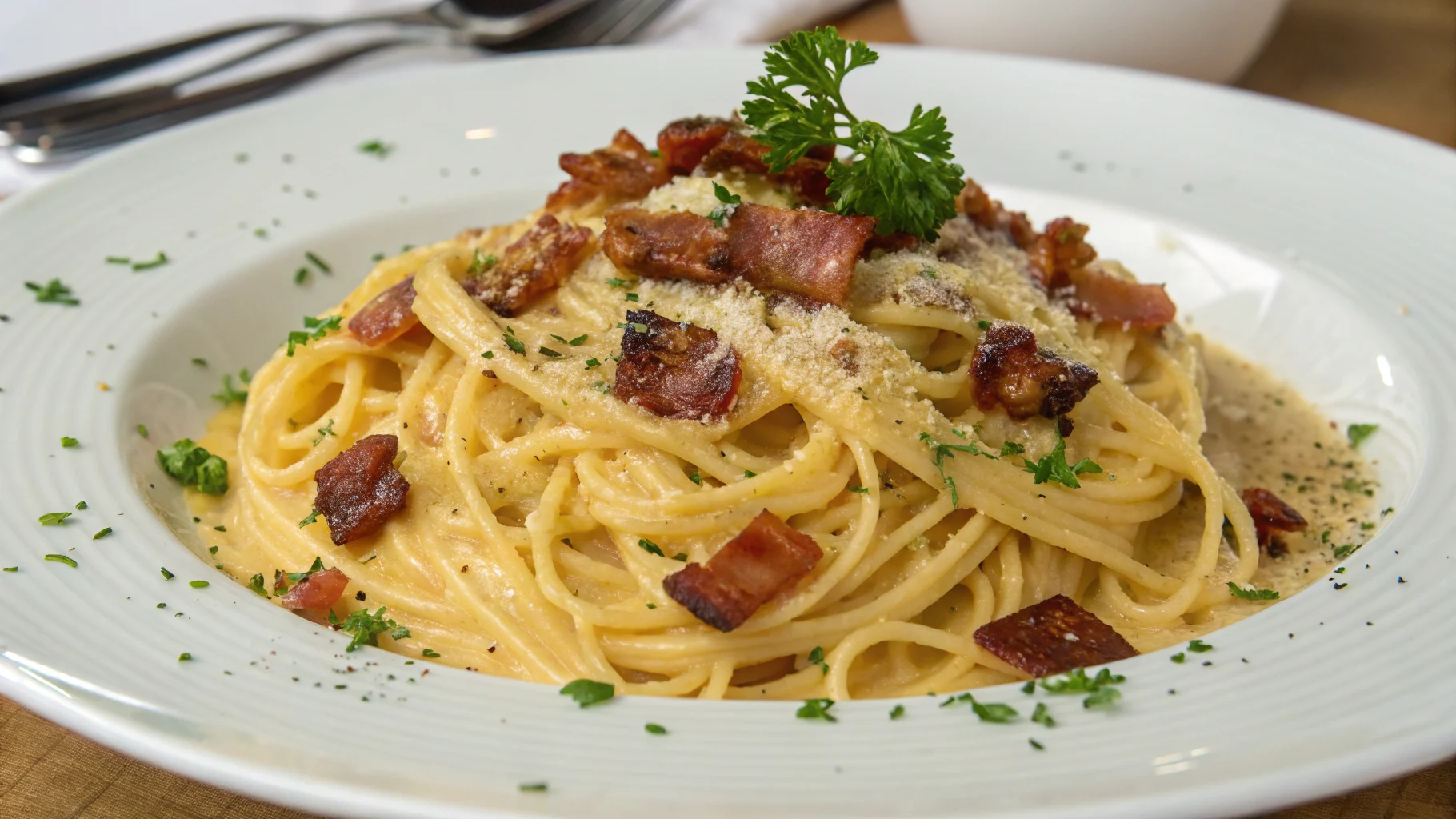
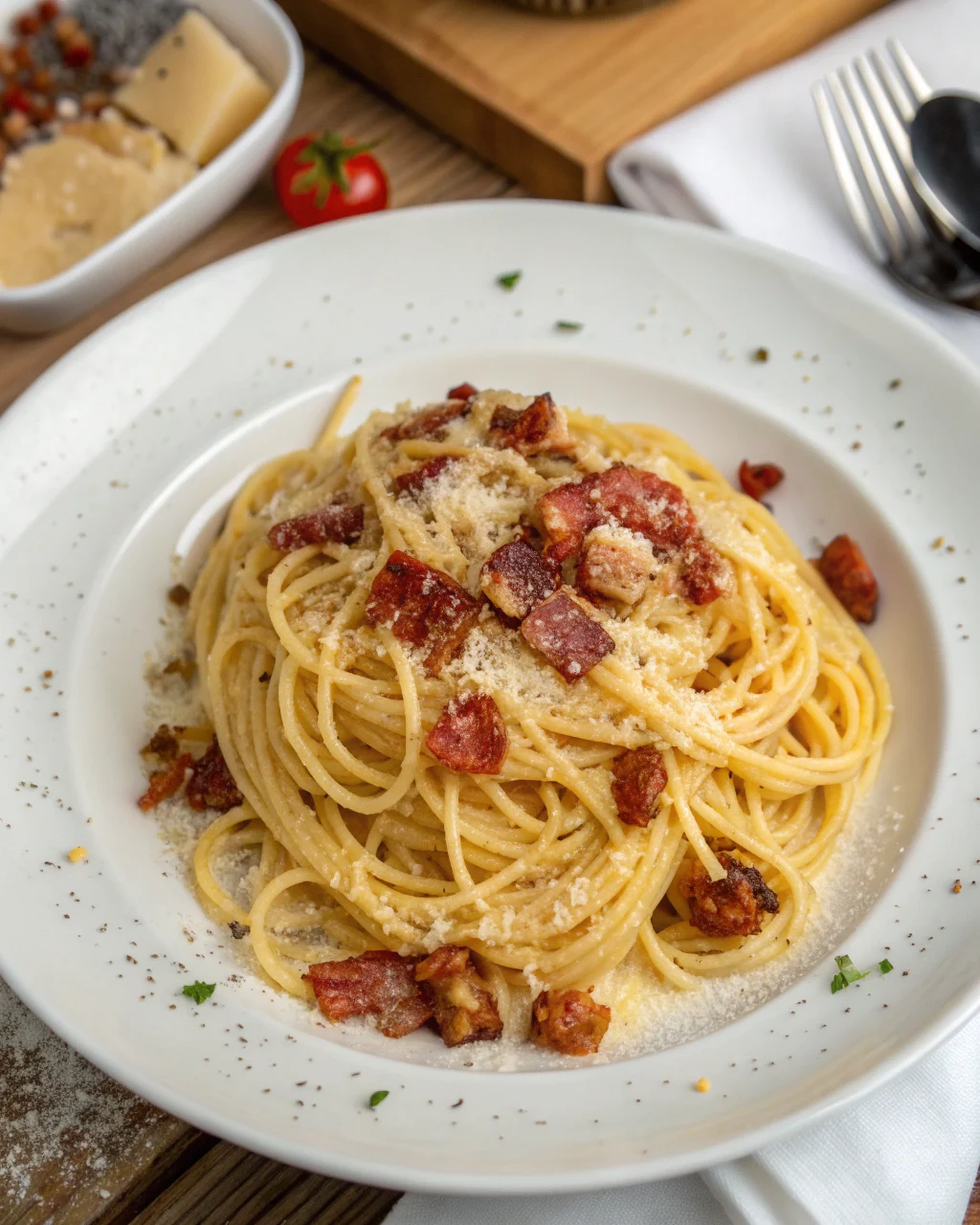
Traditional Spaghetti Carbonara: Creamy, Cheesy, No Cream Needed

Skip the restaurant waitlist and the guesswork. This Traditional Spaghetti Carbonara hits like a mic drop—five ingredients, 20 minutes, zero culinary drama.
Silky sauce? No cream.
Depth of flavor? All in the technique.
You’ll learn the moves that make Roman grandmas proud and your guests question whether you studied abroad.
Fair warning: once you nail this, takeout pasta may become a breakup story.
The Special Touch in This Recipe
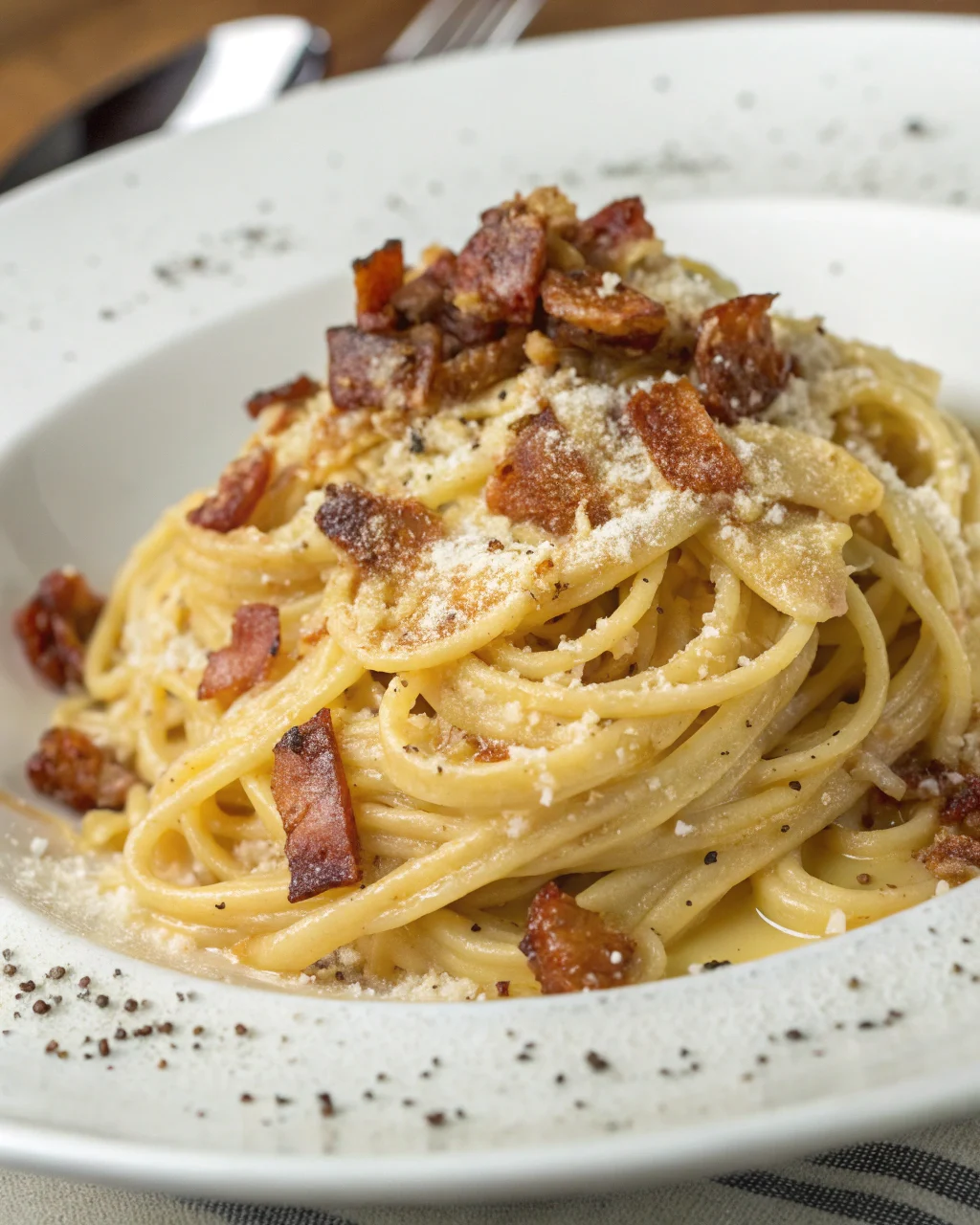
This version honors Rome: no cream, no garlic, no peas—just technique.
The sauce is emulsified with starchy pasta water and egg yolks, gently heated by residual warmth. Black pepper gets toasted for a deeper bite, then blooms into the sauce.
And we use guanciale for that cured, porky backbone. Pancetta can pinch-hit, but guanciale is the MVP.
Traditional Spaghetti Carbonara: Creamy, Cheesy, No Cream Needed
Course: Dinner, Pasta4
servings10
minutes15
minutes620
kcalIngredients
12 oz (340 g) spaghetti
5 oz (140 g) guanciale, cut into 1/4-inch batons (sub: pancetta)
3 large egg yolks + 1 whole egg
1 cup (90 g) finely grated Pecorino Romano (or 50/50 Pecorino and Parmigiano-Reggiano)
Freshly ground black pepper, to taste (about 1–2 tsp)
Kosher salt for pasta water
Reserved pasta water (you’ll need 1/2–3/4 cup)
Step-by-Step Instructions
- Prep your players: Bring a large pot of water to a boil and salt it until it tastes like the sea. Cut the guanciale into batons. Finely grate the cheese. Crack 3 yolks and 1 whole egg into a mixing bowl.
- Build the sauce base: Whisk the eggs with the cheese until thick. Add a generous amount of black pepper. The mixture should look like a paste—this helps cling to the pasta later.
- Crisp the guanciale: Place guanciale in a cold skillet and set over medium heat. Cook, stirring occasionally, until golden and crisp and the fat renders, 6–8 minutes. Turn heat to low. Remove 1–2 tablespoons of the fat and set aside.
- Toast the pepper: Add a few cracks of black pepper to the guanciale fat in the skillet and toast for 30 seconds. This wakes it up. Turn off the heat.
- Cook the pasta: Add spaghetti to the boiling water. Cook until just shy of al dente, 1 minute less than package directions. Reserve 1–1.5 cups pasta water.
- Marry pasta and pork: Transfer the spaghetti straight into the skillet with the guanciale using tongs. Add a splash (about 1/3 cup) of hot pasta water. Toss over low heat for 30–45 seconds to coat and to cool the pan slightly. You’re building an emulsion, not frying noodles.
- Emulsify off heat: Remove the pan from the heat completely. Add the egg-cheese mixture and toss vigorously, lifting and turning the pasta. Add more hot pasta water, a little at a time, until the sauce turns glossy and creamy. Aim for a silky coat, not soup.
- Adjust and finish: Taste and add more pepper and cheese as needed. If it tightens, loosen with a splash of pasta water. If it’s runny, toss over very low heat for 10–15 seconds—don’t scramble it.
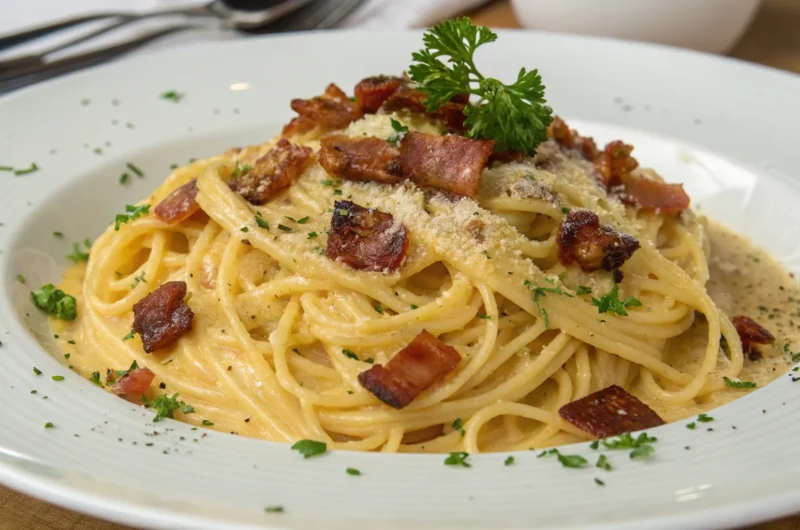
- Plate like you mean it: Twirl into bowls, shower with extra Pecorino, and top with a few crispy guanciale bits. Serve immediately.
Storage Instructions
- Best fresh: Carbonara is a “cook-and-serve-now” dish. The sauce thickens as it cools.
- Short hold: Keep leftovers in an airtight container for up to 1 day.
- Reheating: Gently warm in a skillet over low heat with a splash of water to re-emulsify.
It won’t be perfect, but it’ll be tasty. Microwave only if you must, at 50% power in short bursts with stirring.
Why You’ll Love It
- Big flavor, tiny ingredient list: Every item earns its place.
- Restaurant-level texture: Creamy without cream—pure emulsification magic.
- Weeknight-fast: On the table in about 20 minutes.
- Authentic vibes: Guanciale, Pecorino, pepper—nothing extra, nothing missing.
Nutrition Stats
- Calories: ~620 per serving
- Protein: ~24 g
- Carbs: ~70 g
- Fat: ~26 g (with ~9 g saturated)
- Sodium: Moderate-high due to cheese and guanciale
Values are estimates based on standard brands and 12 oz spaghetti.
Adjust cheese and pork quantities to tweak macros. FYI, Pecorino is salty—taste before adding extra.
Common Blunders
- Scrambling the eggs: Adding the egg mixture over high heat or to a scorching pan.
Remove from heat first, then add eggs, then adjust with warm water.
- Dry, clumpy sauce: Not enough pasta water or tossing too timidly. Be generous and energetic.
- Overcooking pasta: You need a little bite.
It finishes in the pan.
- Wrong cheese grind: Large shreds don’t melt smoothly. Finely grate, snow-like.
- Skipping the pepper: Carbonara needs that sharp, floral heat.
Don’t be shy.
Other Versions to Try
- 50/50 cheese blend: Half Pecorino, half Parmigiano-Reggiano for a slightly milder, nuttier profile.
- All-yolks: Use 5 yolks for ultra-luxurious texture. Reduce pasta water slightly.
- Rigatoni carbonara: Swap pasta shape; tubes catch the sauce and guanciale bits.
- Smoky twist: Pancetta plus a pinch of smoked black pepper.
Not Roman, but delicious.
- Vegetarian-ish: Use smoked olive oil and mushrooms instead of guanciale. Not traditional, but practical.
FAQ
Can I use bacon instead of guanciale?
Yes, but choose thick-cut, minimally sweet bacon.
Bacon brings smoke and sometimes sugar, which shifts the flavor. Pancetta is closer.
Guanciale is the gold standard.
Why no cream?
Because the creaminess should come from emulsified egg, cheese, and starchy water. Cream flattens the flavor and turns it into something else.
If you crave creaminess, adjust with more yolk and proper tossing.
Should I salt the pasta water heavily?
Absolutely. The pasta is your main canvas, and bland pasta equals bland carbonara.
Go for salty like the sea, but remember Pecorino adds salt too.
How do I avoid scrambled eggs?
Kill the heat before adding the egg-cheese mix, toss vigorously, and use warm pasta water to loosen. If it starts to clump, pull off heat, splash more water, and keep tossing.
Patience > panic.
Can I make it ahead?
Not really. You can pre-measure cheese, portion the guanciale, and set up your mixing bowl, but the dish shines only when made to order.
It’s a sprint, not a marathon.
Is Pecorino Romano mandatory?
For traditional flavor, yes. If it’s too salty or sharp for you, blend with Parmigiano-Reggiano.
IMO, a 60/40 Pecorino-to-Parm mix is a crowd-pleaser.
Do I need a specific pepper?
Freshly cracked black pepper is key. Coarse grind gives speckles and a clean punch; toasting the pepper briefly in fat adds depth.
Pre-ground? It’ll work, but it won’t sing.
The Bottom Line
Traditional Spaghetti Carbonara is proof that simple beats complicated when you respect technique.
Crisp guanciale, silky eggs, sharp Pecorino, and assertive pepper—nothing more, nothing less. Master the emulsion and you’ll have a weeknight weapon that tastes like a Roman vacation.
Now go make it before “just one more scroll” turns into dinner o’clock.